
 by
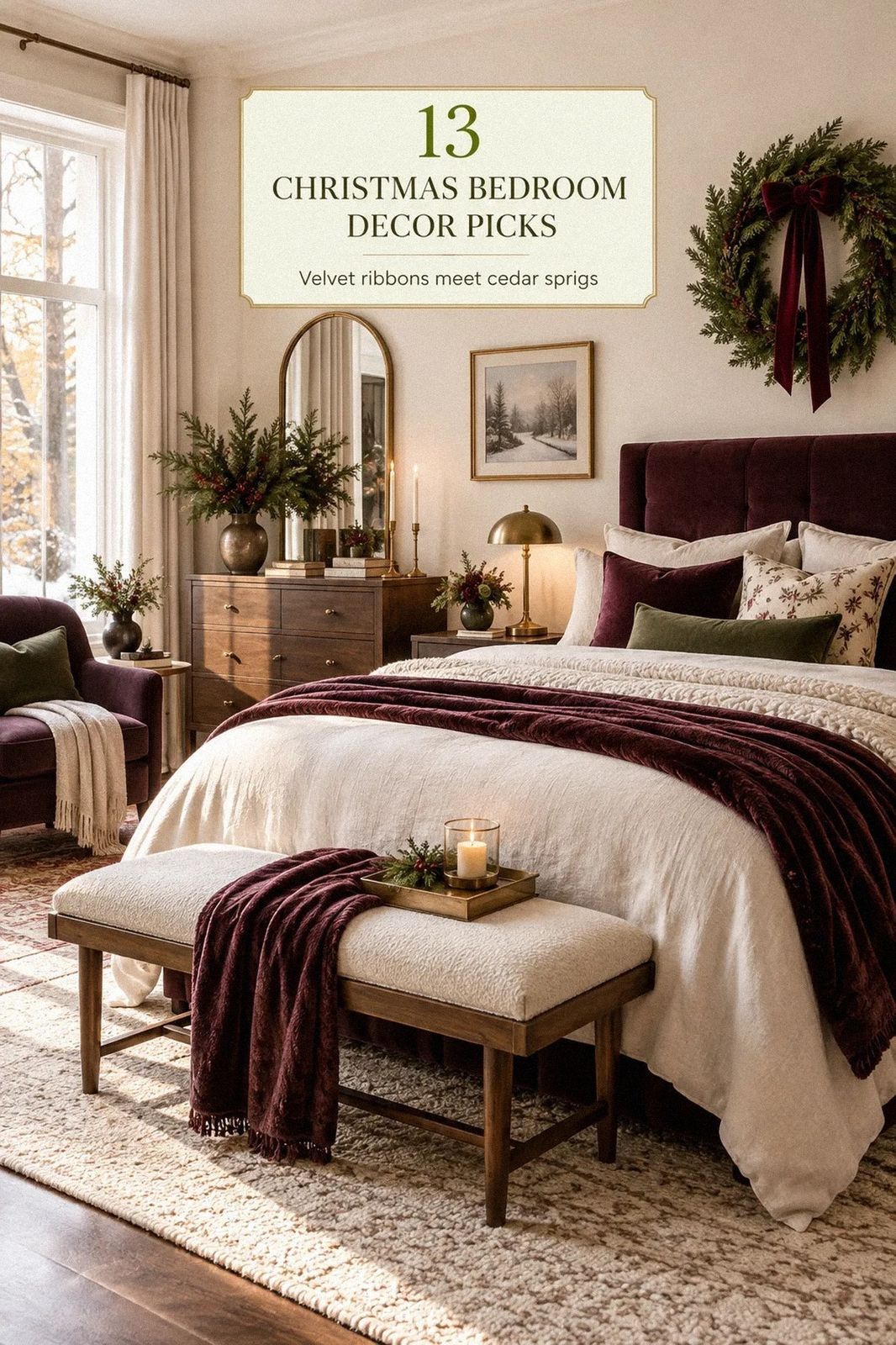
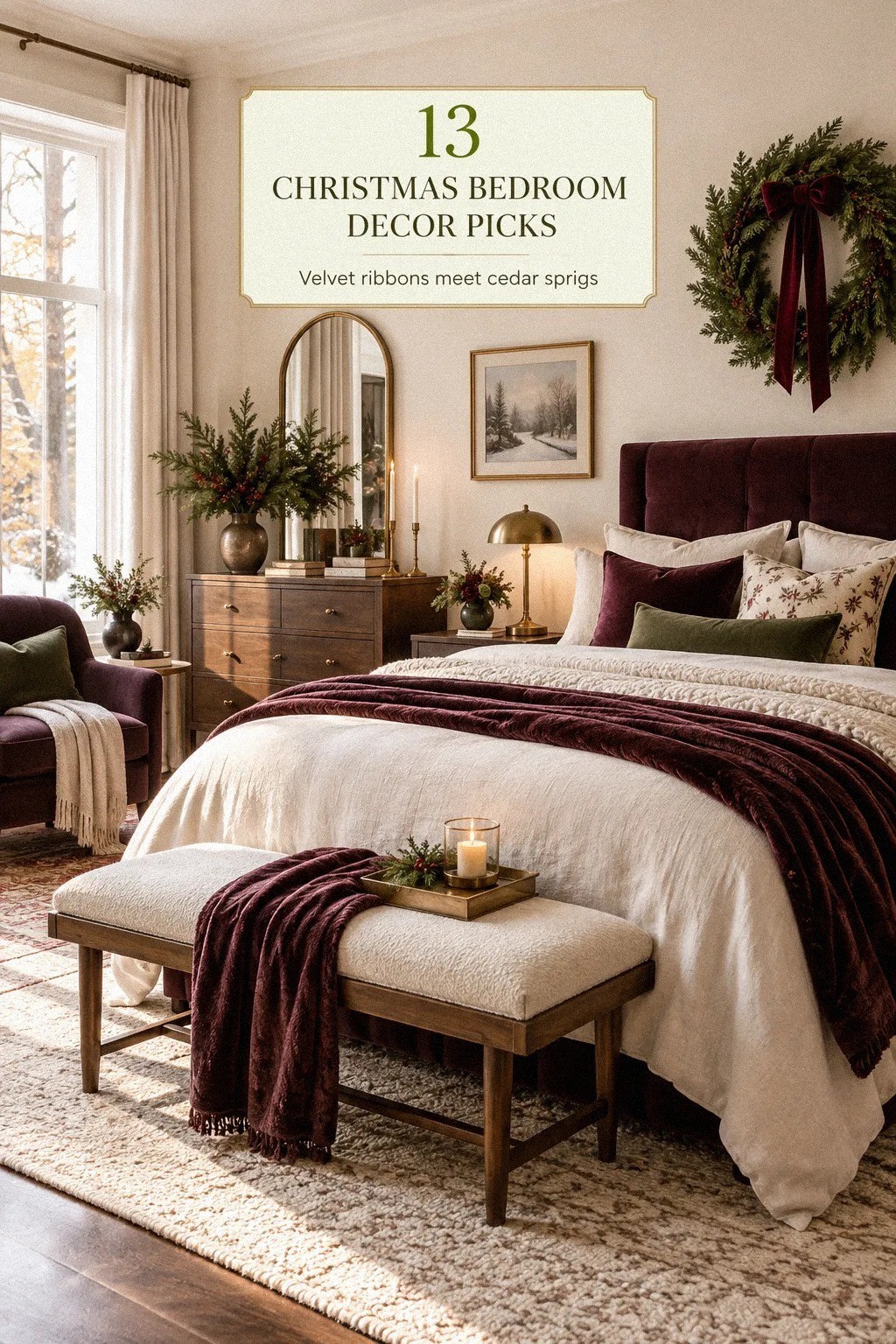
by My 13 Christmas Bedroom Decor Ideas for a Cozy Winter Sleep worked because I stopped treating the room like a holiday display and started treating it like a place to rest. I had one weekend, a small budget, and no appetite for wall damage. The surprising fix was removing decorations, not adding them. The result felt calmer, warmer, and far more inviting.
Here's what it looked like before
The room had pale walls, mismatched lamps, a bed pushed too close to the window, and holiday pieces scattered wherever there was an empty surface. I’d added red pillows, shiny ornaments, and a string of lights, but the room still felt chilly and visually loud.
You can see the problem in your own room by standing in the doorway and taking it in honestly. I did, and the answer became obvious. The bed needed breathing room, the lighting needed to drop lower, and the Christmas bedroom decor needed one clear color story instead of five competing ones.
No glitter storm.
- Strip the room back to a winter baseline
- Paint a quiet shell with Farrow & Ball Setting Plaster
- Layer winter bedding by temperature
- Build the Three-Height Light Stack
- Hang curtains wider than the window
- Swap a busy rug for a wool landing
- Frame the bed with the Evergreen Halo
- Choose warm wood over matching white
- Style the nightstand for the 24-inch reach
- Mix Christmas red with earthy restraint
- Can a small bedroom hold a tree?
- Use the Two-Texture Pillow Rule
- Live with the room after sunset
1Strip the room back to a winter baseline
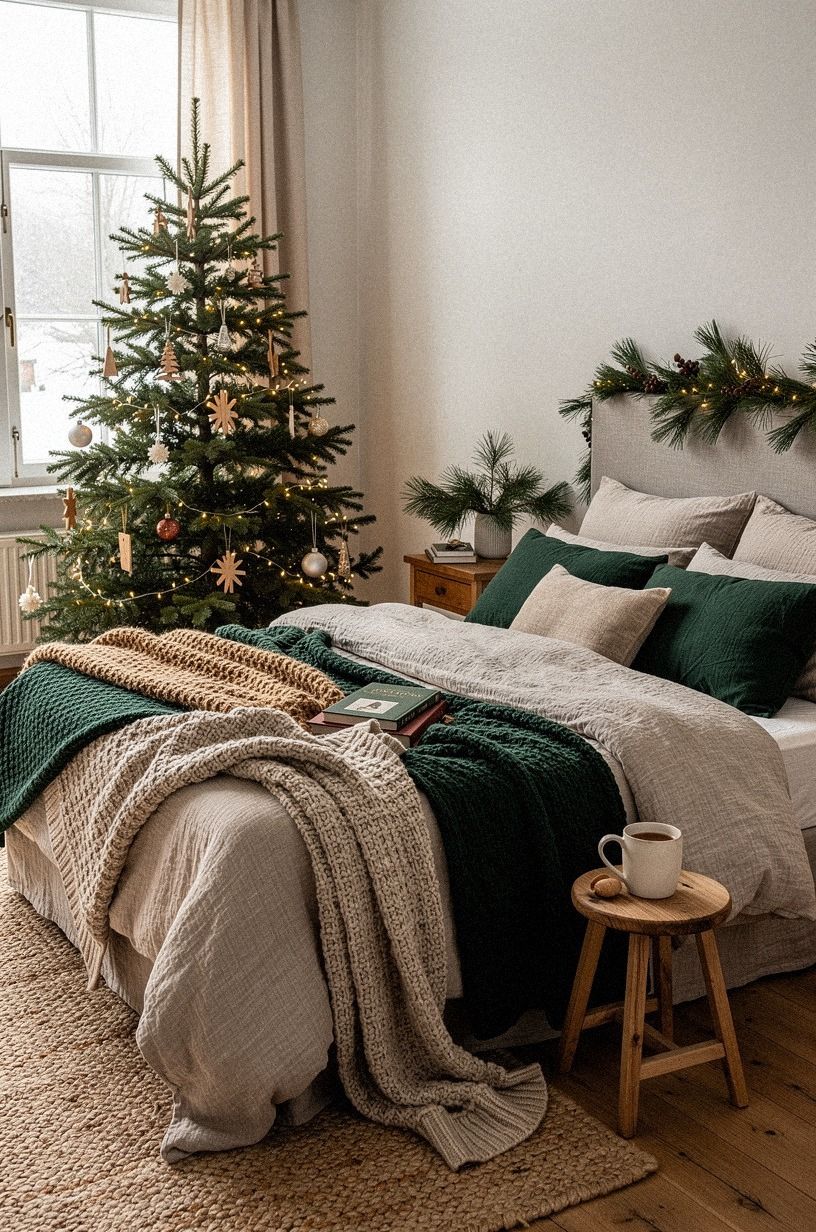
I started by removing every decoration that didn’t serve sleep. That meant the ceramic reindeer on the dresser, two bright red pillows, a metallic garland, and a tiny sign that had never looked right.
Your room will probably have a similar pile. Put everything on the floor, then bring back only what feels warm, useful, or personal.
The first keeper was a washed-linen duvet in a muted clay shade. I added an organic-bouclé throw for softness without making the room look themed. I’d skip shiny polyester bedding because it reflects every lamp and makes a bedroom feel busier after dark.
This guide to cozy winter bedroom ideas with natural fibers helped me choose quieter materials.
I also kept one small aged-brass bell beside the lamp. That was enough holiday sparkle for the whole nightstand. Your eye needs a calm landing place, and mine finally had one.
A small, deliberate detail can feel more magical than a crowded shelf.
2Paint a quiet shell with Farrow & Ball Setting Plaster

I didn’t repaint the whole room, but I tested Farrow & Ball Setting Plaster No. 231 behind the bed. The sample carried a muted plum cast in the afternoon and softened toward gray after sunset, which was exactly the gentle shift I wanted. A touch of rose gold in the hardware kept the palette from feeling flat.
I made the mistake of judging the paint at noon. It looked too rosy, so I nearly rejected it.
At 9 p.m., under a warm lamp, it looked grounded and soothing. The nearby unlacquered brass had started developing a lovely patina, which made the whole corner feel less polished and more lived-in.
A lower-cost option is Benjamin Moore Pale Oak OC-20. I’d choose it over stark white for your Christmas bedroom decor because white makes red ornaments look sharper and colder.
Pale Oak lets the branches, bedding, and rose-gold details settle into the room. You can compare the effect with these white bedroom sleep ideas.
The result was understated but not bland. The walls became a soft backdrop for every warmer, more tactile layer that followed.
3Layer winter bedding by temperature
The bed became the emotional center of the makeover.
I used navy and white bedding over a walnut bed frame, then added one deep-pile mohair velvet layer at the foot. The combination felt warmer than a stack of matching holiday textiles because each surface changed the way the room held light. Your bed should invite you in before it announces the season.
4Build the Three-Height Light Stack
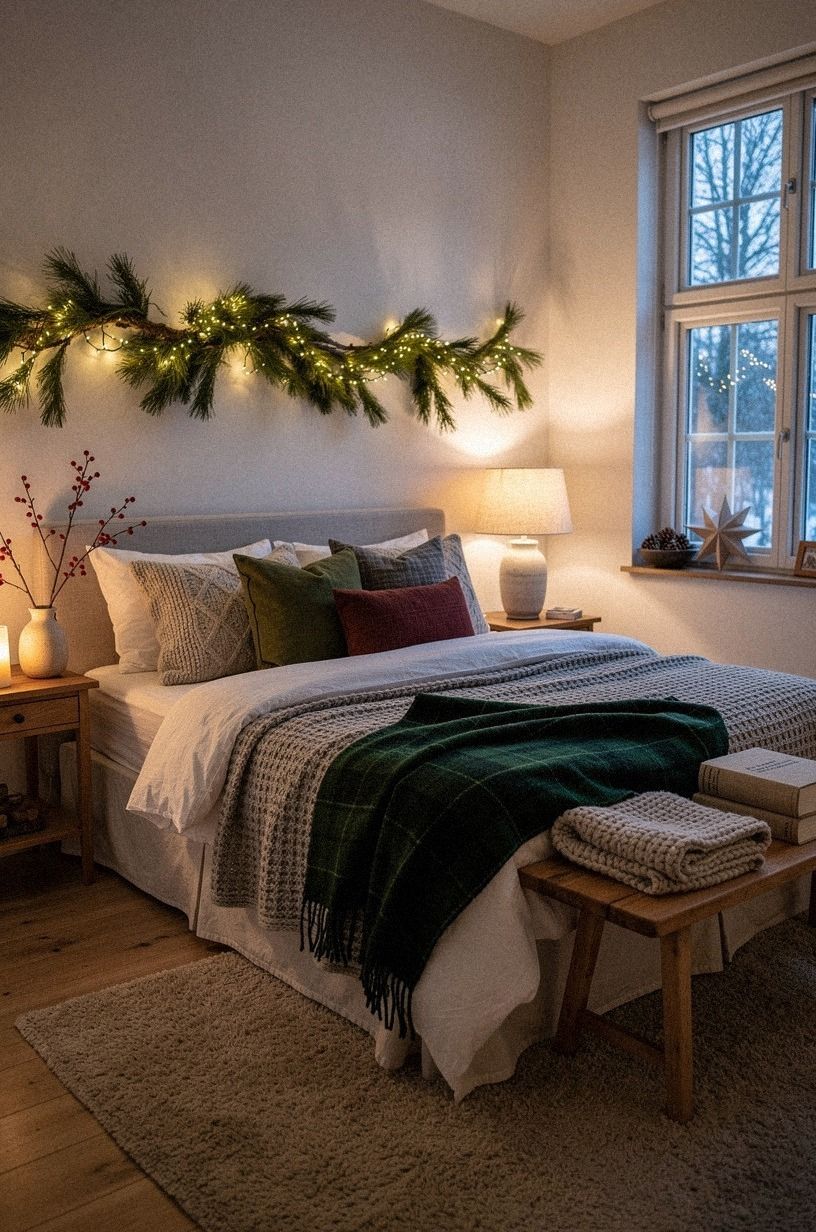
The room changed when I stopped relying on one ceiling fixture. I built what I call the Three-Height Light Stack: one low bedside lamp, one medium glow from the dresser, and a higher string of warm lights around the curtain rod. Your eye moves through those three levels instead of stopping at a harsh bulb overhead.
The bedside lamp has a linen drum shade, which cuts the glare and leaves a soft pool on the hand-applied Venetian plaster behind it. I chose a 2700K warm bulb and kept the overhead light off after dinner.
If you’re styling a small bedroom, this matters more than adding another ornament. Low light makes the room feel deeper and more atmospheric.
I tested the lights while lying down. That sounds obvious, but I’d always tested them standing up.
From your pillow, the wrong bulb shines straight into your eyes. A lamp that feels ordinary at eye level can feel wonderfully soothing at mattress height.
For more ideas on making a pale room feel warmer, I returned to these white bedroom sleep ideas. The principle is simple: layer the glow, then lower the intensity.
That was the first real win! The room looked seasonal even before I brought the greenery back in.
5Hang curtains wider than the window
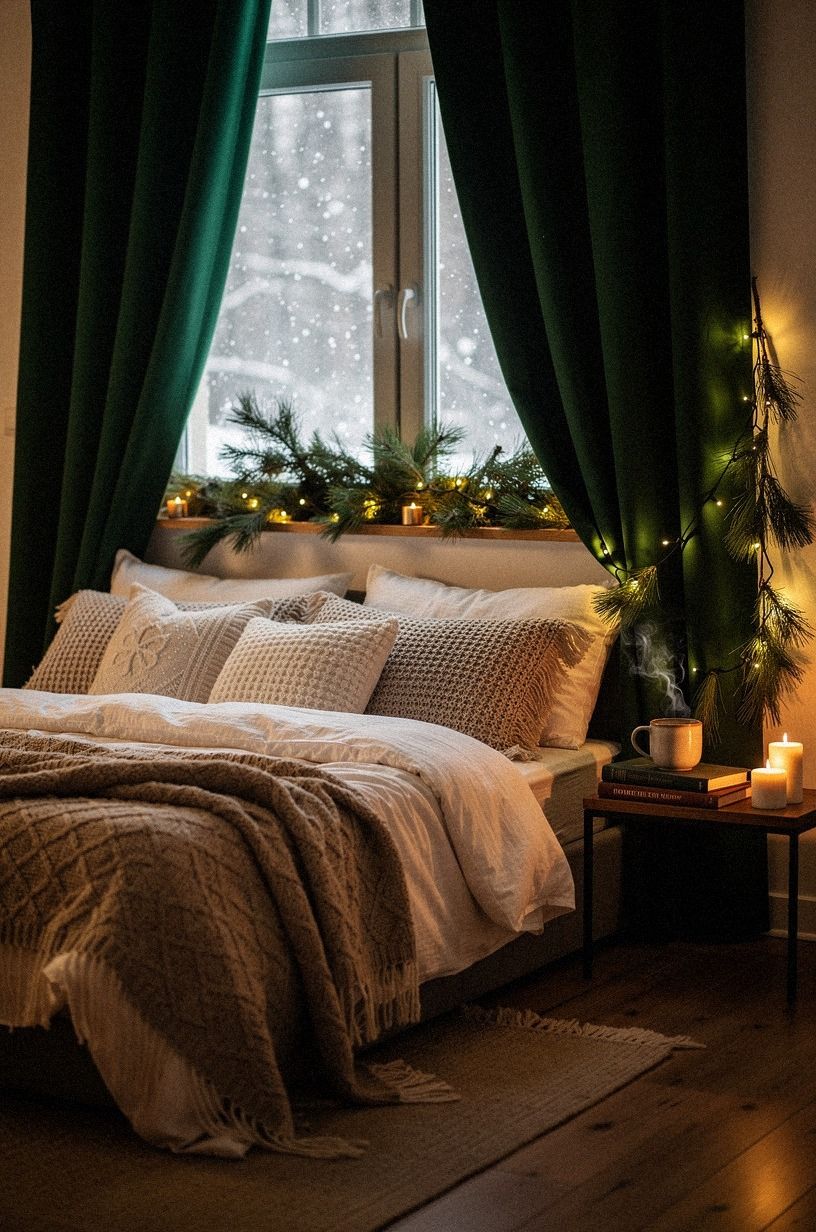
The window looked smaller than it was because the curtain rod stopped at the frame.
I replaced it with a rod in reclaimed weathered teak and hung forest-green curtains with a restrained rust tone. The natural oak nearby kept those colors from becoming heavy. Your curtains should make the room feel taller and softer, not simply cover the glass.
6Swap a busy rug for a wool landing
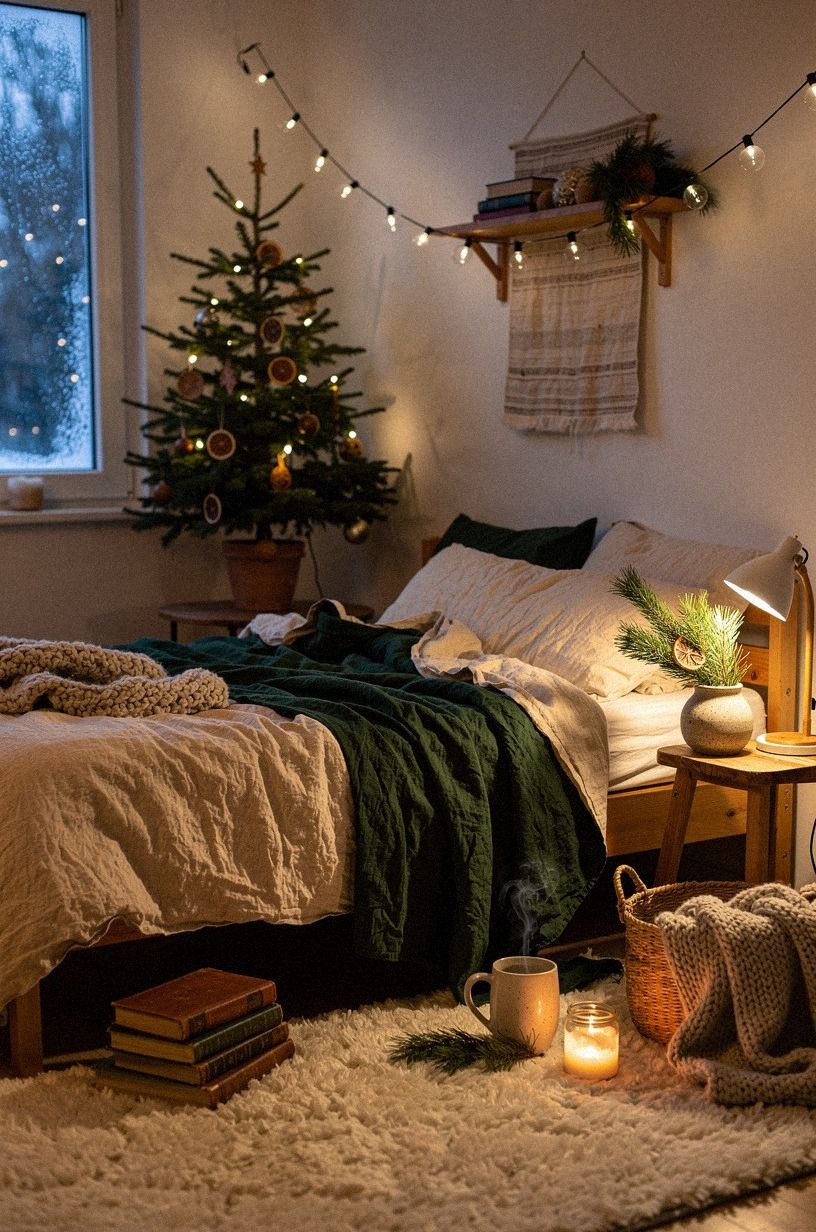
My old rug had a complicated pattern that fought with the bedding. I swapped it for a washed Belgian-linen rug in muted dusty rose, then slid it under the lower two-thirds of the bed.
Charcoal and aged-brass details kept the palette grounded. Your rug should give your feet a warm landing, not announce itself before the bed does.
The standard guidance says a rug should extend 18 to 24 inches past the bed. That measurement helped me stop guessing.
For a queen, the right size made the room feel anchored without swallowing the walkway. I’d choose a quiet linen texture over a high-contrast pattern because the surface still shows up in low light.
The rug caught a little afternoon sun and felt slightly soft underfoot. That small sensory shift mattered more than the pattern.
If your floor is already warm wood, choose a rug with a quiet border and let the grain remain visible. Your room will feel collected without looking crowded.
A restrained rug also made the rest of the room seem more deliberate. I found similar calming principles in these cozy winter bedroom ideas.
7Frame the bed with the Evergreen Halo
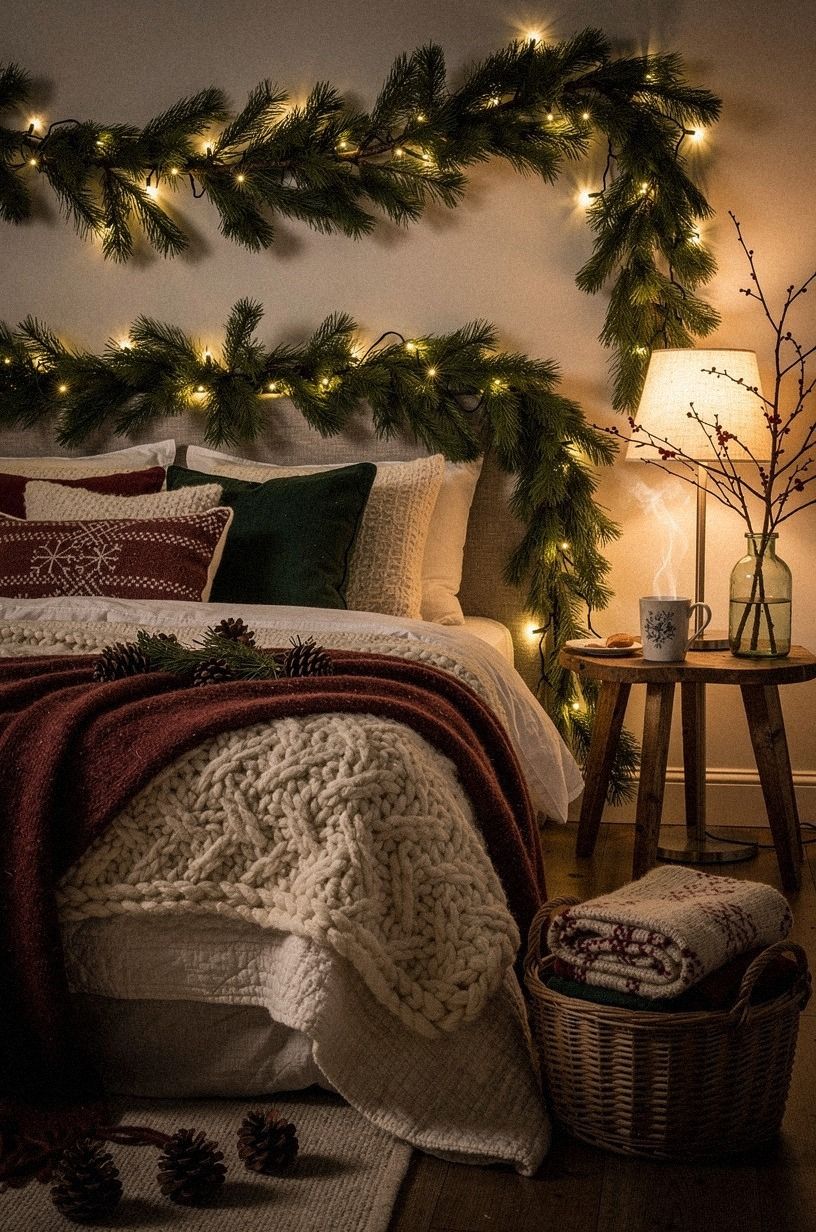
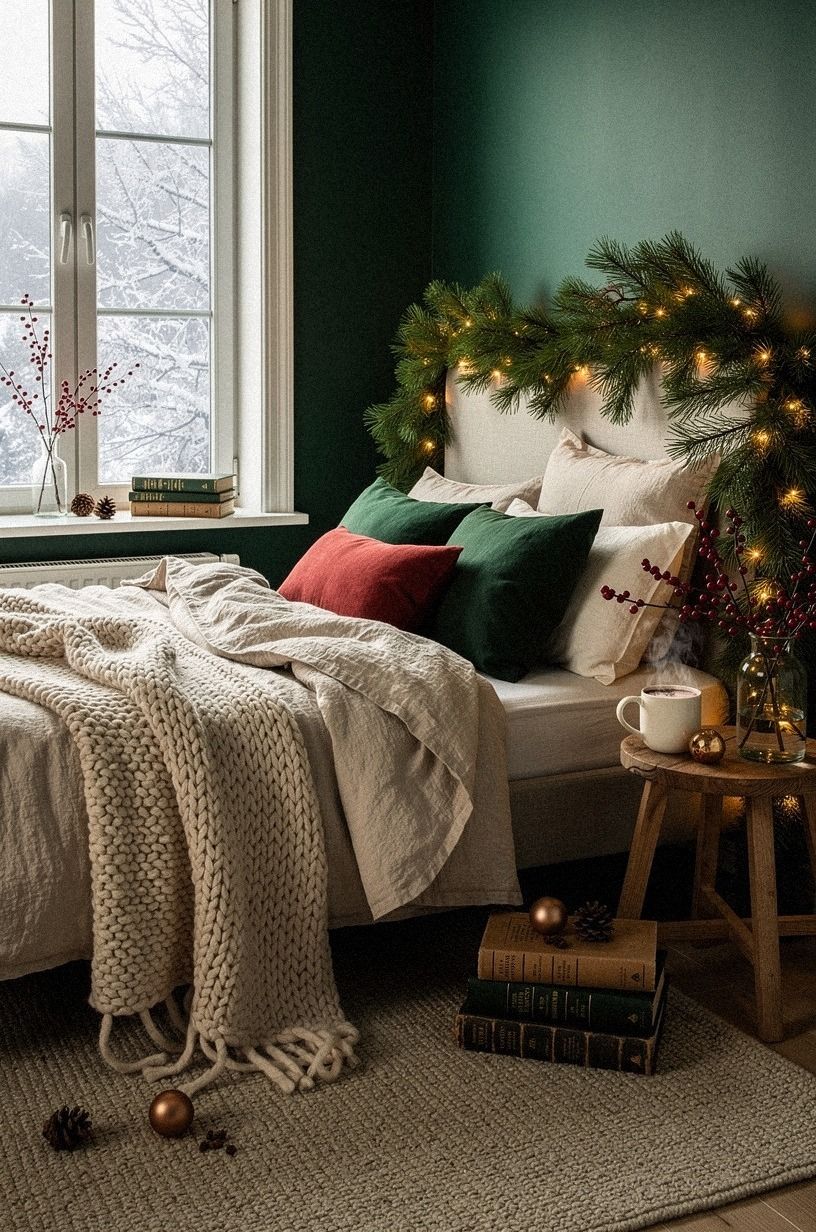
I wanted greenery, but a full garland across the headboard felt theatrical.
I kept the arrangement narrow and let warm white bedding, camel textiles, and black accents do the supporting work. A cerused white oak detail around the bed gave the greenery a quieter landing than a thick garland would have.
8Choose warm wood over matching white
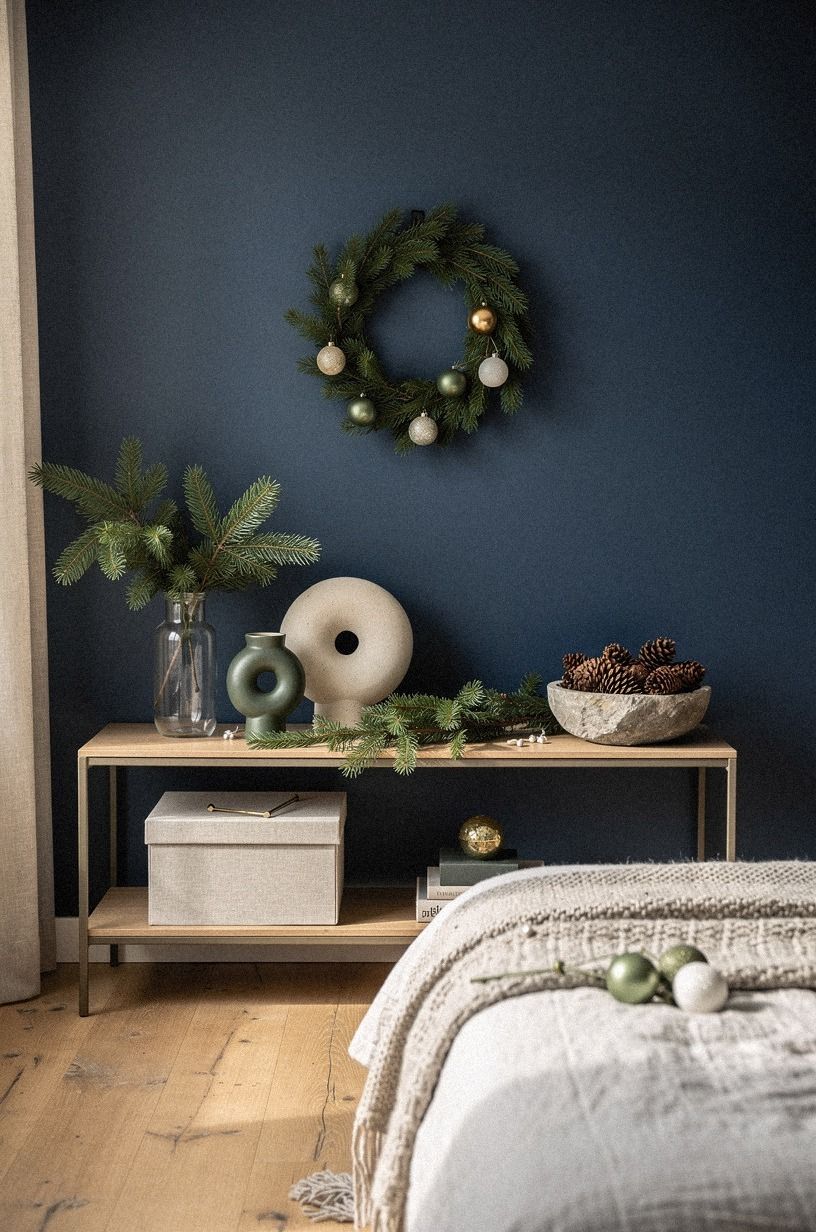
The room had too much white furniture, so I brought in one midnight-blue bench with shagreen accents at the foot of the bed. It added texture, shadow, and a place to fold tomorrow’s sweater. Copper details and ivory textiles kept the darker color from making the room feel closed in.
I’d choose a warmer, more tactile surface over glossy white every time in a cold bedroom. Glossy surfaces bounce light and make the room feel sharper, while shagreen catches the lamp glow and gives it somewhere to land. If you’re shopping on a budget, a secondhand bench can do the work as long as the frame is stable.
The bench also solved a practical problem. I stopped dropping clothes over the chair because I had a clear place to sit and fold them.
You don’t need a full furniture replacement. One useful, textured piece can change how your bedroom behaves.
The contrast looked especially rich beside the ivory walls. A few ideas from these white bedroom sleep ideas also helped me see that white works best when something deeper breaks it up.
9Style the nightstand for the 24-inch reach
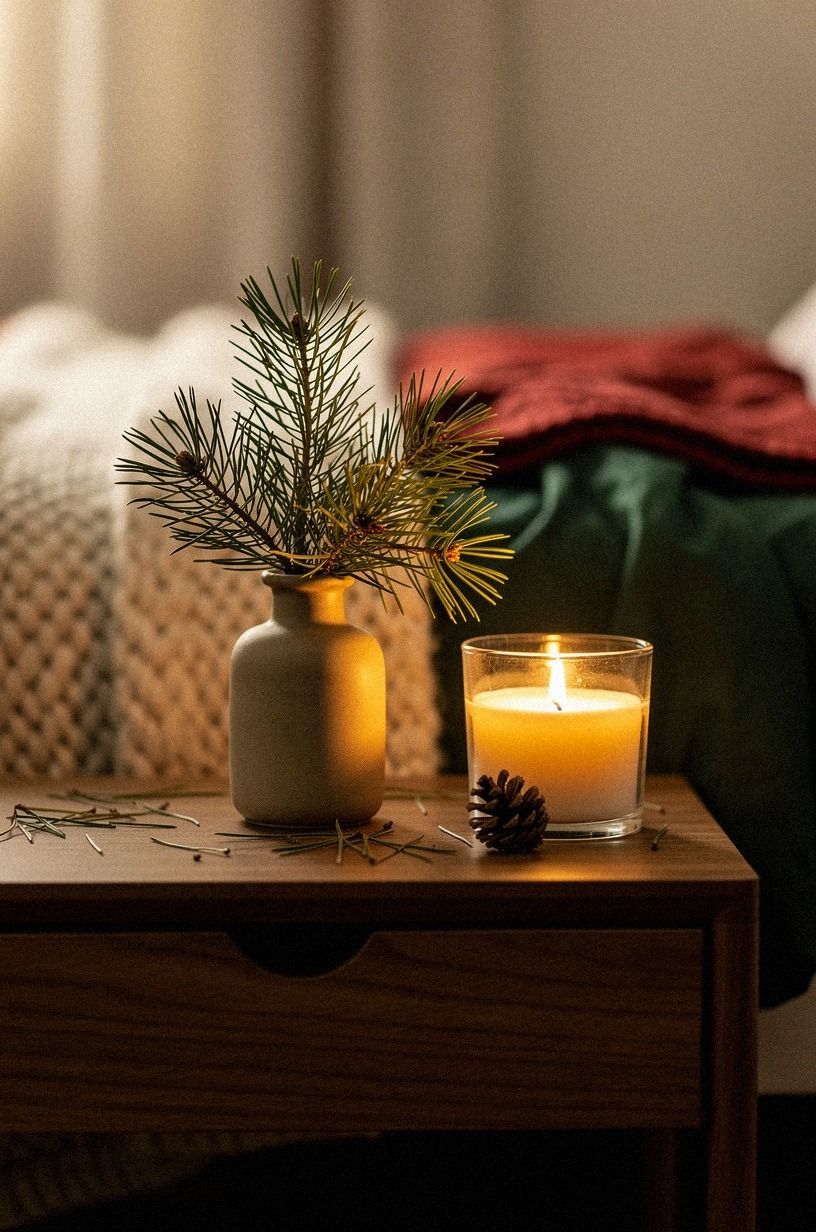
My nightstand was 31 inches tall, so the lamp towered over the mattress.
I lowered the lamp and kept the surface in a sage green, warm cream, and natural wood palette. The drawer front was book-matched walnut, which gave the small piece enough visual interest without needing a stack of accessories. Your nightstand should support the bed, not compete with it.
10Mix Christmas red with earthy restraint

I didn’t ban red. I reduced it. One terracotta organic-bouclé pillow and a narrow red ribbon around the branch vase gave me the holiday color without turning the room into a department-store display.
Your eye needs repetition, but it doesn’t need the same shade on every surface.
I paired the red with olive, stone, and dark brown. Sherwin-Williams Accessible Beige SW 7036 would work well here because it keeps the warm palette from becoming sugary. I’d avoid bright white with saturated red unless you want a crisp, graphic look.
I wanted the room to feel earthy and soft.
The ribbon was a leftover from wrapping gifts, which made the change nearly free. But the color had to appear twice before it felt intentional. If you’re working with a tight budget, repeat one holiday shade in fabric and greenery rather than buying a dozen new objects.
The effect was festive, elegant, and surprisingly grown-up. I found the same restrained mood in these natural winter bedroom ideas.
11Can a small bedroom hold a tree?
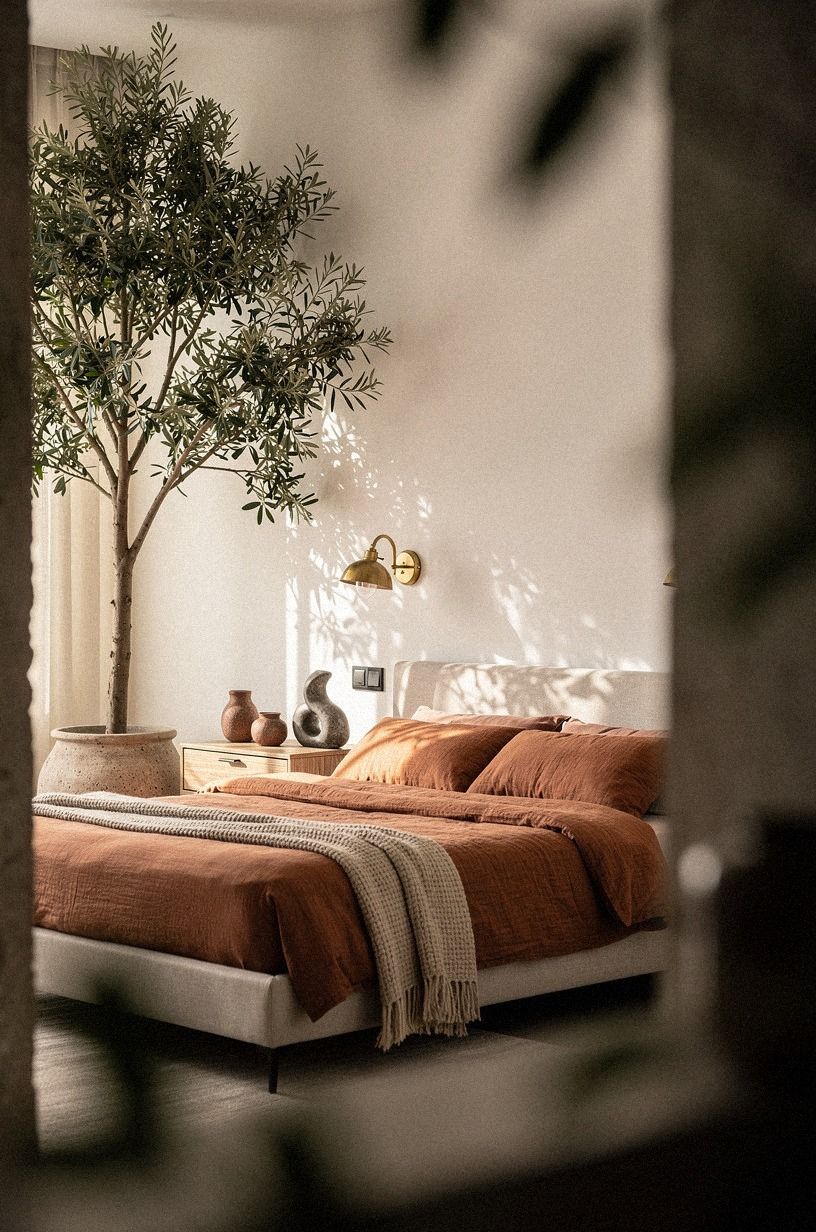
Yes, but your tree doesn’t need to stand beside the bed.
I placed mine near the dresser, where the clay, linen, and aged-brass palette already felt warm. A small organic-bouclé basket softened the base without taking over the floor. Your tree only needs enough room to breathe and enough distance that changing the sheets remains easy.
12Use the Two-Texture Pillow Rule
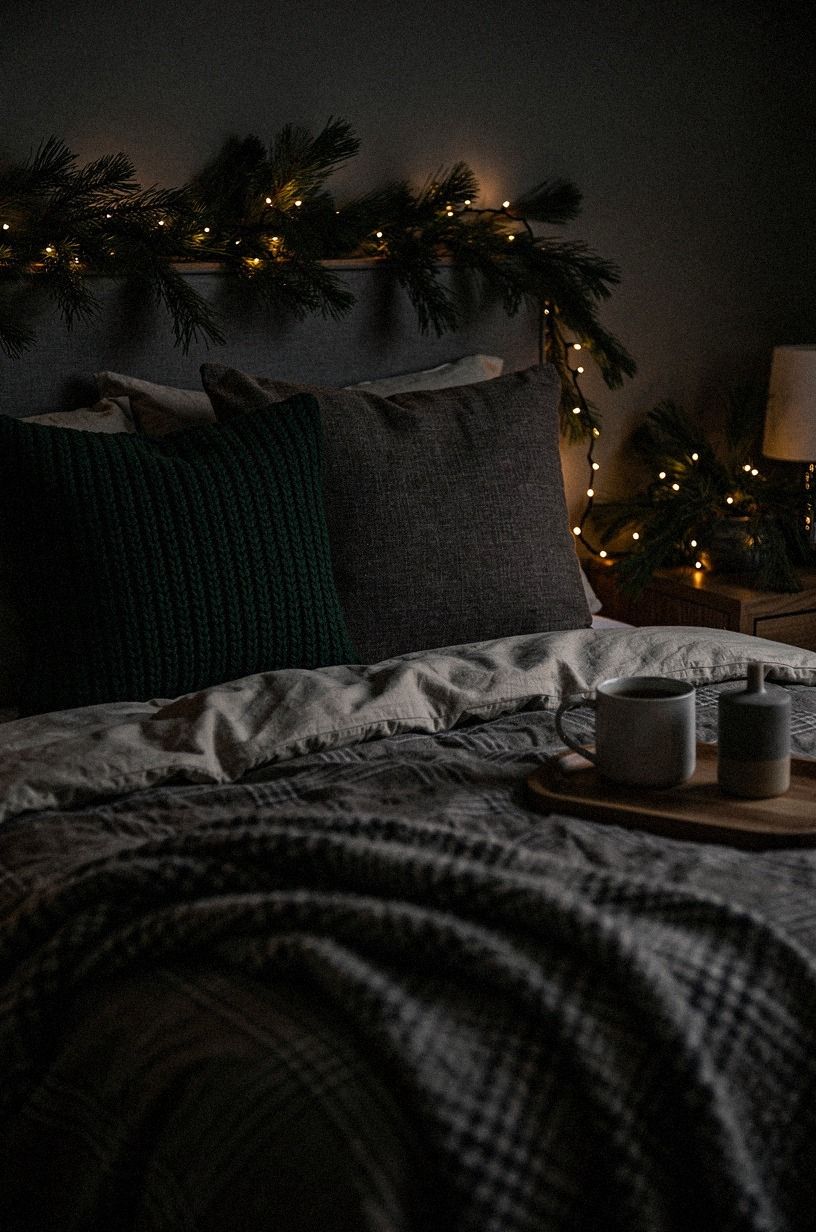
The bed looked finished after I used two textures, not four. My combination was plum deep-pile mohair velvet against a gray washed-cotton pillow, with a small rose-gold detail nearby and the sleeping pillows tucked behind them. Your Christmas bedroom decor needs a little tactile contrast, but too many fabrics make the bed look like a store sample.
The Two-Texture Pillow Rule is simple: choose one fabric that catches light and one that absorbs it. I’d skip a matching holiday pillow set because identical shapes flatten the arrangement. A single woven cushion can work if its pattern includes a color already present in your bedding.
I tested the pillows by sitting against them, not just admiring them. One looked great but collapsed immediately.
The other kept its shape and didn’t shed fibers onto the duvet. You’re allowed to make comfort the deciding factor.
The bed is for sleeping first.
For a softer starting palette, I’d pair these cozy winter natural-fiber ideas with one seasonal accent instead of a full holiday collection.
The final arrangement used one plum velvet pillow, one gray cotton pillow, and the sleeping pillows underneath. It looked relaxed, felt comfortable, and didn’t require constant arranging.
13Live with the room after sunset
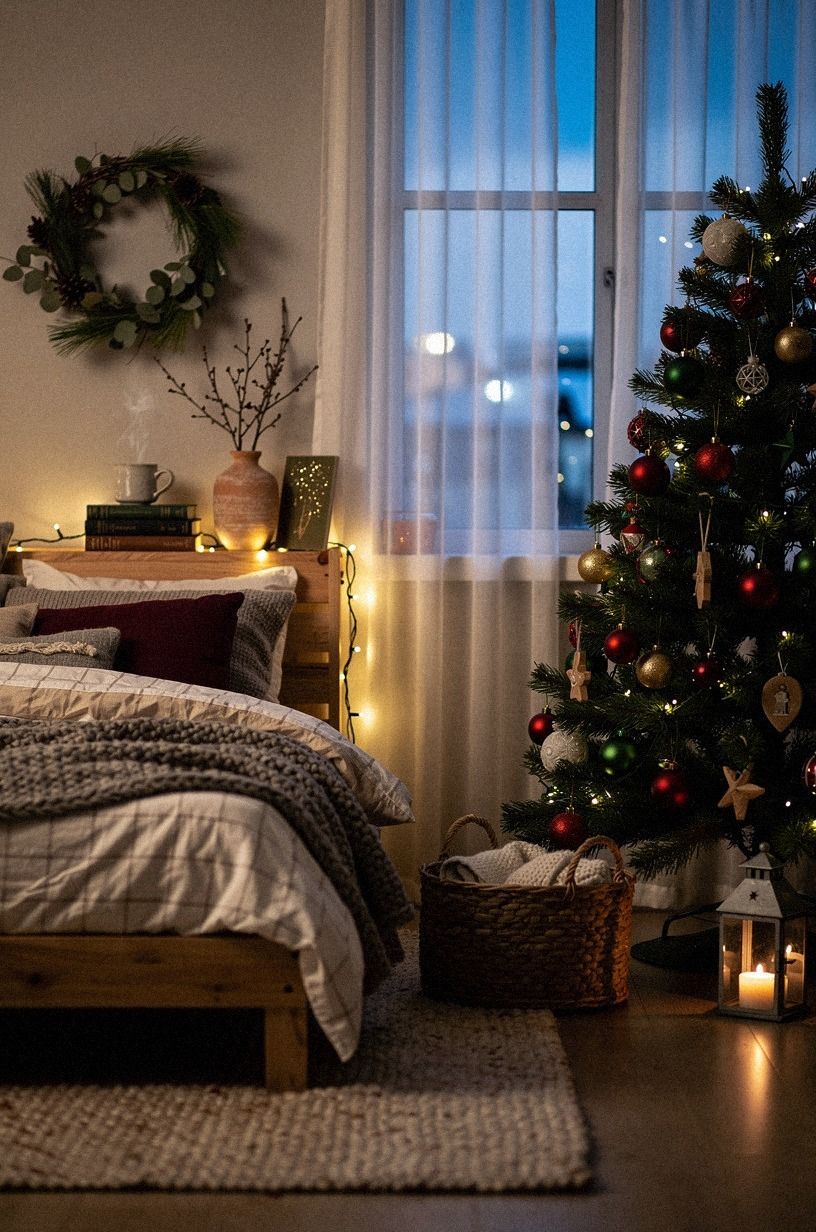
The makeover only made sense after sunset. I turned off the overhead fixture, switched on the lamp stack, and sat on the bed for a few minutes. Your room may look plain in daylight but warm at night, or it may reveal clutter that afternoon light hides.
The navy and white bedding looked calmer beside the walnut furniture once the lights were low. The hand-applied Venetian plaster held a soft glow rather than reflecting it harshly. That was the kind of shift I wanted from every major piece.
I made one last check from the bed. The branches softened the window, the red pillow looked restrained, and the floor was clear.
That was the moment I stopped shopping. If you can settle into your room and immediately understand where your body would rest, you’re done.
A final comparison with these white bedroom sleep ideas reminded me to judge the room under its actual evening lighting. That mattered more than how it looked at noon!
What I Learned From Reworking the Room
I’ve decorated bedrooms that looked lovely in daylight and felt wrong at night. The mistake was always the same: I designed for daylight first.
A bedroom has a second life after sunset, and that’s the one that matters when you’re tired, carrying a book, or trying to fall asleep after a loud holiday day. Your room should work at the hour you need it most.
I also learned that Christmas bedroom decor doesn’t need a large inventory. I removed more than I added, and the room felt warmer because the materials could speak clearly. The linen bedding had room to wrinkle.
The wood showed its grain. The branches cast small shadows on the wall.
Those details did more than a shelf full of ornaments ever could.
There was one awkward mistake. I put the tree beside the bed at first, then knocked into the basket twice while changing the sheets.
It looked charming in the room and annoyed me in real life. So I moved it near the dresser. Your own room will tell you what works if you pay attention to your hands and feet, not just its appearance.
The most valuable change was the lighting. I’d been trying to make the room festive with color, but the warm bulbs created the mood before the decorations arrived. If you’re choosing between another pillow and a better lamp, I’d choose the lamp.
It changes every surface around it, including the pieces you already own.
I don’t think a bedroom needs to look traditionally Christmas-themed to feel seasonal. A branch, a cinnamon-colored pillow, soft bedding, and lower light were enough. The room felt inviting without becoming childish.
That balance is the part I’ll keep next year, even if the decorations change.
The broader lesson matched these calm white-bedroom styling ideas: restraint is not the same as emptiness. It gives the best pieces room to feel special.
How Much It Cost: $387 and One Weekend
My personal refresh came to $387 because I reused the lamps, curtain rod, ornaments, and most of the bedding. The new pieces were the Belgian-linen rug, the bench, the pillow, branches, paint sample, and basket. Your total will change with room size and what you already own, but the typical US ranges below are useful planning points.
For a smaller refresh, the material ranges can help you decide where your money should go. A linen rug often costs more than a pillow, but you’ll feel it every morning. Washed-linen bedding costs more than basic cotton, yet it changes the whole bed rather than one corner.
I’d spend first on the item you touch daily. If you’re working with $200, choose bedding and lighting before seasonal decor.
If you have $800, add a rug or bench after the sleep basics are handled. Your room will feel more finished when the practical choices carry the visual weight.
For another useful budgeting perspective, compare the material priorities in these cozy winter bedroom ideas. Texture usually earns its place longer than novelty decor.
A Few Things Worth Answering
What is the best 13 Christmas Bedroom Decor Ideas for a Cozy Winter Sleep for a small bedroom?
The best choice is layered bedding with low lighting and one vertical branch arrangement. A narrow IKEA HEMNES piece can add storage without taking much floor space, while a small tree near the dresser keeps your walking path open. You’ll get more warmth from texture than from extra ornaments.
Where can I buy 13 Christmas Bedroom Decor Ideas for a Cozy Winter Sleep pieces on a budget?
Look at IKEA, Target, and Wayfair first, then check Facebook Marketplace or a local thrift shop for benches, baskets, and lamps. Secondhand wood furniture often gives your room more character than a matching new set. You don’t need every piece to come from one store.
How much does a 13 Christmas Bedroom Decor Ideas for a Cozy Winter Sleep makeover cost?
A typical refresh costs about $200 to $800, depending on bedding, paint, shades, and art. Reusing what you own can keep the total near the low end. You can make a visible difference with branches, warmer bulbs, rearranged furniture, and textiles you already have.
Can I create a 13 Christmas Bedroom Decor Ideas for a Cozy Winter Sleep on a budget?
Yes, and you can start without buying anything. Free changes include moving the bed, removing clutter, grouping existing ornaments, and lowering the lighting. Add one secondhand basket or a budget throw, then repeat one holiday color instead of purchasing a full matching collection.
Is a 13 Christmas Bedroom Decor Ideas for a Cozy Winter Sleep worth it in a small space?
Yes, because a small room needs fewer pieces to feel complete. A clear walking path can make the space feel calmer than another storage unit would.
Keep the tree narrow, use a rug that extends 18 to 24 inches past the bed, and leave the nightstand easy to reach. More ideas for compact layouts appear in these cozy winter bedroom ideas.
Is 13 Christmas Bedroom Decor Ideas for a Cozy Winter Sleep a good idea for a rental?
Yes. Use tension rods, removable hooks, peel-and-stick accents, and freestanding lamps instead of permanent fixtures.
No-damage styling can still feel personal when you rely on bedding, baskets, branches, and portable art. If you’re renting, test every adhesive in a hidden spot first.
These white bedroom sleep ideas also work well when paint and permanent fixtures are off-limits.
Where I’d Start First
If I had to pick one, I’d start with the lighting. Warm bulbs make ordinary bedding and thrifted furniture look softer after sunset, while extra decorations can’t fix a harsh ceiling fixture. Save this bedroom makeover for later, then turn off the overhead light tonight and see what your room was missing.