
 by
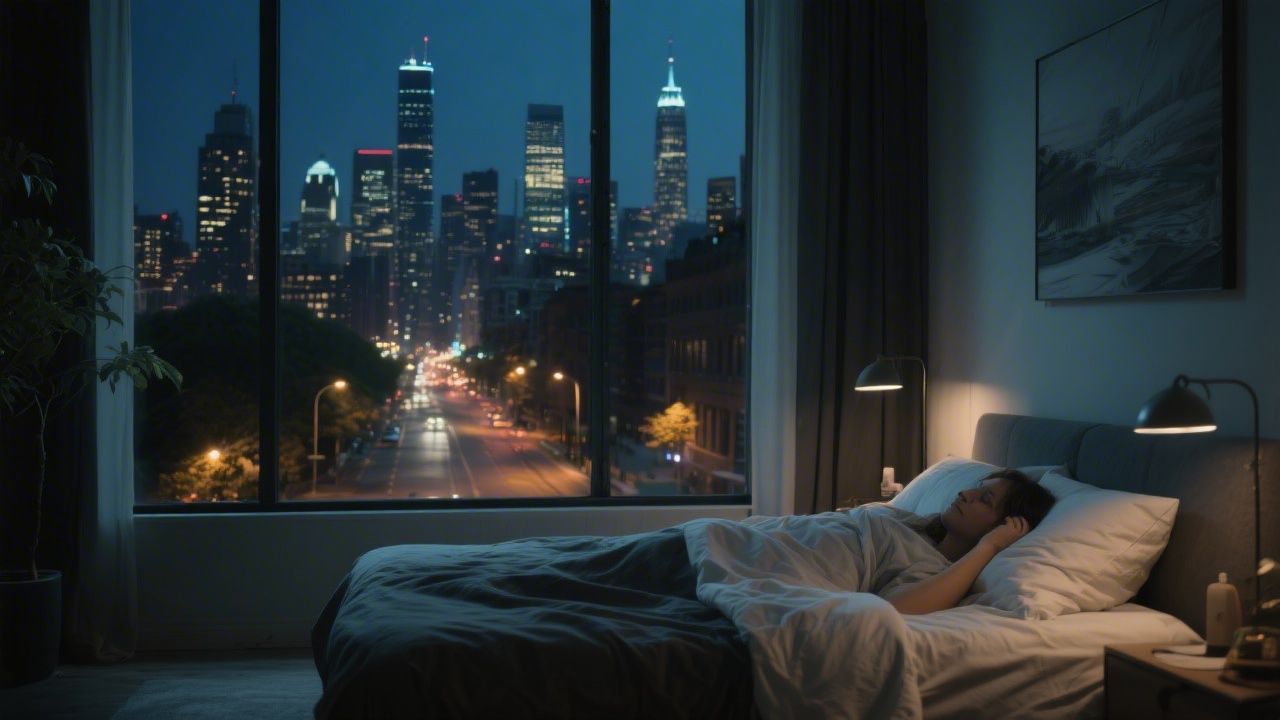
by City living offers density, walkability, and access to opportunity — but it consistently costs residents sleep. The mechanisms are multiple: ambient noise from traffic and nightlife, artificial light suppressing melatonin, later social schedules extending wakefulness, and higher stress environments. Understanding which factors affect your sleep most gives you a targeted approach.
The Urban Sleep Gap: What Research Shows
Large-scale sleep studies consistently document an "urban sleep deficit":
- Urban residents average 45-60 minutes less sleep per night than rural residents.
- City dwellers show significantly later sleep timing — their circadian clocks run later due to artificial light exposure.
- Sleep efficiency (time spent actually sleeping vs. time in bed) is lower in urban environments.
- Self-reported sleep quality is worse, and objective measures of deep sleep and REM show quantifiable differences.
The Four Urban Sleep Disruptors
1. Noise
Urban ambient noise rarely drops below 50 dB in dense neighborhoods — well above the WHO's 40 dB nighttime recommendation. Traffic, late-night pedestrians, delivery vehicles, emergency sirens, and bar closing times create an unpredictable noise environment that triggers repeated arousal responses.
2. Light Pollution
Outdoor artificial light (streetlights, signs, neighboring buildings) enters bedrooms and suppresses melatonin production. Melatonin onset — the hormone that signals your brain to prepare for sleep — requires light levels below 1-3 lux. Urban bedrooms with unblocked windows can have ambient light levels of 5-50 lux, delaying melatonin onset by 30-90 minutes and shifting your entire circadian cycle later.
3. Social Rhythms
Cities have later social schedules than rural areas — restaurants, entertainment, and social gathering late into the night. This creates social pressure to delay sleep timing, which compounds the light-driven circadian delay. The result is a systematic reduction in sleep opportunity even for people who could theoretically go to bed earlier.
4. Stress and Activation
Urban environments maintain higher baseline sympathetic nervous system activation — more stimuli, higher population density, more decision-making demands. This physiological activation does not automatically switch off at bedtime. The pre-sleep wind-down period is critical and harder to achieve in continuously stimulating environments.
City-Specific Sleep Optimization
For Noise
White or brown noise machine at the window-facing wall. Acoustic window inserts for significant reduction. Earplugs for highest-noise situations or irregular noise events.
For Light
True blackout curtains extending 4-6 inches beyond window frame on all sides. If you rent and cannot hang heavy curtains, tension rods with light-blocking panel liners provide a non-damaging option. Sleep masks for residual light that enters despite curtains.
For Social Rhythms
Consistent sleep and wake time, including weekends. Light exposure management: bright outdoor or light therapy light in the morning resets the circadian clock forward, counteracting the light-driven delay.
For Stress Deactivation
A defined pre-sleep routine that signals the transition from city activation to rest — dimming lights 60-90 minutes before bed, lowering room temperature (65-67°F optimal), and avoiding stimulating screen content. This creates the physiological conditions for sleep that the city environment otherwise works against.
Your Mattress in a City Environment
When noise and light cause repeated micro-arousals, returning quickly to deep sleep depends partly on physical comfort. For sleep quality improvements in city apartments, a mattress that eliminates pressure point discomfort removes one barrier to returning to sleep after disturbance. See also our guide for sleep and anxiety and recommendations for mattress for hot sleepers.
Frequently Asked Questions
Do city residents really sleep less than rural residents?
Yes. Multiple population studies, including a large analysis using actigraphy data from tens of thousands of participants, found urban residents sleep 45-60 minutes less per night on average than rural residents, with greater sleep fragmentation and later sleep timing. The gap persists after controlling for income, age, and work schedules.
Is light or noise the bigger sleep problem in cities?
Research suggests they compound each other and act through different mechanisms. Noise triggers acute arousals and stress responses. Light pollution suppresses melatonin onset and delays circadian timing. Most urban residents face both simultaneously. Addressing the light problem first is often more impactful because delayed melatonin onset can shift your entire sleep window later, reducing total sleep time.
What is the best blackout curtain for a city apartment?
True blackout curtains use a three-pass blackout coating or a dense woven fabric with a liner. Look for curtains marketed as 99-100% light-blocking with a thermal liner. Brands like Nicetown, ECLIPSE, and DECONOVO have well-reviewed options. Ensure the curtains extend 4-6 inches beyond the window frame on all sides — light leaks at the edges defeat the blackout effect.
Does living near a 24-hour city affect your circadian rhythm?
Yes. Artificial light at night (ALAN) — from streetlights, illuminated signs, and building lights — suppresses melatonin secretion and delays the circadian clock. Research from urban areas shows later habitual sleep timing and reduced sleep duration compared to populations with minimal ALAN exposure. The effect is dose-dependent: even moderate light exposure through windows can delay sleep onset by 30-60 minutes.
Can you sleep well long-term in a noisy city apartment?
Yes, with appropriate interventions. The combination of acoustic window treatment, sound masking, and blackout curtains can create a sleep environment that functionally approximates a quieter suburban bedroom. The key is treating the sleep space as a dedicated environment requiring active management, rather than accepting whatever conditions the building provides.