
 by
by Among the practical interventions for driving fatigue, one stands above the rest in the research literature: the coffee nap. It is not a folk remedy or productivity hack—it is a physiologically coherent technique backed by multiple randomized controlled trials, including studies specifically designed to test its effect on driving performance. Here is the complete mechanism, the exact protocol, and when to use it.
Editor's Pick
The right mattress is the foundation of better sleep—and safer days.
If poor sleep is affecting your alertness, reaction time, or safety, the quality of your sleep surface matters more than most people realize. The Saatva Classic consistently tops our testing for spinal support, pressure relief, and the deep sleep architecture that restores daytime performance.
Read Our Saatva Review →The Science: Why Coffee + Nap Beats Either Alone
Understanding why the coffee nap works requires understanding the adenosine system. As you stay awake, your brain accumulates adenosine—a byproduct of neural activity that progressively increases “sleep pressure” by binding to adenosine receptors. High adenosine = high drive to sleep.
Sleep clears adenosine. Even a 15–20 minute nap meaningfully reduces adenosine concentrations in the brain. The mechanism is rapid: adenosine clearance begins within minutes of sleep onset.
Caffeine blocks adenosine receptors. Caffeine does not reduce adenosine itself—it competes for the same receptors. When caffeine occupies the receptors, adenosine cannot bind and its sedating effect is blocked. But if adenosine levels remain high, the competition is ongoing and caffeine’s blockade is less complete.
The coffee nap exploits both mechanisms in sequence. You drink caffeine, then nap before it takes effect. The nap clears adenosine from the receptors. When you wake, caffeine encounters cleared receptors and diminished competition—producing a more complete and sustained alertness effect than either intervention alone.
The Research Evidence
The key studies:
- Horne & Reyner (1997, Loughborough University): Fatigued afternoon drivers on a real road course. Coffee nap condition significantly outperformed both coffee alone and nap alone on simulated crash incidence, lane deviation, and subjective sleepiness.
- Reyner & Horne (2002): Replicated findings in night driving conditions, confirming the coffee nap advantage during the circadian nadir when fatigue risk is highest.
- Hayashi et al. (2003, Hiroshima University): Confirmed that the combination produced better afternoon performance than either alone, with EEG measures showing deeper restorative sleep in the nap component when preceded by caffeine.
The Exact Protocol
- Caffeine dose: 150–200mg (approximately one 12oz strong coffee, one 16oz medium roast, or two standard espresso shots). Avoid exceeding 200mg if you are sensitive to caffeine or have had significant caffeine already today.
- Timing: Drink quickly—the goal is to consume the full dose before lying down. Do not sip slowly.
- Set alarm: 15–20 minutes maximum. 20 minutes is the outer boundary to avoid entering the deeper sleep stages that produce significant sleep inertia upon waking.
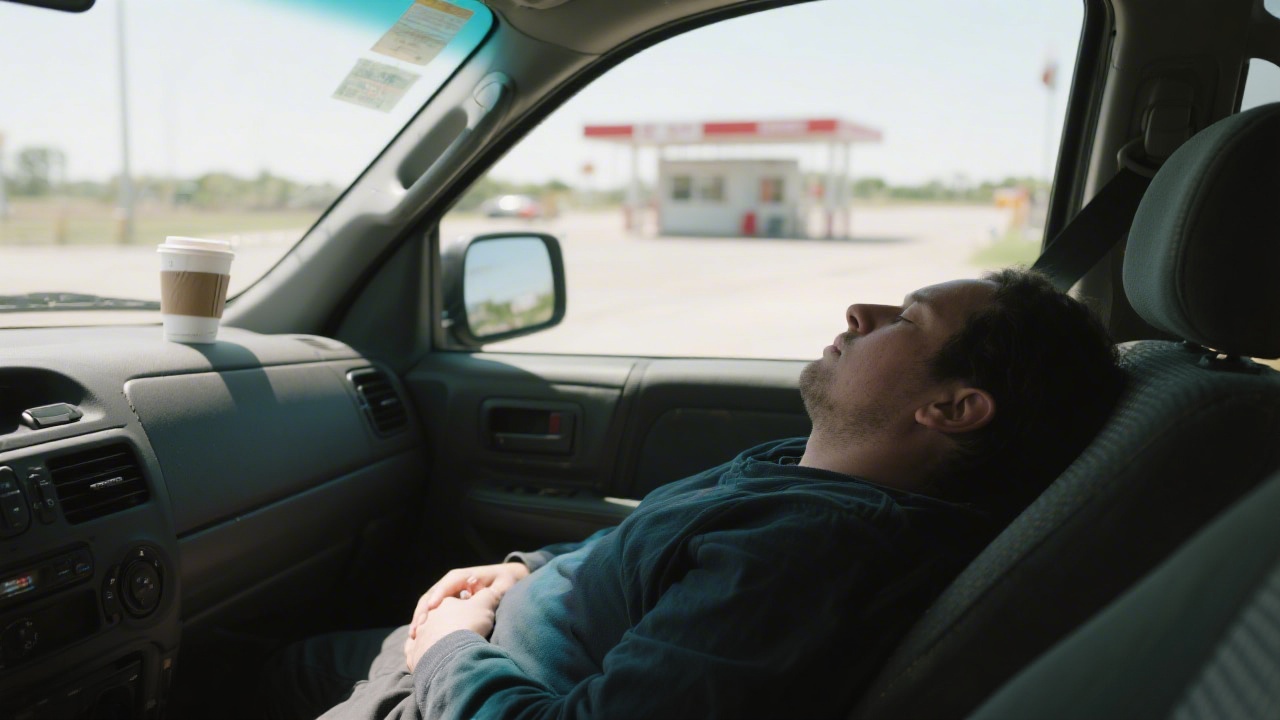
- Lie down or recline fully: A parked reclined car seat works well. Close your eyes and relax without forcing sleep. Even rest without sleep onset provides some adenosine clearance benefit.
- Wake and wait 5–10 minutes: There may be brief mild grogginess. It resolves quickly (unlike grogginess from a longer nap) and gives time for caffeine to ramp up fully before you drive.
When to Use a Coffee Nap for Driving
The coffee nap is most appropriate as a planned intervention, not a rescue measure after dangerous fatigue signs appear. Optimal use cases:
- Before a night drive after a full day of work
- Before the post-night-shift commute home (see: night shift driving safety)
- At a rest stop during a long highway drive, when mild-to-moderate early fatigue signs are present
- Before driving during the circadian trough (2–4 PM or midnight–6 AM)
It is not a substitute for addressing underlying sleep debt. If you have been sleeping fewer than 6 hours per night for multiple days, see how tired is too tired to drive—a coffee nap provides temporary relief but does not restore cumulative impairment. And if you notice the serious warning signs covered in 10 warning signs of fatigue while driving, full sleep rather than a coffee nap is the appropriate response.
Limitations and Cautions
- Effect duration is 1–3 hours, not a full night of sleep restoration
- High caffeine consumers may have reduced receptor sensitivity, limiting the blockade effect
- Do not use this technique as a license to drive after total sleep deprivation—it addresses sleep pressure, not sleep deprivation’s full range of cognitive impairments
- The technique requires a safe place to park and rest—never attempt to nap while the vehicle is in motion
Editor's Pick
The right mattress is the foundation of better sleep—and safer days.
If poor sleep is affecting your alertness, reaction time, or safety, the quality of your sleep surface matters more than most people realize. The Saatva Classic consistently tops our testing for spinal support, pressure relief, and the deep sleep architecture that restores daytime performance.
Read Our Saatva Review →Frequently Asked Questions
Does a coffee nap really work better than coffee alone?
Yes. Multiple randomized controlled trials have confirmed this. The most cited, by Horne and Reyner at Loughborough University, found that a coffee nap reduced driving impairment and simulated crash rates more than either caffeine or a nap alone. The mechanism is well-understood: caffeine reaches peak effect in 20–30 minutes, precisely timed to the alertness rebound from even a brief nap.
What is the exact coffee nap protocol for driving?
Drink approximately 200mg of caffeine (roughly one 12oz strong coffee or two espresso shots), then immediately lie down or recline with an alarm set for 15–20 minutes. The goal is to sleep for most of that window, though even rest without sleep produces benefit. Wake at the alarm—do not allow the nap to extend beyond 30 minutes to avoid deep sleep inertia.
Why do you drink coffee before the nap rather than after?
Caffeine takes 20–30 minutes to be absorbed from the gut and cross the blood-brain barrier. By drinking it before a 20-minute nap, you wake at the precise moment caffeine is beginning to peak—the nap clears adenosine and the caffeine blocks its re-accumulation. Drinking coffee after the nap wastes the 20–30 minute window when you are sitting awake waiting for it to work.
How long does the alertness boost from a coffee nap last?
Research indicates approximately 1–3 hours of meaningfully improved alertness for driving, compared to roughly 30–45 minutes for caffeine alone and 10–30 minutes for a short nap alone. The combined effect also shows improved mood and reduced feelings of sleepiness compared to either alone.
Can I take a coffee nap if I’ve already had a lot of coffee today?
Reduced benefit, but still some benefit. Adenosine receptor occupancy by existing caffeine may blunt the ‘nap’ component somewhat. If you are already heavily caffeinated, a 20-minute nap alone is still worthwhile before a high-fatigue drive—sleep inertia is minimal at this nap length and the adenosine clearance benefit persists.
Our Top Mattress Pick
The Saatva Classic consistently ranks #1 for comfort, support, and long-term durability.
View Saatva Classic Pricing & DetailsKey Takeaways
Coffee Nap Before Driving is a topic that depends heavily on individual needs and preferences. The most important thing is to consider your specific situation — your body type, sleep position, and personal comfort preferences — before making any decisions. When in doubt, take advantage of trial periods to test before committing.