
 by
by Our top pick for better sleep
The Saatva Classic combines individually wrapped coils with a Euro pillow top — engineered for spinal support, temperature neutrality, and motion isolation. Built to support every stage of sleep improvement.
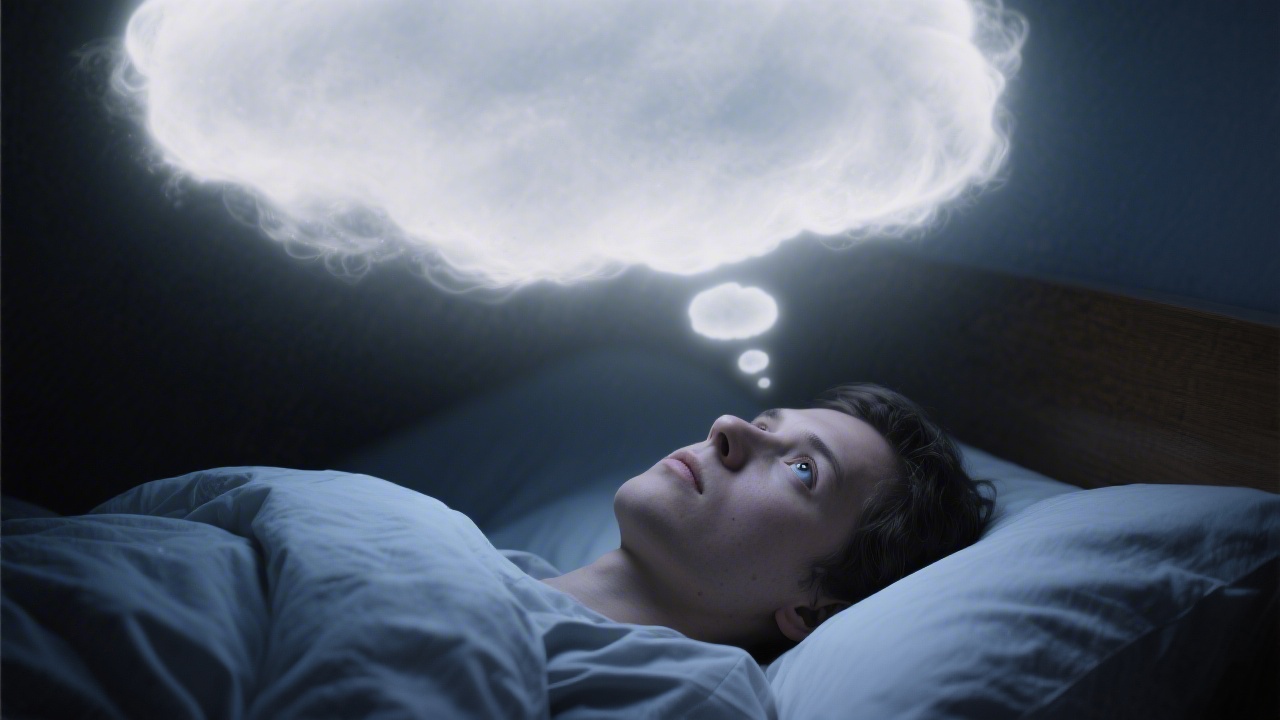
The most exhausting part of insomnia is often not the sleeplessness itself — it is the mental commentary around it. "I need eight hours or tomorrow is ruined." "I've been awake for two hours; I'll never function." "If I don't sleep soon I'll get sick." Standard cognitive therapy challenges these thoughts by examining their evidence. Acceptance and Commitment Therapy (ACT) takes a different approach: cognitive defusion.
What Is Cognitive Defusion?
Cognitive defusion, developed by Steven Hayes as part of ACT, is a set of techniques for changing your relationship to thoughts rather than changing the thoughts themselves. In cognitive fusion, a thought feels like reality: "I won't sleep" feels like a fact that is happening to you. In cognitive defusion, you observe the thought as a mental event: "I'm having the thought that I won't sleep." The thought has not changed — but its grip on your behavior has.
Why Challenging Sleep Thoughts Backfires
Traditional CBT-I (cognitive behavioral therapy for insomnia) includes a cognitive restructuring component: you challenge catastrophic sleep thoughts ("if I don't sleep I'll fail tomorrow") by asking for evidence and generating more balanced responses. Research indicates this component is the weakest part of CBT-I — not because the thoughts are accurate, but because engaging with anxious thoughts about sleep at 2am increases arousal rather than reducing it. Defusion sidesteps this problem entirely.
Core Defusion Techniques for Bedtime
The following techniques can be used in sequence when sleep-disrupting thoughts arise:
- Labeling: Preface the thought with "I'm having the thought that…" ("I'm having the thought that I won't be able to function tomorrow.") This creates grammatical distance between self and thought.
- Observation: Add one more layer: "I notice I'm having the thought that I won't function tomorrow." This shifts you from being the thought to watching it.
- Leaves on a stream: Visualize thoughts as leaves floating on a stream. Each anxious sleep thought arrives, you place it on a leaf, and watch it float past. You do not engage with it; you do not push it away — you let it pass.
- The radio in the background: Treat anxious thoughts like a radio playing in another room. You can hear it but you are not obligated to listen to or respond to what it is saying.
- Thanking your mind: When a catastrophic thought arrives, say silently, "Thanks, mind, I see you're trying to protect me." This acknowledges the thought without merging with it.
Defusion vs. Suppression
A critical distinction: defusion is not thought suppression. Trying not to think about something ("I will not think about how I'm not sleeping") is the single most effective way to keep thinking about it — Wegner's ironic process theory demonstrates this reliably. Defusion allows thoughts to exist without giving them behavioral authority. You are not fighting the thought; you are simply no longer treating it as a command.
ACT and Sleep: The Research
A 2019 meta-analysis in Journal of Sleep Research covering 11 randomized controlled trials found ACT-based interventions produced significant improvements in insomnia severity, dysfunctional beliefs about sleep, and depression — with effect sizes comparable to CBT-I. Defusion showed the strongest effect for reducing middle-of-night wakefulness associated with ruminative thought. A 2022 study specifically found that defusion reduced pre-sleep cognitive arousal more effectively than progressive muscle relaxation alone.
Integrating Defusion With Sleep Restriction
Defusion is most powerful when combined with the behavioral components of CBT-I: consistent rise time, stimulus control (bed only for sleep and sex), and breaking the behavior chains that keep you awake. Defusion handles the cognitive arousal; behavioral interventions handle the conditioned arousal and circadian drift that defusion alone cannot address.
The Physical Dimension
Cognitive defusion reduces psychophysiological arousal — the mental component of lying awake. But if your sleep environment is creating arousal through heat, light, noise, or physical discomfort, defusion is working against a persistent physical stimulus. A mattress that creates sustained pressure at the shoulder or hip is a nightly source of micro-arousal that no amount of cognitive technique can fully override.
Related reading
Frequently Asked Questions
- What is cognitive defusion in ACT?
- Cognitive defusion is an Acceptance and Commitment Therapy (ACT) technique that creates psychological distance from thoughts by changing how you relate to them rather than changing their content. Instead of challenging or suppressing anxious thoughts, defusion teaches you to observe thoughts as mental events rather than facts.
- How is cognitive defusion different from traditional CBT thought challenging?
- Traditional CBT challenges the accuracy of anxious thoughts by examining evidence. Cognitive defusion does not assess accuracy — it changes the relationship to the thought. Where CBT asks 'Is this thought true?', defusion asks 'Can I observe this thought without being controlled by it?' For sleep anxiety, this distinction matters because engaging with anxious thoughts at 2am tends to increase arousal regardless of the logical content.
- What does 'I'm having the thought that I won't sleep' accomplish?
- Adding 'I'm having the thought that...' before a sleep-disrupting belief creates grammatical distance between self and thought. Research shows this simple linguistic modification reduces the credibility and emotional impact of negative thoughts without requiring any logical analysis of their content. It is the quickest defusion technique to implement in the moment.
- How long does it take to learn cognitive defusion for sleep?
- Basic defusion techniques (labeling, observation) can be practiced effectively within the first week of use. More advanced visualization techniques (leaves on a stream) typically become reliable after two to three weeks of regular practice. The technique does not require a therapist and is well-suited to self-guided practice from book or audio resources.
- Can cognitive defusion replace CBT-I for insomnia?
- Cognitive defusion is not a standalone insomnia treatment — it is most effective when combined with the behavioral components of CBT-I (sleep restriction, stimulus control, sleep hygiene). Defusion handles cognitive arousal; behavioral interventions handle conditioned arousal and circadian misalignment. ACT-based insomnia protocols that combine defusion with behavioral components show effect sizes comparable to full CBT-I.
Ready to give your sleep habits the foundation they deserve?
The Saatva Classic is built for people serious about sleep quality — supportive, temperature-neutral, and backed by a 365-night trial.