 by
by Quick answer: A cooling blanket won't cure a fever, but a breathable, temperature-regulating option like the Sleep Number True Temp Weighted blanket can make a feverish night far more bearable — alongside medical care, never instead of it.
- Cooling blankets fall into two camps: passive (cooling fabrics, phase-change materials, moisture-wicking fibers) and active (circulating coolant or chilled layers), per general consumer guidance.
- Shivering is the enemy: an overly aggressive chill raises metabolism and can counteract the comfort you're after, according to clinical discussions of cooling methods.
- Stop using any cooling layer if you notice numbness, pale skin, excessive shivering, or discomfort, per consumer safety guidance.
Updated July 2026 · Reviewed for accuracy
Fever turns your bed into a swamp. One minute you're drenched, the next you're freezing, and a regular comforter makes both worse. A cooling blanket can genuinely help with the comfort side of that misery — but only if you understand what these blankets actually do and where their limits sit. This guide covers the science, the buying checklist, and the safety rules, so you can pick one before the next fever hits, not during.
One thing up front: nothing here is medical advice. Consumer guidance is consistent on this point — a cooling blanket is a supportive comfort tool, not a treatment. If a fever is high, persistent, or comes with severe symptoms, that's a call to a healthcare professional, full stop.
Can a cooling blanket actually help with a fever?
Here's the honest answer: it can make your skin feel cooler faster than lying under a standard blanket, but the effect varies a lot by blanket type, by person, and by how severe the fever is. Controlled studies of cooling methods show faster surface cooling with certain techniques, while other research finds no clear advantage over standard care when cooling is used alone. That's why clinical discussions consistently frame external cooling as an adjunct — something you use alongside fever-reducing medication and medical guidance, never as a replacement.
The practical takeaway for your bedroom: a cooling blanket's real job during a fever is comfort. When your skin feels hot and sticky, a surface that absorbs and moves heat away helps you rest. Rest is the whole game. You're not trying to force your core temperature down with fabric — you're trying to stop the sweaty, sheets-stuck-to-your-back misery that keeps you awake at 3 a.m.
The Nut's rule of thumb: treat a cooling blanket like a fan or a cool washcloth — a comfort layer that works next to whatever your doctor recommends, not a fever treatment in a box.
Fever management itself has a specific logic, per general clinical context: most guidance focuses on treating fever when it causes distress or when other health conditions are in play, not on chasing a number on the thermometer. A blanket that keeps you comfortable enough to sleep through the night fits that logic perfectly. A blanket that chills you into violent shivering works against it — more on that below.
Passive vs. active cooling: two very different designs
Every cooling blanket on the market uses one of two approaches, and the difference matters more for fever use than for ordinary summer sleeping. If you want the full technical breakdown, I cover the mechanics in detail in my guide to how cooling blankets work. The short version:
- Passive cooling uses the material itself. Phase-change fabrics absorb heat as your skin warms them, moisture-wicking fibers pull sweat away so evaporation can do its job, and breathable weaves let heat escape instead of trapping it. No power, no noise, nothing to break.
- Active cooling circulates a chilled medium — usually water through embedded tubes or a cooled layer — to actively pull heat away. Stronger cooling, but it comes with hardware, noise, setup, and safety considerations that passive designs simply don't have.
| Factor | Passive cooling blanket | Active cooling system |
|---|---|---|
| How it cools | Fabric absorbs, wicks, or releases heat | Circulating chilled medium pulls heat away |
| Power needed | None | Yes, plus a control unit |
| Noise | Silent | Low hum from the unit |
| Fever use | Gentle, self-limiting comfort — hard to overdo | Stronger chill; needs careful monitoring to avoid over-cooling |
| Best for | Everyday sleeping plus occasional sick nights | Chronic hot sleepers who want precise control |
For fever specifically, I lean passive. Here's my reasoning: when you're sick, your perception of hot and cold swings wildly. An actively chilled surface doesn't know you're feverish — it keeps pulling heat at the same rate whether you're burning up or sliding into the shivery phase. A passive blanket self-limits: once the fabric reaches equilibrium with your skin, the cooling sensation tapers off naturally. That's a safer pairing with a body whose temperature regulation is already confused.
Active systems have their place — serious hot sleepers love the precision — but for a sick kid at 2 a.m., simpler is better. Quiet, washable, and impossible to over-chill wins.
Comparing options? The True Temp™ Weighted blanket is the pick we keep coming back to — see the final verdict ↓
The shivering problem nobody warns you about
This is the single most important concept in this article, and most buying guides skip it entirely. Shivering is your body's emergency heat generator. When your skin gets cold enough to trigger it, your muscles start burning energy to produce warmth — which raises your metabolism and can push core temperature up, according to clinical discussions of external cooling. An overly aggressive cooling blanket doesn't just feel awful. It can actively work against the comfort you're chasing.
That's why consumer reviews and expert opinions consistently reward blankets that balance cooling with comfort rather than chasing maximum chill. The best-performing designs cool gently enough that your body never hits the shiver threshold. Think of it like air conditioning: the room that cools you comfortably beats the one that turns you into a popsicle every single time.
Signs a cooling layer is too aggressive for a feverish sleeper:
- Visible shivering or teeth chattering
- Numbness in any area touching the blanket
- Pale or blotchy skin where the blanket contacts the body
- A general sense of discomfort that wasn't there before
Per consumer safety guidance, discontinue use immediately if any of these appear.
The shivering issue also explains why blanket weight matters for fever. A heavy blanket pressing heat-trapping fabric against already-hot skin feels suffocating. A light, breathable layer that skims the body while still wicking moisture hits the sweet spot. Some sleepers love the pressure of a weighted blanket even when sick — that's personal — but the fabric on top of that weight needs to breathe, or you've built yourself a sauna with anxiety benefits.
What to look for when buying a cooling blanket for fever season
Start with the cooling technology, because it dictates everything else. Phase-change fabrics, arc-chill style fibers, and temperature-regulating yarns like 37.5 technology all fall in the passive camp and need no power. Anything advertising circulating water or a plugged-in control unit is active. Verify which one you're actually buying before checkout — marketing language blurs the line constantly.
Fabric and fill come next. Per general consumer guidance, the materials you'll see most often are cotton, lyocell, wool blends, and synthetic cooling fibers. Cotton and lyocell breathe well and wash easily, which matters enormously for a blanket that will see sick nights. Moisture buildup against feverish skin invites irritation, so breathability isn't a luxury here — it's the whole point.
The Nut's pre-checkout checklist:
- Technology type: passive fabric cooling or active circulation — confirm which.
- Breathability: weave and fill that move moisture away from skin.
- Washability: machine-washable with reasonable dry time; sick blankets get washed often.
- Certifications: OEKO-TEX or similar fabric-safety certification is a good signal.
- Sizing: options typically run from throw up through king — match your bed, not your wishlist.
- Return policy: comfort is subjective, especially mid-fever; a generous return window protects you.
On price: expect a wide spread across the category, from accessible basics to premium designs with advanced temperature-regulating tech, and active systems sitting at the top of the range. Rather than anchor on a number, decide which technology type you want first, then compare within that camp — and always check the current price on the official site, because this category discounts aggressively throughout the year.
Maintenance deserves a harder look than most guides give it. High-tech cooling fabrics sometimes demand delicate cycles or air drying, which is annoying on a normal week and genuinely impractical when someone in the house is sick and the blanket needs washing today. My full cooling blanket buying guide goes deeper on fabric-by-fabric care if you want the long version.
Safety rules for using a cooling blanket while feverish
Skin sensitivity spikes during a fever, so a cooling sensation that felt pleasant last month can feel sharp or irritating tonight. Consumer safety guidance is clear: check in with how your skin actually feels, especially during long stretches of contact with a cooling layer, and pull the blanket off at the first sign of numbness, excessive shivering, pale skin, or plain discomfort.
Breathability doubles as a safety feature here. A blanket that traps sweat against feverish skin creates a damp, warm microclimate — the exact opposite of what you bought it for, and a recipe for skin irritation on top of everything else. This is one more argument for passive, moisture-wicking designs over anything sealed or coated.
When the blanket is irrelevant: high fever, a fever that won't break, or fever with severe symptoms means professional care. No blanket — cooling or otherwise — changes that. Get medical help first, buy bedding second.
One more consideration: whoever is sick should be able to kick the blanket off easily. Feverish sleepers cycle between hot and cold phases, and the ability to self-adjust without wrestling heavy fabric matters. A blanket sized to the person rather than oversized for drama is the smarter sick-day choice.
Which cooling blanket I'd grab for fever season
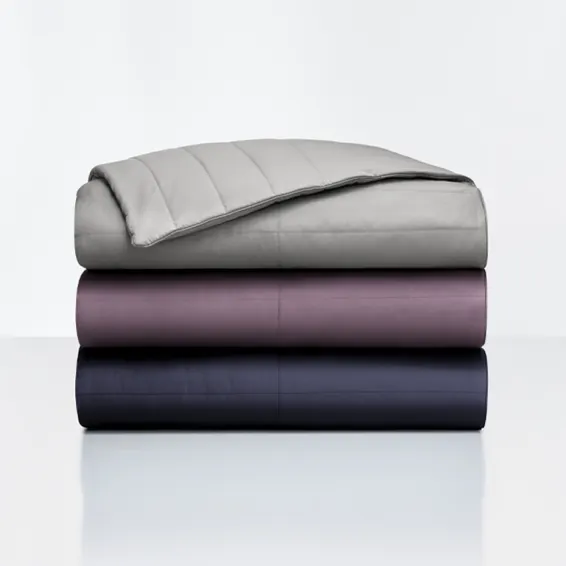
If I were stocking a linen closet with one blanket that handles summer nights and the occasional feverish evening, I'd want three things: passive temperature-regulating fabric with no power or noise, enough weight to feel calming without smothering, and a construction that washes without drama. The Sleep Number True Temp Weighted blanket is built around exactly that brief — temperature-regulating technology in a weighted format — which is why it sits at the top of my list for this use case. It's priced in the premium tier, so check the current offer on the official site before deciding.
If you want to compare it against the other standout option in the weighted-cooling space, my Gravity cooling weighted blanket review breaks down how that design handles heat, and my roundup of the best cooling weighted blankets for summer shows how the whole category stacks up for hot-weather sleeping.
Whichever direction you go, buy it before you need it. Nobody comparison-shops bedding coherently with a fever.
FAQ
Will a cooling blanket lower a fever?
No, and you shouldn't expect it to. Research on cooling methods shows faster surface cooling in some cases but no consistent advantage over standard care when cooling is used alone. A cooling blanket is a comfort tool that works alongside fever-reducing medication and medical guidance — it's not a treatment.
Is a passive or active cooling blanket better for fever?
For most fever situations, passive. Passive blankets cool gently through fabric and self-limit as they equalize with your skin, which reduces the risk of over-chilling a body whose temperature perception is already swinging. Active systems cool harder but require monitoring to avoid triggering shivering.
Can a cooling blanket make fever chills worse?
It can if the cooling is too aggressive. Shivering raises metabolism and generates heat, working against your comfort, per clinical discussions of cooling methods. If you start shivering, feel numbness, or notice pale skin under the blanket, remove it — those are the stop signals consumer safety guidance points to.
What fabric should I look for in a cooling blanket for sick nights?
Breathable, moisture-wicking materials like cotton, lyocell, or purpose-built cooling fibers, per general consumer guidance. Machine washability matters more than usual here, since a blanket used during illness will see frequent washing. OEKO-TEX or similar certification is a useful fabric-safety signal.
Should kids use a cooling blanket when they have a fever?
Comfort measures like a light, breathable blanket are one thing, but any fever in a child that is high, persistent, or paired with concerning symptoms warrants a call to a healthcare professional first. Let medical guidance lead; bedding choices follow.
FINAL VERDICT
Bottom line for cooling comfort during a fever: if you want comfortable relief while you ride it out, the True Temp™ Weighted blanket is the safer buy — you get real temperature control from a brand you can still find next year, not a marketplace listing that vanishes.
OUR CATEGORY-MATCHED PICK
True Temp™ Weighted blanket
- See the product page for full specs and current pricing