
 by
by Our Top Pick for Temperature Regulation
The Saatva Classic's dual coil system promotes airflow throughout the night, supporting natural thermoregulation without foam heat retention.
Your body temperature follows a precise 24-hour rhythm. In the evening, core temperature begins dropping — and that drop is not a side effect of sleep. It is a prerequisite for it. Understanding this mechanism tells you exactly why some people sleep poorly and what to do about it.
The Core Temperature Drop Mechanism
Core body temperature (CBT) peaks in the late afternoon around 4–6 PM, typically at 98.6°F (37°C). In the two hours before natural sleep onset, CBT begins falling. By the time you enter deep NREM sleep, it has dropped 1–2°F (0.5–1.1°C) — reaching its lowest point around 4–5 AM.
This cooling is driven by peripheral vasodilation: blood vessels in the hands, feet, and face dilate, allowing heat to radiate from the skin. The body is essentially dumping heat from its core to the periphery and then into the environment. Researchers call this the "distal-to-proximal skin temperature gradient" — when hands and feet are warm relative to the core, sleep onset follows quickly.
The circadian clock in the suprachiasmatic nucleus (SCN) orchestrates this through melatonin release and autonomic nervous system signals. Melatonin itself does not cause sleepiness — it triggers the vasodilation cascade that enables heat loss.
What Interferes With Core Temperature Drop
Hot bedroom temperature. If ambient temperature is above 68–70°F (20–21°C), the body cannot dissipate heat efficiently. The skin-to-environment gradient collapses. Sleep onset is delayed and deep sleep is shortened.
Exercise within 2–3 hours of bedtime. Vigorous exercise raises core temperature substantially. The body needs 2–3 hours to return to baseline. Morning or afternoon exercise has the opposite effect — the post-exercise temperature drop in the evening coincides with the natural cooling window.
Hot meals late at night. Digestion generates heat. Large late meals keep CBT elevated during the critical pre-sleep window.
Alcohol. Alcohol causes peripheral vasodilation (which initially feels sleep-inducing) but disrupts the second half of the night by fragmenting sleep architecture and impairing the body's ability to maintain the stable low temperature needed for REM.
Menopause and andropause. Hormonal changes disrupt thermoregulatory set points, causing hot flashes that spike CBT during sleep. This is the mechanism behind perimenopausal insomnia.
High-density foam mattresses. All-foam mattresses trap body heat against the skin, preventing radiant heat loss from the back and sides — precisely the surfaces in contact with the bed. This raises skin temperature and, over time, CBT.
How to Facilitate Core Temperature Drop
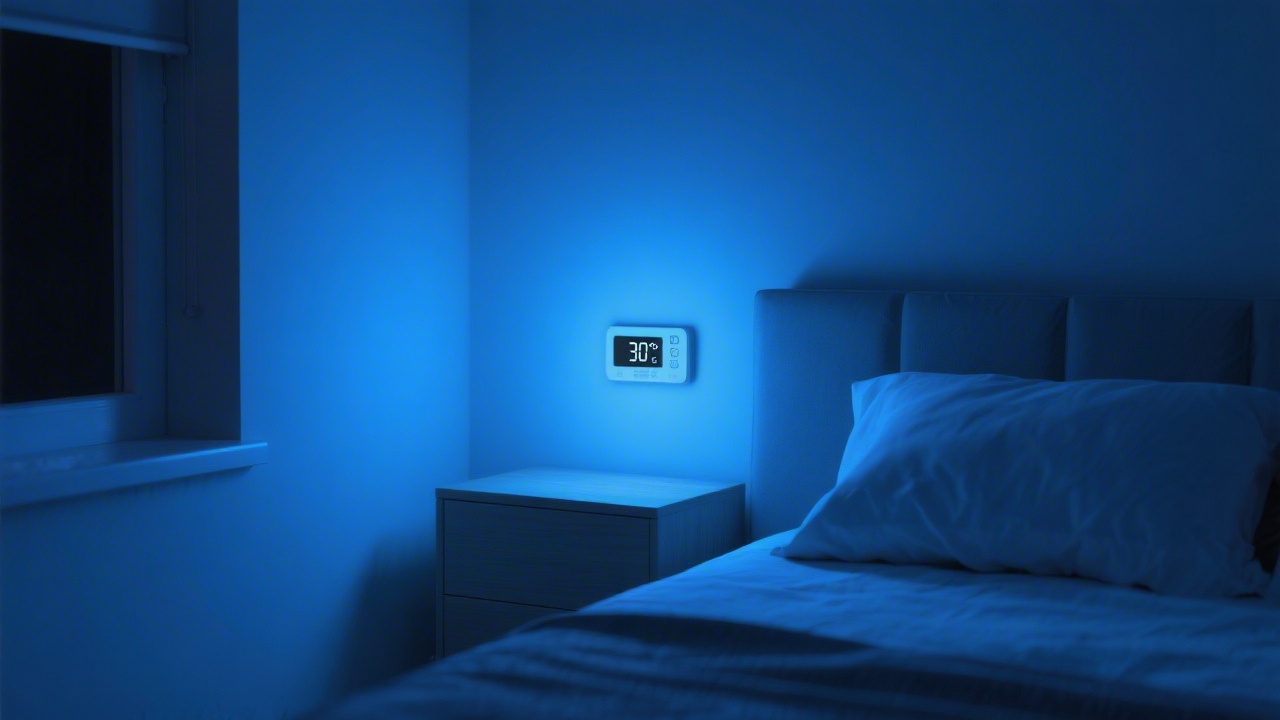
Set bedroom temperature to 65–68°F (18–20°C). This is the most consistently cited optimal range in sleep research. Cooler rooms enable the skin-to-environment gradient needed for efficient heat dissipation.
Warm bath or shower 1–2 hours before bed. This sounds counterintuitive but works precisely because of the thermoregulation mechanism. See our warm bath before bed guide for the full protocol.
Wear socks to bed. Warming the feet via socks dilates peripheral blood vessels, accelerating heat loss from the core. Research shows 7–8 minutes faster sleep onset. See our socks before bed guide.
Sleep position matters. Side sleeping with limbs extended exposes more skin surface area, increasing heat dissipation. Fetal position conserves heat — useful in cold environments but counterproductive for sleep onset when you're already warm. Full detail: sleep position and temperature regulation.
Choose an innerspring or hybrid mattress. Open coil construction allows airflow through the mattress. The Saatva Classic's dual coil system provides excellent airflow compared to all-foam alternatives, preventing heat buildup at the skin surface.
Use breathable bedding. Percale cotton or linen over polyester microfiber. Thread count above 400 reduces breathability — stay in the 200–300 range for cotton.
Clinical Conditions That Affect Thermoregulation
Several medical conditions disrupt the normal CBT drop. Raynaud's disease causes excessive vasoconstriction in the extremities — the opposite of what's needed for heat loss. Patients often have cold feet and hands at bedtime, impairing sleep onset through the same mechanism (just reversed). Warming the extremities artificially (via warm bath or heated socks) partially compensates. For conditions that severely impair thermoregulation, see our guide on thermoregulation sleep disorders.
Night sweats are different from the normal CBT drop — they represent a thermoregulatory overcorrection, usually hormonal in origin. See our night sweats treatment guide for evidence-based interventions by cause.
The Role of Your Mattress in Core Temperature Regulation
A mattress affects CBT indirectly but significantly. An all-foam mattress creates a "thermal envelope" around the body — foam is an insulator. Innerspring and hybrid mattresses, by contrast, allow convective airflow through the coil layer, preventing the buildup of trapped heat. For people who run warm, sleep hot, or are in perimenopause, mattress choice is a meaningful thermoregulatory intervention.
The Saatva Classic uses a dual coil system (individually wrapped micro-coils over a base coil grid) with organic cotton and wool cover materials. Wool is naturally thermoregulatory — it wicks moisture and has low thermal conductivity, which means it stays cool to the touch while still insulating against cold when needed.
Sleep Cooler with the Right Mattress
The Saatva Classic's dual coil construction and organic wool cover are designed to support natural heat dissipation, not fight it.
Frequently Asked Questions
How much does core body temperature drop during sleep?
Core body temperature drops approximately 1–2°F (0.5–1.1°C) during normal sleep. The drop begins 1–2 hours before sleep onset and reaches its nadir around 4–5 AM. This temperature decline is controlled by the circadian clock and is necessary for initiating and maintaining deep sleep.
What happens if your core temperature doesn't drop before sleep?
If core temperature fails to drop, sleep onset is delayed, time in deep NREM sleep is reduced, and overall sleep quality declines. Causes include a hot bedroom, recent exercise, alcohol consumption, and certain hormonal conditions. Addressing the root cause — usually starting with room temperature — resolves most cases.
Does body temperature keep dropping all night?
No. Core temperature drops through the first half of the night (during NREM-dominant sleep) and then rises during the second half (during REM-dominant sleep). The rise in the early morning hours contributes to natural wake-up. Disrupting this pattern — for example, with late-night alcohol or night sweats — fragments sleep architecture.
Why do my feet feel warm when I'm trying to fall asleep?
Warm feet are a sign that peripheral vasodilation is working correctly — blood vessels in the feet are dilating to dissipate heat. This is the thermoregulatory mechanism operating as designed. If your feet are chronically cold at bedtime, that can indicate impaired vasodilation (as in Raynaud's disease), which slows sleep onset.
Does a cooling mattress pad help with core temperature regulation?
Active cooling mattress pads (water-circulated or thermoelectric) can lower skin surface temperature by 2–4°F. This improves heat dissipation and can be effective for people with hormonal night sweats or those sleeping in warm climates. Passive options (phase-change material covers) provide modest cooling but don't sustain it throughout the night the way airflow-based innerspring systems do.
Key Takeaways
Core Body Temperature and Sleep is a topic that depends heavily on individual needs and preferences. The most important thing is to consider your specific situation — your body type, sleep position, and personal comfort preferences — before making any decisions. When in doubt, take advantage of trial periods to test before committing.