
 by
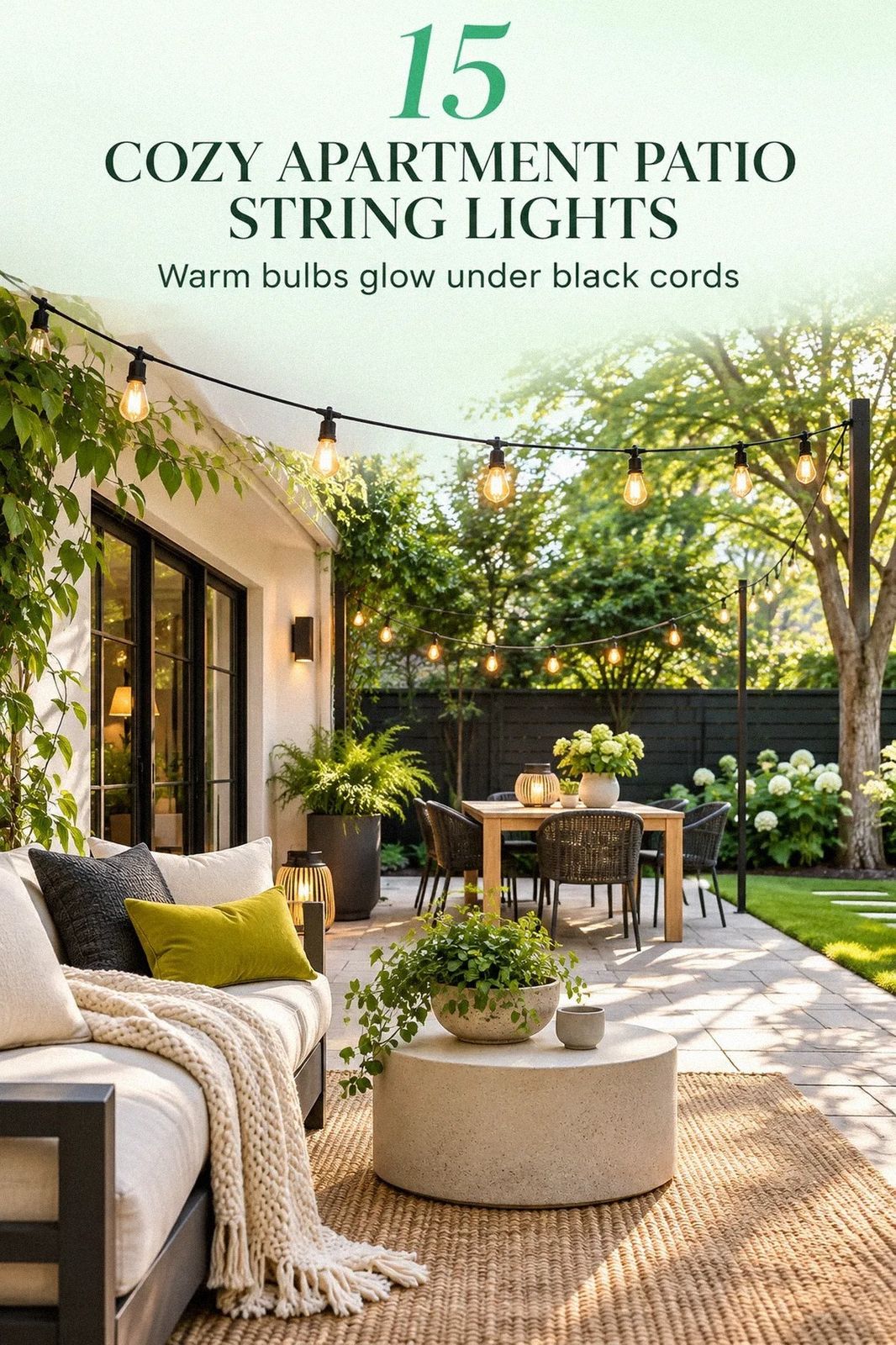
The easiest way to make a rental patio feel warm is to layer string lights, potted plants at different heights, and one grounded outdoor textile below. I learned that after my first balcony looked like a bright outdoor storage closet. You don't need a renovation, and you won't need to drill into brick. Small changes can make the whole corner feel inviting.
- Layer the Three-Height Light Stack
- A Rug, Not Another Table
- Hang Planter String Lights Above the Door
- Build a Vertical Herb Wall
- Swap a Bulky Table for a Drop-Leaf Bistro Set
- Frame the View With Tall Container Plants
- Paint One Wall in a Deep Outdoor Color
- Loveseat or Open Floor?
- Mix Two Plant Textures Instead of Ten Varieties
- Turn the Railing Into a Green Border
- Grow a Scented Corner Beside the Chair
- Budget First, Shopping Second
- Create a No-Drill Privacy Screen
- Mix Lanterns With String Lights
- Arrange the Patio Around One Daily Ritual
1Layer the Three-Height Light Stack
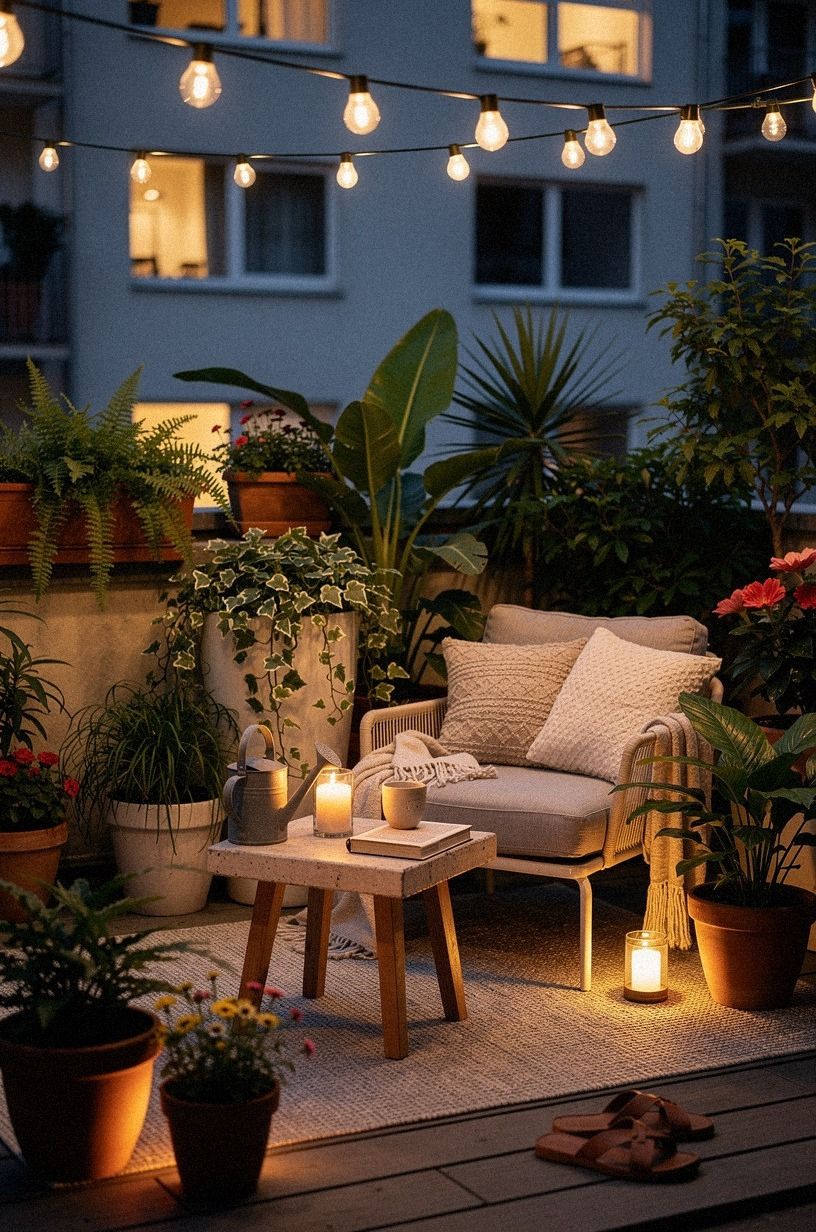
Start with three light levels so your patio doesn't look flat after sunset. Hang one strand of LED string lights overhead, add a table lamp at sitting height, and place a low lantern near the floor. A warm travertine lamp base, muted plum, and one rose-gold detail create the gentle glow you want, while a lamp keeps your drink, book, or dinner visible.
Your top strand should follow the patio's longest edge, not crisscross randomly above your head. If you're working with a narrow balcony, keep the cable close to the wall and leave a clear 36-inch walkway. You don't need a dramatic canopy to make the space feel intimate.
One clean line can do more than five tangled strands.
And if you want more variations, these cozy backyard lighting ideas with string lights show how different bulb spacing changes the mood. I've tried cool white bulbs outside, and they made every plant look gray. Warm light wins here.
Typical cost by tier (US averages):
2A Rug, Not Another Table
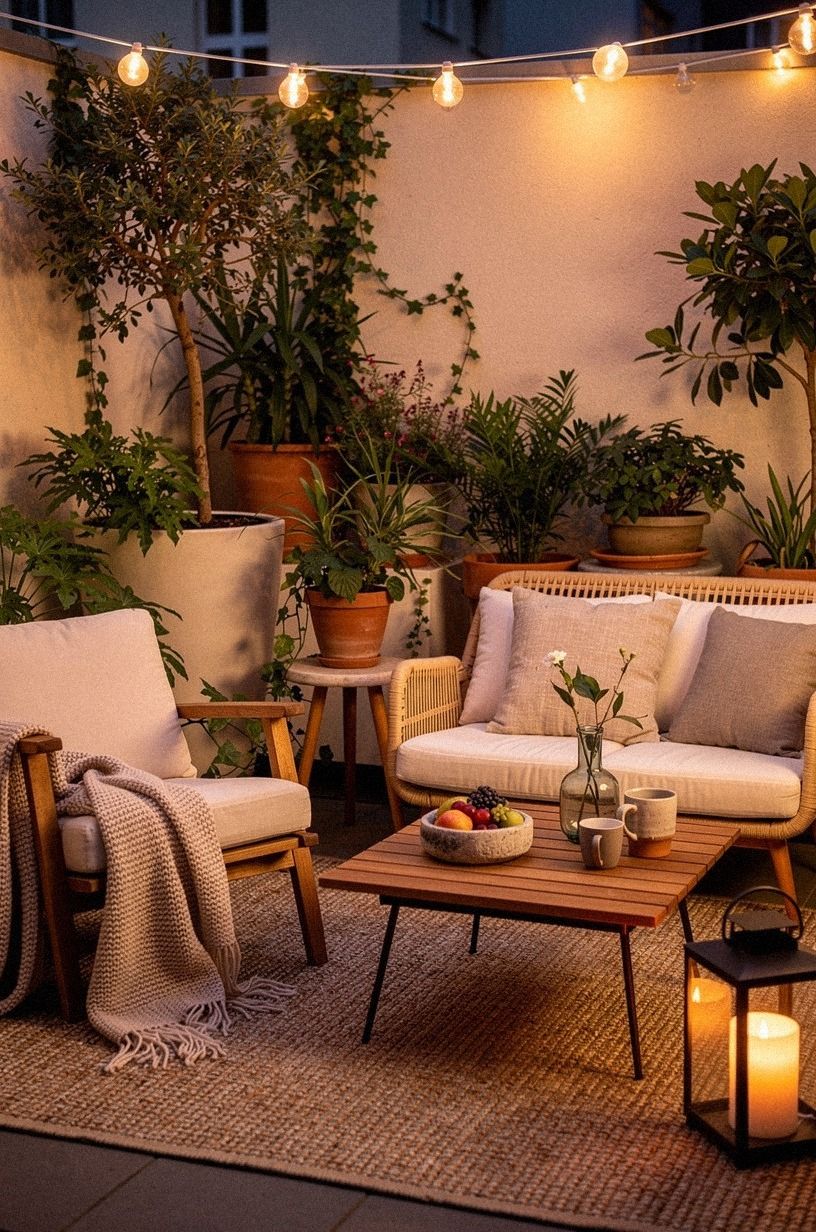
A rug gives your patio a visual floor, especially when the existing surface is plain concrete or faded composite decking. Choose a low-pile outdoor rug in navy and white with a weather-resistant backing, then size it so at least the front legs of your chair or loveseat rest on it.
A low-pile polypropylene rug is easy to shake clean and won't make a small door swing feel cramped. Add a walnut-toned finish or one small piece of unlacquered brass if you need more warmth, but leave a narrow strip of flooring around the edges so the patio still feels open.
A rug can define the seating area without adding one more bulky object. That is enough!
For another compact layout, compare the proportions in these small rental apartment ideas before you shop. The same spacing principles work outdoors.
3Hang Planter String Lights Above the Door
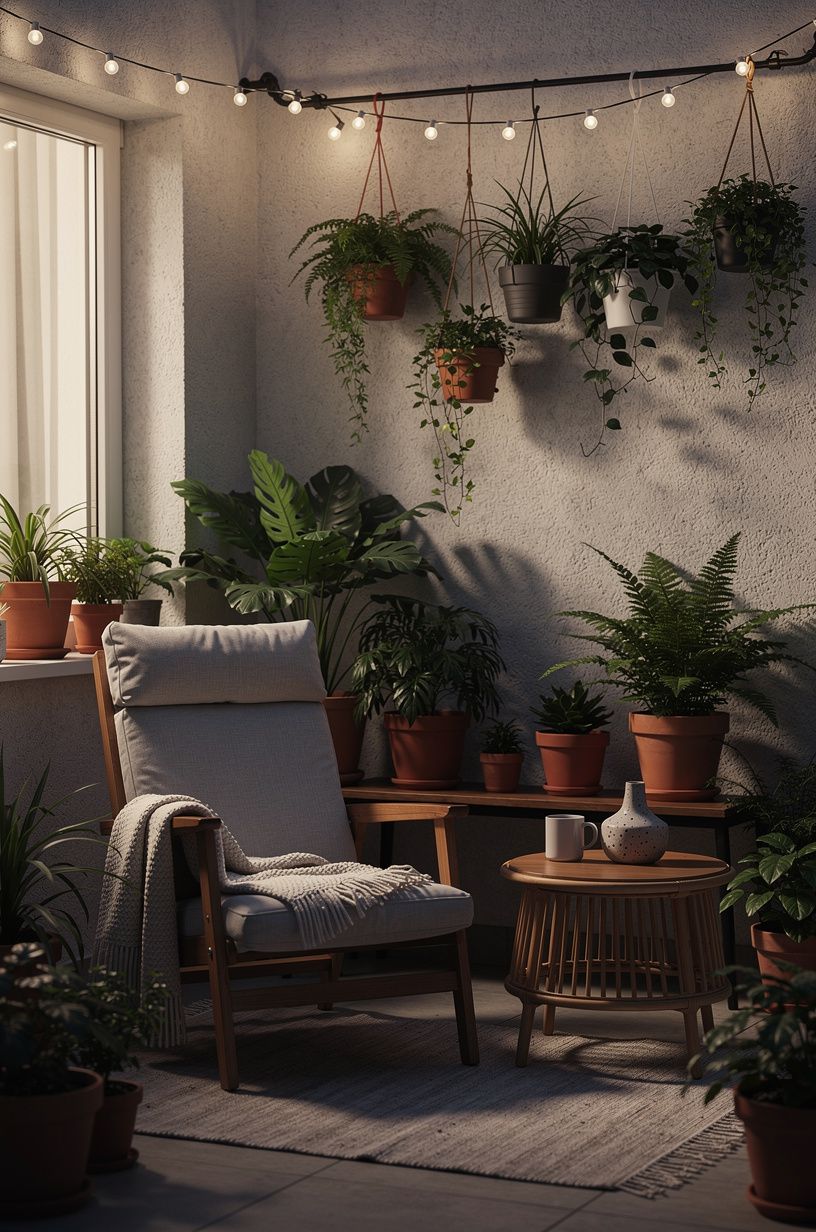
The area above your patio door is often wasted, but it can become the brightest and most useful part of the setup. Use removable hooks or a tension-mounted rod to support a short strand of warm white globe bulbs across the top frame. Emerald greenery, cream planters, and a touch of gold will make the threshold feel richer without adding visual weight.
Keep the bulbs high enough that you won't bump them when carrying groceries. A strand that sits around the top third of the door creates a soft threshold between your apartment and the open air. You can pair it with trailing pothos or faux eucalyptus in lightweight planters, including one with an oversized-chip terrazzo finish, but don't overload the hardware.
I made the mistake of hanging too many pots over one doorway, and the whole arrangement felt heavy. You want your plants to soften the light, not swallow it. For another small-space layout, look at this 400-square-foot studio setup before choosing your planter positions.
4Build a Vertical Herb Wall
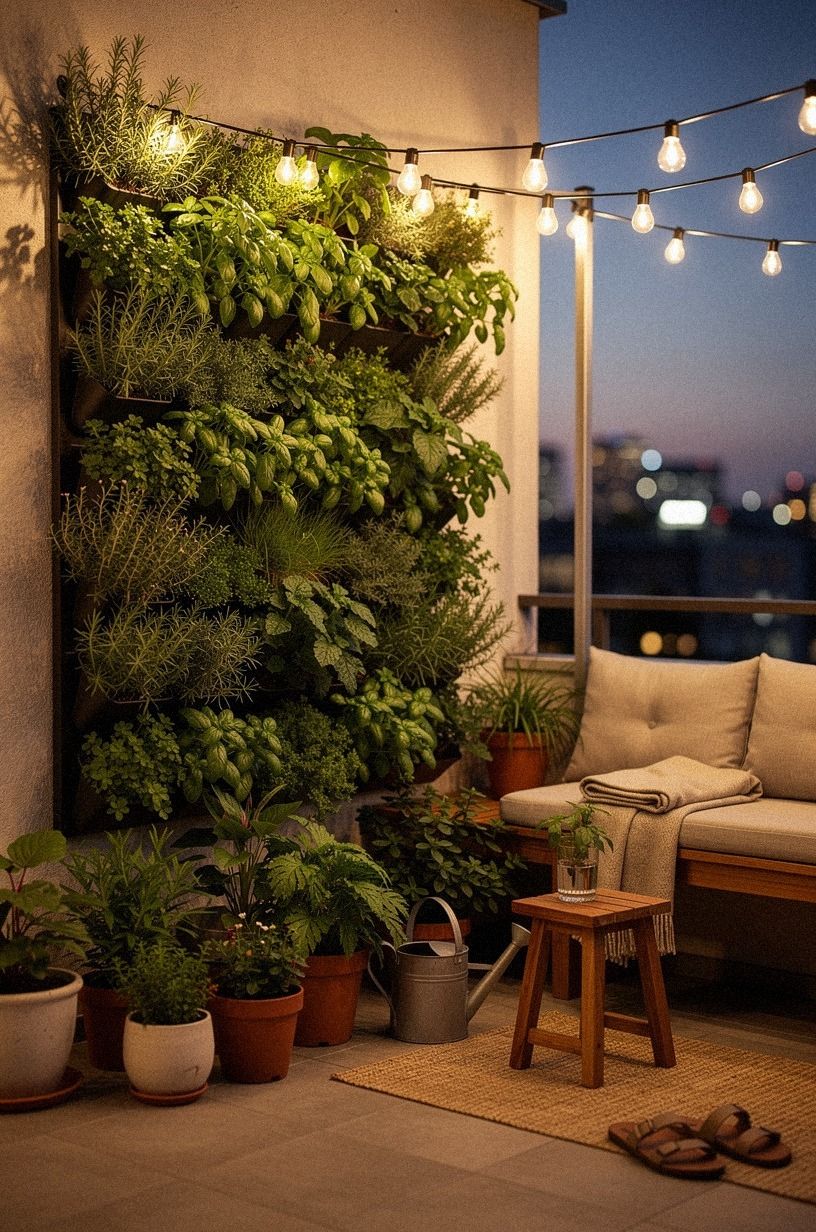
A vertical herb wall gives you greenery, scent, and a practical reason to spend more time outside. Use a narrow natural oak slats panel, a rail-mounted organizer, or three self-watering planters arranged in a column.
Keep the herbs close enough to reach from your chair. Lemon thyme, parsley, and chives can handle regular harvesting, while faux greenery works better in a deeply shaded balcony.
Forest-green pots and a little rust-colored hardware will sit naturally beside the oak. If you rent, use freestanding support or removable brackets instead of attaching anything permanently.
A slim herb wall also adds height without creating a solid privacy barrier. For more ideas about layering fragrance, browse these winter home fragrance ideas.
5Swap a Bulky Table for a Drop-Leaf Bistro Set
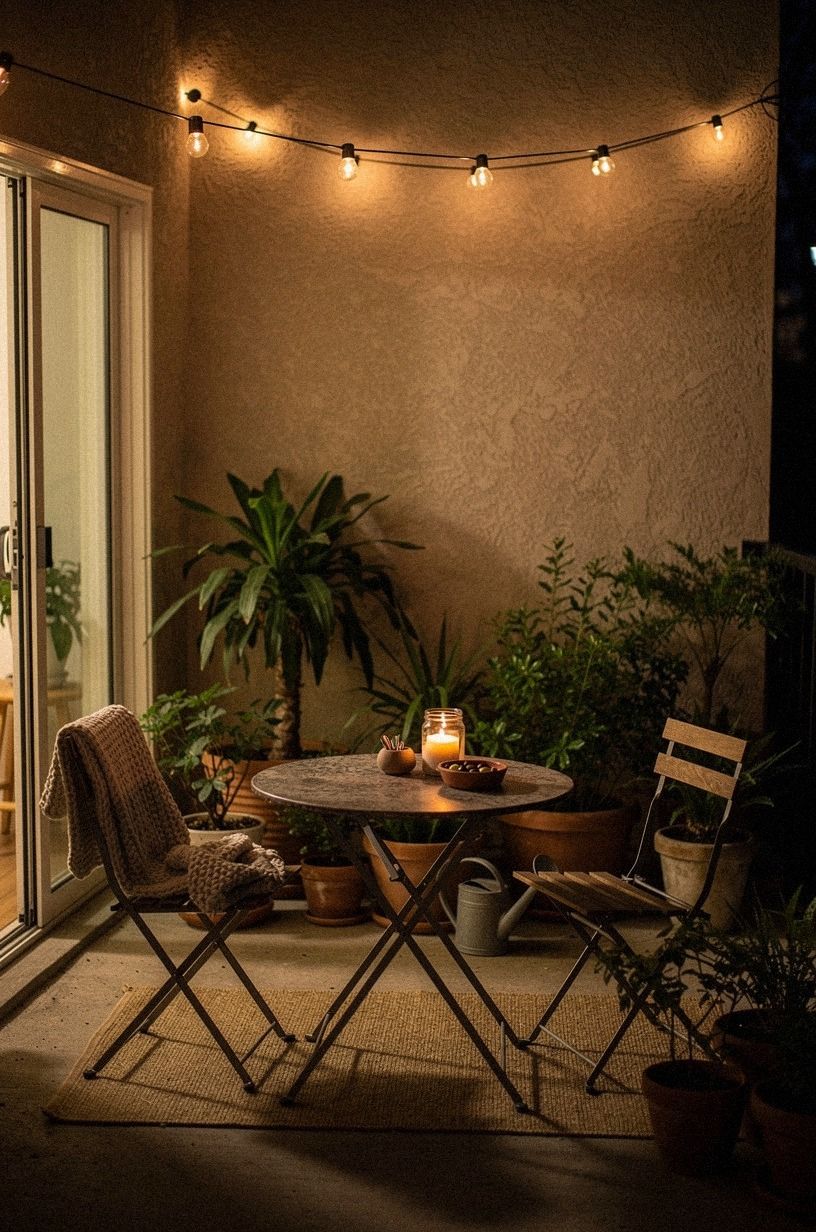
A drop-leaf table gives you a real eating surface without stealing the entire patio. Choose dusty rose, charcoal, and aged brass, then add a small shagreen accent for texture.
6Frame the View With Tall Container Plants
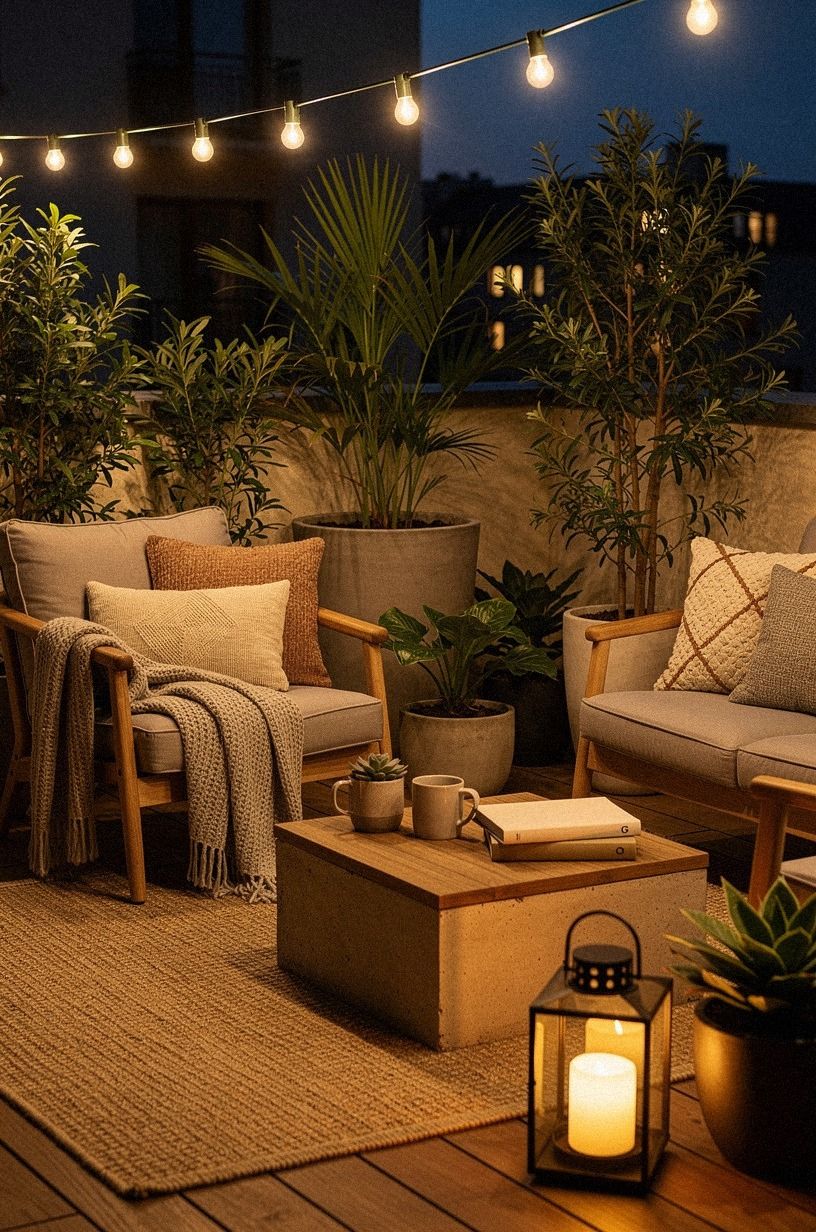
Tall plants can hide an ugly railing, soften a neighboring wall, and give your patio a sense of privacy without permanent construction. Use two matching warm-white planters or tall containers with camel-colored foliage at the outer corners. Keep the center open so your patio still feels connected to the view.
Your containers should be heavy enough not to tip in wind, but they shouldn't become impossible to move. Stone-textured resin planters are lighter than real terracotta and still bring an earthy finish.
Add a washable cushion in washed Belgian linen, with black accents used sparingly. For a shaded balcony, choose a snake plant or faux olive tree rather than expecting sun-loving plants to thrive.
A plant screen works best when it frames your seating instead of forming a solid wall. You want filtered privacy, not a green barricade.
If you're unsure how much furniture your patio can hold, borrow the visual logic from these intentional small apartment layouts. Your eye needs a little breathing room.
7Paint One Wall in a Deep Outdoor Color
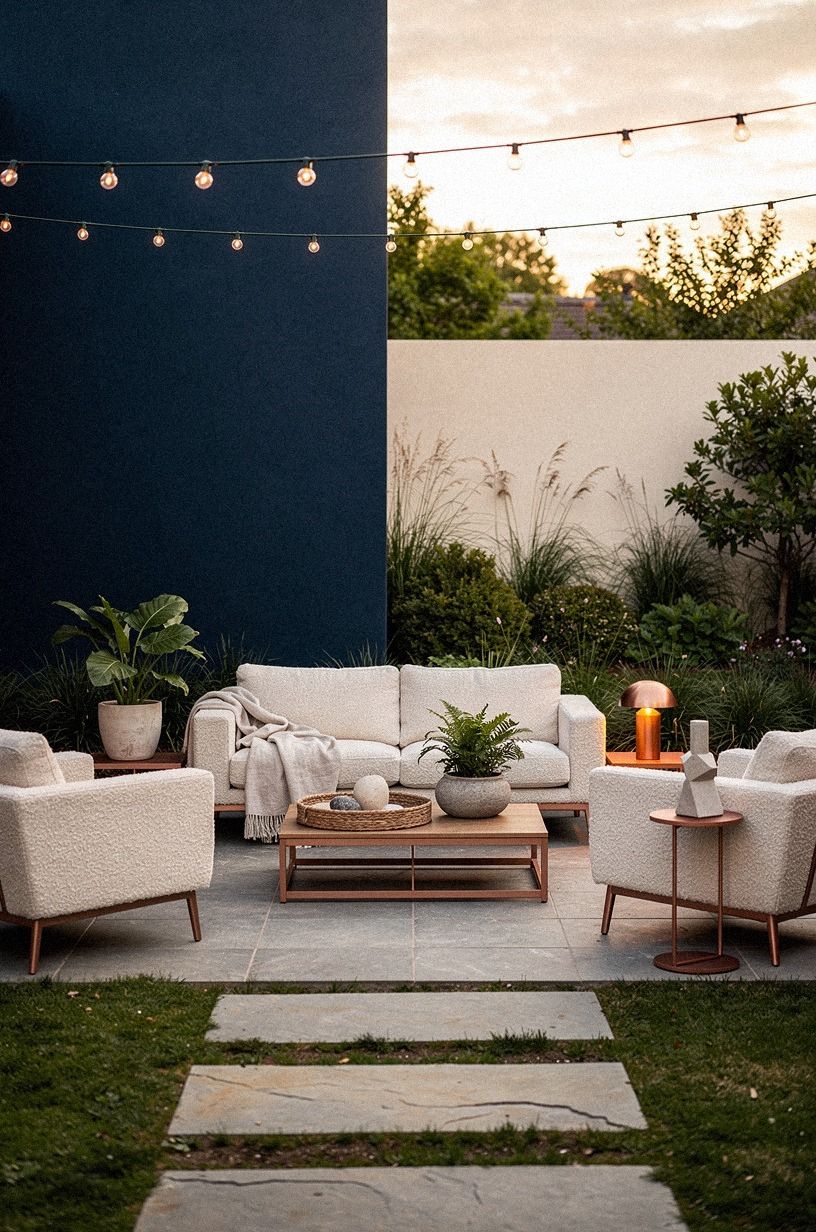
If your lease permits removable paint or your patio wall is yours to change, one deep midnight blue color can make pale furniture look richer. Pair it with copper hardware, ivory textiles, and one outdoor cushion in organic bouclé.
8Loveseat or Open Floor?
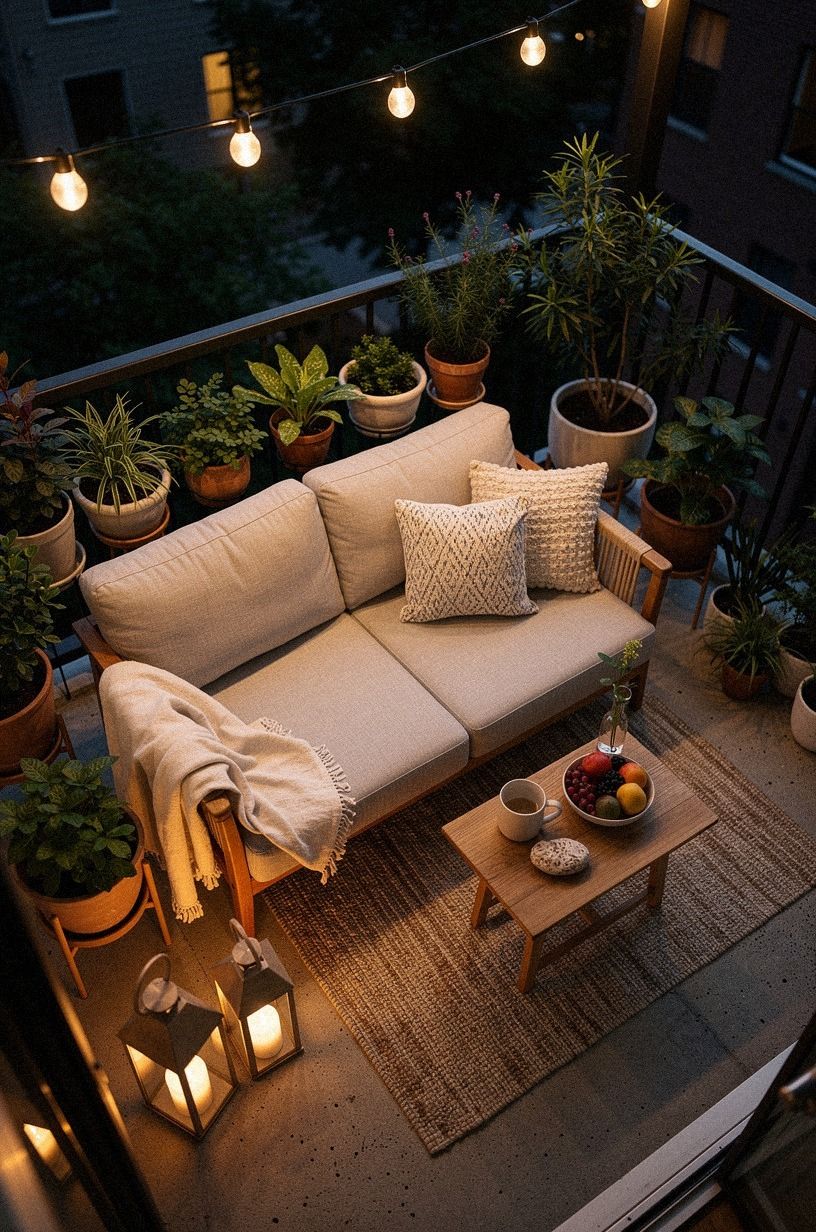
A compact loveseat can make your patio feel like a real outdoor room, but only if it leaves enough circulation around it. Measure the door swing first, then allow about 18 inches between the seat and the table edge.
Choose outdoor-grade upholstery in sage green or warm cream with natural wood legs. A small Nero Marquina black marble accent table can add contrast, while removable cushions are easier to carry indoors during bad weather.
If the patio is especially narrow, one generous chair may work better than a two-seat sofa. It won't look as finished in a furniture catalog, but you'll have room to turn, stretch your legs, and carry a tray outside. Compare this approach with the intentional small apartment layouts before committing to a large piece.
9Mix Two Plant Textures Instead of Ten Varieties
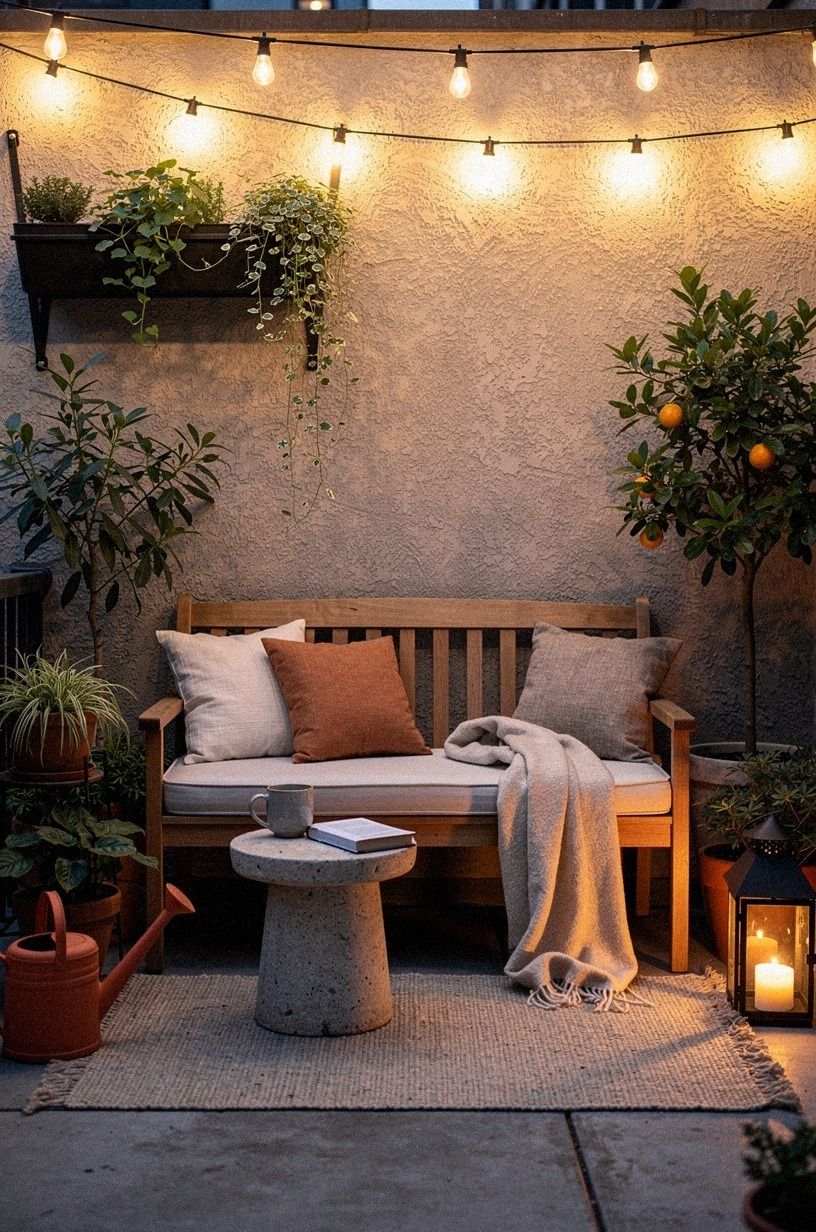
A patio feels calmer when your plants repeat a few strong shapes. Combine one broad-leaf plant, such as a rubber plant, with one fine-leaf fern or trailing option. Honed ceramic planters in two sizes can make the grouping feel collected without turning your patio into a nursery aisle.
Your plants don't need identical pots, but they should share one visual thread. Keep the finishes in the same family, such as matte clay or weathered terracotta.
Then let the leaves provide the contrast. A broad leaf beside a delicate fern looks more sophisticated than six unrelated plants.
I went too far with variety once, and watering became a chore I kept avoiding. Three healthy plants will make your patio feel more peaceful than twelve neglected ones. If you're building a dinner-ready outdoor corner, these cozy dinner party ideas can help you choose lighting and table details that won't crowd the plants.
10Turn the Railing Into a Green Border
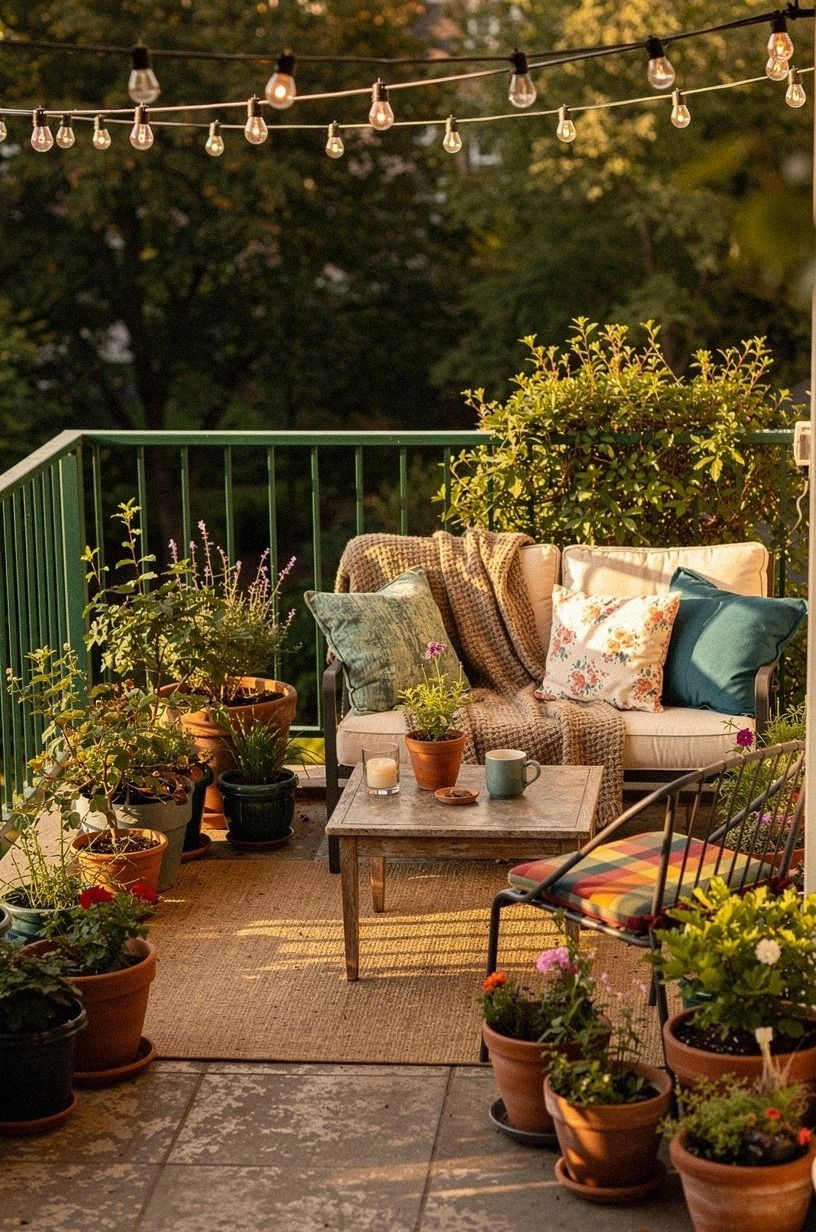
A railing planter is one of the fastest ways to add greenery without using precious floor space. Choose clay containers with linen-colored accents, then use aged brass clips or a narrow Carrara marble tray to keep the arrangement grounded.
11Grow a Scented Corner Beside the Chair
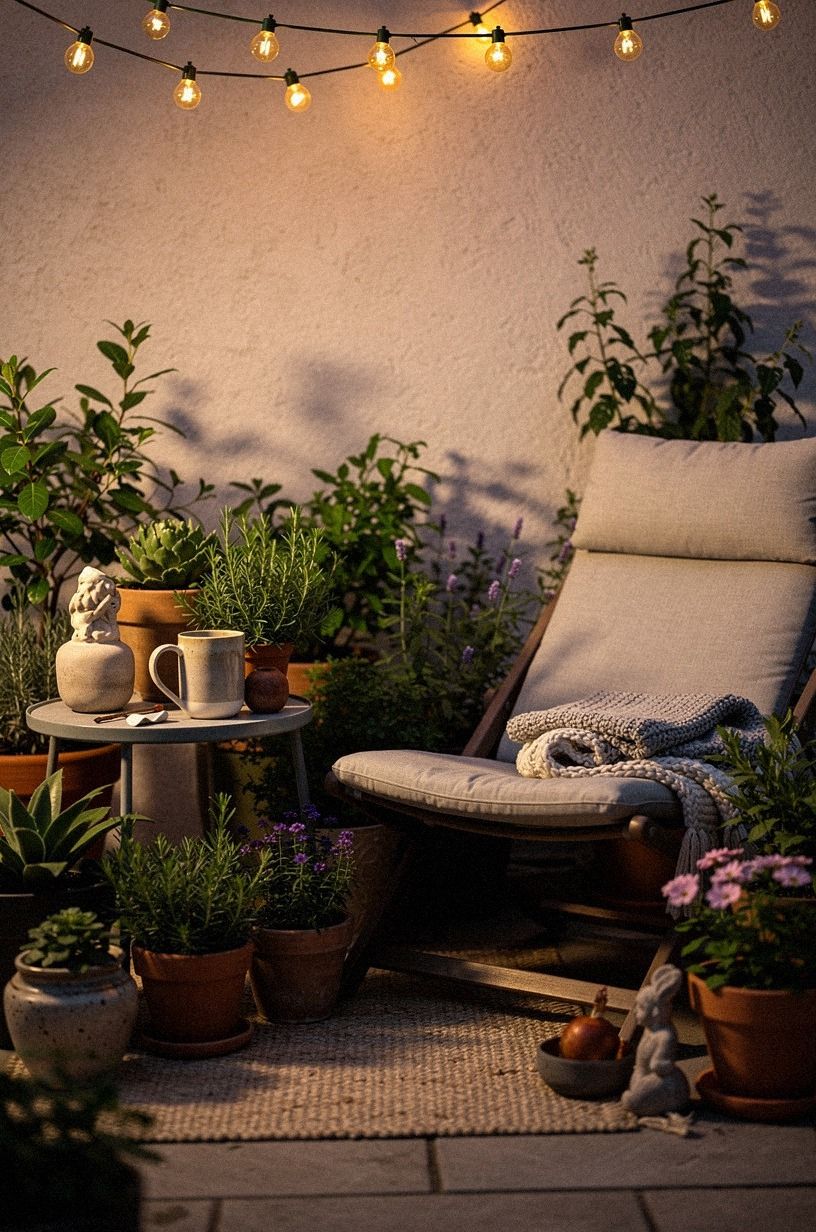
Place fragrant plants near the chair where you'll notice them, not at the far end of the patio. Lavender, lemon thyme, jasmine, or mint can create a gentle scent when the evening air moves through the leaves. Use one reclaimed weathered teak stand beside your reading chair, then add a smaller pot below it.
Your scented corner should be easy to reach because you'll need to water and trim it. A plant that lives behind the table will be forgotten, no matter how charming it looked at the garden center. Plum and grey containers with one rose-gold detail can bring warmth without competing with the greenery.
And don't mix too many scents. Mint and jasmine together can become strangely sharp, especially in a small enclosed balcony.
Choose one dominant scent and let the rest stay green and quiet. If you like sensory details outdoors, this guide to winter home fragrance ideas offers a similar approach for layering scent without overwhelming a room.
12Budget First, Shopping Second
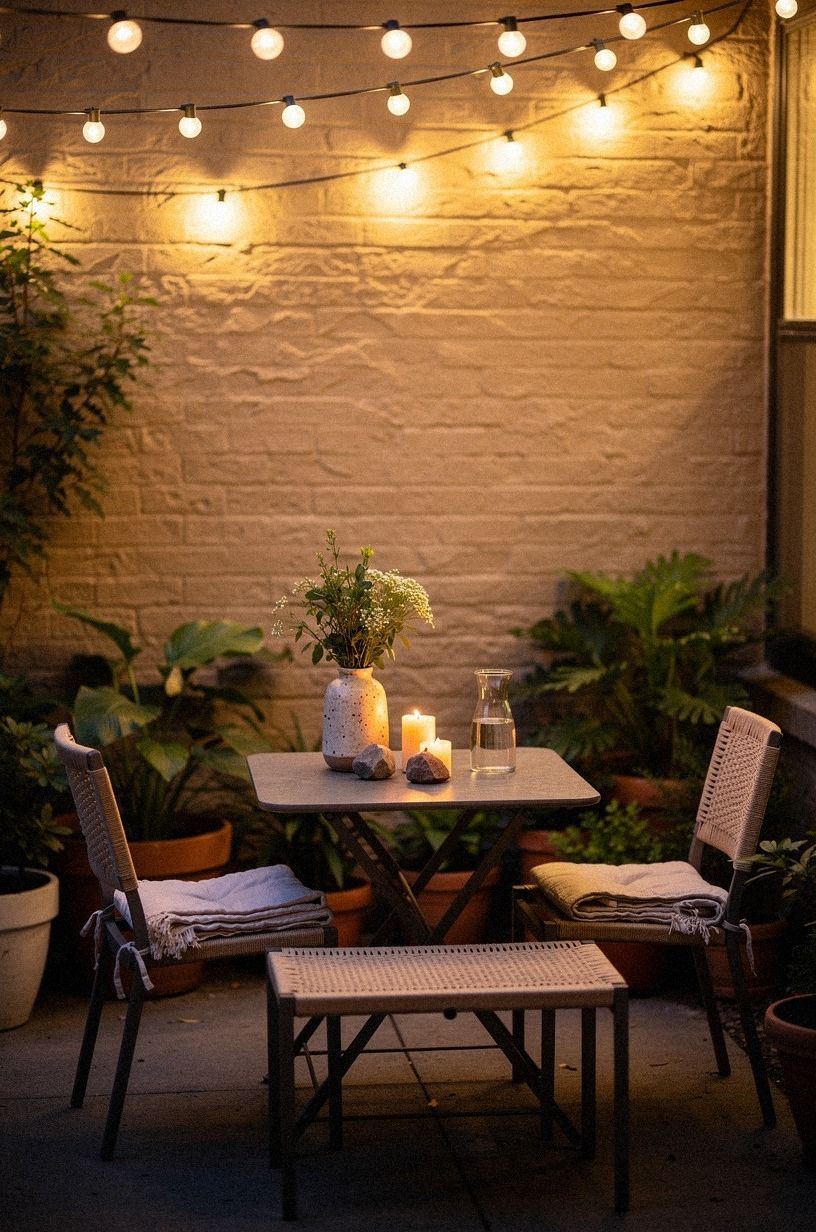
A budget tier keeps your patio from becoming a pile of attractive objects with no clear arrangement. Divide your spending into three groups: lighting, seating, and plants or textiles.
Start with what you already own. A small indoor side table, a propagated plant, or a secondhand furniture find can cover one category while you save for the piece that matters most.
A navy, white, and walnut palette is easy to build gradually. Spend carefully on weatherproof textiles, since cheap outdoor fabric can fade and become rough quickly.
Write a short shopping list before opening a store app. If an item doesn't solve a specific problem, leave it for later.
A small Calacatta marble tray with gold veining can be a later splurge, not the starting point. These budget-friendly studio apartment ideas can help you decide which changes will have the biggest visual effect.
13Create a No-Drill Privacy Screen
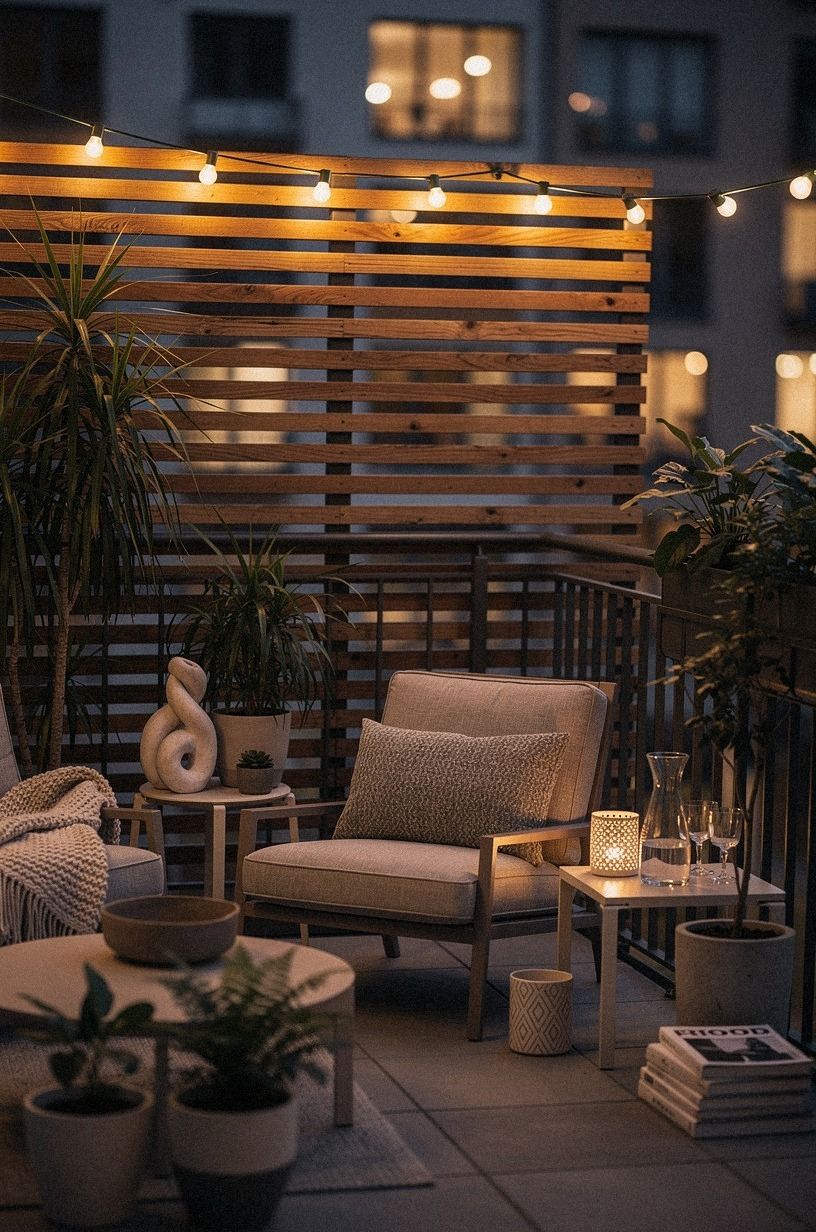
A privacy screen doesn't have to look like a construction project. Use a freestanding cerused white oak divider or a tension rod with outdoor curtain panels. Position it beside the seating area rather than across the entire patio, so you gain privacy without losing daylight or airflow.
Your curtain fabric should be light enough to move in a breeze but dense enough to soften the view. Outdoor polyester in cream, emerald, or a muted gold will feel more relaxed than a stark white panel. Keep the bottom several inches above the floor so it won't drag through rainwater.
A full screen can make a narrow balcony feel boxed in, so I'd start with one side only. Add a tall planter in front of it and let the leaves break up the straight edge.
A freestanding cedar shelf with a stone-filled base can also add height without drilling. If your patio is part of a studio apartment, these small studio ideas that feel like a real home show how partial dividers can create zones without closing them off.
14Mix Lanterns With String Lights
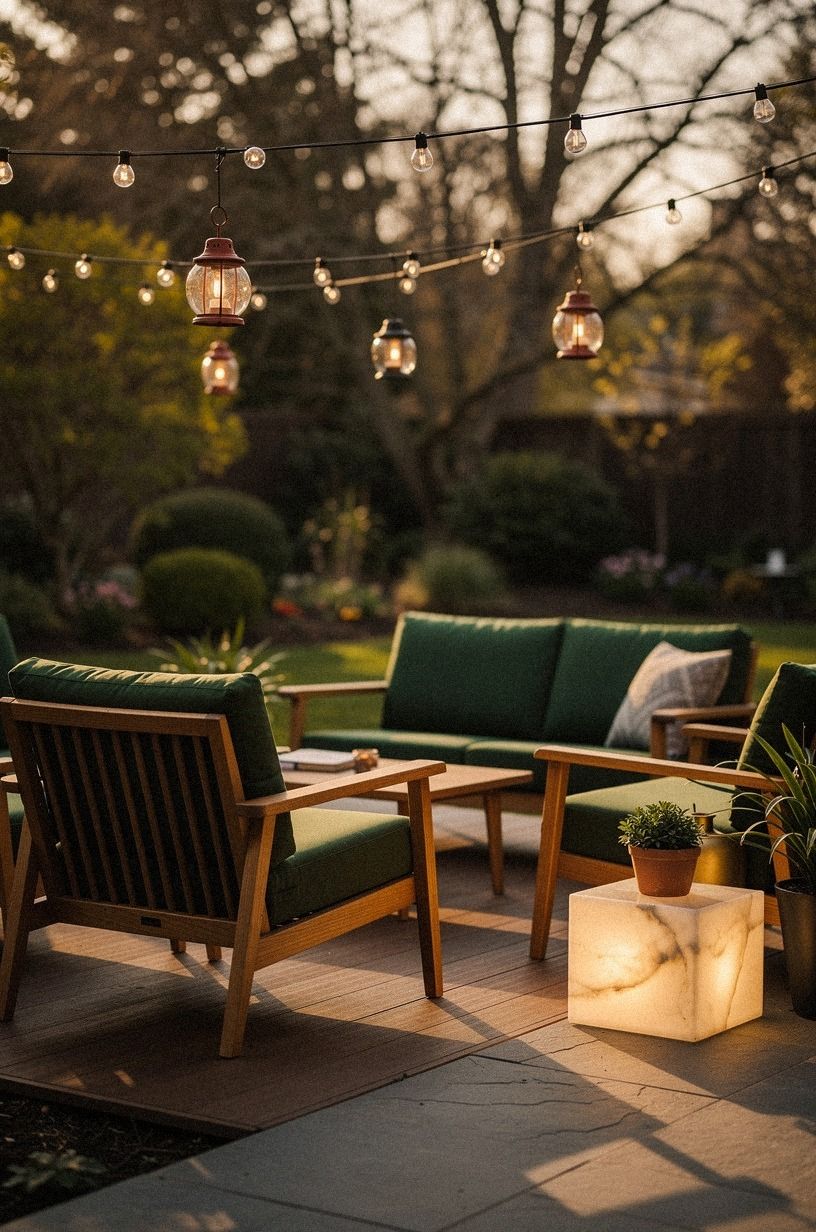
String lights give you overhead sparkle, but lanterns bring the glow down where you sit. Use two natural-oak lantern bases with rust-colored details, then add small panels of backlit translucent onyx and battery candles with warm LEDs. The combination makes the patio feel layered and calm instead of lit by one harsh source.
Your lanterns should be weighted or placed where wind won't send them sliding across the floor. A shallow tray beneath them can protect the surface and gather small items such as matches, plant clippers, or napkins. Keep the flame effect soft and avoid anything that looks too bright blue.
I prefer lanterns with glass panels that show the bulb clearly because they cast little pools of light on the floor. A metal cage can look dramatic, but it may create busy shadows on a very small patio. If your goal is a relaxed evening setup, these cozy night-in ideas offer useful cues for balancing candlelight, textiles, and small surfaces.
15Arrange the Patio Around One Daily Ritual
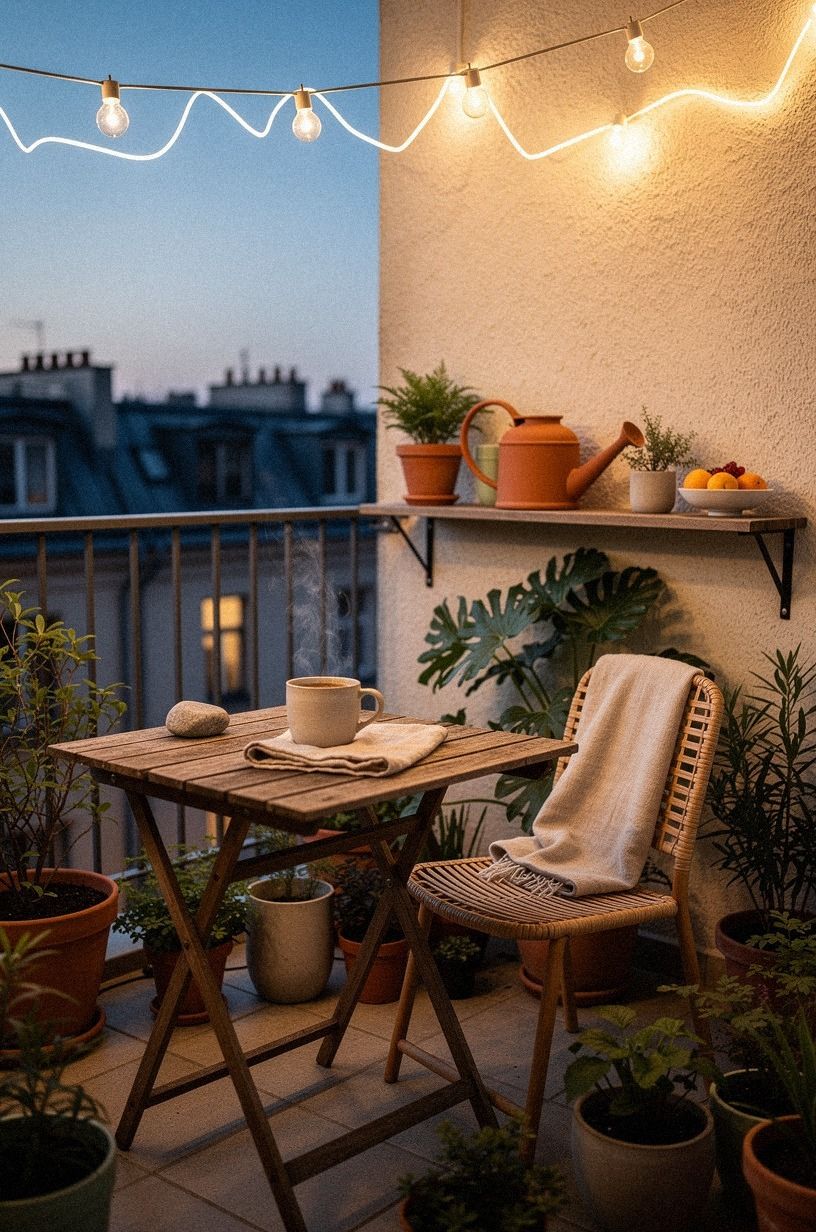
The strongest patio layouts begin with something you already do. Build the ritual around a dusty-rose cushion, a charcoal seat, and a brass tray resting on a book-matched walnut surface.
What I Learned From Styling Rental Patios
I used to think a small patio needed more furniture to feel finished. That was my first mistake.
I bought a deep chair, a large planter, and a table that looked good in the store, then discovered I couldn't open the door without turning sideways. The patio wasn't intimate.
It was crowded. Your first measurement should be the circulation path you need to move through the space, not the size of the furniture you want.
The second mistake was treating string lights as decoration instead of lighting. One bright strand across the ceiling made everything underneath look washed out. Once I added a low lamp and a lantern, the patio changed at night.
Your eye needs more than one glow level, even outside. The warmest corner became the place I used most, and it wasn't the part with the most expensive furniture.
I also learned that plants need a job. A tall planter can hide a railing, a herb shelf can add scent, and a trailing vine can soften a hard door frame.
Random pots don't create that same feeling. If you're choosing plants for a rental, ask what each one contributes before you buy it. Maybe the answer is privacy, color, fragrance, or simply a softer view.
The best patio isn't the one with the most pieces. It's the one that lets you sit down without rearranging everything first. I'd spend on warm light, a washable rug, and one healthy plant before buying a full outdoor collection.
Those three choices give your patio texture, function, and a reason to stay outside longer. That's a better return than another decorative object.
What People Always Want to Know
What is the best setup for a small apartment patio?
A slim bistro table, one comfortable chair, warm string lights, and two plants create the most usable layout. IKEA's compact outdoor pieces work well when you need furniture that folds or tucks away.
Keep a 36-inch walkway clear so your patio won't feel blocked. For another example, see this 400-square-foot studio setup.
Where can I buy patio pieces on a budget?
IKEA, Wayfair, and Target are useful starting points, while Facebook Marketplace and local thrift stores can provide tables and planters for less. Look for solid frames, washable fabric, and easy-to-move pieces. You don't need matching furniture to create a welcoming patio.
How much does an apartment patio makeover cost?
A small refresh often costs about $100 to $300 if you already own seating. Free changes include rearranging furniture, propagating plants, and using indoor cushions briefly in dry weather. For more inspiration, browse these budget-friendly studio apartment ideas before shopping.
Can I create this look on a budget?
Yes, and you can begin with three cheap changes: warm LED string lights, a secondhand table, and plants in containers you already own. Add a rug later.
Your patio will feel more finished when you repeat one color, such as terracotta, across pots and textiles. Start there!
Is this setup worth it in a small space?
Yes, because a small patio needs fewer pieces to feel complete. Put the seating near the best view, keep the center open, and use vertical plants to save floor space. These small-space patio ideas can help you protect that open feeling.
Is this a good idea for a rental?
Yes. Choose no-drill hooks, tension rods, freestanding screens, and removable outdoor rugs. Check your lease before attaching planters or painting.
A freestanding cedar shelf can provide height and storage without leaving holes, and you can take it with you when you move.
Where I'd Start First
If I had to pick one, I'd start with warm string lights. They make a bare patio usable after sunset, and plants look richer under amber bulbs than under cool white glare.
Pin the setup for later, then add one chair and one plant before buying anything else. Small changes compound quickly.