
 by
by Ready to complete your sleep bedroom? The Saatva Classic is our top-rated luxury innerspring hybrid — individually wrapped coils, organic cotton cover, three firmness options, and white-glove delivery. See current pricing and configurations at Saatva.
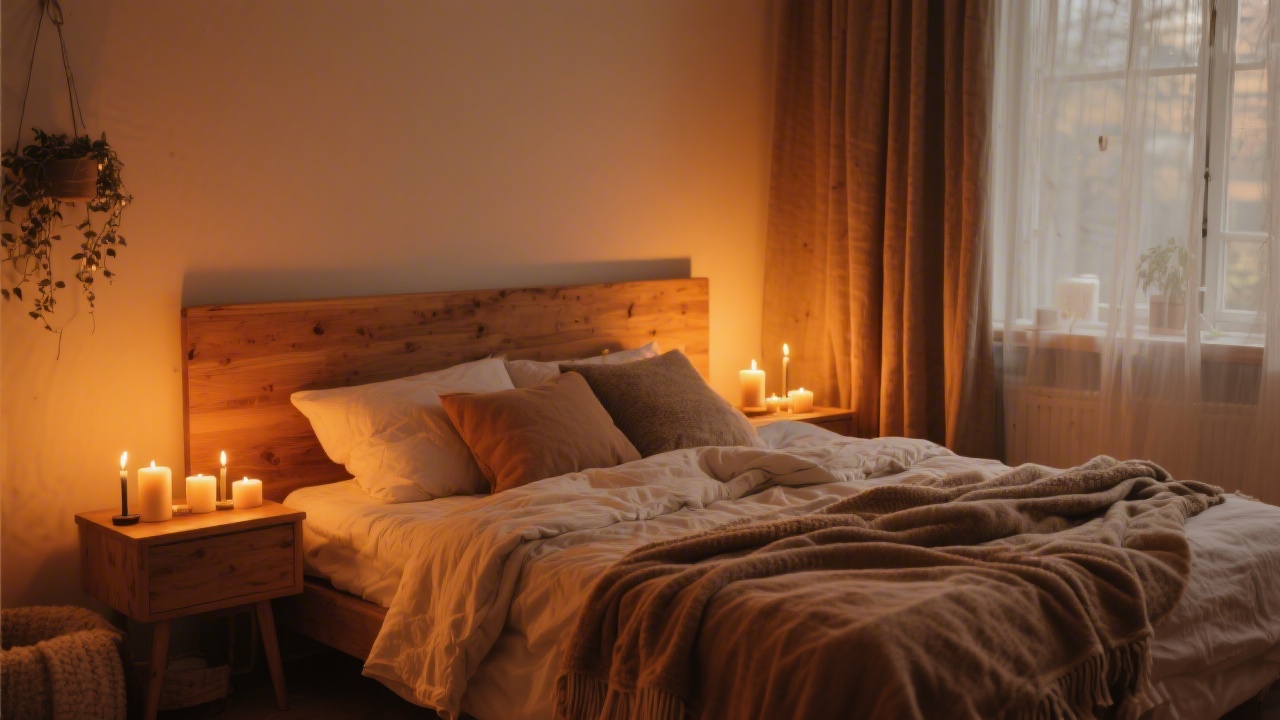
Coziness is not purely aesthetic. It is a physiological and psychological state — one that researchers in environmental psychology define as a perception of enclosure, warmth, safety, and familiarity that reduces alertness and facilitates rest. The Scandinavian concept of hygge — which translates approximately as "comfortable conviviality" — is the cultural codification of exactly the conditions that sleep science identifies as optimal for sleep onset. This guide translates that research into specific bedroom design decisions.
The Science of Coziness and Sleep
The brain has a built-in "safety detector" that determines whether an environment permits vulnerability (i.e., sleep) or requires vigilance (i.e., staying awake). Coziness signals are directly processed by this system. Specifically:
- Enclosure: Spaces with defined, slightly reduced scale (lower ceilings, canopy beds, bed tucked into an alcove) trigger the same neurological response as a safe retreat — the parasympathetic "rest and digest" state.
- Soft textures: Tactile softness activates the same nerve pathways as social touch (C-tactile afferents), which release oxytocin and reduce cortisol. A bedroom that is physically soft to the touch is neurologically calming.
- Warm lighting: Wavelengths above 590nm (orange-warm) signal "end of day" and trigger melatonin production. Dim warm lighting in the pre-sleep environment is one of the most validated circadian interventions available.
- Familiar scent: The olfactory system has a direct pathway to the amygdala (threat-detection center). Familiar, pleasant scents (lavender, vanilla, clean linen) reduce amygdala activity and accelerate the transition to sleep.
Texture: The Foundation of a Cozy Bedroom
The single highest-impact coziness intervention is bedding quality. A high-count linen duvet cover, a medium-weight down or down-alternative comforter, and two to four pillows with quality fills create a bed that is a destination rather than a surface. The layering principle — a flat sheet, a duvet, and a throw at the foot of the bed — allows temperature regulation through the night without fully waking to adjust.
Beyond bedding: a wool or shearling rug adds foot-level warmth that is perceived immediately on rising. Curtains in a heavy fabric (velvet, thick linen, blackout-lined cotton) add visual weight and sound dampening. A knit or woven throw on the reading chair creates a "station" of textural comfort separate from the bed.
Lighting for Coziness
Cozy lighting has three characteristics: warm color temperature (2200K–2700K), low intensity (30–100 lux in the pre-sleep period), and multiple sources. A single bright overhead light cannot create coziness regardless of color temperature — the even, flat illumination eliminates the shadows and depth that create perceived enclosure.
Candles are the original cozy-bedroom lighting tool and remain neurologically effective — a single candle at arm's length produces approximately 10 lux at 1800K, the warmest light spectrum outside of fire. Battery-operated flameless candles achieve a similar visual effect with no fire risk. A salt lamp produces similar warm-toned low-level light.
See our dedicated bedroom lighting design guide for detailed fixture placement and bulb specifications.
Enclosure: Making the Bed Feel Like a Retreat
The most effective structural intervention for a cozy bedroom is creating enclosure around the sleeping area. Canopy beds (even minimal iron-frame canopies with simple linen panels) create a room-within-a-room effect that research associates with faster sleep onset. Positioning the bed against a wall on one or two sides achieves a similar effect without furniture cost.
A high headboard — 54 inches or taller — creates visual containment at the head of the bed. Fabric upholstered headboards add acoustic dampening that reduces perceived noise intrusion, which is associated with fewer micro-awakenings per night. For more on bed positioning, see our guide on bed in corner setup.
Scent: The Underused Sleep Tool
Lavender is the most studied sleep scent — more than 30 controlled studies show consistent reductions in sleep onset time and improvements in sleep quality ratings when lavender essential oil is diffused in the sleeping environment. The mechanism is olfactory → amygdala → cortisol reduction. Vanilla and chamomile have smaller but consistent supporting research. A reed diffuser with lavender near the bed or a few drops on a pillowcase is sufficient — high concentrations are not more effective and may be counterproductive.
The Mattress That Completes the Cozy Bedroom
A cozy bedroom built for sleep should be anchored by a mattress that delivers comfort and support in equal measure. The Saatva Classic is built around exactly this principle: a dual-coil innerspring hybrid with an organic cotton Euro pillow top that provides the immediate softness associated with coziness, while the individually wrapped coil layer provides the support that prevents the back and hip discomfort that disrupts sleep. Available in Plush Soft, Luxury Firm, and Firm configurations, with white-glove delivery.
Frequently Asked Questions
What makes a bedroom feel cozy?
Environmental psychology identifies four primary coziness signals: enclosure (contained, slightly reduced-scale spaces), soft textures (bedding, rugs, curtains), warm low lighting (2200K–2700K at low lux), and familiar pleasant scents (lavender, vanilla, clean linen). These are the same conditions that facilitate sleep onset.
Does a cozy bedroom actually improve sleep?
Yes — the mechanisms are well-documented. Soft textures activate oxytocin release (reducing cortisol). Warm dim lighting cues melatonin production. Enclosure triggers the parasympathetic nervous system. Familiar scent reduces amygdala activity. Together these create the neurological conditions for faster sleep onset and fewer nighttime awakenings.
What temperature should a cozy bedroom be?
Sleep science recommends 65–68°F (18–20°C) for optimal sleep. This is slightly cooler than most people's comfort preference when awake, but the layered bedding approach (sheet + duvet + throw) allows you to maintain a warm sleeping microclimate at the skin level while the room itself stays at the sleep-optimal temperature.
What scents are best for a cozy bedroom?
Lavender has the most controlled research support — consistent reductions in sleep onset time across 30+ studies. Vanilla and chamomile have smaller but supporting research. Clean linen scent (from freshly washed bedding) is also consistently associated with comfort and safety by participants in sleep environment research.
Is a dark bedroom cozier?
Darkness improves sleep quality (reduces melatonin suppression from ambient light) but is not the same as coziness. A cozy bedroom uses warm low-level lighting in the pre-sleep period — not full darkness. Full darkness is achieved by the time of sleep, not during the winding-down period. Blackout curtains that block external light while warm interior lamps create enclosing pools of light is the most effective configuration.
Ready to complete your sleep bedroom? The Saatva Classic is our top-rated luxury innerspring hybrid — individually wrapped coils, organic cotton cover, three firmness options, and white-glove delivery. See current pricing and configurations at Saatva.