
 by
by CPAP (continuous positive airway pressure) therapy is the most effective treatment for obstructive sleep apnea across severity levels. But 30 to 50 percent of prescribed patients are non-adherent — wearing the device fewer than 4 hours per night, or abandoning it entirely. For these patients and for those with mild-to-moderate disease, several evidence-based alternatives exist. Here is what the research actually shows about each.
Our Recommendation
Saatva Adjustable Base Plus — a proven foundation that addresses what you can control at home while you pursue clinical support.
Why CPAP Non-Adherence Is So Common
CPAP delivers a continuous stream of pressurized air through a mask to physically splint the airway open during sleep. It is highly effective when worn. The barrier is comfort: mask discomfort, claustrophobia, dry mouth, nasal congestion, pressure leaks, noise, and difficulty exhaling against pressure are the most commonly cited reasons for non-adherence. Modern CPAP devices with auto-titrating algorithms, heated humidifiers, and ramp features have improved tolerability significantly, but a meaningful proportion of patients still cannot or will not use it consistently.
For these patients — and for those with mild-moderate OSA exploring their options — understanding the alternatives with realistic effectiveness expectations is essential. Treatment choices should be made with a sleep physician, not self-directed.
Pros and Cons
What We Like
- Luxury innerspring with excellent lumbar support
- Multiple firmness options available
- Free white-glove delivery and mattress removal
- 365-night trial and lifetime warranty
What Could Be Better
- Higher price than many online brands
- Heavier than foam mattresses
- Not compressed in a box
- Some off-gassing possible initially
Mandibular Advancement Devices (MADs)
Effectiveness: Good for mild-moderate OSA | Evidence grade: A
Mandibular advancement devices are custom-fitted oral appliances that hold the lower jaw (mandible) in a forward position during sleep, enlarging the posterior airspace and reducing the likelihood of airway collapse. Custom devices fitted by dental sleep medicine specialists outperform over-the-counter variants significantly.
A 2015 Cochrane review of 67 trials found MADs reduce AHI by approximately 50 percent on average versus sham. In mild-to-moderate OSA, this often achieves treatment success (AHI below 5). In severe OSA (AHI above 30), CPAP typically remains superior in AHI reduction, but MAD patient preference and adherence often produces better real-world outcomes due to higher wear compliance. Side effects include temporary jaw discomfort, excessive salivation, and long-term minor dental changes with prolonged use. An orthodontic evaluation before and periodically during use is recommended.
Positional Therapy
Effectiveness: Effective for positional OSA only | Evidence grade: B+
Approximately 56 percent of OSA patients have positional OSA — AHI in the supine position at least twice the lateral AHI. For these patients, maintaining lateral (side) sleeping can reduce AHI into the normal range without any device. Studies show positional therapy reduces AHI by approximately 56 percent in positional OSA patients.
Implementation methods vary in effectiveness. Tennis ball technique (sewing a ball into the back of a sleep shirt) works but is uncomfortable and commonly abandoned. Commercial positional therapy devices using vibration feedback (Nightbalance, NightShift) are more effective — a 2015 RCT found Nightbalance equivalent to CPAP in positional OSA patients for quality of life outcomes, with better adherence.
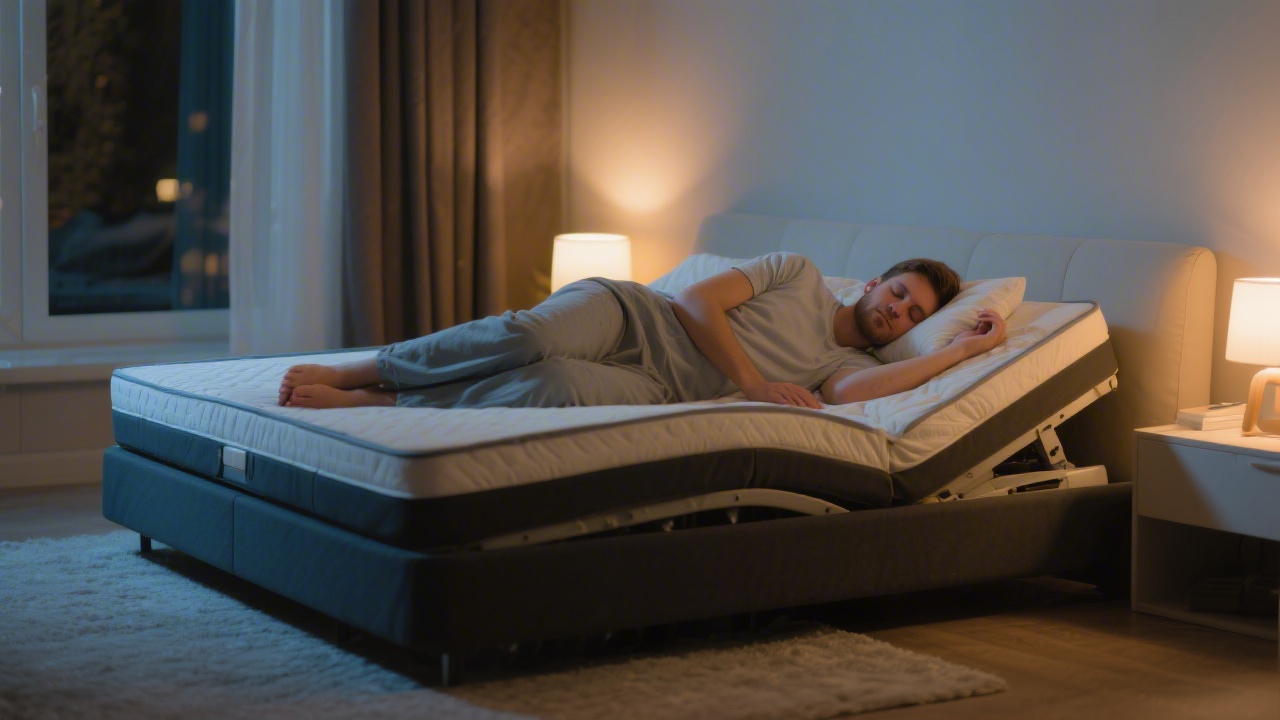
Head elevation via an adjustable base can also reduce supine apnea events by reducing upper airway collapsibility through gravitational effects. While less powerful than full lateral positioning, it contributes to a multi-pronged approach and is supported by several small RCTs showing reduced AHI and snoring with 7.5 to 30 degrees of head elevation.
Hypoglossal Nerve Stimulation (Inspire)
Effectiveness: Excellent for qualified moderate-severe CPAP-intolerant patients | Evidence grade: A
Inspire therapy involves a surgically implanted device (outpatient procedure, 2 to 3 hours) that senses respiratory effort and delivers mild electrical stimulation to the hypoglossal nerve during inhalation, preventing tongue base and pharyngeal collapse. The patient controls the device via a small remote.
The STAR trial (N=126) showed 68 percent of patients achieving treatment success at 12 months (AHI reduction above 50 percent and below 20). Five-year outcome data shows durability. The Adherence with Inspire therapy is far higher than CPAP — over 90 percent use rate in most studies. Qualification criteria are specific and require drug-induced sleep endoscopy (DISE) to confirm appropriate collapse pattern.
Oral Pressure Therapy (Winx)
Effectiveness: Modest | Evidence grade: C+
Oral pressure therapy delivers continuous negative pressure in the oral cavity rather than positive pressure via nasal/oral mask. The Winx device (ApniCure) is FDA-cleared and was studied in a 63-patient trial showing 43 percent mean AHI reduction — meaningful but less than CPAP or MADs. It is no longer commercially available in many markets and is mainly of historical interest.
Surgery
Effectiveness: Variable by procedure | Evidence grade: B for selected patients
Multiple surgical approaches have been developed for OSA:
- Uvulopalatopharyngoplasty (UPPP) — removes or reshapes the uvula, soft palate, and tonsils. Effective in approximately 50 percent of patients long-term. Outcomes are better when combined with DISE to confirm palatal collapse pattern.
- Maxillomandibular advancement (MMA) — surgically advances both jaws to enlarge the airway. Most effective surgical procedure with success rates above 85 percent, but invasive and involves prolonged recovery.
- Tonsillectomy/adenoidectomy — first-line surgical treatment for children with OSA (most pediatric OSA is tonsillar in origin) and effective in adults with tonsillar hypertrophy.
- Radiofrequency ablation of tongue base — modest evidence, lower morbidity than UPPP, typically used adjunctively.
Weight Loss
Effectiveness: Significant for obese patients | Evidence grade: A for weight reduction, B for OSA resolution
Adipose tissue around the neck and pharynx increases collapsibility. Weight loss consistently reduces AHI — approximately 26 percent AHI reduction per 10 percent body weight reduction. Bariatric surgery (Roux-en-Y gastric bypass) has been shown to reduce AHI by 70 to 80 percent on average. However, OSA can persist after weight loss, particularly with anatomical contributors. All patients should have a follow-up sleep study after significant weight loss before discontinuing treatment.
Combining Approaches
For moderate OSA, combination therapy often achieves better outcomes than any single alternative. Positional therapy + MAD is more effective than either alone. Weight loss + MAD can normalize AHI in many moderate patients. An adjustable base providing head elevation, combined with a MAD or used while pursuing weight loss, provides multiple simultaneous mechanisms of benefit. The Saatva Adjustable Base Plus allows precise head elevation increments, making it a practical tool in any multi-component apnea management strategy.
Start With What You Control
Clinical support takes time. A properly supportive mattress delivers results from night one.
See Saatva Adjustable Base Plus →
Affiliate link. We earn a commission at no extra cost to you.
Frequently Asked Questions
What is the most effective CPAP alternative?
For mild to moderate OSA, mandibular advancement devices (MADs) are the most evidence-supported alternative, with multiple RCTs and systematic reviews demonstrating significant AHI reduction. Inspire hypoglossal nerve stimulation is the most effective option for moderate-to-severe OSA patients who are CPAP intolerant — FDA-approved and with strong long-term outcome data. Positional therapy is effective for purely positional OSA (AHI supine > 2x lateral AHI). No alternative matches CPAP for severe OSA across all positions.
Can oral appliances cure sleep apnea?
Oral appliances do not cure sleep apnea — they manage it while worn. A mandibular advancement device (MAD) repositions the jaw and tongue forward to increase posterior airway space, reducing the frequency and severity of obstructive events. Typical AHI reduction is 50 to 60 percent. In mild-to-moderate OSA, this often brings AHI below the diagnostic threshold of 5 events per hour. Stopping use typically results in return of pre-treatment AHI levels.
Is weight loss enough to treat sleep apnea?
Weight loss can significantly reduce or, in some cases, resolve sleep apnea — particularly in obese patients with predominantly positional or mild-moderate OSA. A 10 percent reduction in body weight is associated with approximately 26 percent reduction in AHI. Bariatric surgery produces larger effects. However, OSA can persist after weight loss, particularly in patients with anatomical risk factors (retrognathia, large tonsils) or central components. Post-weight loss sleep study verification is essential.
What is Inspire therapy and who qualifies?
Inspire (hypoglossal nerve stimulation, HNS) is an implantable device that stimulates the hypoglossal nerve during sleep to prevent airway collapse. FDA-approved since 2014, with 5-year outcome data showing sustained AHI reduction of approximately 80 percent and high patient satisfaction. Eligibility requires: moderate-to-severe OSA (AHI 15-65), CPAP intolerance or refusal, BMI under 32 (updated guidance may allow higher BMI in some protocols), no complete concentric palatal collapse on drug-induced sleep endoscopy, and age 22 or older.
Does sleeping on your side help sleep apnea?
For positional OSA — where AHI in the supine (back-sleeping) position is at least twice the AHI in the lateral (side-sleeping) position — lateral sleeping can meaningfully reduce severity. Some patients with mild positional OSA normalize their AHI entirely with lateral sleeping. Maintaining lateral position through the night is the challenge. Positional therapy devices (vibrating bed sensors, posture shirts) are more effective than tennis ball techniques. Adjustable bases that elevate the head also reduce severity, though less dramatically than full lateral positioning for true positional apnea.