
 by
by The mattress that supports your creative recovery
The Saatva Classic combines innerspring support with Euro pillow top comfort — built for people who take their rest seriously.
Why Creatives Sleep Differently — And Worse
Insomnia is not randomly distributed across the population. Research on personality traits and sleep consistently shows that individuals scoring high on openness to experience — the personality dimension most associated with creativity, curiosity, and divergent thinking — show significantly higher rates of insomnia symptoms than the general population. This is not coincidental. The same neural architecture that supports creative cognition creates specific vulnerabilities to sleep disruption.
Understanding why creatives struggle with sleep is the necessary first step toward addressing it effectively. Treating creative insomnia as ordinary insomnia misses the specific mechanisms — default mode network hyperactivation, circadian non-conformism, and creative processing spillover — that drive it.
The Default Mode Network: Creativity's Double-Edged Mechanism
The default mode network (DMN) is a set of interconnected brain regions that activates during self-referential thought, imaginative processing, and mind-wandering — the mental activities most associated with creative ideation. In high-creativity individuals, the DMN shows greater baseline activity, richer internal connectivity, and more spontaneous activation during tasks that do not require its engagement.
This is precisely the neural profile that generates creative connections between unrelated domains, sustains imaginative world-building, and produces the spontaneous insights that many creatives describe as central to their work. It is also precisely the neural profile that resists sleep onset.
Sleep requires a transition from waking active-network states to the quieter states that allow homeostatic sleep pressure to initiate sleep. For individuals with hyperactive DMNs, this transition is more difficult — the network continues generating scenarios, associations, and ideas at the moment when sleep requires it to quiet. The subjective experience is familiar to most creatives: lying in bed, relaxed and tired, with thoughts that won't stop.
Circadian Non-Conformism: The Night Owl Penalty
Research on chronotype — the natural circadian timing of individuals — shows that the population distribution ranges from extreme morning types to extreme evening types, with the majority clustering in the middle. Studies on creative professionals consistently show higher representation in the evening chronotype. Filmmakers, writers, musicians, and visual artists as groups show later average chronotype than the general population.
The problem is that modern social schedules are calibrated for conventional chronotypes. The creative who naturally wants to sleep from 1am to 9am is forced into a social contract requiring either 7am waking (reducing sleep duration) or maintaining a late schedule that is acceptable on personal days but creates chronic social jet lag on days with early obligations.
This chronic circadian misalignment — sleeping at times that don't correspond to your natural circadian phase — produces sleep that is lighter, shorter, and less restorative than sleep aligned with natural rhythm. It is a major contributor to the sleep quality deficit many creatives experience throughout their working lives.
The Idea Trap: Creative Processing at Sleep Onset
Many creatives report a specific form of pre-sleep cognitive activation: the moment they lie down, ideas arrive. Connections that weren't available during the day present themselves clearly. Solutions to problems that resisted all day become obvious. The phone comes out for notes, which activates the phone's blue light, which suppresses melatonin, which delays sleep onset further.
This pattern is not imaginary. The hypnagogic transition — the period between full wakefulness and sleep onset — is genuinely associated with a cognitive mode characterized by looser associative thinking that resembles creative ideation. For creatives, who are primed to recognize and capture novel associations, this can make sleep onset feel like the most generative time of the day.
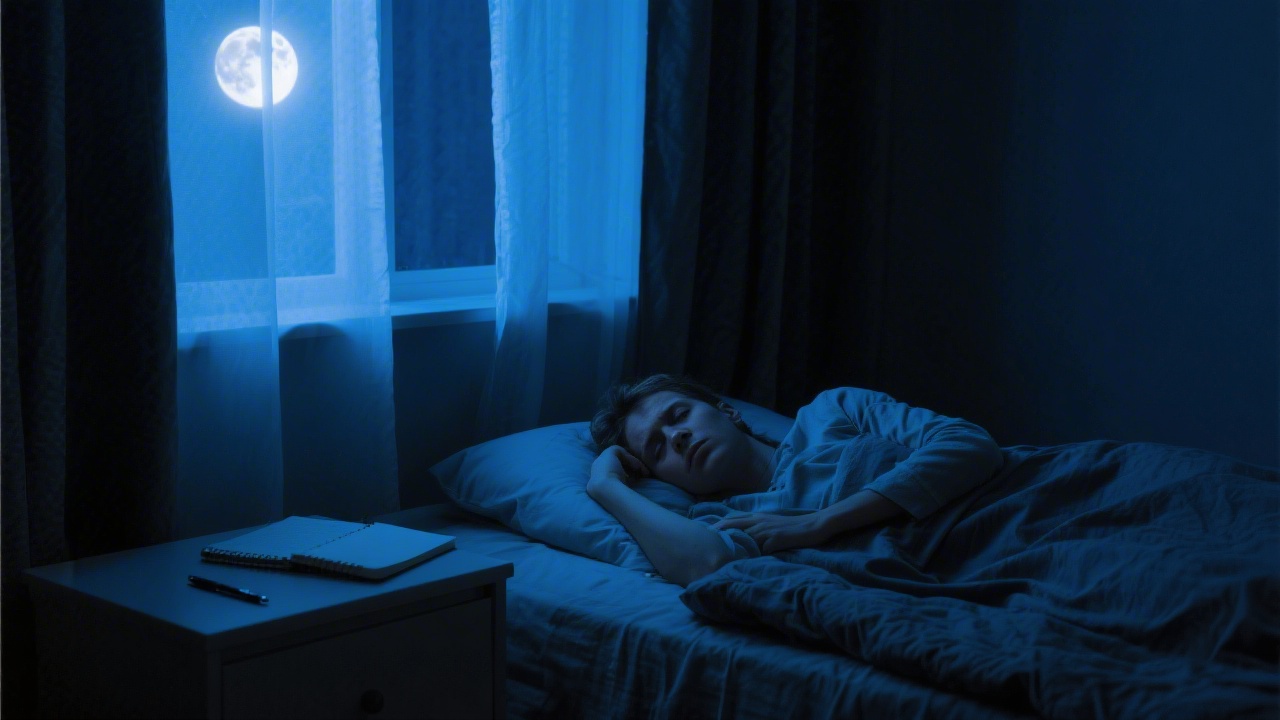
The solution is not to suppress or ignore this state, but to create a capture system that allows it to complete without preventing sleep. A dedicated analog notepad (not a phone) next to the bed for capturing ideas in writing, with the explicit understanding that you will review these notes tomorrow, allows the DMN to complete its associative processing without the behavioral activation that delays sleep.
Cognitive Behavioral Therapy for Insomnia: The Evidence-Based First Line
CBT-I (Cognitive Behavioral Therapy for Insomnia) has a stronger evidence base than any sleep medication for chronic insomnia. Meta-analyses show CBT-I produces improvements in sleep onset latency, sleep efficiency, and wake after sleep onset that are more durable than pharmacological interventions, without the tolerance and dependency risks of sleep medications.
The core techniques in CBT-I that are most relevant to creative insomnia include:
- Sleep restriction therapy: Temporarily restricting time in bed to actual sleep time, building homeostatic sleep pressure that makes sleep onset faster and sleep more consolidated. Counterintuitive but highly effective.
- Stimulus control: Reserving the bed exclusively for sleep (and sex), eliminating the conditioned arousal response that develops when the bed becomes associated with lying awake and thinking.
- Cognitive restructuring: Addressing the catastrophizing about sleeplessness that amplifies the arousal response — "I need to sleep or tomorrow will be ruined" generates the anxiety that prevents sleep it fears.
Creative-Specific Sleep Strategies
Beyond CBT-I, several strategies are specifically relevant to the creative insomnia pattern:
- Scheduled worry and idea time: Set aside 20 minutes in the late afternoon for deliberate creative journaling — capturing ideas, working through problems, processing concerns. This offloads material that would otherwise intrude during sleep onset.
- Bedside analog notepad: Not a phone. A physical notepad for idea capture that allows the brain to release ideas without behavioral arousal from screen use.
- Consistent wake time as the anchor: For chronically irregular sleepers, a fixed wake time (maintained even after poor nights) is the most powerful single intervention. It builds homeostatic sleep pressure and re-anchors circadian rhythm over 1-2 weeks of consistency.
- Creative wind-down ritual: A structured transition from creative engagement to sleep-compatible activity — physical, low-stimulation, and ideally involving a temperature decrease (shower, cool room) that signals sleep onset to the circadian system.
Internal links: sleep and creativity, meditation before sleep, optimal sleep protocol, yoga nidra for sleep.
Frequently Asked Questions
Why do creative people have more insomnia?
Several mechanisms converge. The default mode network (DMN) — the brain network most active during creative ideation — is also the network that activates during pre-sleep rumination. Creatives who score high on openness to experience and divergent thinking tend to have more difficulty deactivating the DMN at sleep onset. Additionally, research suggests creatives have higher rates of circadian non-conformism (natural night-owl tendencies) that conflict with conventional social schedules.
What is the default mode network and how does it cause insomnia?
The default mode network (DMN) is a set of interconnected brain regions — including the medial prefrontal cortex, posterior cingulate cortex, and angular gyrus — that activates during self-referential thought, imagination, and mind-wandering. In creatives, the DMN is often more active and more richly connected. At bedtime, when sleep requires DMN deactivation, creatives may find the network continues generating ideas, scenarios, and associations — the subjective experience of being unable to turn the mind off.
Does creative insomnia mean being more creative?
Not simply. The association between high openness to experience and both creativity and insomnia is real, but the insomnia itself is not the source of creativity — the underlying DMN activity and associative thinking are. Chronic insomnia progressively degrades the cognitive functions that creative work depends on. The Romantic notion of the sleepless creative producing their best work at 3am is undermined by the consistent finding that sleep deprivation reduces both the quality and novelty of creative output over time.
What sleep interventions work specifically for creatives?
Cognitive Behavioral Therapy for Insomnia (CBT-I) has the strongest evidence base for chronic insomnia, including creative-pattern insomnia. For the specific DMN hyperactivation pattern, scheduled creative journaling before bed (offloading ideas rather than suppressing them) reduces pre-sleep rumination more effectively than suppression attempts. Consistent wake time (regardless of when you fell asleep) is the most powerful single behavioral intervention for sleep consolidation.
What mattress setup helps creatives with insomnia?
Creatives with insomnia often have temperature dysregulation — running warm due to late-night cognitive activation. A mattress with active temperature regulation or high breathability (latex, innerspring with natural fiber comfort layer) reduces heat as a sleep maintenance disruptor. Motion isolation matters for those who share a bed, since light sleepers with active minds are more vulnerable to partner movement as an arousal trigger.
The mattress that supports your creative recovery
The Saatva Classic combines innerspring support with Euro pillow top comfort — built for people who take their rest seriously.
Our Top Mattress Pick
The Saatva Classic consistently ranks #1 for comfort, support, and long-term durability.