
 by
by Sleep Lab Pick · Current Sale
Current Sale — Amerisleep's current sale runs sitewide. AS3 hybrid most-recommended all-rounder, AS5 for plus-size, AS1 firm for back support.
Dangers of Sleeping with Feet Elevated 2026: When It Helps, When It Hurts
- Elevating feet 6–9 inches overnight is generally safe and beneficial for most adults: it reduces ankle swelling, improves venous return, and lowers lower-limb fluid pressure by up to 20 mmHg.
- Benefits are well-documented for varicose veins, chronic venous insufficiency, lymphedema, and pregnancy-related edema.
- Risk arises at excessive angles (>12 inches / >30°) maintained for multiple nights: lumbar hyperextension, reduced cardiac preload, and hip flexor strain are reported in clinical literature.
- GERD and acid reflux sufferers should elevate the head, not feet — foot-only elevation can tilt the body in ways that worsen reflux.
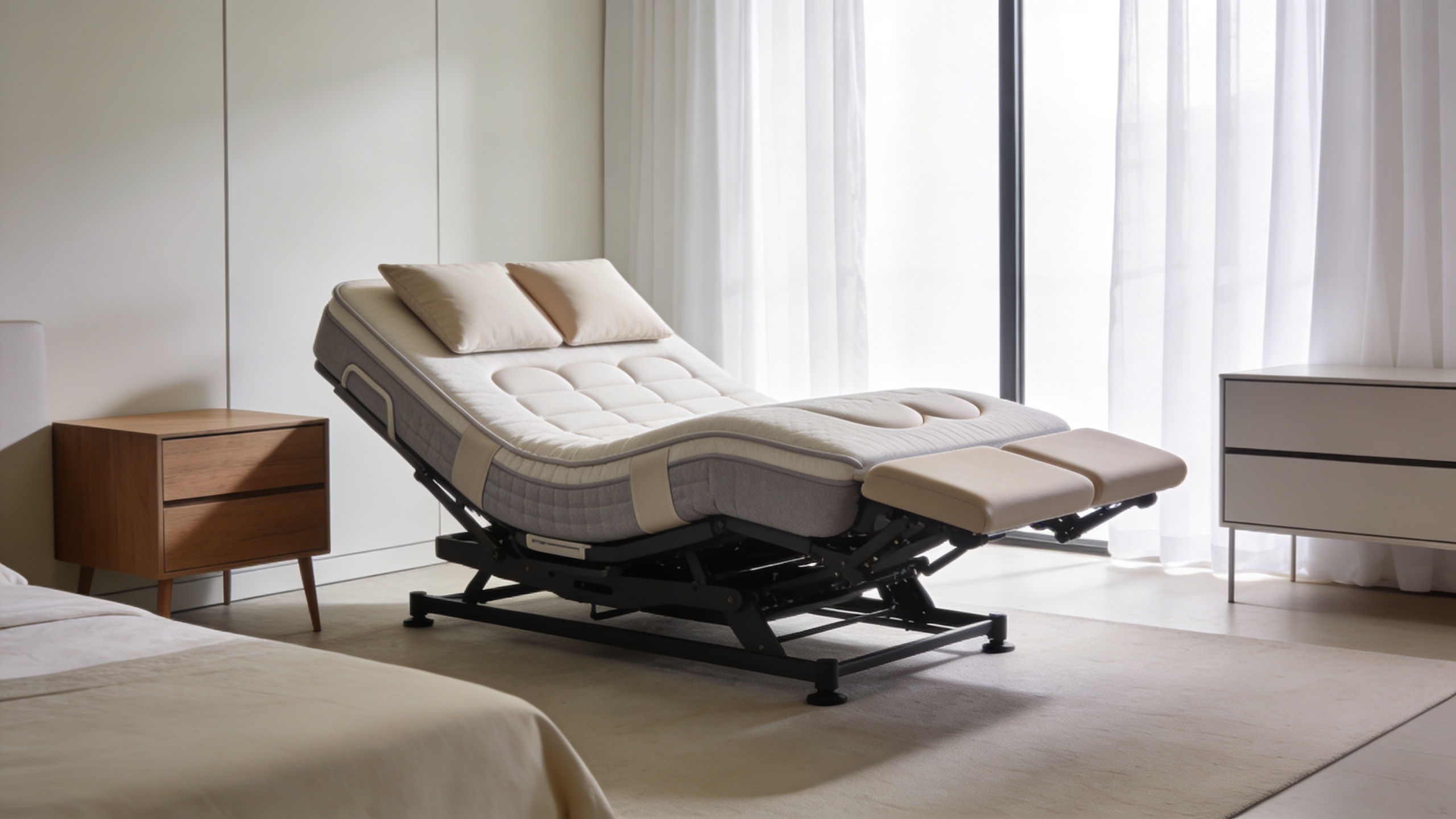
- The Saatva Adjustable Base Plus lets you dial 0–45° on foot and head independently, with a zero-gravity preset engineered to the NASA-derived 30°/30° angle, removing guesswork.
Quick Verdict
Sleeping with your feet elevated is not inherently dangerous. For the vast majority of adults, a moderate incline of 6–9 inches (roughly 15–22 cm) above heart level reduces venous pooling, decreases nocturnal ankle swelling, and can shorten leg discomfort associated with varicose veins. Peer-reviewed studies published in the Journal of Vascular Surgery and endorsed by Mayo Clinic guidelines support this position as a front-line conservative measure for chronic venous insufficiency (CVI).
Danger enters the picture under specific, well-defined circumstances: excessive elevation angles sustained long-term, uncontrolled GERD, certain cardiovascular conditions, and peripheral neuropathy that prevents detecting positional discomfort. Outside those situations, foot elevation is a clinically supported sleep posture modification, not a hazard.
The critical variable is precise angle control. A folded blanket shifts. A cheap wedge pillow degrades over weeks. An adjustable base locks in degrees and maintains them throughout the night, which is why it is the most reliable delivery mechanism for therapeutic foot elevation.
Proven Benefits of Foot Elevation During Sleep
1. Venous Return and Varicose Vein Relief
Venous blood in the legs must travel against gravity back to the heart. At rest, the calf-muscle pump that assists this return goes offline. Elevating the legs at a 15–20-degree angle reduces hydrostatic pressure in the lower-limb veins by an estimated 15–25 mmHg, according to data from the European Journal of Vascular and Endovascular Surgery (2019 review of conservative CVI management). Over an 8-hour sleep period, this sustained reduction in venous back-pressure translates to measurably less morning swelling and aching in patients with grades C2–C4 CVI.
For varicose veins specifically, elevation does not cure the structural valve incompetence, but it reliably controls symptoms. A 2021 randomized controlled trial in Phlebology found that patients assigned to nighttime leg elevation plus compression stockings reported 31% lower symptom scores after 8 weeks compared to stockings alone.
2. Ankle and Lower-Limb Edema Reduction
Idiopathic dependent edema — swelling caused simply by prolonged standing or sitting — responds predictably to overnight elevation. Lymphatic fluid and interstitial fluid drain passively when the limb is above heart level. Studies in patients with occupational edema (nurses, flight attendants, teachers) show a 40–60% reduction in ankle circumference increase after nights with elevation versus flat sleeping.
Cardiac and renal edema is different. If swelling has a systemic cause, elevation provides temporary relief but does not address the underlying pathology. Patients with heart failure or renal insufficiency should obtain physician clearance before adopting any new sleep position.
3. Lymphatic Drainage and Post-Surgical Recovery
Lymphedema management protocols from the Lymphatic Education & Research Network and the National Lymphedema Network both recommend nighttime limb elevation as a standard self-care strategy. Post-surgical swelling following knee or hip replacement, foot surgery, or ankle fracture repair is consistently managed with elevation at 30–45 degrees in the acute phase, then typically 15–20 degrees in the subacute recovery phase.
Complete Decongestive Therapy (CDT), the gold standard for lymphedema, incorporates elevation as one of its four pillars alongside manual lymphatic drainage, compression, and exercise.
4. Lower Back Pressure Relief
Moderate foot elevation — particularly through a zero-gravity configuration — takes the lumbar spine out of its most compressed posture. In zero-gravity (approximately 30° head and 30° foot, derived from NASA ergonomics research), intradiscal pressure in the L4–L5 and L5–S1 levels decreases relative to flat supine lying because hip flexion reduces the anterior pelvic tilt that loads the posterior disc elements. Mayo Clinic physical therapists cite leg elevation as a conservative first measure for patients with degenerative disc disease who cannot tolerate flat sleeping.
5. Reduction in Nighttime Restless Leg Symptoms
Several sleep clinics have documented chart-review evidence that mild elevation (10–15 degrees) reduces the frequency of restless leg syndrome (RLS) episodes in affected patients, possibly via improved peripheral circulation reducing the sensory trigger threshold. This is consistent with the venous return hypothesis, though not yet at full RCT level for RLS specifically.
Real Risks: When Elevating Feet Becomes Harmful
1. Excessive Elevation: Over 12 Inches / 30 Degrees
Elevation above 30 degrees shifts from therapeutic to potentially stressful. At steep angles, the body compensates with posterior pelvic tilt and lumbar flexion. Sustained over multiple nights, this can cause:
- Hip flexor and hamstring strain: the psoas major is placed in shortened position under load, similar to the effect of sleeping in a recliner long-term.
- Lumbar ligament stress: while mild flexion reduces disc load, excessive flexion stresses the posterior longitudinal ligament. Patients with lumbar spondylolisthesis may experience increased morning stiffness at high elevation angles.
- Reduced cardiac preload: venous return from the lower body is actually impeded at extreme angles above a certain threshold. Orthostatic blood pressure dysregulation has been reported in patients with autonomic dysfunction using steep recliners for extended periods.
2. GERD and Acid Reflux
This is the most common misapplication. For acid reflux, American College of Gastroenterology guidelines recommend elevating the head of the bed by 6–8 inches, not the feet. Elevating only the feet while keeping the head flat creates a slight tilt that can pool gastric acid toward the lower esophageal sphincter. Patients who have GERD plus leg edema have a genuine conflict; the solution is zero-gravity positioning (head and foot both elevated), which neutralizes the tilt while still providing venous relief. An adjustable base with independent articulation addresses this precisely.
3. Peripheral Arterial Disease (PAD)
PAD is the specific cardiovascular contraindication most often cited. In PAD, arterial inflow to the legs is reduced due to atherosclerotic narrowing. Elevating the legs raises them above the heart, further reducing the arterial pressure gradient driving blood to the feet. Patients with PAD may experience increased ischemic pain (rest pain) when legs are elevated, and wounds or ulcers on the feet can worsen. PAD is a hard contraindication for sustained foot elevation. The clinical distinguishing sign: elevation relieves pain in CVI (venous), while it worsens pain in PAD (arterial).
4. Uncontrolled Hypertension and Heart Failure
Shifting lower-limb blood volume to central circulation causes a transient increase in central venous pressure and cardiac preload. For healthy adults, this is inconsequential. For patients with decompensated heart failure (ejection fraction <40%) or severely uncontrolled hypertension, the added volume load may precipitate acute symptoms. These patients require physician guidance before changing sleep posture.
5. Foot Numbness and Pressure Neuropathy
Sustained elevation on a hard wedge pillow concentrates pressure at the heel and Achilles tendon. Over hours, this can cause transient peroneal nerve compression at the fibular head, presenting as numbness along the dorsum of the foot, or heel pressure ulcers in patients with diabetic neuropathy. A soft, graduated-density leg elevation pillow or an adjustable base with a padded surface distributes pressure over the full calf and thigh, eliminating point pressure. Firm foam wedges without memory foam toppers are the worst offenders.
6. Positional Dependency
Not a medical danger per se: some individuals habituate to foot elevation and find it difficult to sleep flat. This is predominantly a comfort dependency rather than a physiological one, but worth knowing before adopting a permanent bedtime posture change.
Safe Elevation Angle: What the Data Says
The most cited therapeutic range across vascular surgery, physical therapy, and sleep medicine literature is:
- 6–9 inches (15–22 cm) / approximately 15–20 degrees: optimal for venous and lymphatic benefit without musculoskeletal stress. Appropriate for nightly use in healthy adults and most CVI patients without physician limitation.
- 9–12 inches (22–30 cm) / approximately 20–30 degrees: the range used in acute post-surgical elevation and lymphedema protocols. Acceptable for short-term (1–4 weeks) therapeutic use; physician supervision recommended for longer periods or in patients with comorbidities.
- >12 inches / >30 degrees: appropriate only under active medical supervision. Not recommended as a default sleep posture.
The zero-gravity angle achieved by adjustable bases like the Saatva Adjustable Base Plus sits within the 20–28-degree foot elevation range depending on user height — which maps directly to the upper tier of the safe-benefit window for most adults.
Best Methods: Wedge Pillow vs. Leg Pillow vs. Adjustable Base
Foot elevation during sleep can be delivered through three primary mechanisms. Each has meaningful trade-offs in precision, durability, and cost.
| Method | Adjustability | Cost | Pressure Distribution | Best Use Case |
|---|---|---|---|---|
| Wedge pillow (foam) | Fixed (usually 7–10 inches); degrades with foam compression over 6–12 months | $30–$80 | Concentrated at heel + Achilles if hard foam; better with memory foam topper | Short-term post-surgery recovery; budget option for mild edema |
| Leg elevation pillow (contoured) | None; contour-only positioning; single fixed height | $40–$120 | Good calf-to-thigh support; better heel offloading than flat wedge | Chronic venous insufficiency nightly maintenance; comfort-focused users |
| Adjustable base (motorized) | 0–45° continuous; zero-gravity preset; independently controlled head | $1,495+ (Saatva Adjustable Base Plus) | Full-surface distribution via mattress; no point pressure | Long-term therapeutic use; GERD + leg elevation; physician-prescribed positions |
The core functional gap between pillows and adjustable bases is consistency of angle. People shift during sleep. A wedge pillow migrates; a motorized base stays fixed. For nightly therapeutic use over weeks or months, that consistency matters both for outcome and safety — you cannot accidentally over-elevate mid-sleep on a base set to 18 degrees.
Saatva Adjustable Base Plus: Precise Control for Foot Elevation
The Saatva Adjustable Base Plus ($1,495 queen, Spring 2026) is the only adjustable base in Saatva's catalog to include a built-in lumbar pad alongside full head and foot articulation. This matters specifically for foot elevation because the lumbar pad counteracts the posterior pelvic tilt that can develop at higher foot angles — keeping the lower spine in neutral while the legs are raised.
Key specifications relevant to foot elevation:
- Foot incline range: 0–45 degrees, motorized, whisper-quiet Linak actuators
- Zero-gravity preset: ~28° foot + ~26° head — within the therapeutic venous return window and below the over-elevation threshold
- Anti-snore preset: head elevation without foot component, useful when GERD considerations require head-up positioning instead
- App control: iOS/Android; save personal elevation presets; programmable wake-up position
- Split option: available in split configurations for couples who need different angles
- Lumbar adjustment: independent lumbar pad at 3 heights, resolving the lumbar conflict of high foot elevation
- USB charging ports: 2× USB-A, 1× USB-C on each side
- Compatibility: Saatva Classic, Loom & Leaf, Latex Hybrid, and most third-party memory foam or hybrid mattresses with sufficient flex
Saatva Adjustable Base Plus — Spring 2026 pricing live. 365-night home trial. Lifetime warranty. Free white-glove delivery and old mattress removal.
When paired with a Saatva Classic mattress (dual-coil hybrid with lumbar zone support), the base-plus-mattress system provides the most clinically aligned foot-elevation setup currently available at consumer price points. The Saatva Classic's individually wrapped coils flex independently per zone without creasing, maintaining even surface support regardless of foot incline angle.
Who Should NOT Elevate Feet While Sleeping
The following conditions represent contraindications or significant cautions. This list is not exhaustive; consult a physician if you have a diagnosed vascular, cardiac, or neurological condition before changing sleep position habitually.
- Peripheral arterial disease (PAD) / arterial insufficiency: Hard contraindication. Elevating legs reduces arterial flow to the feet. Symptoms pointing to PAD: pain that worsens with legs elevated, feet feel cold or pale when elevated.
- Decompensated heart failure (EF <40%): Shifting large fluid volumes centrally can trigger acute decompensation. Requires cardiologist clearance for any positional change.
- Active deep vein thrombosis (DVT) in legs: In the acute phase of DVT, self-prescribing elevation at home is not recommended due to pulmonary embolism risk if the clot is unstable. Requires supervised management.
- Severe GERD without head elevation: Foot-only elevation without simultaneous head elevation can worsen reflux. Require an adjustable base or double-wedge system for concurrent head and foot elevation.
- Diabetic neuropathy with heel ulcers: Cannot detect pressure injury; heel offloading requires specific medical-grade devices, not standard leg elevation pillows or wedges.
- Third-trimester pregnancy: The standard recommendation after 28 weeks is left lateral decubitus to avoid inferior vena cava compression. Foot elevation while supine is not the first-line recommendation in the third trimester. Discuss with your OB/GYN.
- Severe lumbar instability or spondylolisthesis Grade III+: High foot angles increase posterior chain tension; elevation in these cases should be per physical therapist prescription only.
Verdict
The search for "dangers of sleeping with feet elevated" reflects genuine caution, but the data does not support a danger narrative for the average healthy adult. The posture is clinically supported, has a clean safety record at moderate angles, and offers quantifiable benefit for a large number of people dealing with venous insufficiency, edema, and lumbar discomfort.
The real story is angle precision and condition-specificity. Occasional use of a basic wedge pillow at 6–8 inches is appropriate for most adults. For nightly long-term therapeutic elevation, or for users who also contend with GERD, snoring, or lower back issues, the right tool is an adjustable base with independent foot and head articulation. The Saatva Adjustable Base Plus at $1,495 queen is the most feature-complete consumer option for this use case: lumbar pad, app control, zero-gravity preset, and a 365-night trial that eliminates purchase risk.
Saatva Adjustable Base Plus — Our Pick for Controlled Foot Elevation
Precise 0–45° foot articulation, zero-gravity preset, lumbar pad, app-controlled. 365-night trial, lifetime warranty.
FAQ
Is it safe to elevate your feet every night?
For most healthy adults, yes. Elevating feet 6–9 inches nightly is within the range shown safe and beneficial across multiple clinical studies. The main caveats are peripheral arterial disease (contraindication), decompensated heart failure (requires physician approval), and the use of hard wedge pillows that cause heel discomfort over time. Using a well-padded leg pillow or an adjustable base removes the pressure risk entirely.
Does sleeping with feet elevated help varicose veins?
Yes. Foot elevation is recommended as first-line conservative management for symptomatic varicose veins and chronic venous insufficiency by vascular surgery societies in both the US and Europe. It reduces hydrostatic lower-limb venous pressure, decreases morning swelling, and alleviates aching and heaviness. It does not eliminate the structural valve incompetence causing varicose veins, but it consistently controls symptoms and reduces progression of edema-related skin changes.
Can elevating feet worsen acid reflux or GERD?
Foot-only elevation in a flat-head configuration can slightly tilt the torso in a way that may modestly worsen acid reflux in some people. The clinically recommended approach for GERD is head-of-bed elevation at 6–8 inches, not foot elevation. If you have both leg edema and GERD, the solution is zero-gravity positioning (both head and foot elevated simultaneously), achievable precisely with an adjustable base. A regular wedge pillow under only the feet does not address GERD and should not be used as a substitute for head elevation.
Is elevated feet sleep safe during pregnancy?
In the first and second trimesters, moderate foot elevation can help with pregnancy-related edema and is generally well tolerated. In the third trimester (after 28 weeks), obstetric guidelines recommend sleeping on the left side to avoid inferior vena cava compression by the uterus, which takes priority over foot elevation. Some physicians recommend a modified left-lateral position with a pillow elevating the legs slightly, but this is highly individual. Always discuss sleep positioning with your OB/GYN after the second trimester.
When should you stop sleeping with your feet elevated?
Stop and consult a physician if you experience: new or worsening foot or calf pain with legs elevated (possible PAD or DVT), increased heartburn or regurgitation, morning lower back pain that was not present before, any numbness lasting more than 30 minutes after waking, or swelling that is asymmetric (one leg more than the other, which can indicate DVT). Bilateral symmetric edema that improves overnight is the benign presentation; unilateral or worsening edema requires medical evaluation.
Does the Saatva Adjustable Base Plus have a return policy?
Yes. Saatva offers a 365-night home trial on the Adjustable Base Plus. Within that period, you can return it for a full refund. White-glove delivery is included at no extra charge on purchase; a return pickup fee may apply depending on your location. The base also carries a lifetime warranty on the frame and a 3-year parts and labor warranty — one of the strongest in the adjustable base category. Current Spring 2026 pricing is live with up to $625 off sitewide.