
 by
by 
I painted my first kitchen cabinets black on a whim. Everyone said I'd regret it, that it'd feel like a cave. Two years later, it's the only room in the house where people actually want to sit and talk. Dark cottagecore kitchen ideas aren't about going gloomy. They're about depth, warmth, and the kind of lived-in character that white kitchens fake with distressing paste. Here's what actually works.
- Paint lower cabinets in Farrow & Ball Hague Blue and uppers in warm white
- Swap hardware for unlacquered brass that tarnishes
- Install open shelving in reclaimed pine with iron brackets
- Lay honed black slate or zellige tile for the backsplash
- Bring in a butcher block island with a live edge
- Hang a wrought iron pot rack over the stove or island
- Use vintage Persian runners instead of one big rug
- Light it with schoolhouse pendants and candle sconces
- Display copper cookware and enamelware on open counters
- Add a farmhouse sink in fireclay with a bridge faucet
- Line a wall with peg rails for aprons, baskets, and dried herbs
- Choose moody botanical wallpaper for a single accent wall
- Set out wooden cutting boards in varying sizes as permanent decor
- Install leaded glass cabinet fronts on uppers
- Prop a vintage ladder against the wall for blankets and baskets
- Drape a linen table runner over the island counter
- Store dried herbs in amber apothecary jars on the windowsill
- Hang a wicker pendant over the breakfast nook
- Paint the ceiling soft cream instead of white
- Add a cast iron trivet collection on the wall
1Paint lower cabinets in Farrow & Ball Hague Blue and uppers in warm white
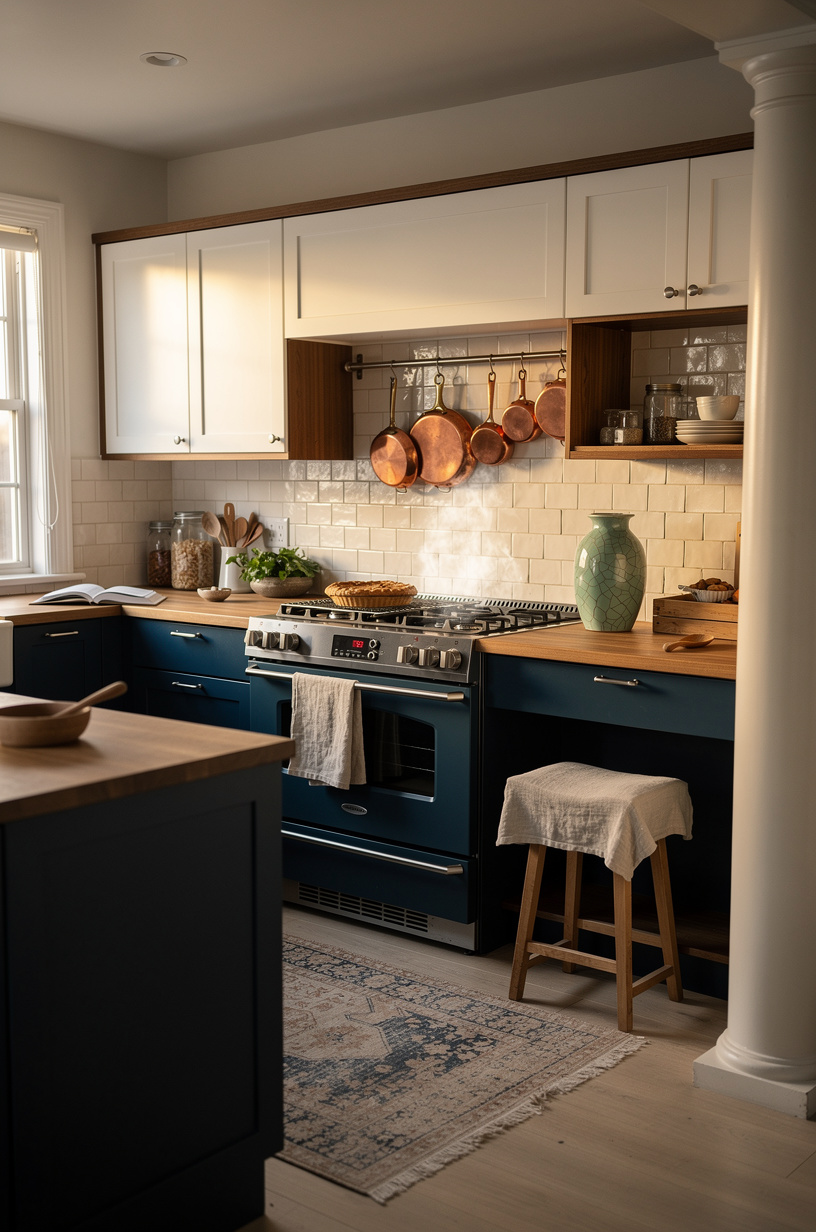
The two-tone split is the fastest way into this look without tearing anything out. Hague Blue reads almost black in low light, but it's got this deep mineral undertone that keeps it from feeling flat.
Pair it with Benjamin Moore White Dove up top so the wall doesn't close in on you.
I've seen this in a galley kitchen in Portland and the contrast made the whole room feel taller and more serene. Satin finish on the lowers, eggshell above. You'll want to scuff-sand first, even if the box says you don't.
Your prep work is what separates a professional result from a weekend mistake.
2Swap hardware for unlacquered brass that tarnishes
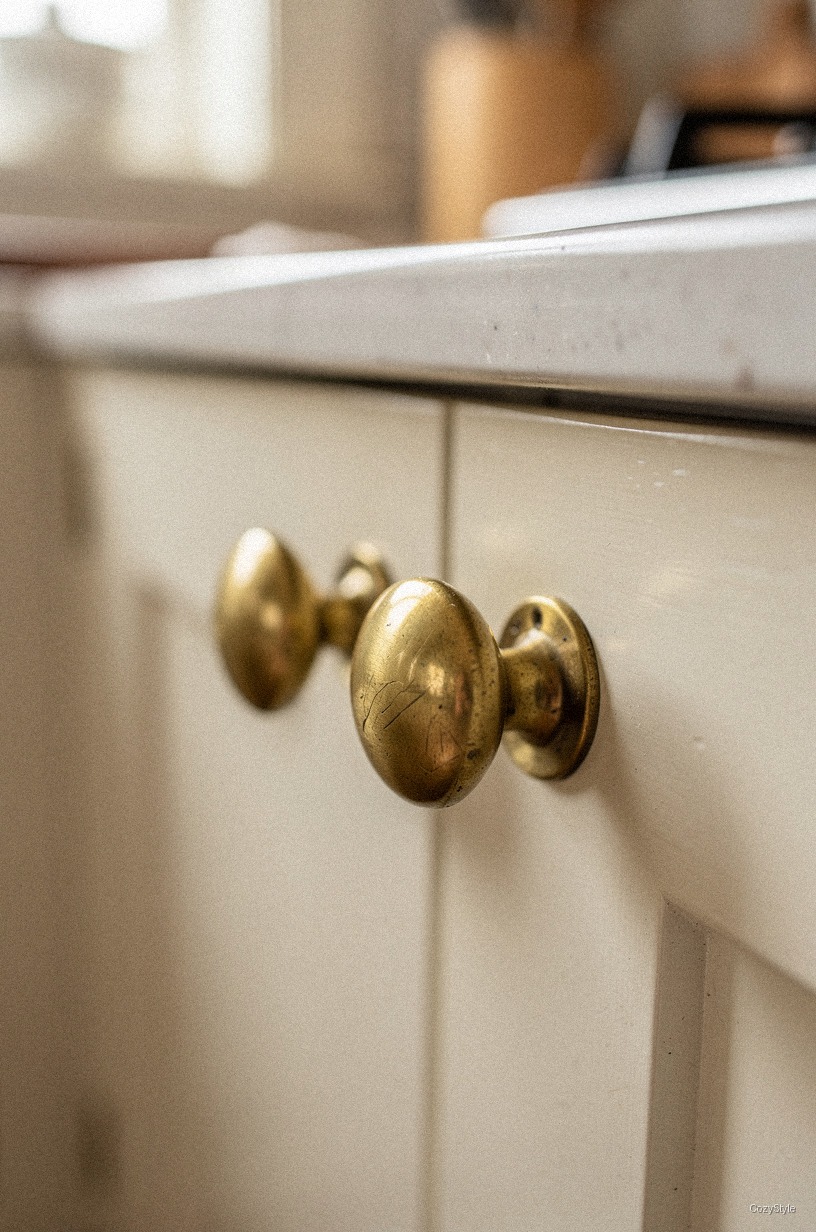
Shiny brass feels new-build. Unlacquered brass gets that quiet, mottled patina after six months of finger grease and steam. It's the jewelry of a dark kitchen.
CB2 and Rejuvenation both do solid pulls that aren't too ornate. Match your faucet if you can swing it. The mismatch of polished and aged metal is what makes a kitchen look assembled over time, not ordered from a catalog on Tuesday.
If you're unsure about the cost, start with just the island. It's worth it for the impact!
3Install open shelving in reclaimed pine with iron brackets
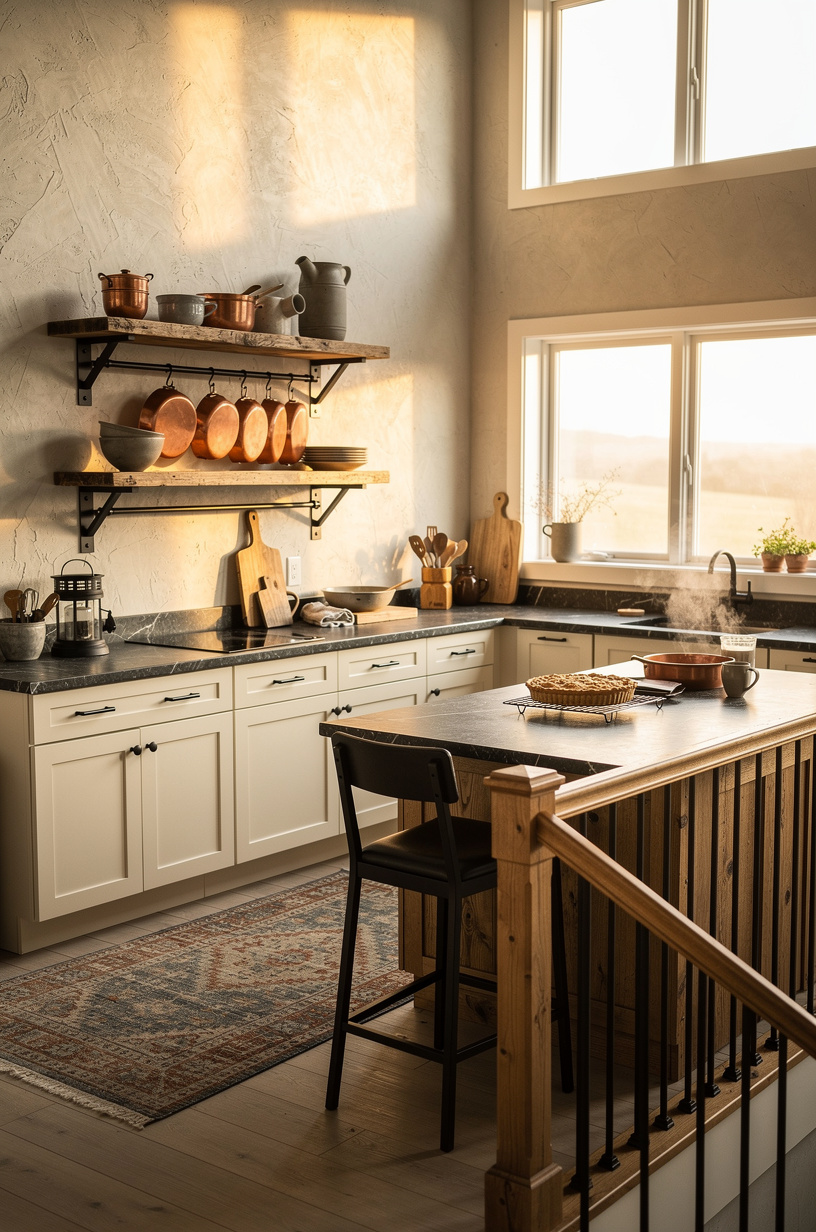
Cabinets hide clutter. Open shelves force you to curate. Reclaimed pine with the saw marks still visible, held by wrought iron brackets with a hammered finish.
Stack white ironstone, a few mason jars, and let the wood do the talking. If you're nervous about dust, keep the daily-use stuff down low and the pretty things up high. My open shelving guide covers how deep to go so your plates don't teeter.
The look is so inviting once you get it right.
4Lay honed black slate or zellige tile for the backsplash
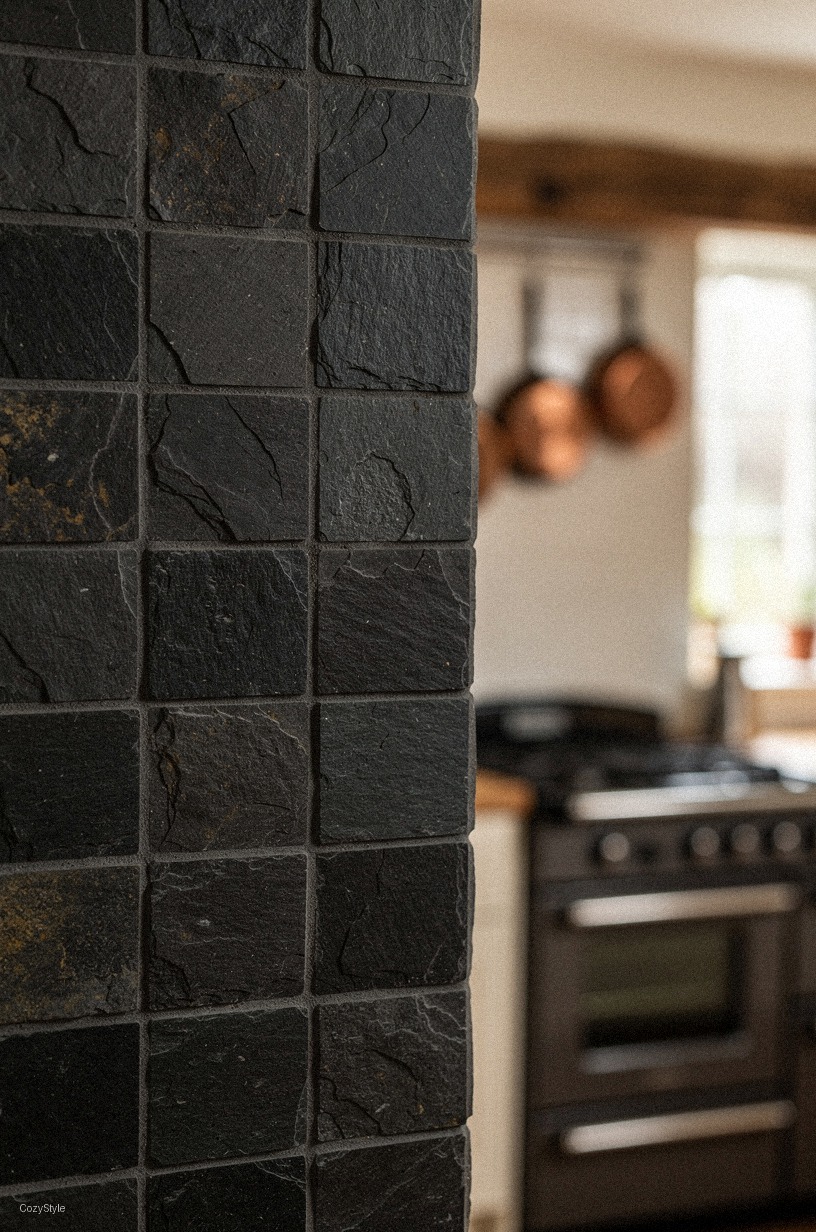
Glossy subway tile kills the mood here. You want something that drinks light instead of throwing it back.
Honed black slate has this soft, almost velvety surface that feels like a chalkboard. Zellige in charcoal or deep olive gives you that handmade wobble, each tile slightly different from the next.
Grout in Mapei Warm Gray, never bright white. The variation is the whole point.
Your backsplash becomes a gorgeous, harmonious backdrop for every meal you make.
5Bring in a butcher block island with a live edge
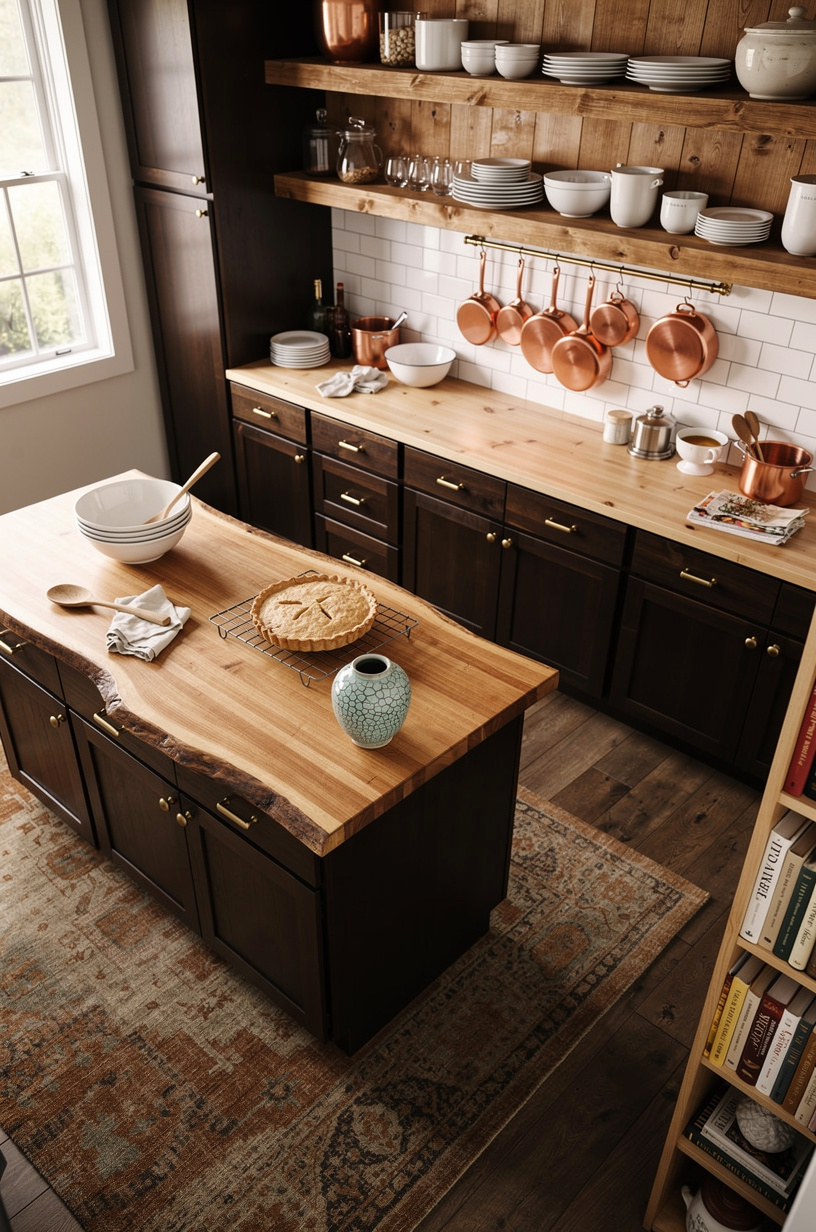
Stone islands feel cold in a dark kitchen. Butcher block, especially maple or walnut with a live edge, adds the warmth that keeps the room from going monastic.
Oil it every few months, let it get a few knife marks.
That's the cottage part. If you're buying new, IKEA's HAMMARP oak countertop is a steal and takes dark stain beautifully. Seal it with Osmo Polyx so water doesn't ghost into the grain.
The value here is incredible for the rich visual weight it adds.
6Hang a wrought iron pot rack over the stove or island
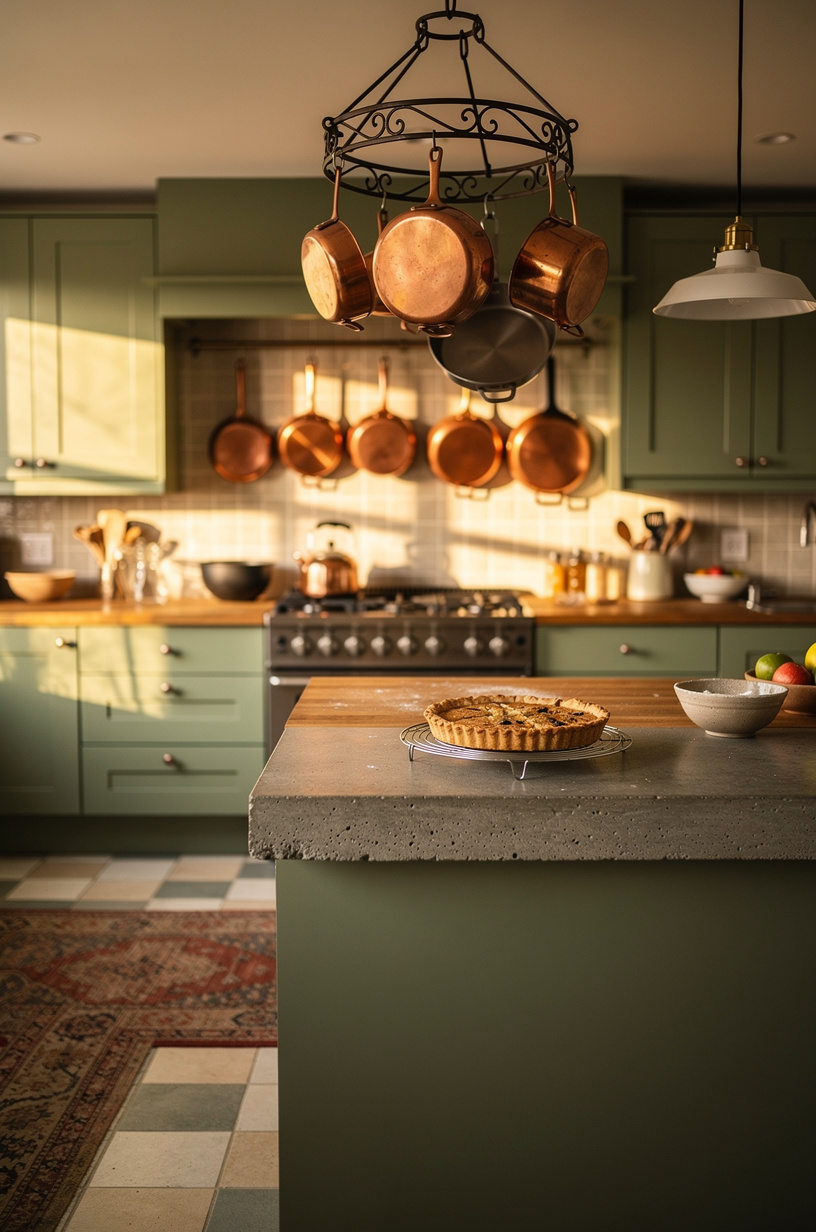
This is part storage, part sculpture. A wrought iron pot rack loaded with copper and cast iron turns cooking gear into decor. The metal echoes the hardware, the copper catches what little light you've got, and everything stays within reach.
Just don't overload it. I've seen one pull out of a ceiling that wasn't properly anchored. Drywall anchors are not your friend here.
Find a joist. Your pots deserve a secure, elegant home.
7Use vintage Persian runners instead of one big rug
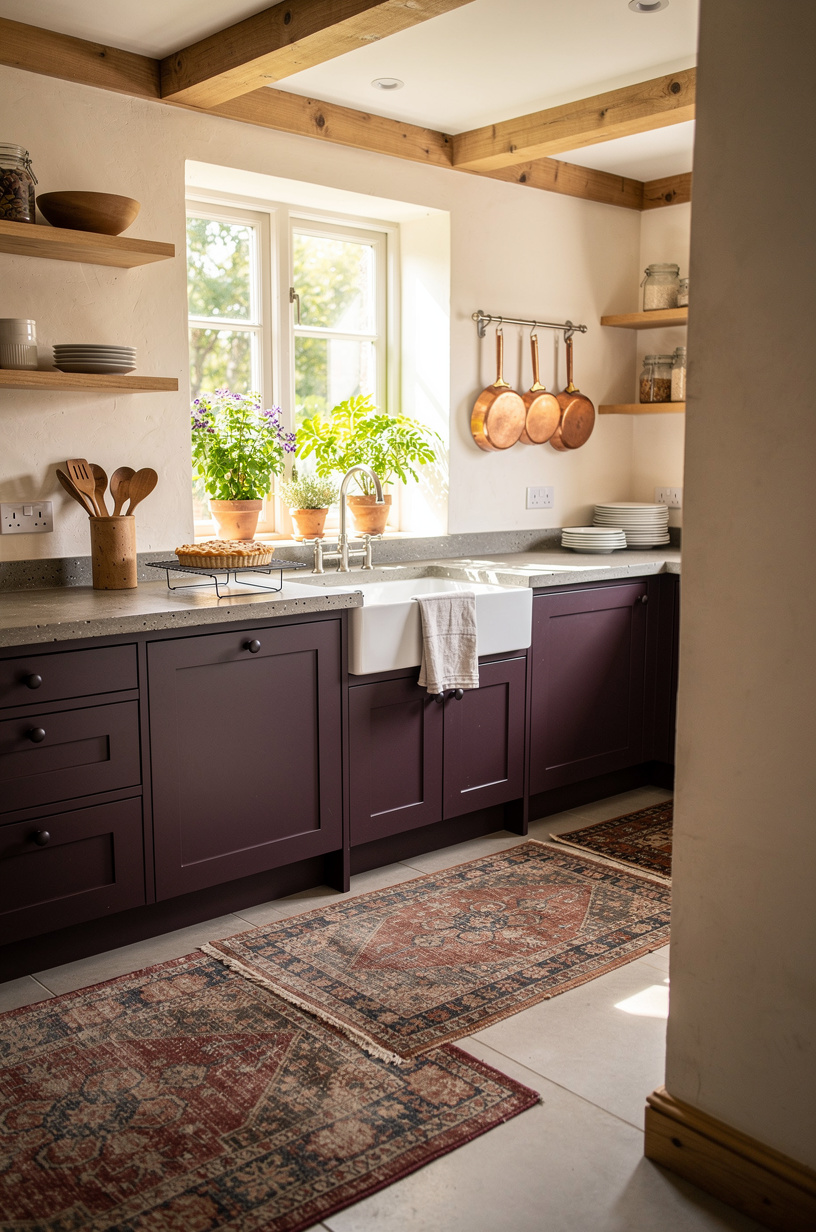
One solid rug in a kitchen is a trip hazard and a spill magnet. Runners laid in a line, like vintage Persian pieces with worn pile and vegetable dyes, give you the pattern without the commitment. Look for Heriz or Malayer runners on the narrow side.
They'll already have years of fading, so a little tomato sauce won't ruin your life. Layer two if your galley is long. The overlap adds depth.
I found mine for under a hundred dollars at a local estate sale. My vintage rug guide has tips on sizing.
8Light it with schoolhouse pendants and candle sconces
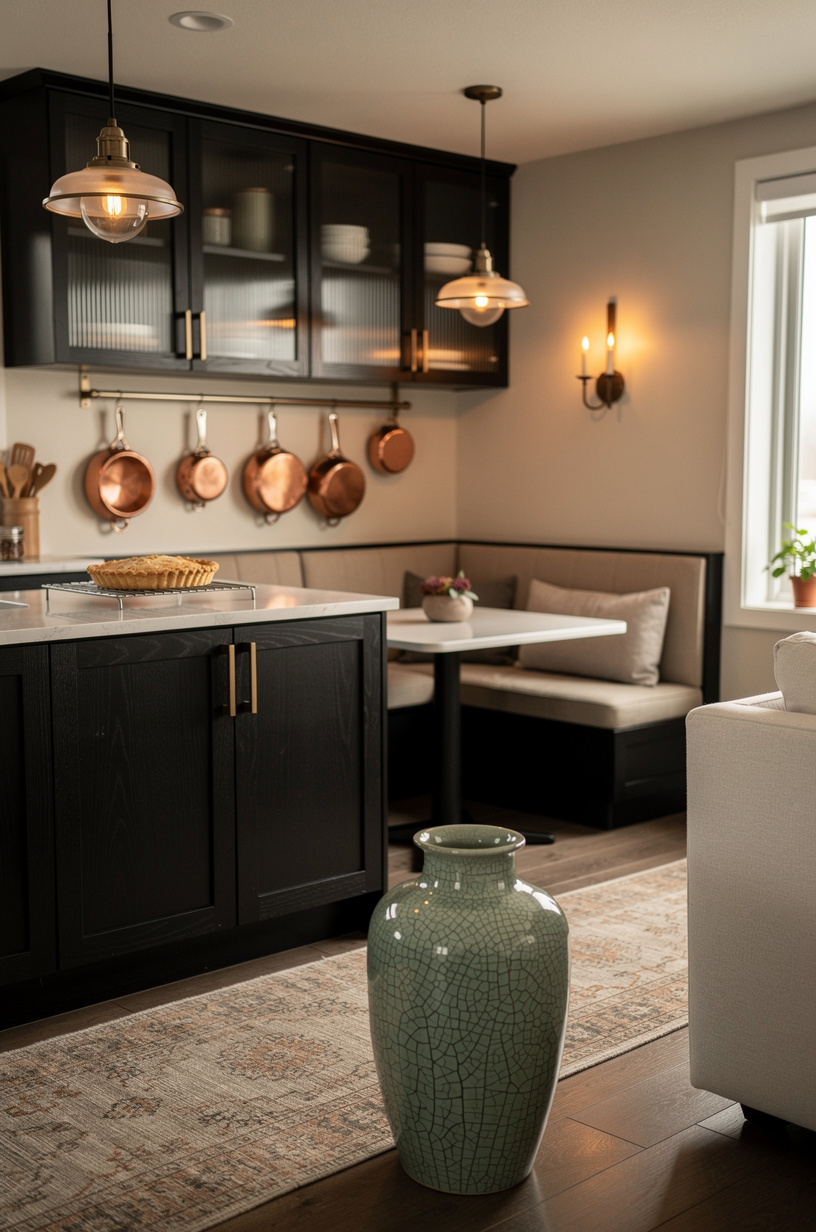
Overhead cans are the enemy of atmosphere. Schoolhouse pendants in milk glass, hung low over the island, throw a pool of warm light that stops at the counter's edge.
Add candle sconces on a dimmer where you can. The mix of electric and almost-electric keeps the room from feeling too wired.
My kitchen lighting guide breaks down the bulb temps that won't make your dark cabinets look muddy. The right glow transforms everything!
9Display copper cookware and enamelware on open counters
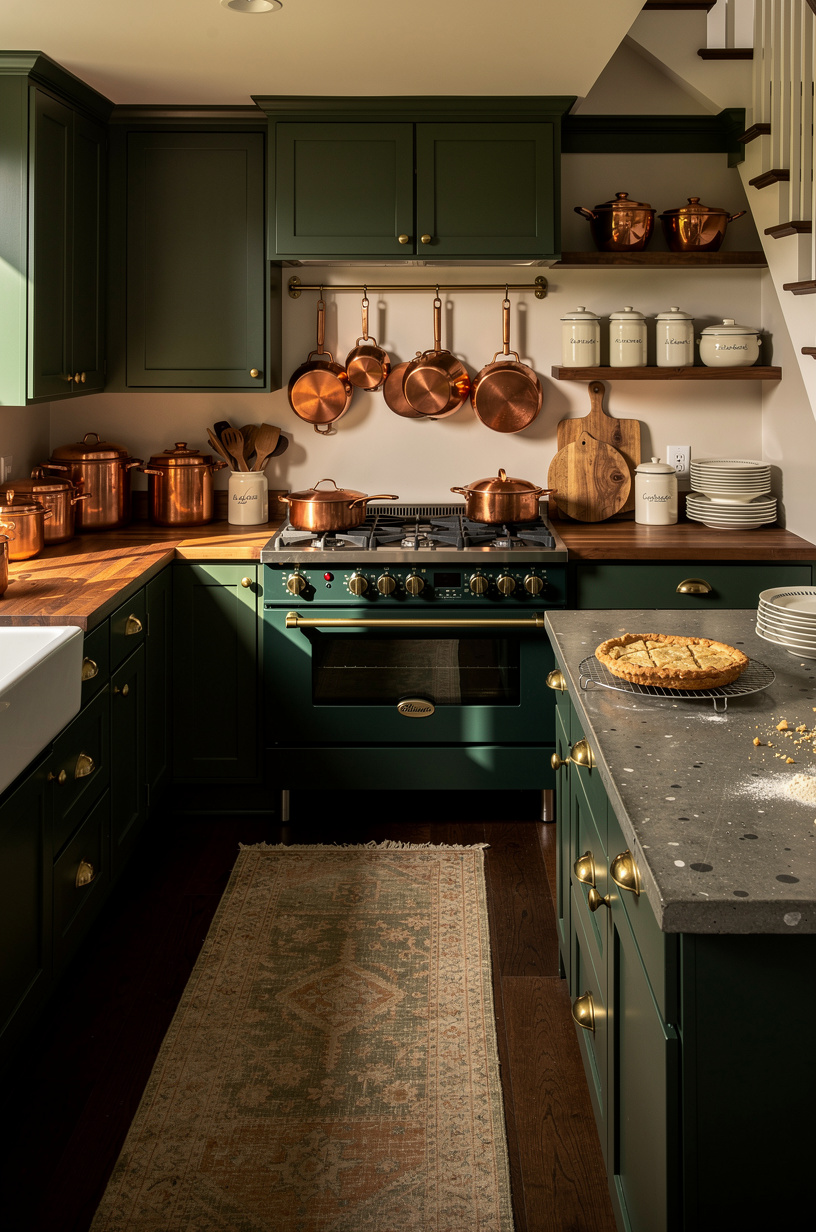
Not everything needs to be behind a door. A stack of copper saucepans, a few pieces of cream enamelware, a wooden bowl of garlic.
This is the styling that sells the fantasy.
Mauviel if you're investing, De Buyer for the mid-range, or thrifted pieces with the tin lining still intact. The copper darkens to a soft bronze over time. Don't polish it.
The tarnish is the look. Your counter becomes a captivating still life.
10Add a farmhouse sink in fireclay with a bridge faucet
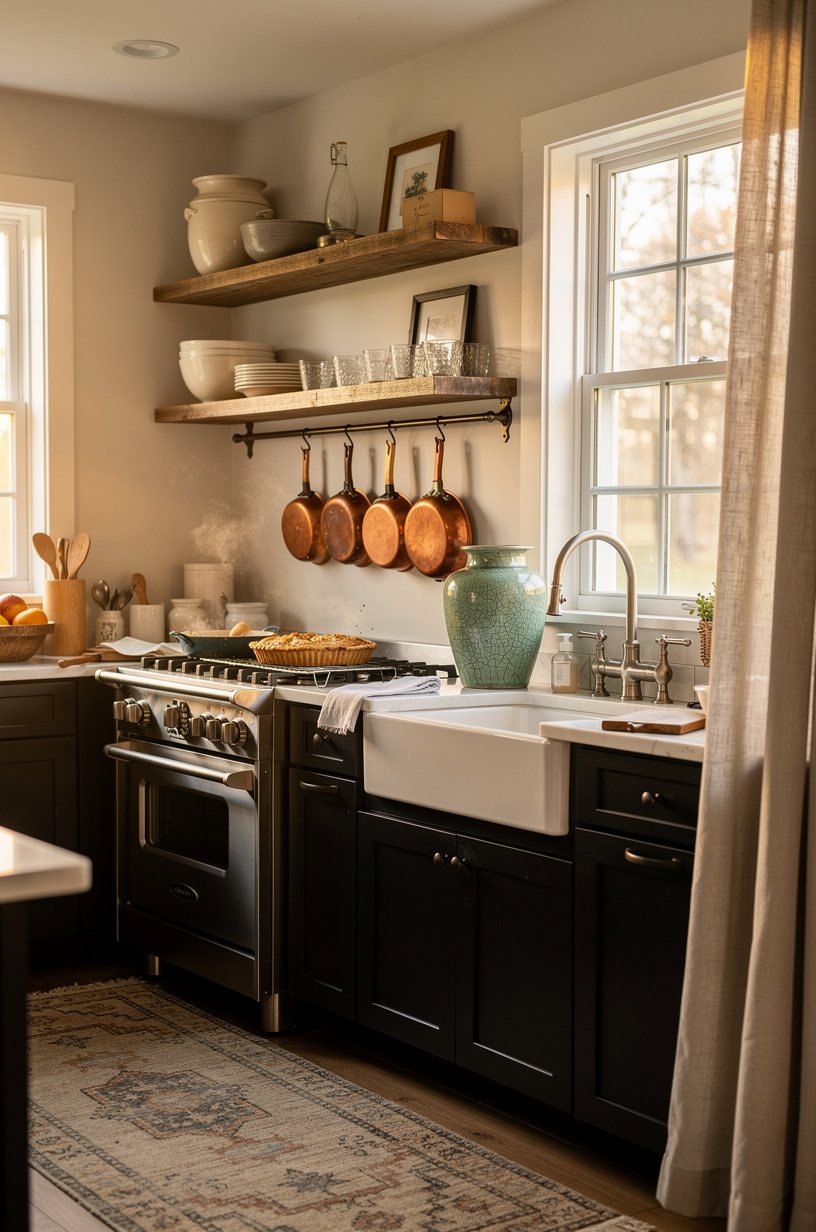
Fireclay has this heft that stainless steel can't fake. It stays cool to the touch, doesn't ping when you drop a pan, and the apron front gives you that old-laundry-room gravitas. Pair it with a bridge faucet in unlacquered brass or oil-rubbed bronze.
The cross handles feel deliberate. You'll wash dishes more slowly. That's not a bug.
If you're budgeting for one splurge, make it this timeless sink. My farmhouse sink guide breaks down the best brands.
11Line a wall with peg rails for aprons, baskets, and dried herbs
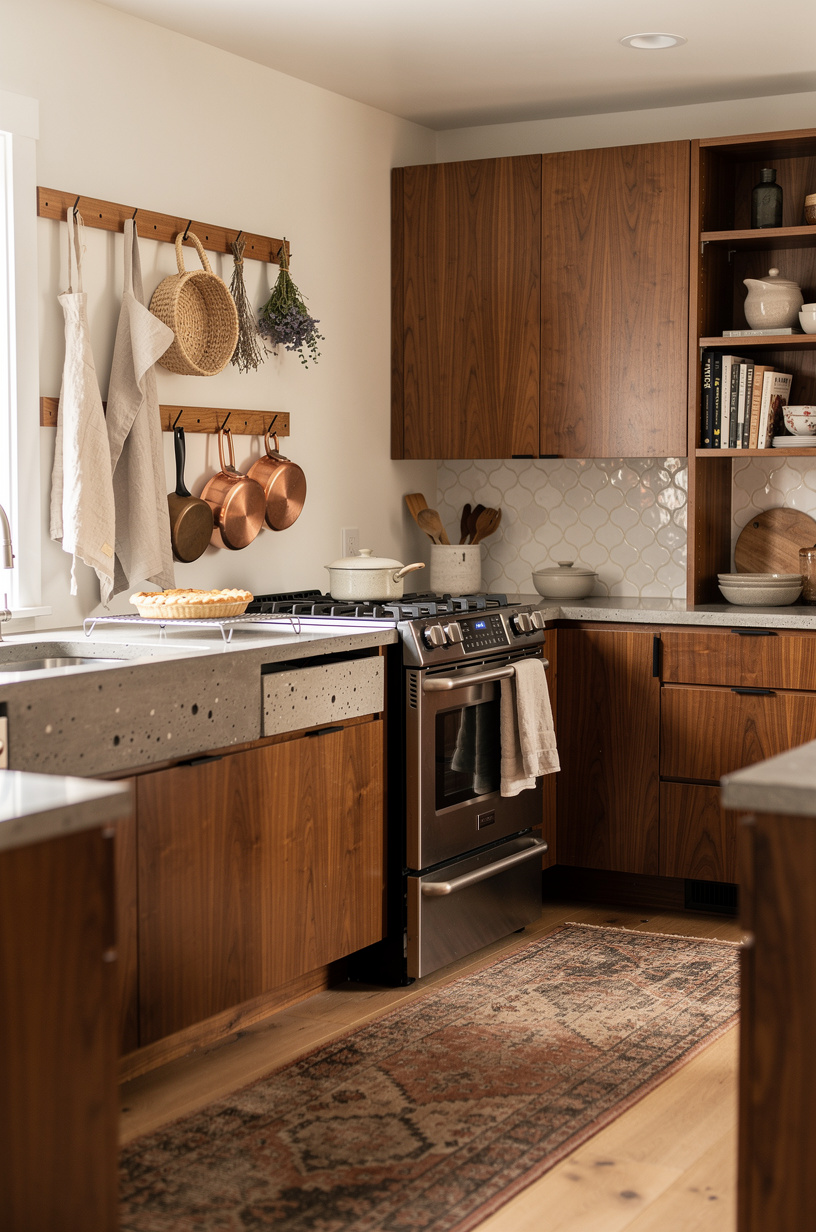
Shaker peg rails, painted the same color as the wall so they disappear, are the original storage move. Hang linen aprons, a few wicker harvesting baskets, bundles of dried lavender or thyme. It fills vertical space without cluttering countertops.
And when you need the wall clear for a big project, everything lifts off in thirty seconds. I've got three in my kitchen and I'd add a fourth if I had the studs. It's the most affordable upgrade on this list.
My peg rail ideas show how to space them.
12Choose moody botanical wallpaper for a single accent wall
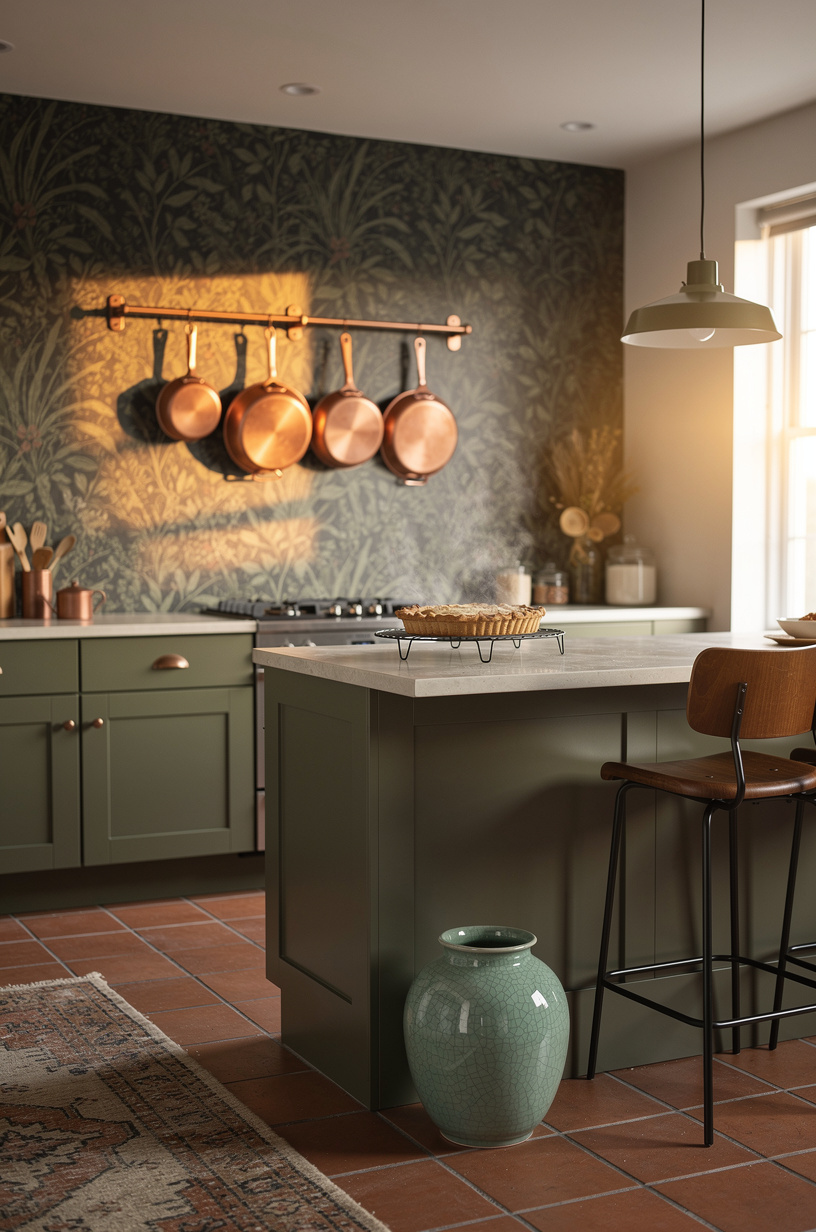
Not the whole room. One wall, maybe the pantry door or the space above the backsplash if you've got a gap.
Look for moody botanical prints, mushroom foraging scenes, or deep forest green patterns with hand-painted texture. House of Hackney does the high end, Spoonflower has artist prints that hold up.
Matte paper, not vinyl. The matte finish keeps it from reading like a rental fix.
Your guests will ask where you found this enchanting paper.
13Set out wooden cutting boards in varying sizes as permanent decor
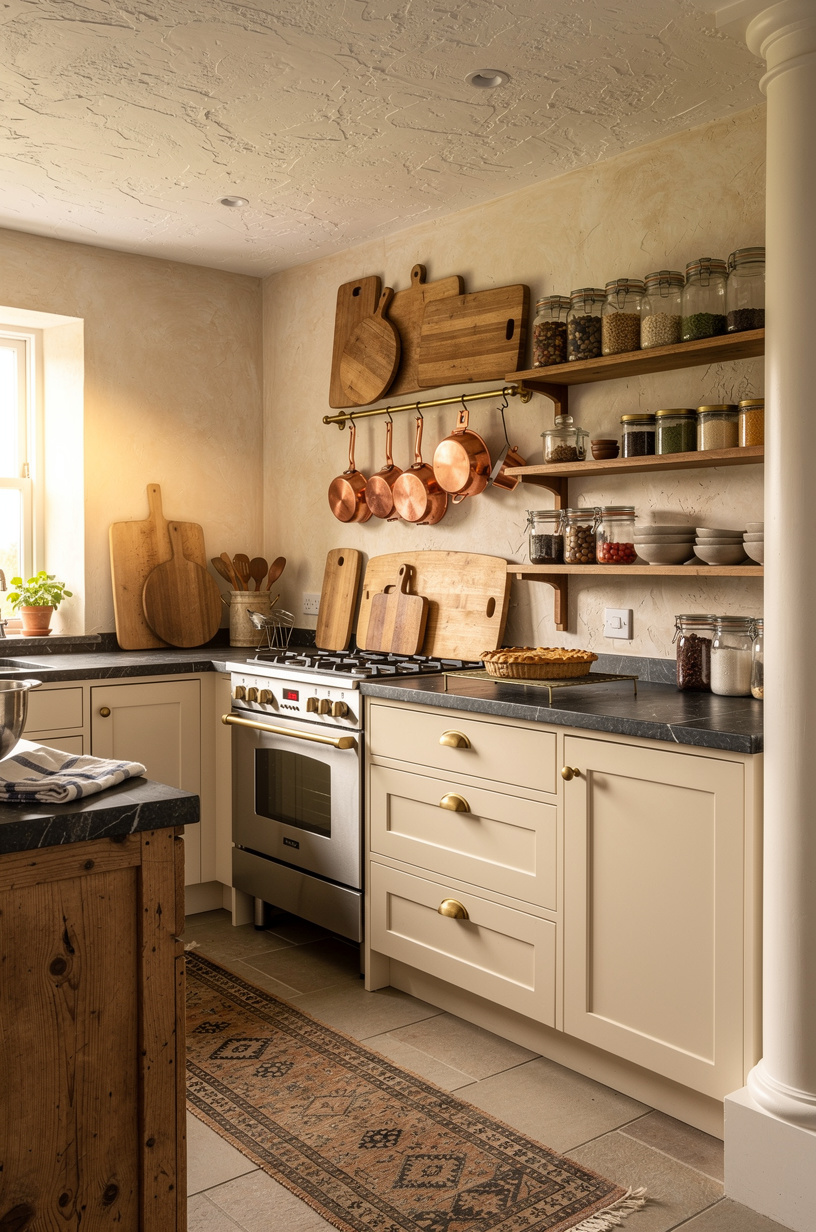
This isn't staging. This is living.
A walnut board for bread, a cherry one for vegetables, a small olive wood piece for garlic.
Lean them against the backsplash where you can grab them. The wood darkens where your hands touch it. Over time they become a record of every meal.
Way better than a sign that says "Eat." The organic texture warms up any dark corner. My cutting board care guide keeps them beautiful for years.
14Install leaded glass cabinet fronts on uppers
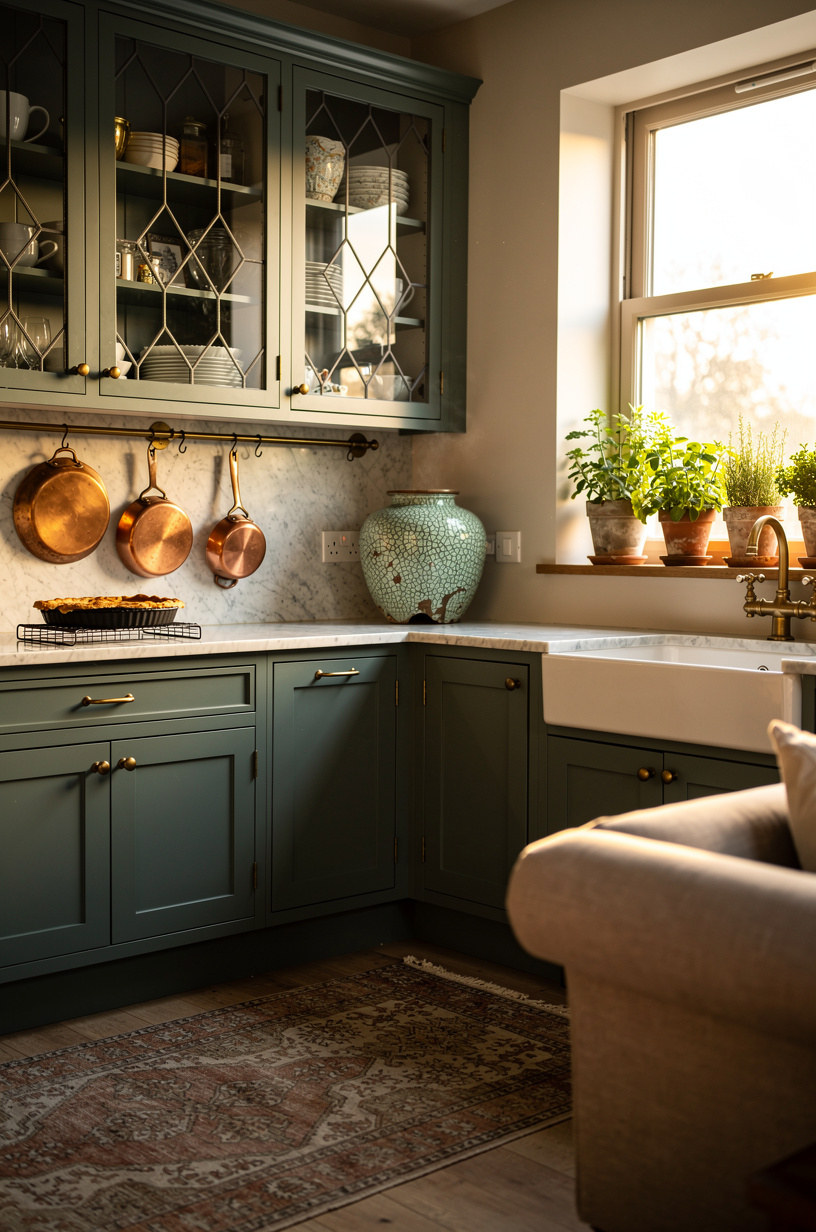
If you've got standard flat-panel uppers, swapping a few doors for leaded glass or reeded glass changes everything. The light passes through but blurs what's behind it. Stack your prettier dishes there, hide the Tupperware elsewhere.
IKEA sells glass inserts that fit their standard cabinets. Or a local glass shop can cut reeded or seedy glass to size for less than you'd think. The subtle shimmer is absolutely charming at dusk.
15Prop a vintage ladder against the wall for blankets and baskets
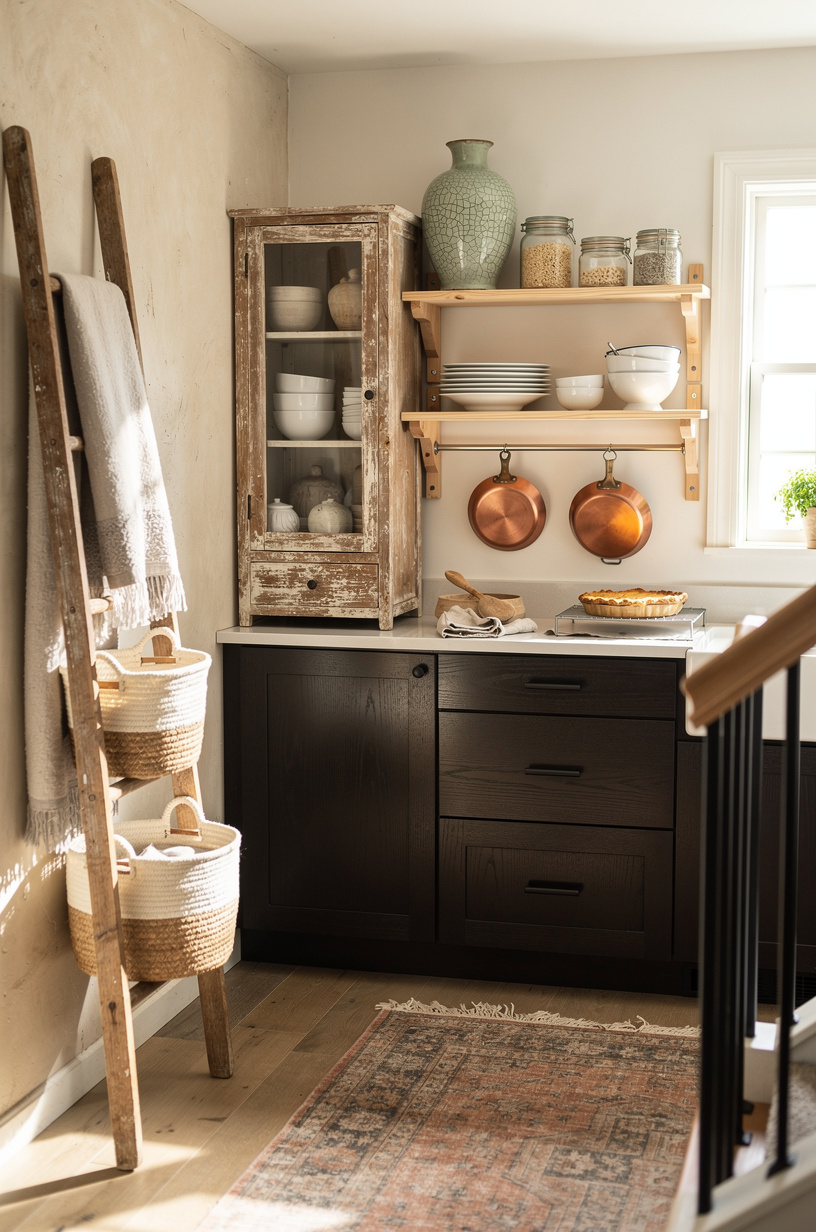
A wooden orchard ladder, the kind with the tapered rungs, leans against a blank wall and holds chunky knit throws, a wicker basket of onions, or nothing at all. It's sculptural.
It breaks up the cabinetry. And if you've got high ceilings, it draws the eye up so the room feels bigger, not smaller.
I found mine at a barn sale for forty bucks. Best money I've spent on this kitchen.
What a steal! My vintage ladder decor post has more styling ideas.
16Drape a linen table runner over the island counter
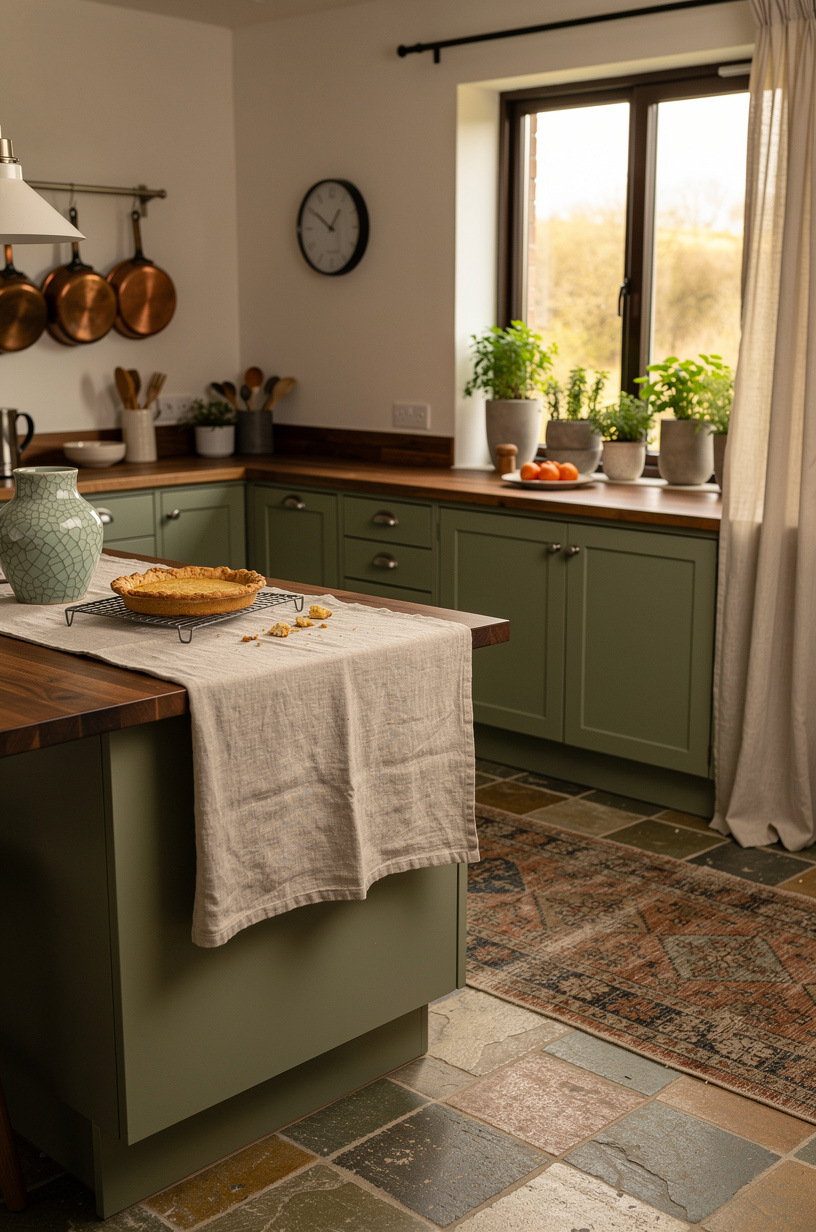
Sometimes the smallest move shifts the whole mood. A heavy linen runner, washed until it's soft and slightly rumpled, laid across the island counter. It catches crumbs, sure.
But it also catches the light differently than bare stone. Rough Linen does the real thing, or you can bleach and wash a cheap IKEA AINA until it feels like you've owned it for years.
The rumples are the point. Your island instantly feels more welcoming and peaceful.
17Store dried herbs in amber apothecary jars on the windowsill
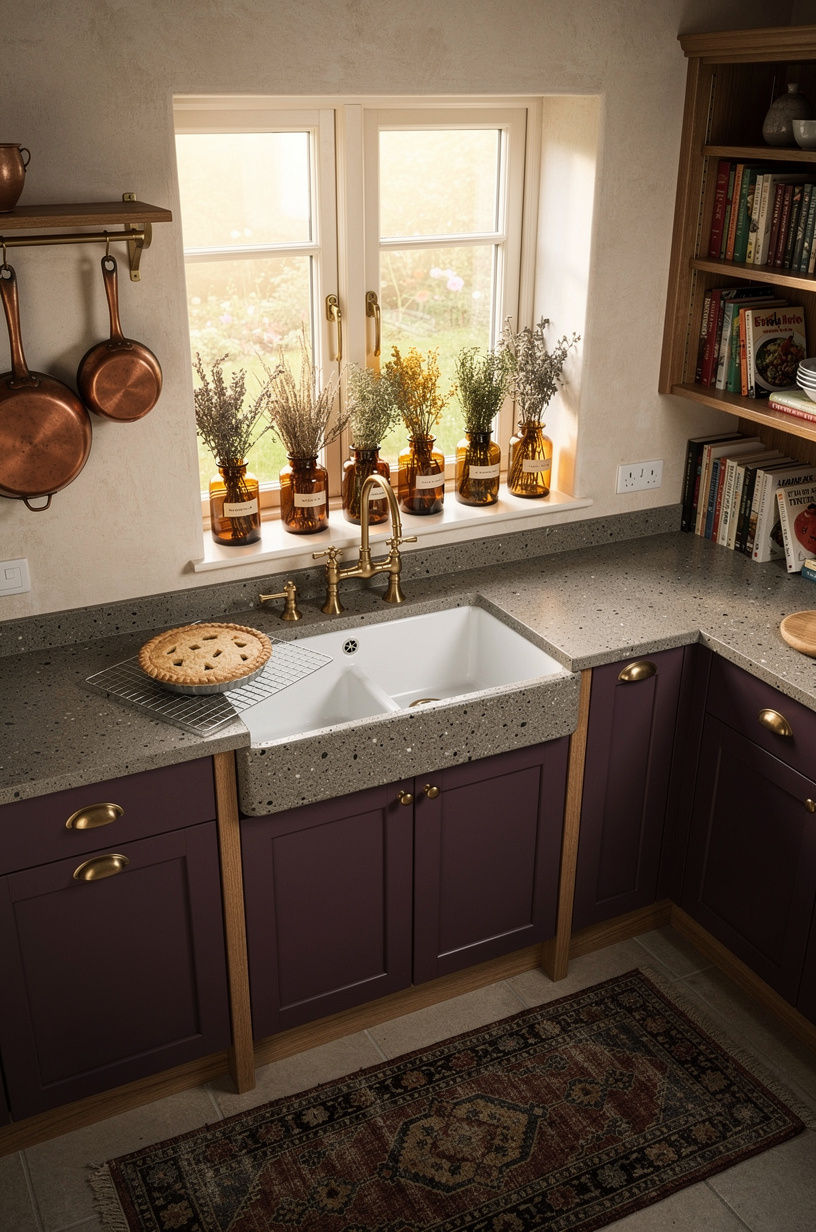
This is the detail that makes people pause and look closer. Amber glass apothecary jars, the kind with cork stoppers, filled with dried rosemary, bay leaves, chamomile.
The amber glows in afternoon light.
The corks smell like something. Line three or four on the windowsill where the sun hits them.
It's functional, but it's also pure atmosphere. The scent alone is worth the few dollars you'll spend.
18Hang a wicker pendant over the breakfast nook
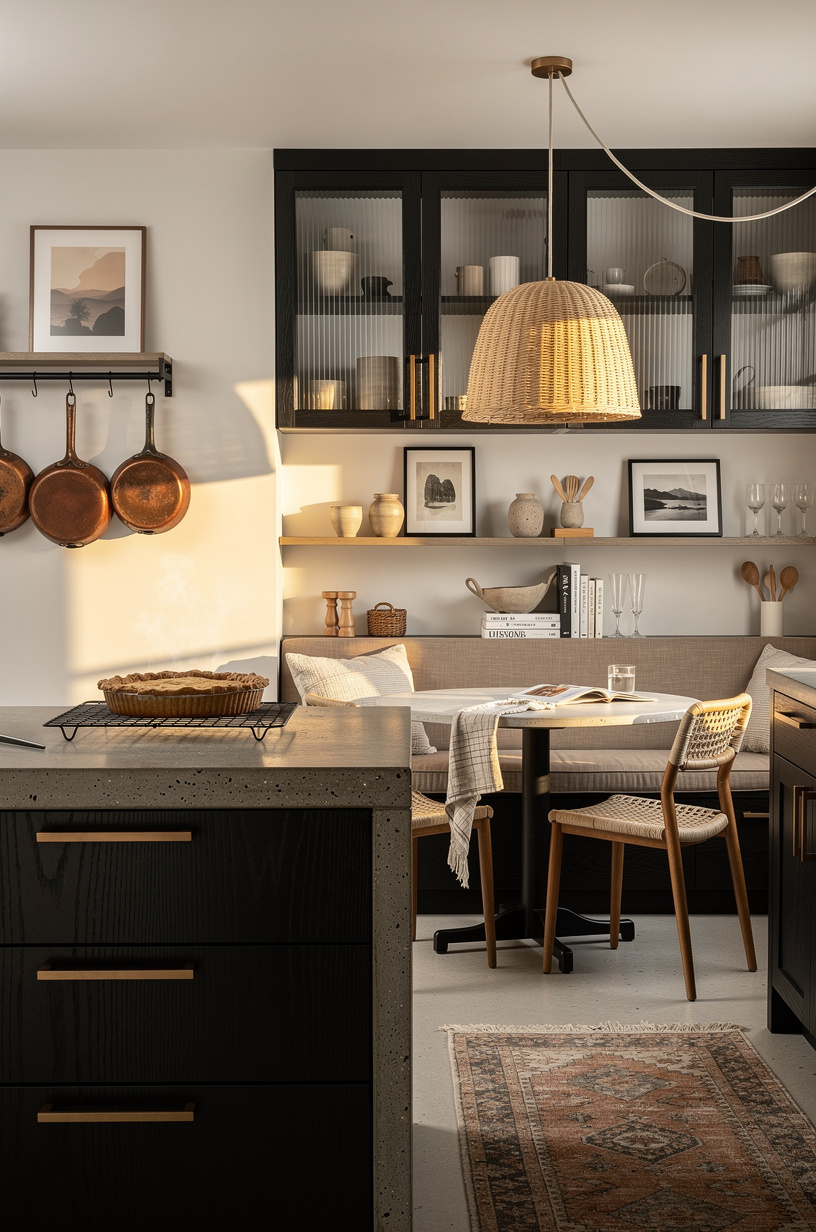
Not every light needs to be metal. A wicker or rattan pendant, especially one with an open weave, throws patterned shadows across the table at night. It softens all the hard surfaces in a dark kitchen.
CB2 and West Elm both do versions that don't look like beach house leftovers. Hang it low, about 30 inches above the table.
The glow underneath is what you're after. Your mornings will feel so much calmer and more tranquil.
19Paint the ceiling soft cream instead of white
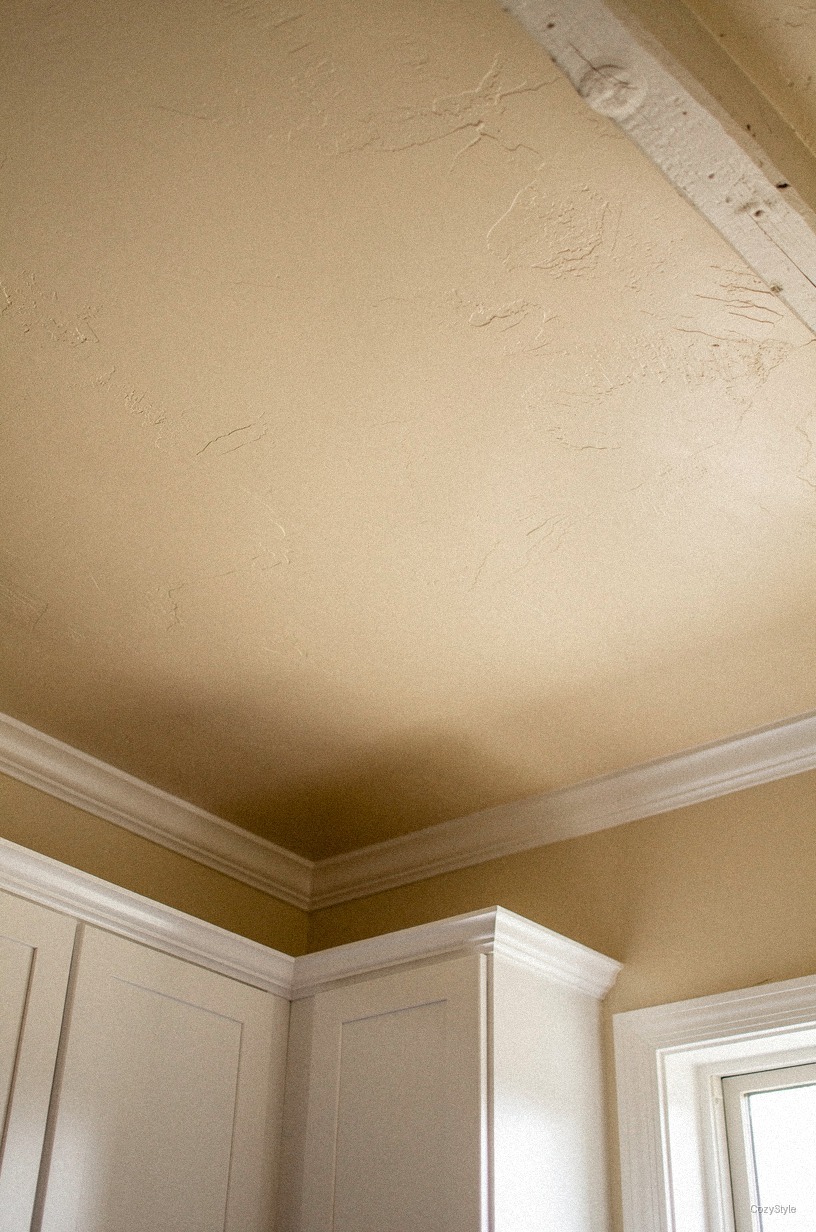
White ceilings in a dark kitchen feel like a hospital trying to cheer up. Soft cream, something like Farrow & Ball's School House White or Benjamin Moore's Linen White, warms the overhead without fighting the walls.
It's subtle. Most people won't notice the color.
They'll just notice the room feels complete. That's the move.
The difference is remarkable once you see it in person!
20Add a cast iron trivet collection on the wall
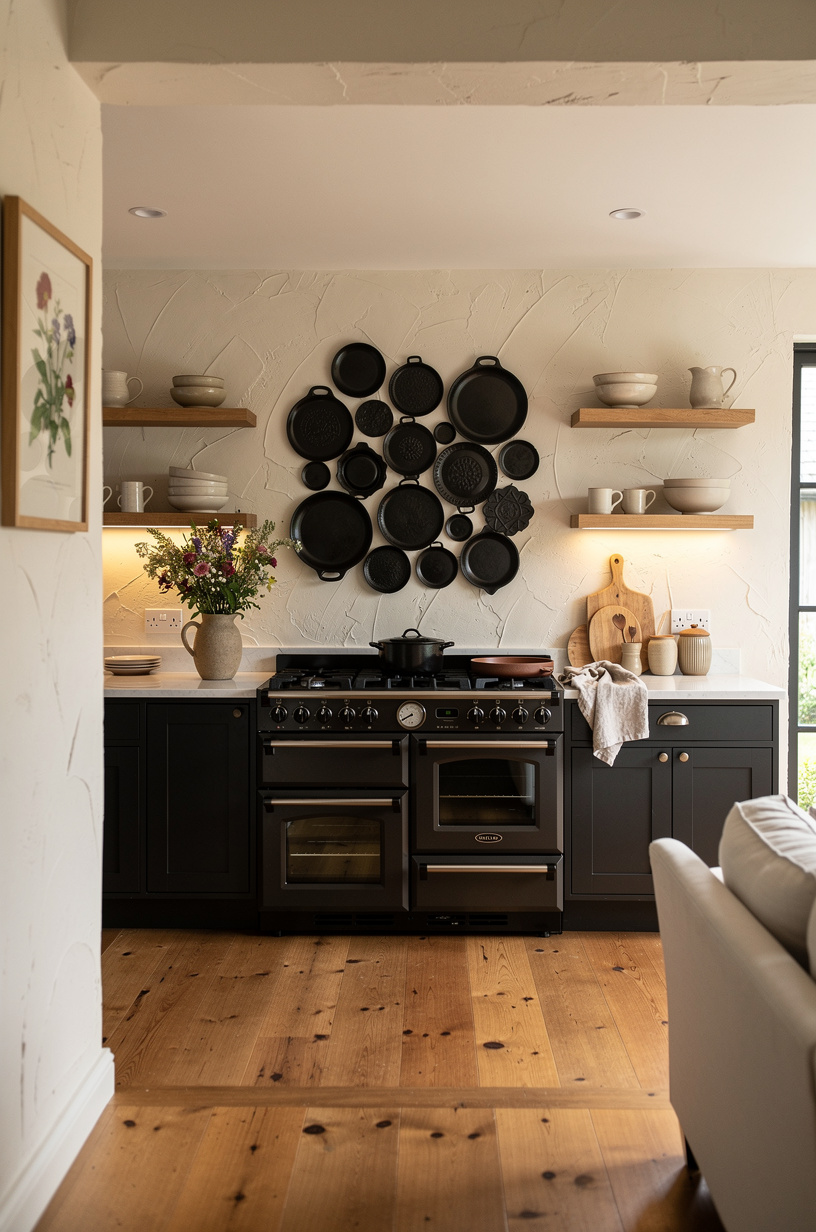
Cast iron trivets, the decorative kind with grapevines or farm animals, are cheap at estate sales and read as folk art when you group them. Hang five or six in a loose cluster on a narrow wall. They're dark, they're textured, and they tell a story about the person who collected them.
I started with one from my grandmother. Now I've got nine.
It happened without a plan. Each one adds so much rustic personality.
Why Dark Cottagecore Works Best in the Kitchen (And Where Most People Go Wrong)
Here's the thing nobody tells you about dark kitchens: they hide the mess that light kitchens broadcast.
A speck of flour on White Dove cabinets screams at you from across the room. On Hague Blue, it barely whispers.
That psychological shift, the permission to cook without performing cleanliness, is why people who actually use their kitchens tend to drift darker over time. Your kitchen should be a refuge, not a stage.
I learned this the hard way. My first attempt was an all-black kitchen. Walls, cabinets, ceiling. It looked incredible in photos.
In person, it felt like cooking inside a camera bag. The problem wasn't the color.
It was the absence of texture. Dark needs variation to breathe. Rough wood against smooth slate.
Warm brass against cool iron. Matte paint next to something that catches light, even dimly. Without that contrast, dark becomes flat.
Flat becomes oppressive. You need layers that invite touch.
The cottagecore part matters too. This isn't a sleek, minimalist darkness.
It's the darkness of an old pub, a root cellar, a pantry with stone walls. It carries the implication of time, of use, of hands.
That's why the materials matter so much more than the color. Reclaimed pine with nail holes. Copper that's gone soft and brown. Fireclay with a chip in the corner you can't quite remember happening.
These are the things that keep a dark kitchen from feeling like a cave. The emotional resonance is what makes guests linger.
And the light. Everyone asks about the light.
A dark kitchen doesn't need more light. It needs better light. Pools of it, not floods. A pendant over the island where you prep.
A sconce near the stove where you stir. A candle on the counter when you're done. The darkness becomes the frame.
The light becomes the subject. That's the whole idea. Your eye naturally rests where you place the glow.
If you're hesitating because you think dark will make your small kitchen feel smaller, I've got news. It won't.
It'll make it feel deeper. A white room has boundaries you can see.
A dark room dissolves them. The eye stops at the light, not the wall.
Place your light well, and the room expands in the direction you want it to. The perceived value of your space goes up immediately.
Frequently Asked Questions
### What is the best dark cottagecore kitchen for a small kitchen?
Start with the two-tone cabinet move. Hague Blue or Railings on the lowers, warm white up top.
It anchors the room without boxing it in.
Add open shelving instead of uppers on one wall. My small kitchen ideas guide has the measurements that keep it from feeling cramped.
The cost is minimal compared to the visual expansion you get.
### Where can I buy dark cottagecore kitchen pieces on a budget?
IKEA for cabinets, countertops, and hardware.
Target's Threshold line for enamelware and textiles. Facebook Marketplace for vintage rugs, ladders, and copper.
Spoonflower for wallpaper. You don't need to spend at a specialty store to get the look.
Your budget goes further when you mix high and low pieces thoughtfully.
### How much does a dark cottagecore kitchen makeover cost?
A full refresh runs about $800 to $3,000 depending on what you already own. Paint and hardware: $150-400.
Backsplash tile: $300-800. Lighting and fixtures: $200-600.
The big variable is labor if you're not DIYing the tile or cabinets. Is it worth it?
Absolutely, for the daily joy you'll get.
### Can I create a dark cottagecore kitchen on a budget?
Yes, and start with what costs nothing. Rearrange your open storage. Move the pretty dishes forward.
Drape a linen tea towel over the oven handle. Paint is the next cheapest move.
A gallon of Farrow & Ball and a Saturday will change the whole room. The transformation is stunning for the price.
### Is a dark cottagecore kitchen worth it in a small space?
Worth it. Dark colors recede visually, which makes walls feel farther away than they are.
The key is keeping the ceiling light and adding reflective textures like brass or copper so the room has depth, not just darkness. Your small kitchen will feel intimate rather than cramped.
### Is dark cottagecore kitchen a good idea for a rental?
Yes, with swaps that leave no trace. Peel-and-stick wallpaper for an accent wall. Removable brass hardware that screws back into the original holes.
A freestanding butcher block island you take with you. Layer rugs and textiles that are yours to keep. The value is in the removable layers you build.
The Final Move
If I had to pick one, I'd start with painting the lower cabinets. It's the single biggest visual shift for the least money, and everything else builds from there.
Pin the two-tone look for later and check out my warm lighting guide to keep the mood right once the sun goes down.
Your kitchen deserves to feel like a storybook.