
 by
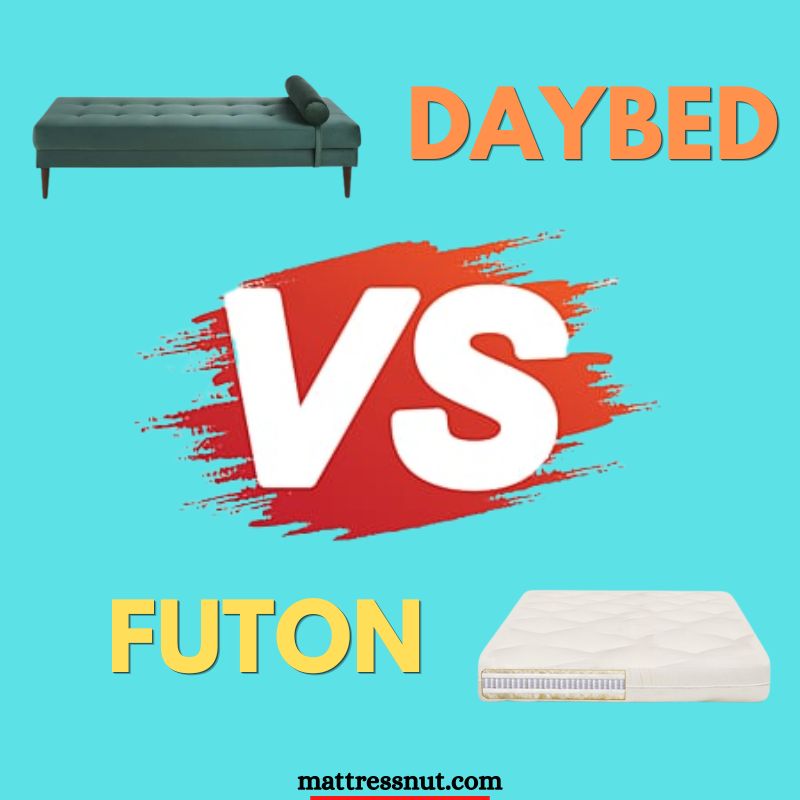
by Choose a daybed if you want dedicated guest-room comfort and a furniture piece that looks good year-round. Choose a futon if you need a sofa-to-bed conversion in a small apartment or dorm and price is the priority. The daybed wins on sleep quality and style; the futon wins on flexibility, price, and fit in tight spaces.
Both daybeds and futons solve the same basic problem: a single piece that functions as a sofa by day and a bed at night. But they solve it differently, and the better choice depends almost entirely on how you will actually use the space.
Daybed vs futon: head-to-head comparison
| Feature | Daybed | Futon |
|---|---|---|
| Sleep surface | Standard twin or twin XL mattress (any thickness) | Foldable futon mattress, typically 4–8 inches thick |
| Sleep comfort (1 person) | Excellent — real mattress, real support | Fair to good — depends on mattress thickness |
| Sleep comfort (2 people) | Limited — twin only unless trundle added | Better — full and queen futons sleep two adults |
| Sofa seating | Workable with cushions, not ideal seat depth | More ergonomic sofa depth, better for daily sitting |
| Trundle option | Yes — adds a second bed underneath | No |
| Storage underneath | Often yes — drawers or open space | Rarely |
| Portability | Heavy, meant to stay put | Lightweight, easy to move and fold away |
| Assembly | More involved — like a bed frame | Simpler, typically 30–60 minutes |
| Frame materials | Wood or metal, wide range of styles | Wood or metal, more minimal |
| Price (frame only) | $200–$1,000+ | $150–$600 (frame + mattress included) |
| Best use case | Guest room, home office, teen room | Studio apartment, dorm, spare living room |
What is a daybed?
A daybed is a bed frame with three sides — two arms and a back — that holds a standard twin or twin XL mattress. Because three sides are enclosed, it reads as a sofa when loaded with cushions, but the sleeping surface is identical to a regular single bed. Most modern daybeds are designed to sit flush against a wall, freeing the remaining floor space in a guest room or home office.
The trundle option is one of the daybed's strongest arguments. A pop-up trundle hides a second mattress frame underneath the main frame; when guests arrive, you pull it out and have two sleeping surfaces from one footprint. That flexibility matters in rooms that need to serve multiple purposes without permanently allocating space to two beds.
Daybed pros
- Uses any twin mattress, so sleep quality scales with your budget for the mattress
- Optional trundle adds a second sleeping surface in the same footprint
- Wide range of frame styles — iron, solid wood, upholstered, platform, canopy
- Often includes under-frame storage drawers
- Looks like intentional furniture, not a folded-out sofa
Daybed cons
- Frame costs more than a comparable futon
- Mattress is sold separately and adds to total cost
- Not portable; difficult to move once assembled
- The three-sided frame can make getting in and out feel constrained
What is a futon?
Modern American futons are bifold or trifold sofa frames with a matched futon mattress that folds with the frame. In sofa position the mattress forms the seat and backrest; in bed position the frame flattens and the mattress lies flat. Standard futon frames come in full and queen sizes more often than twin, which means two adults can sleep on a quality futon where a twin daybed cannot accommodate them.
The futon mattress is the limiting factor. Cheap futons use 4–6 inch cotton or foam mattresses that compress with time and become uncomfortable for regular sleep. Mid-range futons with 8–10 inch foam or hybrid mattresses are genuinely comfortable for nightly use. If you buy a futon and plan to sleep on it every night, budget for the thicker mattress.
Futon pros
- Lower total price — frame and mattress often sold as a set
- Full and queen sizes can sleep two adults comfortably
- Folds flat, saving space in a studio or small apartment
- Lighter than a daybed, easier to reposition or move between rooms
- Converts quickly from sofa to bed
Futon cons
- Thin mattresses wear out faster than a standard mattress
- No trundle option for a second separate bed
- The sofa position is functional but not as comfortable as a dedicated sofa
- Converting between positions adds a step when you just want to sleep
Which should you choose?
Choose a daybed if: you want a dedicated guest sleeping space that looks like real furniture, you have one guest at a time and trundle capability is a bonus, or you already have a mattress and just need the frame.
Choose a futon if: your budget is under $400 all-in, you live in a studio or small apartment where you personally use the sofa every day and fold it out for guests, or you need to sleep two adults on the same surface without paying for two separate beds.
Neither is a substitute for a proper bed if you are the one sleeping on it every night for years. Both work well as guest solutions, with the daybed offering better long-term comfort for individual guests and the futon offering more flexibility when guests vary in number.
Frequently asked questions
Can you sleep on a futon every night?
Yes, but the quality of sleep depends on the mattress. A 4–6 inch cotton futon mattress will compress within months if used nightly. If you plan to sleep on a futon regularly, choose a model with an 8 inch or thicker foam or innerspring mattress. Those are meaningfully more comfortable for daily use.
Can you sleep on a daybed every night?
Yes. Because a daybed holds a standard twin mattress, nightly comfort is determined by whichever mattress you choose — the same as any regular bed. The main practical difference is the three-sided frame, which some people find slightly constrictive when getting in or out.
Is a futon or daybed better for a guest room?
A daybed is generally the better guest room choice. It looks like furniture when not in use, holds a comfortable twin mattress, and the optional trundle gives you a second sleeping surface. A futon works if the guest room doubles as a living room and you need actual sofa seating during the day.
Can two adults sleep on a futon?
Yes, if you buy a full or queen futon. Twin futons are too narrow for two adults. Full futons (54 inches wide) can sleep two average-sized adults; queen futons (60 inches) are more comfortable for two. A twin daybed cannot sleep two adults without the trundle, and even trundle mattresses are slimmer than the main mattress.
What mattress works best in a daybed?
Any standard twin mattress fits a daybed. The main practical consideration is height: daybeds look better with a mattress no thicker than 8–10 inches so the frame arms remain visually proportional and the sleeper does not sit too high. Medium-firm foam or innerspring mattresses in the 6–10 inch range work well. There is no need for a specialty "daybed mattress."