
 by
by Recommended: Saatva Classic Mattress
A supportive, pressure-relieving sleep surface can meaningfully reduce the physical tension that amplifies anxiety at night. Saatva's luxury innerspring hybrid is consistently rated among the best for anxious sleepers.
Why Death Anxiety Intensifies at Bedtime
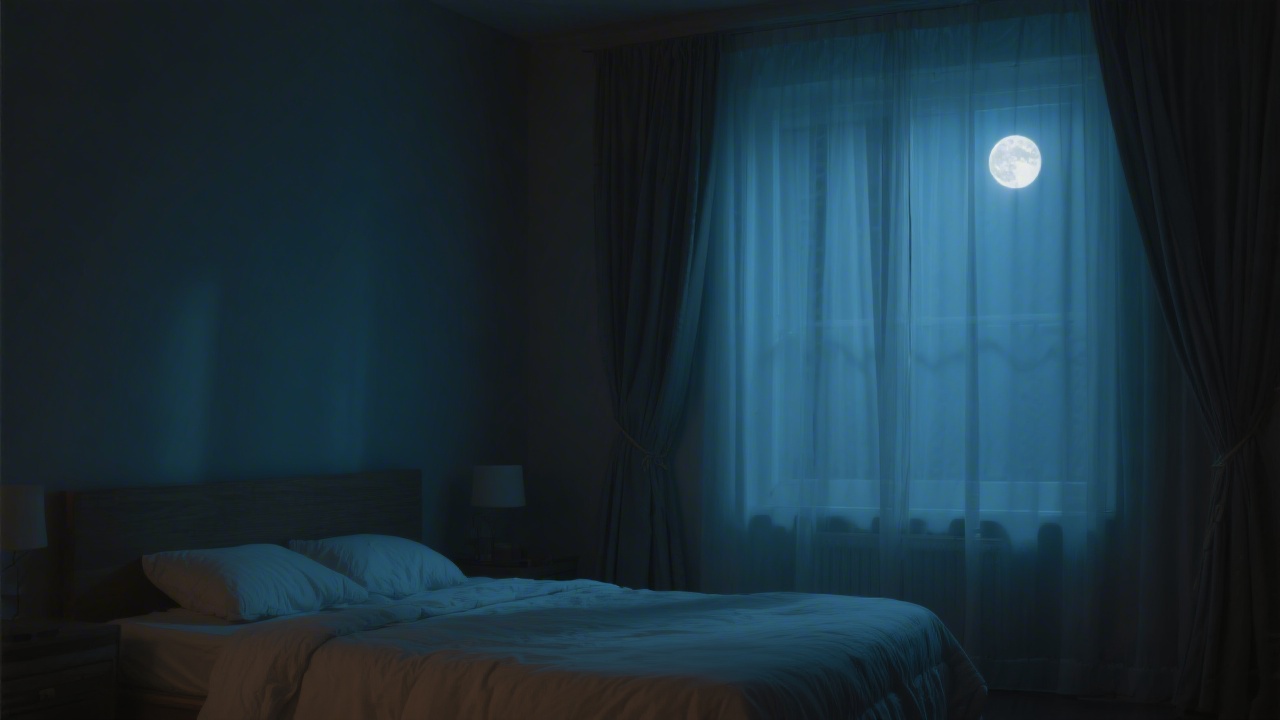
Thanatophobia — a persistent, excessive fear of death — is among the most universal human anxieties, yet it manifests with particular ferocity at bedtime. The phenomenology is widely reported: as the room darkens, external engagement drops away, and the mind turns toward existential questions that daylight hours successfully suppress. The old metaphor of sleep as a "little death" is not merely poetic; neurologically, the transition into sleep involves a genuine dissolution of the waking self-narrative, and for individuals with death anxiety, this transition activates threat-detection systems in the amygdala.
Research by Furer and Walker (2008) found that death anxiety severity was a strong independent predictor of sleep quality even after controlling for general anxiety, depression, and health status — suggesting a specific mechanism beyond general hyperarousal.
The Neurological Basis
The default mode network (DMN) — the brain's "resting state" — is most active precisely when external demands are absent. The DMN is heavily implicated in self-referential thought, including future-oriented worry about mortality. At bedtime, the conditions for maximal DMN activation are met: reduced external stimulation, horizontal posture, dim light. This is the neural substrate of why existential thoughts intrude specifically at night rather than during cognitively engaged waking hours.
The amygdala's role is equally important. Terror management theory (Greenberg et al., 1986) proposes that death awareness generates a fundamental existential terror that culture, meaning, and distraction normally suppress. When those suppressive mechanisms are absent — as they are at bedtime — the raw anxiety surfaces. Sleep deprivation resulting from this anxiety then reduces prefrontal regulation of amygdala reactivity, creating a negative feedback loop.
Developmental and Life-Stage Patterns
Death anxiety shows characteristic developmental peaks. Children between four and eight commonly experience bedtime death anxiety as developmental awareness of mortality emerges. Adolescents show a secondary peak associated with identity formation. Adults in midlife and older age frequently experience increased death salience, often triggered by parental death, health events, or retirement transitions.
Importantly, elevated death anxiety in older adults does not simply reflect greater proximity to death — studies consistently show that the oldest old have lower death anxiety than middle-aged adults, suggesting that acceptance and integration, rather than avoidance, are the long-term adaptive responses. anxiety and sleep
Therapeutic Approaches
Standard anxiety CBT is less effective for thanatophobia than existential therapeutic approaches, because death anxiety is not strictly irrational — death is real — and cognitive restructuring techniques that work for catastrophic misappraisals are not applicable to existential facts. Four approaches have the strongest evidence:
- Existential therapy (Yalom): Irvin Yalom's existential framework addresses death anxiety directly, helping individuals integrate awareness of mortality rather than avoid it. The core therapeutic move is from death as threat to death as the condition that gives life urgency and meaning.
- Meaning-centered therapy: Derived from Frankl's logotherapy, this approach addresses the meaning-disruption that underlies much thanatophobia. Establishing a clear personal meaning structure buffers existential terror at bedtime.
- Mindfulness-based interventions: By training non-judgmental present-moment awareness, MBSR reduces the ruminative self-referential processing that characterizes bedtime death anxiety spirals.
- Acceptance and Commitment Therapy (ACT): ACT's defusion techniques — creating psychological distance from thoughts like "I will die" — reduce the experiential avoidance that maintains thanatophobia.
Practical Bedtime Strategies
Beyond formal therapy, several evidence-adjacent practices reduce nocturnal death anxiety. Gratitude journaling before bed shifts attentional focus from anticipated loss to present appreciation, leveraging the DMN's tendency to consolidate the day's dominant emotional register. best mattress for sleep anxiety
Progressive muscle relaxation reduces the somatic markers of anxiety (tension, elevated heart rate) that the anxious mind reads as confirmation of threat. sleep hygiene tips
Physical sleep environment quality matters: uncomfortable pressure points and temperature dysregulation produce genuine physical sensations that become fodder for existential spirals in anxiety-prone individuals. A supportive sleep surface reduces these physiological triggers. insomnia remedies
Recommended: Saatva Classic Mattress
A supportive, pressure-relieving sleep surface can meaningfully reduce the physical tension that amplifies anxiety at night. Saatva's luxury innerspring hybrid is consistently rated among the best for anxious sleepers.
Frequently Asked Questions
Is death anxiety at bedtime a diagnosable condition?
Thanatophobia can be diagnosed as a specific phobia (DSM-5) when it causes significant distress or impairment. Many individuals experience subclinical death anxiety at bedtime that does not meet diagnostic threshold but still meaningfully impairs sleep quality.
Does death anxiety decrease with age?
Counterintuitively, research shows death anxiety tends to peak in midlife and actually decreases in older age. This is thought to reflect greater acceptance, ego integrity (in Erikson's terms), and reduced future-orientation in older adults.
Can medication help with death anxiety at night?
Benzodiazepines address acute anxiety symptoms but do not treat the underlying existential concerns and carry dependency risk. SSRIs may reduce general anxiety that amplifies death fear. Existential therapeutic work remains the primary evidence-based approach.
Is it normal to fear sleep itself because it resembles death?
Yes, this is a recognized pattern called somniphobia or hypnophobia, often overlapping with thanatophobia. The cognitive link between sleep and death is the primary maintaining mechanism and the focus of treatment.
How is death anxiety different from general bedtime worry?
General bedtime worry is future-focused and practical (work, relationships, finances). Death anxiety is existential, concerned with non-existence itself, and is not amenable to problem-solving. This distinction guides the choice of therapeutic approach.
Key Takeaways
Death Anxiety and Sleep is a topic that depends heavily on individual needs and preferences. The most important thing is to consider your specific situation — your body type, sleep position, and personal comfort preferences — before making any decisions. When in doubt, take advantage of trial periods to test before committing.