
 by
by The nasal septum is the wall of cartilage and bone dividing the nasal cavity into left and right passages. In an estimated 80% of people, the septum deviates to one side to some degree. Most deviations are minor and asymptomatic. When the deviation is significant enough to meaningfully restrict airflow on the narrower side, it becomes a structural factor in sleep quality — particularly in combination with nighttime positional changes and mucosal swelling.
How a Deviated Septum Affects Breathing During Sleep
During the day, most people compensate for a deviated septum adequately. The wider side carries more of the airflow load. At night, two things change this balance: the nasal cycle and positional mucosal changes.
The nasal cycle is a normal alternating congestion pattern in which each nostril swells and contracts on a 2–4 hour rotation. In people with a deviated septum, when the already-narrower side enters its congested phase of the cycle, total airflow can drop substantially — sometimes enough to force mouth breathing. This typically occurs 2–3 times per night, which may explain why many deviated septum patients report frequent nighttime waking without a clear reason.
Additionally, lying on the side places the dependent nostril at a slight pressure disadvantage for drainage. Sleeping on the side of the more open nostril down tends to worsen obstruction on the functional side, while sleeping on the deviated side down may compress that side further. Many patients find one sleeping side noticeably worse than the other.
Saatva Adjustable Base — Positioning for Structural Nasal Issues
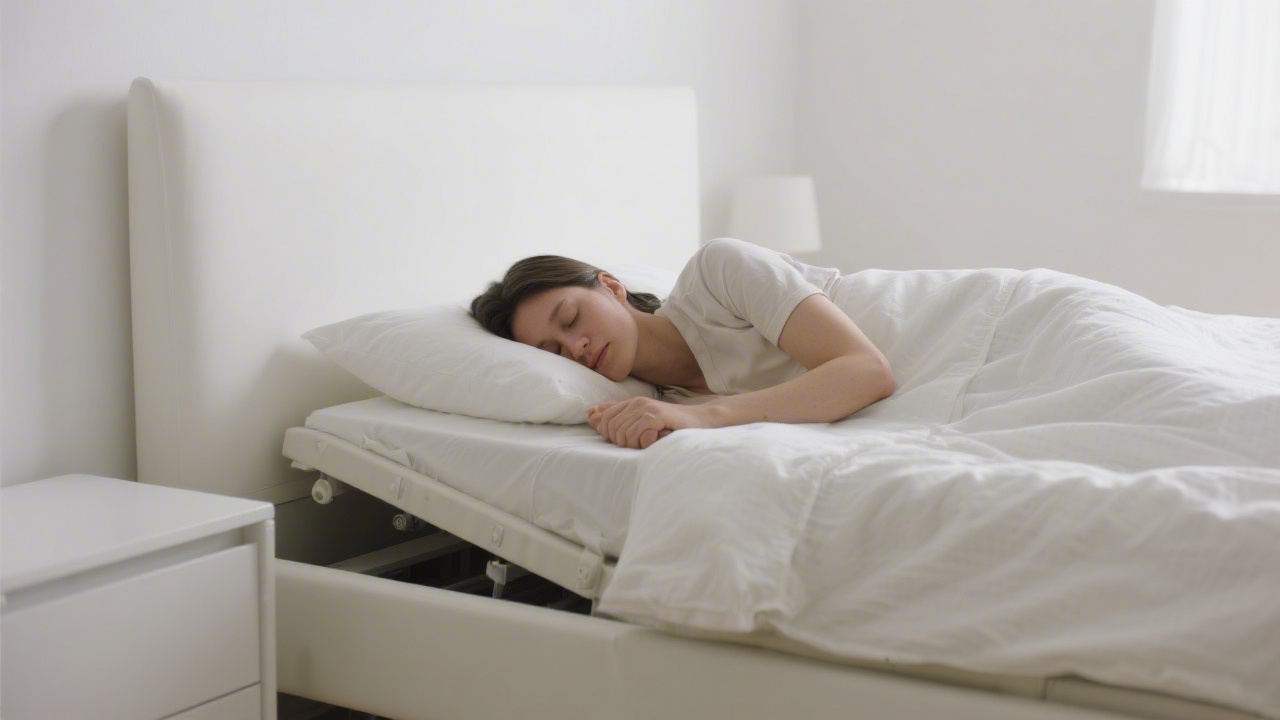
Head elevation changes the dynamics of nasal congestion. Raising the head of the bed improves venous and lymphatic drainage from the nasal mucosa, reducing the swelling that compounds septum-related obstruction. The Saatva Adjustable Base allows precise head elevation — typically 15–30 degrees is enough to meaningfully reduce nasal congestion — without the ergonomic compromises of pillow-stacking, which creates cervical flexion problems over time.
Signs a Deviated Septum Is Affecting Your Sleep
- Chronic unilateral nasal obstruction (one side always feels more blocked)
- Obstruction that alternates with the nasal cycle but is consistently worse on one side
- Snoring that is position-dependent (worse on one sleeping side)
- Mouth breathing at night despite no active allergy or illness
- Recurrent sinus infections on one side (impaired drainage)
- Facial pressure or headache on waking
Diagnosis
Physical examination by an ENT (otolaryngologist) is sufficient to diagnose a clinically significant deviated septum. They will use a nasal speculum and headlight to visualize the septum directly. CT scan of the sinuses provides more detail and is useful if surgical planning is being considered or if sinus disease is suspected alongside the deviation.
Important: a deviated septum can coexist with enlarged inferior turbinates. In many patients, the turbinate hypertrophy is actually the primary contributor to obstruction, and treating that (with topical steroids or turbinate reduction) may resolve the issue without surgery. An ENT can differentiate these contributors.
Non-Surgical Management Options
Intranasal Corticosteroids
While INCs do not alter the septum itself, they reduce turbinate hypertrophy and mucosal swelling that accompanies the structural deviation. In patients where the turbinates are contributing to obstruction alongside the septum, INCs can provide substantial functional improvement.
Nasal Strips and Dilators
External nasal strips and internal nasal dilators widen the nasal valve, which is anatomically separate from the septum but often the first point of significant resistance. In deviated septum patients with valve collapse as a co-contributor, these devices can meaningfully improve airflow.
Saline Irrigation
Regular nasal saline rinse reduces secondary mucus accumulation and keeps the nasal mucosa functional. It does not change airflow mechanics but reduces the additive effect of mucus in an already narrow channel.
Sleeping Position Optimization
Experiment with which side up provides better breathing. Most deviated septum patients do better with the deviated side down (placing the more open side uppermost), though individual anatomy varies. Head elevation of 15–30 degrees reliably reduces positional worsening.
Surgical Option: Septoplasty
Septoplasty straightens the deviated septum through internal incisions with no external scarring. It is an outpatient procedure under general anesthesia. Recovery involves nasal packing for 1–2 days and congestion for 2–4 weeks. Studies show 75–85% of patients report significant improvement in nasal airflow after septoplasty. It is typically covered by insurance when there is documented functional impairment.
Septoplasty is not indicated for mild deviations, for deviations that respond to medical management, or for patients who are poor surgical candidates. The decision should involve an ENT with sleep medicine awareness — see our guide to sleep specialist types for choosing the right professional.
For context on how nasal structure interacts with overall breathing during sleep, our guide on nasal breathing during sleep covers the physiology in depth.
Frequently Asked Questions
Can a deviated septum cause sleep apnea?
A deviated septum can increase snoring and may contribute to mild sleep-disordered breathing by increasing upper airway resistance. However, obstructive sleep apnea (OSA) involves pharyngeal collapse, which is anatomically separate from the septum. Correcting a deviated septum alone is unlikely to resolve significant OSA, though it may improve PAP therapy adherence by reducing the nasal resistance that makes CPAP pressure harder to tolerate.
How do I know if my deviated septum is severe enough to warrant surgery?
Surgical intervention is generally considered when: symptoms significantly impair sleep or daily quality of life, when 3+ months of medical management has failed to provide adequate relief, and when ENT examination confirms the deviation is functionally significant. A CT scan helps quantify the degree of obstruction objectively.
Does sleeping position matter with a deviated septum?
Yes. Most patients breathe better with the deviated side down (open side uppermost). Head elevation of 15–30 degrees reduces mucosal swelling that compounds the structural restriction. An adjustable base allows finding the optimal angle without cervical strain from pillow-stacking.
Can a deviated septum get worse over time?
The structural deviation itself does not worsen significantly with age. However, the turbinate hypertrophy and mucosal changes that often accompany chronic mouth breathing secondary to septum obstruction can progress. Additionally, age-related loss of nasal tip support can increase valve collapse, making a borderline septum more symptomatic in older adults.
Are there any risks to septoplasty that affect sleep?
Short-term: post-operative nasal congestion and disrupted breathing during the 2–4 week healing period. Long-term: rare cases of over-correction or scarring. Most patients experience durable improvement. The procedure does not change external nasal appearance, unlike rhinoplasty.
Saatva Adjustable Base — Recommended for Deviated Septum
For deviated septum patients, head elevation is one of the most accessible and effective sleep interventions. The Saatva Adjustable Base allows precise, motorized elevation and is compatible with Saatva mattresses as well as most other brands. It is a more ergonomically sound approach to positional management than pillow-stacking, which introduces cervical flexion problems over time.
Our Top Mattress Pick
The Saatva Classic consistently ranks #1 for comfort, support, and long-term durability.
View Saatva Classic Pricing & Details