
 by
by Quick answer: No. Closing your eyes can reduce visual input and support quiet rest, but it doesn’t count as sleep unless you actually transition from wakefulness into sleep.
- NeuroLaunch describes closing your eyes as a precondition for sleep, not sleep itself.
- NeuroLaunch says you can remain conscious and continue processing sound and sensation with your eyes shut.
- Does Closing Your Eyes Count as Sleeping? [The Scientific Truth] distinguishes sleep by transitions into NREM and REM, which closing your eyes alone doesn’t create.
Updated July 2026 · Reviewed for accuracy
Closing your eyes is a doorway to sleep, not proof that you crossed it. I’d treat any period of continuous awareness as quiet rest. The deciding factor is whether sleep began, not whether your eyelids stayed shut.
Closing your eyes changes input, not your sleep state
NeuroLaunch says shutting your eyes quiets the visual cortex and moves the brain toward a more relaxed state. At the same time, you can remain awake, conscious, and aware of sound and sensation. That combination is rest, but it isn’t yet sleep.
The distinction matters because eyelids and sleep describe different things. Eyelids control visual input. Sleep is a change in your overall state. One can help prepare for the other, but the preparation shouldn’t be mistaken for the result.
A separate article titled Does Closing Your Eyes Count as Sleeping? [The Scientific Truth] draws the boundary at the transition into NREM and REM stages. Simply keeping your eyes closed doesn’t produce those transitions. It only tells us that your eyes were closed.
Duration doesn’t change that definition. If you remain consciously awake throughout a long stretch of closed-eye rest, the stretch remains wakefulness. Time passing can give sleep an opportunity to begin, but it cannot make known wakefulness count as sleep after the fact.
The useful rule: Eyelid position describes what your eyes are doing. Sleep describes the state you’re in. Don’t use the first as automatic proof of the second.
This is why “I lay there with my eyes closed” and “I slept” aren’t interchangeable statements. The first describes posture and visual disengagement. The second says an actual sleep transition occurred.
Resting awake and sleeping can look identical
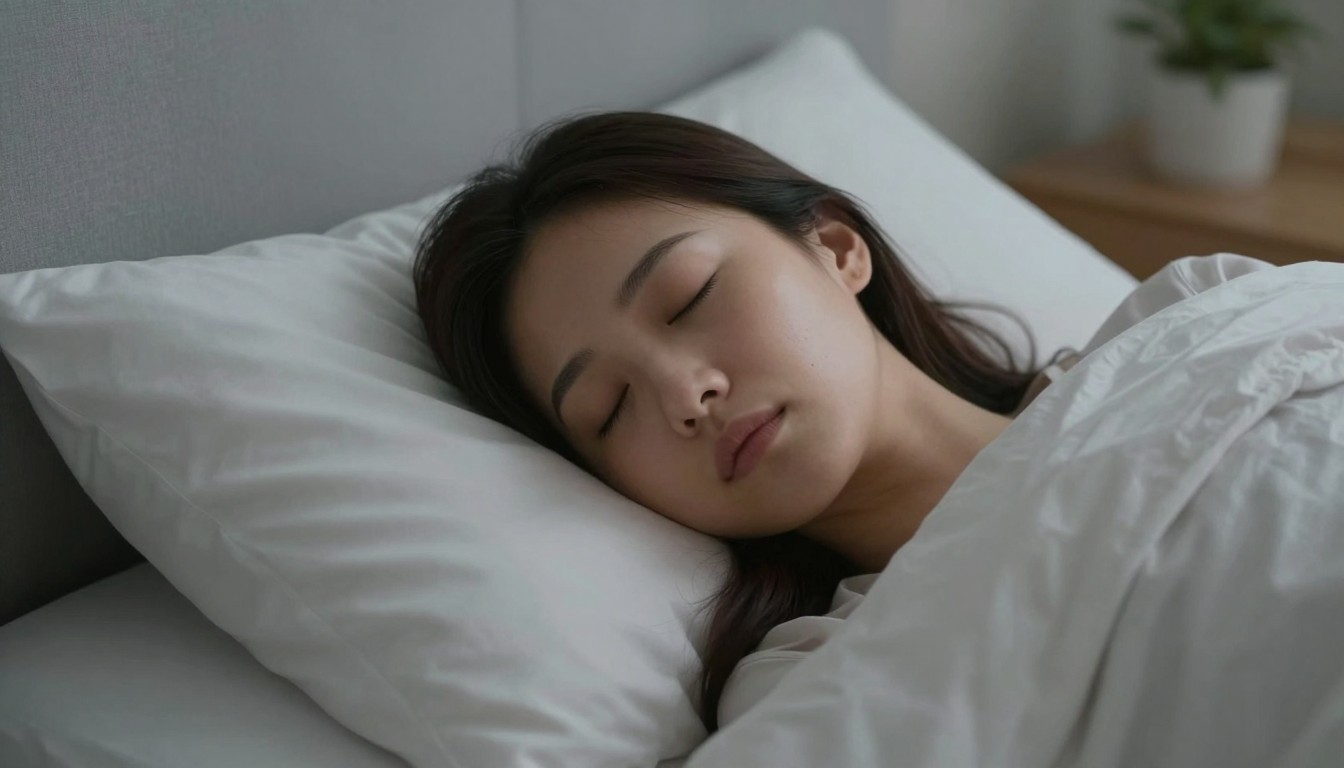
A person lying still with closed eyes could be resting awake or sleeping. From that visible position alone, there’s no reliable way to choose between those possibilities. The internal state supplies the distinction.
The comparison below follows the boundaries stated by NeuroLaunch and by Does Closing Your Eyes Count as Sleeping? [The Scientific Truth]. It separates what closed eyelids establish from what they leave unanswered.
| Point of comparison | Closed-eye wakefulness | Sleep |
|---|---|---|
| Eyelids | Closed | Eyelid position isn’t the deciding evidence |
| Conscious state | You remain awake and conscious, per NeuroLaunch | A transition out of wakefulness has occurred |
| Sound and sensation | They can still be consciously processed, according to NeuroLaunch | Sleep isn’t established merely by closing off vision |
| Sleep stages | Closing your eyes alone doesn’t create NREM or REM transitions | The cited article uses those transitions to distinguish actual sleep |
| Honest classification | Quiet rest | Sleep |
Relaxation is one source of confusion. NeuroLaunch places the shift toward relaxation before sleep is confirmed. Feeling calmer therefore doesn’t prove that you were asleep. It shows that closing your eyes changed the conditions of wakefulness.
Stillness creates the same problem. You don’t need to move or look around to be awake. If you’re knowingly following sounds, sensations, or your own train of thought, your experience fits the conscious state NeuroLaunch describes.
The word “dozing” can blur the line in everyday conversation. For personal tracking, I’d keep the standard cleaner: if sleep began, count sleep; if you know you stayed conscious, count rest. If you genuinely can’t tell, uncertainty is more accurate than using closed eyes as proof.
Closed-eye rest still has a purpose
NeuroLaunch describes a quieter visual system and a more relaxed state after the eyes close. That’s a real change, even while you remain awake. I wouldn’t call the period useless just because it doesn’t qualify as sleep.
The right label depends on your goal. If you want a break from active visual engagement, closing your eyes directly serves that purpose. If you want to sleep, it creates a condition associated with settling down, but the outcome remains incomplete until wakefulness actually ends.
What closed-eye rest can honestly mean:
- Your visual processing has quieted, according to NeuroLaunch.
- You may be in a more relaxed but still conscious state.
- You’ve created a precondition that can precede sleep.
- You have not confirmed NREM or REM merely by waiting with your eyes shut.
This avoids a false choice between “I slept” and “the period had no value.” Quiet rest can be worthwhile on its own terms. It simply shouldn’t be relabeled as sleep to make the period seem more successful.
The same distinction applies to an attempted nap. If you lie down, close your eyes, and remain consciously awake, you rested instead of sleeping. That may still feel pleasant or calming, but the word “nap” shouldn’t hide the absence of a known sleep transition.
I’d also avoid promising that closed-eye rest gives everything sleep provides. Neither cited article supports treating the states as interchangeable. The careful claim is narrower: closing your eyes can move wakefulness in a more relaxed direction without turning wakefulness into sleep.
How to classify a period you aren’t sure about
Continuous conscious awareness is the clearest dividing clue in NeuroLaunch’s explanation. If you knowingly followed sounds and sensations throughout the entire period, that description fits closed-eye wakefulness. You were resting, but you were still aware.
Uncertain periods are harder. Your eyes being closed cannot settle them because both rest and sleep can involve closed eyelids. The honest answer may simply be that you don’t know exactly when or whether the transition occurred.
A practical classification check
- You were consciously aware throughout: Record the period as closed-eye rest.
- You believe sleep actually began: Separate that sleep from the wakeful period before it.
- You only know your eyes were closed: That detail is insufficient to establish sleep.
- You can’t decide: Mark the stretch as uncertain instead of forcing a precise label.
Don’t let duration make the decision for you. Does Closing Your Eyes Count as Sleeping? [The Scientific Truth] explicitly says that closing your eyes for a long time doesn’t count as sleeping when the required sleep-stage transitions haven’t occurred. A long rest can remain a long rest.
If you keep personal sleep notes, separate known wakefulness from what you reasonably believe was sleep. You can add a short uncertainty note where the boundary is unclear. That approach records what you experienced without pretending eyelid position is a sleep measurement.
Descriptions are often more useful than a confident guess. “My eyes were closed, I remained aware of sounds, and I’m unsure whether I drifted off” preserves the relevant information. Calling the whole stretch sleep would remove the very detail that makes it uncertain.
This framework isn’t a diagnosis. If repeated difficulty sleeping or uncertainty about your sleep is affecting how you function during the day, consider discussing the pattern with a qualified healthcare professional. Be specific about what you experienced rather than relying only on the phrase “I didn’t sleep.”
What to do while you’re awake with your eyes closed
If you’re consciously following every sound or sensation, NeuroLaunch’s description fits wakeful rest. Start by naming the state accurately. You haven’t failed at resting, but you also shouldn’t tell yourself that eye closure alone is already sleep.
I’d keep the immediate goal modest: remain comfortable and allow rest to be rest. Trying to prove that you slept won’t change the state you were in. Accurate language gives you a cleaner picture of what happened and whether the same pattern keeps recurring.
Physical discomfort is a separate issue worth checking. If your attention is fixed on your sleep surface, our guides explain questions such as why a mattress may hurt your back and why a mattress can feel different. Those concerns don’t alter the definition of sleep, but they can help you describe what is keeping you consciously occupied.
Keep the questions separate: “Am I comfortable?” asks about your setup. “Am I still conscious?” asks whether you’re awake. Closed eyelids answer neither question by themselves.
Positioning deserves the same careful treatment. If you’re considering a change because your current position feels uncomfortable, the guide to sleeping with a pillow between your knees covers that specific setup. Don’t assume any positioning change guarantees sleep, since no such guarantee appears in the cited material.
It also helps to decide what you’re trying to achieve. A short visual break only requires closing your eyes. Sleep requires the additional transition described by the cited articles. Keeping those goals distinct prevents you from dismissing useful rest or overstating what it accomplished.
If the pattern continues, record the experience plainly: how aware you felt, whether sound and sensation held your attention, and whether discomfort was present. You don’t need to manufacture an exact sleep estimate. A qualified professional can work with a clear description if you later decide the issue needs further assessment.
FAQ
Does closing your eyes count as sleeping?
No. NeuroLaunch describes eye closure as a precondition for sleep while noting that you can remain awake, conscious, and aware of sound and sensation. Sleep counts only after the state changes from wakefulness into actual sleep.
Does keeping your eyes closed long enough become sleep?
Not automatically. Does Closing Your Eyes Count as Sleeping? [The Scientific Truth] says prolonged eye closure doesn’t count as sleep without the neural transitions into NREM and REM. Duration creates an opportunity for sleep to begin, but it doesn’t reclassify continuous wakefulness.
Is resting with closed eyes completely useless?
No. According to NeuroLaunch, closing your eyes quiets visual processing and moves the brain toward a more relaxed state, even while you remain conscious. I’d call that worthwhile rest, but not a substitute label for sleep.
If I heard everything around me, was I awake?
NeuroLaunch says a person resting awake with closed eyes can continue processing sound and sensation. If you were continuously conscious and deliberately following those sounds, your experience fits wakeful rest. Hearing or remembering an isolated sound, however, doesn’t classify an entire uncertain period by itself.
What if I can’t tell whether I fell asleep?
Don’t use closed eyelids as proof. Record what you know, separate clearly conscious time from likely sleep, and leave the unclear portion marked as uncertain. My verdict stays simple: closed eyes count as rest until sleep actually begins.