
 by
by Recommended: Saatva Mattress Pad — Washable Protection for Dog Owners
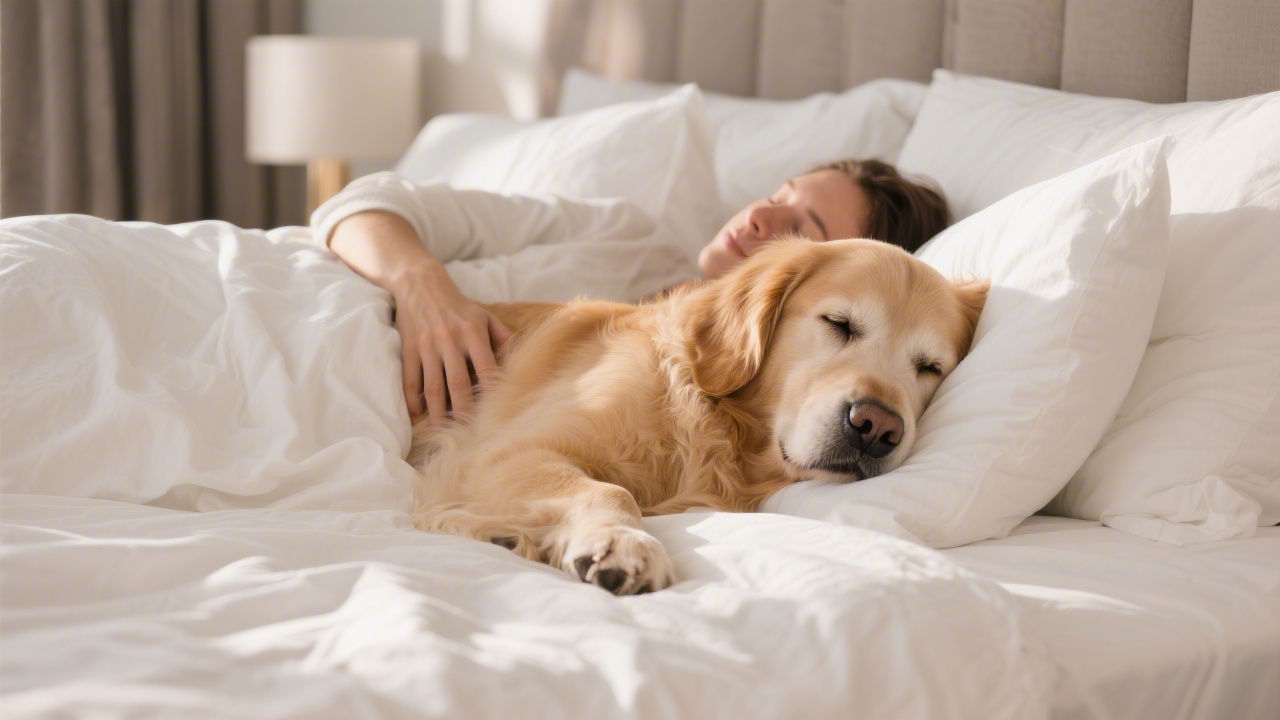
Dog owners have been sleeping with their animals for thousands of years — long before sleep medicine existed to study it. The modern research is more nuanced than either camp (pro or anti co-sleeping) tends to acknowledge. Here's what the data actually shows, and how to make the arrangement work if you want it to.
What Research Shows About Dogs and Sleep
The most-cited study comes from Mayo Clinic (2017), which tracked 40 adults and their dogs using accelerometers for seven nights. Key finding: dogs in the bedroom — but not in the bed — were associated with acceptable sleep efficiency (83%). Dogs in the bed itself produced slightly lower sleep efficiency (80%). The researchers concluded that dog presence in the bedroom is not significantly disruptive for most people.
A 2015 Mayo Clinic study found that 20% of patients at a sleep medicine clinic reported being disrupted by their pet. But 41% reported the pet being unobtrusive or even beneficial to sleep. The majority experience is: mild occasional disruption, net positive emotional experience.
The Real Benefits
The benefits are psychologically real, not just sentimental:
- Anxiety reduction: Physical contact with a dog lowers cortisol and raises oxytocin. For people with anxiety disorders or PTSD, this effect at bedtime can meaningfully reduce sleep onset time.
- Security: Dogs are alert to environmental sounds. Many owners report sleeping more deeply knowing their dog will react to disturbances.
- Warmth regulation: In cold environments, dogs provide physical warmth that reduces the need for heavy bedding.
- Routine anchoring: Dogs are consistent about sleep timing. For people who struggle with irregular sleep schedules, a dog's insistence on a bedtime routine can be a useful external regulator.
The Real Risks
These aren't theoretical — they're the documented reasons co-sleeping fails:
- Movement disruption: Dogs reposition multiple times per night. Large breeds can physically push a sleeping person, triggering arousal without full waking.
- Allergen load: Dander accumulates in mattress fabric. This affects even people without obvious allergies — sub-clinical irritation can reduce breathing quality during sleep.
- Zoonotic disease: Rare but documented. Intestinal parasites and certain bacteria can transfer through close contact. Regular vet care and parasite prevention reduce this risk to negligible levels for most owners.
- Behavioral issues: Some dogs develop resource guarding around the bed, becoming territorial with other humans or pets. This is a training issue that's easier to prevent than to correct.
- Partner conflict: One person often prefers co-sleeping and the other doesn't. This is genuinely difficult to resolve without one person consistently compromising sleep quality.
Setting Boundaries That Actually Work
The most effective co-sleeping arrangements have defined rules that are applied consistently:
- Designated spot: A dog bed placed at the foot or side of your mattress gives your dog a defined territory. Most dogs accept this within 1–2 weeks if the spot is comfortable and the reinforcement is consistent.
- On/off command: Teaching a clear "off" command before establishing co-sleeping prevents the bed from becoming a resource-guarded space.
- Pre-sleep exercise: A dog that has been adequately exercised sleeps more deeply and repositions less. The difference between a dog walked 20 minutes vs 60 minutes before bed is noticeable in movement frequency.
- Consistent schedule: Dogs track your sleep schedule. Variable bedtimes create restlessness; consistent ones create calm.
Protecting Your Mattress
Beyond the behavioral setup, the practical infrastructure that makes dog co-sleeping sustainable long-term is a washable mattress pad. Dog nails — even trimmed — create micro-abrasions in mattress covers over time. Dander embeds in fabric. Occasional accidents happen. A quality mattress pad with a waterproof barrier layer absorbs all of these without damage to the mattress itself, and can be washed at high heat weekly.
For more on mattress protection with dogs, see our guide to removing pet hair from a mattress and our overview of pet-friendly mattress options.
When to Stop Co-Sleeping
Co-sleeping with a dog becomes a problem worth solving when: you're waking more than twice per night on average (tracked, not estimated), when allergy symptoms have worsened since starting, when a new baby or partner has joined the bed, or when behavioral issues around the bed have emerged. A gradual transition — dog bed in the room first, then outside the room — is more effective than cold-turkey removal for most dogs.
If you're considering giving your dog their own sleeping space instead, the dog bed vs mattress guide covers what to look for by size and sleeping style.
Frequently Asked Questions
How many times does a dog disrupt sleep per night on average?
Research suggests around 4–5 brief disruptions per night for dogs sleeping in the bed (not just the bedroom). Many of these are below the threshold of full waking but are detectable with sleep trackers.
Is it safe to sleep with a large dog?
Yes, with appropriate precautions. Large dogs are more physically disruptive due to movement, but the same principles apply: designated spot, pre-sleep exercise, and consistent routine. The mattress protection consideration is more important with larger dogs due to nail contact.
At what age should a puppy stop sleeping in the bed?
There's no universal rule, but the practical issue is that puppies establish their sleeping expectations early. If you don't want a 70-pound adult dog in your bed, don't start the habit with the puppy. The transition is significantly harder to make after 6 months.
Can sleeping with a dog cause allergies?
It can worsen existing allergies and can contribute to sensitization over time in borderline cases. Dander accumulation in bedding is the primary mechanism. A washable mattress pad and HEPA air filtration are the most effective mitigation strategies.
What mattress is best for dog owners who co-sleep?
A mattress with a durable, tightly-woven cover combined with a high-quality washable mattress pad. The pad does the protective work — it can be washed weekly, while the mattress itself is protected underneath. See our pet-friendly mattress guide for specific recommendations.
Recommended: Saatva Mattress Pad — Washable Protection for Dog Owners