
 by
by Struggling with sleep? Your mattress matters too.
A supportive, pressure-relieving mattress reduces the time it takes to fall — and stay — asleep. The Saatva Classic is our top-rated pick for deep, restorative sleep.
What Doom Scrolling Does to the Sleeping Brain
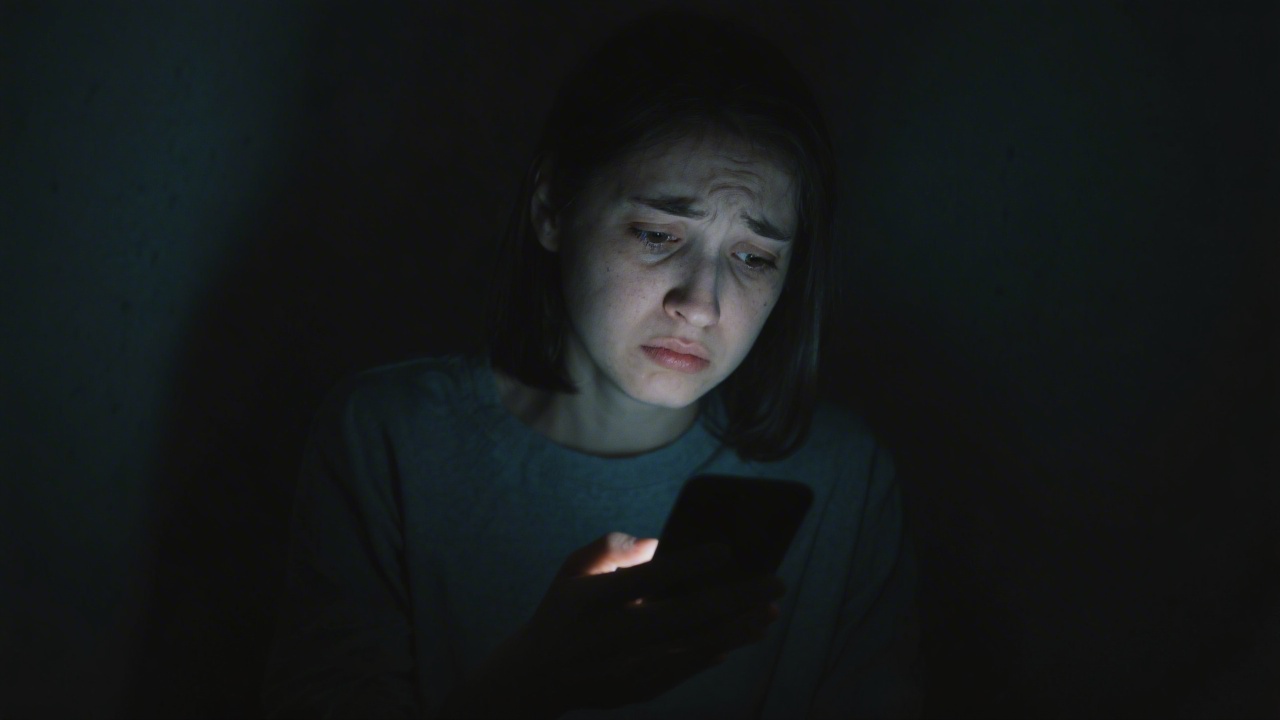
Doom scrolling — the compulsive consumption of negative news content in an endless scroll — isn't just a bad habit. It's a specific threat-activation pattern that directly counteracts the physiological requirements for sleep onset. Understanding the mechanism explains why generic "put your phone down" advice doesn't work and what actually does.
The Threat-Processing System and Sleep
Your amygdala — the brain's threat-detection center — cannot distinguish between a tiger in the room and a threatening headline on your phone. Both activate the same sympathetic nervous system response: cortisol release, elevated heart rate, heightened alertness, and suppressed parasympathetic activity.
Sleep onset requires the opposite: parasympathetic dominance, cortisol trough, and reduced amygdala activity. Doom scrolling before bed creates a cortisol spike directly into the window when cortisol should be at its 24-hour minimum. This isn't a metaphor — research using salivary cortisol measurements shows that exposure to threatening news content elevates cortisol by 20–30% and the effect persists for 45–60 minutes after cessation.
This connects directly to the how to fall asleep faster loop: anxiety disrupts sleep, sleep deprivation increases anxiety sensitivity, which increases doom scrolling as a hypervigilance behavior, which further disrupts sleep.
Why Doom Scrolling Is Self-Reinforcing
Doom scrolling doesn't feel good — most people who do it don't enjoy it. It persists because it serves a psychological function: the illusion of vigilance. By monitoring threats, the brain feels it's being responsible rather than vulnerable. Stopping means accepting that you can't monitor everything, which feels uncomfortable to the threat-monitoring system.
This is why willpower-based approaches fail. You're asking the brain to voluntarily become less vigilant in an environment it perceives as threatening. The more anxious the news cycle, the stronger the pull to doom scroll, and the stronger the sleep disruption.
How to Identify Your Doom Scrolling Pattern
Doom scrolling isn't always obvious. Indicators that distinguish it from casual news reading:
- You feel worse after reading but continue anyway
- You check the same sources multiple times within an hour for updates
- You feel vaguely guilty or ashamed when you stop (rather than satisfied)
- Your scroll is characterized by dread rather than curiosity
- You find yourself on third-tier sources (comment sections, fringe sites) pursuing the story further
If three or more of these apply, the pattern is doom scrolling rather than informed news consumption.
The Pre-Sleep Doom Scroll: Special Dangers
Evening doom scrolling is more harmful than daytime doom scrolling for two reasons. First, it occurs when the sleep homeostatic drive is rising — the brain is primed for sleep and the threat activation is directly fighting that priming. Second, the cognitive content of doom scrolling becomes the material for pre-sleep rumination. The stories you consume in the last 30–60 minutes before sleep disproportionately populate the mental replay that delays sleep onset.
Research on pre-sleep cognition shows that emotional content from the pre-sleep hour is more likely to become intrusive thought than equivalent content from earlier in the day. This is a memory consolidation artifact — the brain preferentially encodes emotionally valenced material from the pre-sleep period.
Intervention Strategies That Work
- News cutoff time, not just device cutoff: Stop consuming news — in any format — 90 minutes before bed. This is more specific than a general screen limit and addresses the cortisol mechanism directly.
- Substitute monitoring with a summary: Check one reputable news summary (daily newsletter, brief podcast digest) once per day, preferably morning. This fulfills the vigilance need without the scroll architecture.
- Scheduled worry time: Set a 20-minute "worry window" in the afternoon (not evening) where you deliberately review concerns. This reduces the brain's need to process threats at bedtime because it knows there was a designated processing period.
- Screen time before bed and sleep and sleep quality are closely connected — improving sleep reduces anxiety sensitivity, making doom scrolling less appealing.
News Addiction vs. Doom Scrolling
Not all news consumption before bed is doom scrolling. Reading a single newspaper article about a topic you're genuinely interested in, then stopping, is not doom scrolling. The key characteristics are compulsive continuation despite negative affect and the infinite-scroll architecture that removes natural stopping points. Choosing finite-length content (an article, a podcast episode) with a defined ending creates a stopping point the brain accepts more readily than an endless feed.
Frequently Asked Questions
Why do I keep doom scrolling even though I know it's bad?
Because doom scrolling isn't a rational choice — it's a threat-monitoring behavior. The amygdala compels vigilance when it perceives threat. Knowing it's bad doesn't override the threat-processing system. Environmental interventions (removing access to news sources after a cutoff) work better than insight alone.
Does doom scrolling cause insomnia?
It contributes to two of the three insomnia mechanisms: hyperarousal (cortisol and sympathetic activation) and pre-sleep cognitive arousal (rumination about news content). It doesn't cause all insomnia, but it reliably worsens it in people who already have sleep difficulties.
Is doom scrolling worse than social media before bed?
For anxiety-prone individuals, yes. Doom scrolling specifically activates threat-processing, which is more physiologically disruptive than the social comparison and intermittent reinforcement of social media. The two often co-occur (social media contains news), which compounds the effect.
How long after doom scrolling can you sleep?
After significant doom scrolling, cortisol normalization and amygdala deactivation typically take 45–90 minutes. This is a physiological minimum, not a psychological one — rumination about the content can extend this significantly.
What should I read instead of doom scrolling before bed?
Fiction is the strongest evidence-based replacement: it requires sustained attention (preventing rumination), activates imagination rather than threat-detection, and has a defined narrative arc that creates natural stopping points. Non-threatening non-fiction (history, science, biography) is second best.
Struggling with sleep? Your mattress matters too.
A supportive, pressure-relieving mattress reduces the time it takes to fall — and stay — asleep. The Saatva Classic is our top-rated pick for deep, restorative sleep.
Our Top Mattress Pick
The Saatva Classic consistently ranks #1 for comfort, support, and long-term durability.
Key Takeaways
Doom Scrolling and Sleep is a topic that depends heavily on individual needs and preferences. The most important thing is to consider your specific situation — your body type, sleep position, and personal comfort preferences — before making any decisions. When in doubt, take advantage of trial periods to test before committing.