
 by
by A Queen bed is 6 inches wider and 5 inches longer than a Double (Full) bed, giving couples 30 inches of personal space each instead of 27. For most couples and solo sleepers over 6 feet, the Queen is the right call. If your room is under 10 feet wide or you are furnishing a solo guest room, the Double makes more practical sense. Either way, the mattress you put on it matters as much as the size you pick.
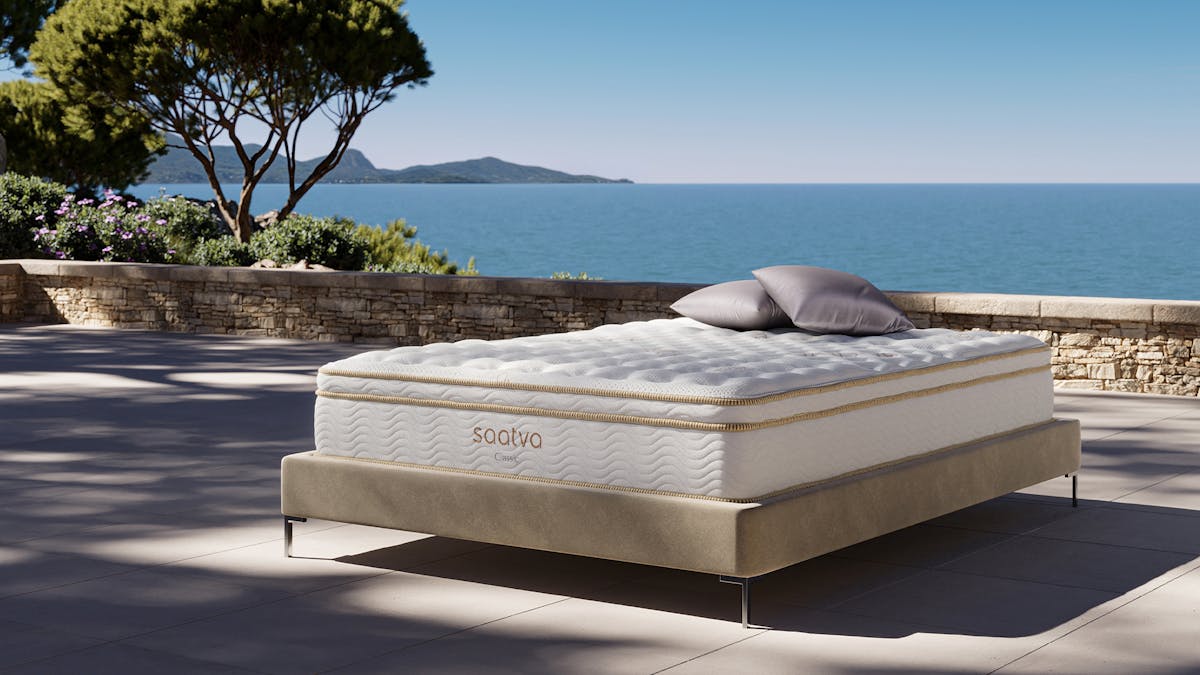
Saatva Classic
9.2/10
- Dual-coil construction with a reinforced lumbar zone delivers proper spinal support regardless of whether you go Double or Queen
- Available in three firmnesses (Plush Soft, Luxury Firm, Firm) to suit any sleep position
- Free white-glove delivery, setup, and old mattress removal
- 365-night trial and lifetime warranty
- Ships flat rather than compressed in a box
- $99 return fee if you decide to return during the trial
If you are sizing up to a Queen (the right move for most couples), the Saatva Classic is the mattress that rewards the upgrade: hotel-quality construction, zoned lumbar support, and a trial window long enough to know it works for you.
Double bed vs queen bed: direct size comparison
| Specification | Double (Full) | Queen |
|---|---|---|
| Width | 54" (137 cm) | 60" (152 cm) |
| Length | 75" (190 cm) | 80" (203 cm) |
| Sleep surface | 28 sq ft | 33 sq ft (+18%) |
| Width per sleeper (couple) | 27" | 30" |
| Length ceiling | Comfortable to ~6'0" | Comfortable to ~6'4" |
| Typical price (mid-tier mattress) | $800–$1,400 | $1,000–$1,800 |
| Minimum room size (with clearance) | 9'6" x 10'6" | 10' x 10' |
Six inches of extra width sounds trivial. In practice, moving from 27 inches per person to 30 inches per person is the difference between waking each other up constantly and actually sleeping through the night.
When a double bed is the right choice
- Solo sleeper under 6 feet tall. A 54-inch wide mattress gives one person more than enough room. The length works fine for anyone up to 6'0".
- Guest room in a tight space. If the room is under 10 feet wide, a Double is the more practical fit. Guest rooms do not need to maximize personal space the way a primary bedroom does.
- Teenage bedroom. Teens fit the 75-inch length with room to grow, and the smaller footprint leaves floor space for a desk or other furniture.
- Short-term or transitional use. College dorms, first apartments, short leases. The lower price on both the mattress and bedding adds up meaningfully.
- Narrow RV or cabin bedroom. Some RV floor plans genuinely cannot fit a Queen. The Double is the default for bunk-style RV bedrooms.
When a queen bed is the right choice
- Any couple who shares the bed regularly. The extra 6 inches of width is the clearest reason to upgrade. Most couples who try a Double replace it with a Queen within one to two years.
- Solo sleepers over 6 feet tall. The Queen's 80-inch length gives your feet room to breathe; the Double's 75 inches leaves a 6-footer at the very edge.
- Sleepers who share with a child or pet. Still a tight fit, but workable. A Double is not.
- Active or restless sleepers. The extra width reduces the chance of crossing into your partner's space, which means fewer disruptions.
- Long-term investment thinking. A quality mattress lasts 8 to 10 years. If there is any chance you will start sharing the bed in the next two or three years, the Queen is the more durable purchase.
The real-world cost difference
Stepping up from a Double to a Queen costs more than just the mattress price difference. Here is a realistic breakdown for a mid-tier purchase in 2026:
- Mattress: $150–$400 more for Queen versus Double in most mid-tier lines.
- Sheets and bedding: $20–$50 more per set. A full sheet will not fit a Queen; the sizes are not interchangeable.
- Frame or base: $50–$200 more for Queen, depending on material and style.
- Total 10-year cost premium: roughly $400–$800 more, or $40–$80 per year. For a couple, that works out to less than the price of one coffee per person per month for meaningfully better sleep quality.
Room size requirements
The standard guideline: leave at least 24 to 30 inches of walking space on every accessible side of the bed.
- Double (54"x75"): minimum 9'6" x 10'6". A 10'x10' room works comfortably.
- Queen (60"x80"): minimum 10' x 10'. A 10'x12' or 11'x12' room is comfortable.
- Rooms under 9'6" wide: the Double is the only practical choice.
- Rooms over 11' wide: skip the Double and go Queen or larger.
What about a Full XL?
Full XL measures 54"x80" , same width as a Double but the same length as a Queen. It is genuinely useful for tall solo sleepers in narrow rooms. The problem is availability: very few major mattress brands carry it as a standard size. Production runs are small, selection is thin, and you will typically pay a premium over a standard Queen. Unless a room layout makes the Full XL the only option, the Queen is the cleaner choice.
Amerisleep AS3
9.0/10
- HIVE 5-zone support system firms under the lumbar, relieves pressure at the shoulders and hips
- Plant-based Bio-Pur foam sleeps cooler than standard memory foam
- CertiPUR-US certified, made in the USA
- Strong motion isolation , ideal for couples on a Queen
- Softer edge support than a coil hybrid
- Sleepers over 230 lb may prefer the firmer AS5 Hybrid
A strong choice for couples who prefer an all-foam feel over a traditional innerspring. The HIVE zoning keeps the spine aligned for both back and side sleepers, which matters more once you have two people in a Queen sharing the surface.
For most couples, go Queen. The size premium pays for itself in sleep quality within weeks. If the room genuinely will not fit it or the budget is tight for a short-term setup, the Double is a reasonable choice. On either size, prioritize a mattress with zoned support and a long trial: the Saatva Classic (365-night trial) and the Amerisleep AS3 (100-night trial) are the two we recommend.
Frequently asked questions
Is a double bed the same as a full bed?
Yes. "Double" and "Full" refer to the same size: 54" wide by 75" long. Both terms are used interchangeably in North America. "Full" is more common in the US; "Double" is more common in Canada and the UK.
How much bigger is a queen than a double?
A Queen is 6 inches wider and 5 inches longer than a Double. That works out to roughly 18% more total sleep surface: 33 square feet versus 28 square feet.
Can two adults fit on a double bed?
They can, but tightly. Each person gets about 27 inches of personal width, roughly the width of a crib mattress. Most couples who start on a Double upgrade to a Queen within one to two years.
Which is better for a tall person, double or queen?
Queen, clearly. The extra 5 inches of length is critical for anyone over 6 feet tall. On a Double, a 6'0" sleeper has their feet at the very edge. On a Queen, there are 5 inches of buffer.
How much do queen sheets cost vs double sheets?
Roughly $20–$50 more per set, depending on material and quality. Double sheets (54"x75") will not fit a Queen (60"x80") , the fitted sheet will not reach the corners and will slip off.
Is a queen too big for a small bedroom?
Not if the room is at least 10'x10'. Below that, a Queen crowds the space and makes furniture placement awkward. A Double is the practical maximum for a true 9'x10' or smaller room.
Related reading: Best Queen Mattress | Full Size Mattress Guide | Queen Size Mattress Guide | Best Mattress for Couples