
 by
by DreamCloud wins on value: you get a 14-inch luxury hybrid with a cashmere-blend cover, a 365-night trial, and a lifetime warranty at a lower price than GhostBed Flex. GhostBed Flex edges it on motion isolation and edge support, but its shorter 101-night trial and higher price make it harder to justify. For most shoppers comparing these two, DreamCloud is the better deal. If budget allows, the Saatva Classic benchmarks above both on build quality, coil-on-coil construction, and purchase protections.
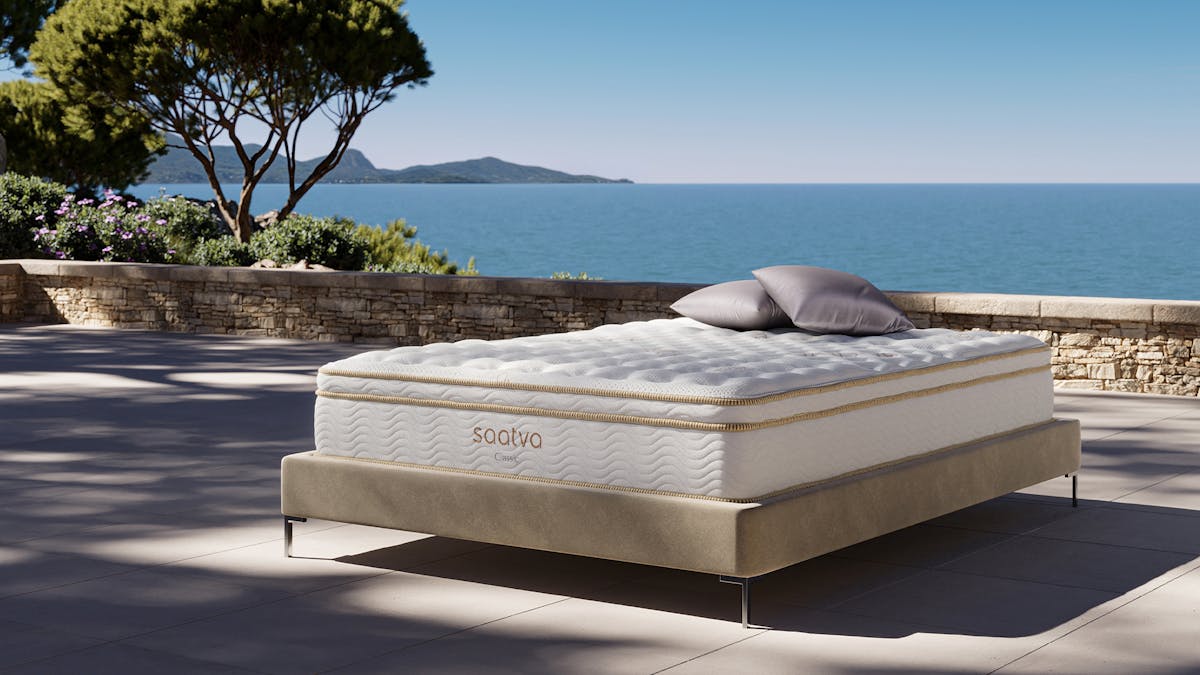
Saatva Classic
9.2/10
- Coil-on-coil construction with a reinforced lumbar zone pad
- Three firmness options (Plush Soft, Luxury Firm, Firm) to match any sleep position
- Free white-glove delivery, in-room setup, and old mattress removal
- 365-night home trial and lifetime warranty
- Ships flat, not compressed in a box
- $99 return fee during the trial period
If you are comparing DreamCloud and GhostBed Flex, the Saatva Classic is the logical next step: better build quality, longer trial, and a white-glove delivery experience neither competitor offers. It costs more, but the gap in long-term durability is meaningful.
DreamCloud vs GhostBed Flex: side-by-side specs
| DreamCloud | GhostBed Flex | |
|---|---|---|
| Type | Hybrid (memory foam + coils) | Hybrid (gel memory foam + coils) |
| Height | 14 inches | 13 inches |
| Firmness | Medium-firm ~6.5/10 | Medium-firm ~6.5/10 |
| Cover | Cashmere-blend quilted | Cooling fiber cover |
| Trial | 365 nights | 101 nights |
| Warranty | Lifetime (Forever) | 25 years |
| Queen price | ~$1,098 | ~$1,595 |
| Best for | Combination sleepers, hot sleepers, value shoppers | Couples, side sleepers, hot sleepers |
Key differences between DreamCloud and GhostBed Flex
Who the DreamCloud is best for
Combination sleepers: the DreamCloud's medium-firm feel with a responsive pillow-top layer handles both back and side positions well. It is not the deepest contouring mattress on the market, but it moves with you rather than trapping you.
Hot sleepers on a budget: the tall coil unit creates solid airflow, and the breathable cashmere-blend cover keeps surface temperature reasonable. No active cooling technology, but passive ventilation is effective.
Shoppers who want a long trial: a 365-night trial is rare at this price point. If you are not sure whether a medium-firm hybrid works for your body, that window gives you a full year to decide.
May not suit: stomach sleepers who need firm support, or anyone looking for deep memory-foam contouring. The feel is bouncy and responsive, not slow-moving.
Who the GhostBed Flex is best for
Couples: the gel memory foam layers absorb motion well, and the reinforced perimeter coils mean you can use the full surface without feeling like you will roll off the edge. Both properties matter when two people share a bed.
Side sleepers: four inches of comfort material with gel memory foam provides solid pressure relief at the shoulder and hip. Side sleepers who have struggled on firmer beds tend to do better here than on the DreamCloud.
Hot sleepers who want more cooling technology: the cooling fiber cover combined with gel memory foam and a coil base gives the GhostBed Flex a slight edge in temperature regulation over the DreamCloud.
May not suit: stomach sleepers, anyone wanting an all-foam feel, or shoppers sensitive to price. At roughly $500 more for a queen, it needs to outperform meaningfully to justify the gap.
Construction compared
The DreamCloud is 14 inches tall. Starting at the top: a luxury cashmere-blend cover that is quilted and tufted with memory foam, giving a soft pillow-top feel. Below that, a comfort layer of soft foam adds pressure relief. The support core is individually wrapped coils, tall and well-spaced for airflow. A dense base foam layer anchors the construction. The result is a mattress that feels more like a traditional innerspring hotel bed than a dense memory foam product.
The GhostBed Flex runs 13 inches. The cooling fiber cover handles surface temperature. Beneath it, you get roughly one inch of fiber fill woven into the cover, then two inches of separate gel memory foam layers for pressure relief. A transition foam layer separates the comfort system from the pocketed coil support core. The coils are reinforced at the perimeter for edge support. Where the DreamCloud leans bouncy, the GhostBed Flex leans toward a classic memory foam feel that is slightly more controlled.
Firmness and feel
Both mattresses land at about 6.5 out of 10, placing them solidly in the medium-firm range. The feel diverges despite the shared rating. DreamCloud is bouncier and more responsive, with a pillow-top layer that compresses quickly and rebounds fast. You do not sink much. GhostBed Flex has a slower, more controlled feel because of the gel memory foam layers. You sink slightly further before feeling supported, and movement takes a fraction more effort.
For combination sleepers who switch positions often, DreamCloud's responsiveness is a practical advantage. For sleepers who stay in one position, the GhostBed Flex's deeper contouring often feels more pressure-relieving.
Motion isolation and edge support
DreamCloud performs well on motion isolation for a hybrid. The foam comfort layers absorb a reasonable amount of movement, though an all-foam mattress will always outperform it here. Edge support is average: the mattress compresses noticeably when you sit on the perimeter, but lying near the edge is workable.
GhostBed Flex has the edge on both counts. The gel memory foam layers dampen motion better than DreamCloud's comfort layers, and the reinforced perimeter coils provide a firmer, more stable edge. If edge-to-edge usable surface and minimal sleep disruption from a partner are priorities, the GhostBed Flex wins this round.
Temperature
Both are hybrid mattresses, which means coils handle most of the airflow heavy lifting. DreamCloud relies on passive ventilation from its tall coil unit and breathable cover. No gel infusions in the primary comfort layers. GhostBed Flex adds gel memory foam and a dedicated cooling fiber cover on top of the coil airflow. For sleepers who run warm but are not extreme hot sleepers, both will be fine. For sleepers who overheat consistently, GhostBed Flex is the safer choice.
Price and value
DreamCloud is the clear value winner. A queen runs around $1,098, backed by a 365-night trial and a lifetime warranty. GhostBed Flex prices a queen at roughly $1,595 with only a 101-night trial and a 25-year (not lifetime) warranty. For the $500 difference to be worth it, GhostBed Flex would need to outperform across the board. It does not. It is better on motion isolation and edge support, roughly equal on firmness and cooling, and worse on trial length and value-per-dollar.
| Size | DreamCloud | GhostBed Flex |
|---|---|---|
| Twin | ~$798 | ~$1,295 |
| Twin XL | ~$898 | ~$1,395 |
| Queen | ~$1,098 | ~$1,595 |
| King | ~$1,298 | ~$1,995 |
| Cal King | ~$1,298 | ~$1,995 |
Ease of movement
GhostBed Flex's responsive coils combined with the controlled memory foam make repositioning smooth. You feel the mattress push back as you shift, which assists the movement. DreamCloud's deeper pillow-top layer can slow things down slightly for lighter sleepers, though the coil base still provides enough rebound that most combination sleepers find it comfortable.
Verdict: which should you buy?
For most shoppers, DreamCloud is the better buy. At roughly $500 less for a queen, with a trial period three and a half times longer and a lifetime warranty, the value is hard to argue with. The feel is bouncy and hotel-like rather than slow memory foam, which suits combination sleepers well.
Choose GhostBed Flex if motion isolation and edge support are your primary concerns, you sleep hot and want dedicated gel cooling technology, or you prefer a deeper, slower memory foam feel with coil support underneath.
If neither mattress feels quite right after reading this, the Saatva Classic is worth serious consideration. It costs more, but coil-on-coil construction, three firmness options, a 365-night trial, a lifetime warranty, and free white-glove delivery represent a different tier of product entirely.
DreamCloud beats GhostBed Flex on value: better price, longer trial, and a lifetime warranty. GhostBed Flex wins on motion isolation and edge support. For the best overall hybrid at this price tier, the Saatva Classic outperforms both.
Deal-hunting between boxes — or buying the benchmark once
This page crowned DreamCloud the better deal, with GhostBed Flex taking motion isolation and edge support. Both verdicts are true, and both describe the same thing: two compressed-in-a-box hybrids trading punches on value. When a comparison ends in « which discount stings less », that’s worth noticing.
We also named the benchmark above: the Saatva Classic. It isn’t shipped in a box at all — it’s built as a traditional coil-on-coil innerspring with a plush euro top and delivered white-glove. If your budget has any stretch in it, price the benchmark before you buy the bargain.
Frequently asked questions
Is DreamCloud better than GhostBed Flex?
For most sleepers, yes. DreamCloud costs less, comes with a 365-night trial versus 101 nights, and includes a lifetime warranty. GhostBed Flex has stronger motion isolation and edge support, which matters for couples and edge-to-edge sleepers. Pick based on your priority.
Is GhostBed Flex good for side sleepers?
Yes. The gel memory foam comfort layers provide solid pressure relief at the shoulder and hip. Side sleepers who need deeper contouring than a bouncy hybrid provides often prefer GhostBed Flex over DreamCloud.
Does DreamCloud sleep cool?
Yes, reasonably well. The tall coil unit creates passive airflow, and the breathable cashmere-blend cover keeps surface temperature manageable. It does not use gel infusions in its foam layers, so it is not the coolest hybrid available, but most sleepers do not overheat on it.
How does DreamCloud compare to Saatva Classic?
Saatva Classic costs more but delivers coil-on-coil construction, three firmness options, a 365-night trial, a lifetime warranty, and free white-glove in-home delivery. DreamCloud is a strong value hybrid; Saatva Classic is a step up in build quality and purchase protection. If budget allows, Saatva is worth the extra spend.
Can you try GhostBed Flex before committing?
GhostBed offers a 101-night sleep trial. That is enough time to determine fit, but significantly shorter than DreamCloud's 365-night window. If you need a longer adjustment period, DreamCloud or Saatva Classic (365 nights each) give you more runway.
All comparisons in this guide use publicly available specifications and our editorial testing methodology. Prices reflect typical promotional pricing and may vary.