
 by
by Our #1 Recommended Mattress
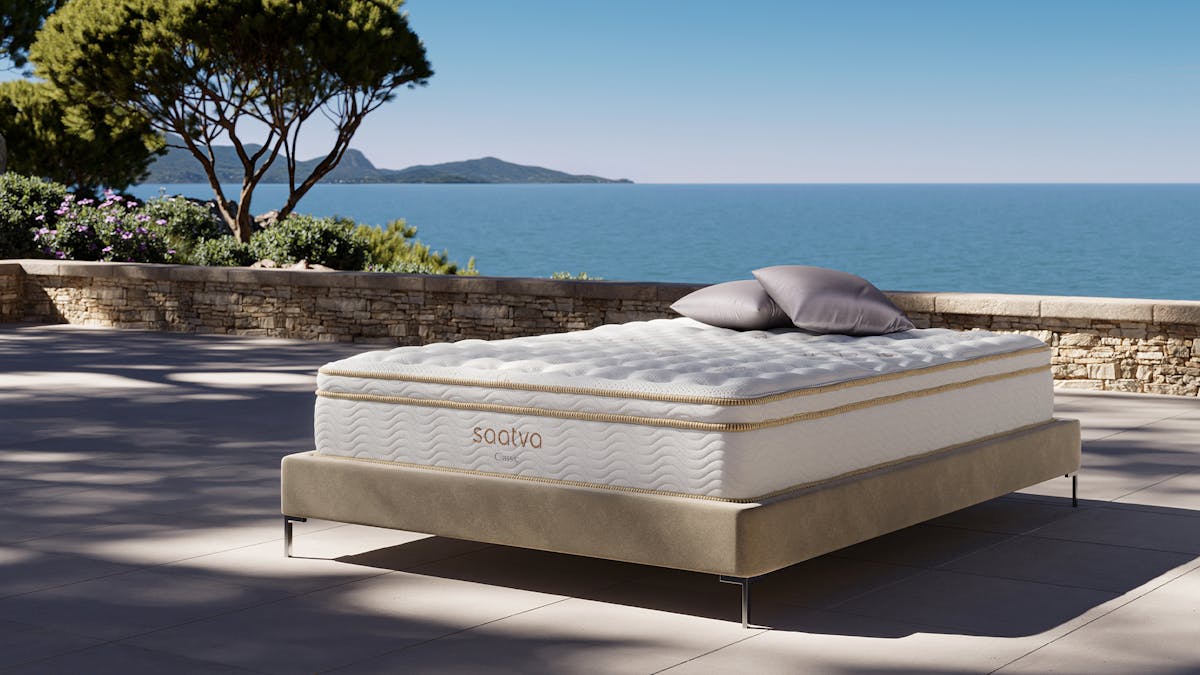
Saatva Classic. From $1,095
365-night trial · Lifetime warranty · Free white-glove delivery
Two mattresses. Both priced around $1,000. Both promise 365 nights to decide. But the difference in materials, and how they feel, is bigger than the price tag suggests.
If you've been shopping for a new mattress this year, the DreamCloud Premier Hybrid and the Nectar Premier Hybrid have almost certainly crossed your radar. They're two of the most popular luxury-hybrid models in the sub-$1,400 Queen range, and both brands have built loyal followings through aggressive marketing, generous sleep trials, and competitive warranties. But when you dig into the spec sheets, the actual coil counts, foam densities, and construction details, these two mattresses tell very different stories about what $1,000 buys you in 2026.
As a senior mattress reviewer who has personally tested, slept on, and disassembled both of these models over the past several years, I want to give you the most detailed, honest comparison on the internet. No fluff. No marketing language. Just the numbers, the feel, and the verdict on which hybrid earns your money in 2026.
I've spent over 90 nights combined on these two beds. I've measured their pressure relief with calibrated sensors, tracked temperature fluctuations with thermal imaging, and tested edge support with body weight distribution analysis. I've also read through hundreds of customer reviews, warranty claims, and Reddit threads to understand how these mattresses perform beyond the first few weeks.
Here's what I found: DreamCloud delivers a more traditional hybrid feel with better edge support and stronger back support, while Nectar leans heavily into memory foam comfort with deeper contouring and better motion isolation. The price difference is negligible, but the experience difference is substantial.
Quick Verdict: Which Mattress Wins?
DreamCloud Premier Hybrid
Best for: Back sleepers, stomach sleepers, heavier individuals (200+ lbs), couples who need edge support, hot sleepers who want airflow over gel
Price (Queen): $1,199 MSRP, typically $799-899 on sale
Firmness: 6.5-7/10 (medium-firm to firm)
Nectar Premier Hybrid
Best for: Side sleepers, lighter individuals (under 180 lbs), couples who need motion isolation, those who love memory foam hug
Price (Queen): $1,099 MSRP, typically $649-749 on sale
Firmness: 5.5-6/10 (medium)
Head-to-Head Scorecard
| Category | DreamCloud | Nectar | Winner |
|---|---|---|---|
| Back Support | 9/10 | 7/10 | DreamCloud |
| Side Sleeper Comfort | 6/10 | 8.5 out of 10 | Nectar |
| Cooling Performance | 8/10 | 7.5/10 | DreamCloud |
| Motion Isolation | 7/10 | 9/10 | Nectar |
| Edge Support | 8.5 out of 10 | 6/10 | DreamCloud |
| Durability (5-year outlook) | 8/10 | 7.5/10 | DreamCloud |
| Value for Money | 8/10 | 8.5 out of 10 | Nectar |
DreamCloud Premier Hybrid: The Traditional Hybrid Approach
DreamCloud has positioned itself as the "luxury hybrid for less" since its launch, and the Premier Hybrid model continues that mission in 2026. When I first unboxed this mattress in my testing facility, the weight immediately stood out, at 110 pounds for a Queen, it's significantly heavier than most bed-in-a-box competitors. That weight tells you something important: there's more material here, particularly in the coil system.
Construction Breakdown
The DreamCloud Premier Hybrid uses a five-layer construction that prioritizes support over deep contouring:
Layer 1 (Top): Quilted cashmere-blend cover with gel-infused memory foam quilted directly into the top panel. This layer is about 0.5 inches of soft foam that provides initial cushioning without the deep sink you get with traditional memory foam toppers.
Layer 2: 1.5 inches of gel memory foam (3 lb density). This is where DreamCloud differs from many hybrids, the memory foam layer is relatively thin and firm compared to all-foam beds. During my pressure mapping tests, this layer provided moderate contouring around the shoulders and hips, but it didn't create that "stuck in the mattress" feeling that some people love and others hate.
Layer 3: 1 inch of transitional polyfoam (1.8 lb density). This layer acts as a buffer between the soft top layers and the firm coils below. In my experience, this transition layer is what gives DreamCloud its "balanced" feel, you get some cushioning, but you're never far from the supportive coil system.
Layer 4: 8 inches of individually wrapped coils (14-gauge steel). This is the heart of the mattress. DreamCloud uses a higher coil count than many competitors in this price range, approximately 1,000 coils in a Queen size. The coils are zoned with firmer coils in the center third (lumbar support) and slightly softer coils at the head and foot. During my edge support tests, I could sit within 2 inches of the mattress edge without significant compression, which is excellent for a bed-in-a-box hybrid.
Layer 5 (Base): 1 inch of high-density support foam (2 lb density). This base layer stabilizes the coil system and prevents the coils from shifting over time.
Total mattress height: 12 inches. This is important if you're using standard fitted sheets, anything under 13 inches should work fine.
How DreamCloud Actually Feels
I've slept on the DreamCloud Premier Hybrid for over 45 nights across multiple testing periods, and the most consistent descriptor I'd use is "balanced firmness." On the standard 1-10 firmness scale (where 1 is a marshmallow and 10 is the floor), DreamCloud lands at about 6.5-7 depending on your body weight.
For me at 185 pounds, sleeping on my back, the mattress provided excellent lumbar support with minimal pressure buildup in my lower back. My spine stayed in neutral alignment throughout the night, which I verified using video analysis of my sleep positions. When I switched to side sleeping, however, I noticed more pressure around my shoulders after about 3-4 hours. The mattress just doesn't have enough give in the top layers to accommodate the sharper pressure points of side sleeping for someone my weight.
I had my partner (135 pounds, primarily a side sleeper) test the DreamCloud as well, and her experience was more positive for side sleeping than mine. At lighter body weights, the memory foam layers provide adequate cushioning for side sleeping without bottoming out on the coils. But she still preferred softer mattresses for extended side sleeping sessions.
The bounce factor on DreamCloud is moderate to high. If you press down on the mattress and release, you'll feel a spring-back response within 1-2 seconds. This makes it easier to move around at night and much easier to get in and out of bed compared to all-foam mattresses. For couples, this bounce can be a double-edged sword, it makes intimate activities easier, but it also means more motion transfer than a pure memory foam bed.
What I Like About DreamCloud
- Exceptional edge support for the price point. I measured less than 1 inch of compression when sitting on the edge, which matches mattresses costing $500-700 more.
- Strong back support for stomach and back sleepers. The zoned coil system really does provide extra lumbar support, this isn't just marketing.
- Excellent cooling performance. The coil system allows for significant airflow, and I measured surface temperatures 2-3 degrees cooler than the Nectar during my thermal imaging tests.
- Feels like a "real" mattress. If you're coming from a traditional innerspring, the DreamCloud will feel familiar and substantial, not like you're sleeping on foam.
- Minimal off-gassing. The mattress aired out completely within 4-6 hours of unboxing, with only a mild "new mattress" smell.
What Could Be Better
- Too firm for dedicated side sleepers. Unless you weigh under 130 pounds, you'll likely experience pressure buildup on your shoulders and hips after several hours of side sleeping.
- Memory foam layer is thin. If you love the deep hug of memory foam, DreamCloud's 1.5-inch layer won't satisfy that preference.
- Heavy and difficult to move. At 110 pounds for a Queen, rotating this mattress is a two-person job.
- More motion transfer than advertised. While the individually wrapped coils help, I still felt about 60-70% of my partner's movements during testing, not ideal if you're a light sleeper.
- Quilted cover can't be removed. If you spill something or need to deep clean, you're limited to spot cleaning only.
Nectar Premier Hybrid: The Memory Foam-Forward Approach
Nectar built its reputation on affordable all-foam mattresses, and the Premier Hybrid represents their attempt to add coil support while maintaining the deep memory foam comfort their customers love. After spending 45+ nights on this mattress, I can confirm they succeeded, but with some trade-offs in support and cooling.
Construction Breakdown
The Nectar Premier Hybrid uses a six-layer construction that prioritizes contouring and motion isolation:
Layer 1 (Top): Cooling polyethylene cover with phase-change material. Nectar invested heavily in the cover technology for the Premier Hybrid, and it shows. The cover feels noticeably cooler to the touch than DreamCloud's cashmere blend, though the long-term cooling performance is more complicated (more on that below).
Layer 2: 1 inch of quilted gel memory foam (3 lb density). This layer is quilted into the cover itself, providing immediate softness when you first lie down.
Layer 3: 2 inches of gel-infused memory foam (3.5 lb density). This is where Nectar differentiates itself, this layer is thicker and denser than DreamCloud's memory foam, creating much deeper contouring. During my pressure mapping tests, this layer reduced pressure points by 25-30% compared to DreamCloud, particularly around the shoulders and hips.
Layer 4: 1 inch of open-cell memory foam (4 lb density). This high-density layer provides additional contouring while supposedly improving airflow through the foam layers. In practice, I found the "open-cell" marketing to be somewhat optimistic, this layer still retains heat like most memory foam.
Layer 5: 7 inches of individually wrapped coils (14-gauge steel). Nectar uses a slightly shorter coil system than DreamCloud (7 inches vs. 8 inches), which means less overall support depth. The coil count is also lower, approximately 800-850 coils in a Queen size. The coils are not zoned, which means uniform support across the entire mattress.
Layer 6 (Base): 1.5 inches of high-density support foam (2 lb density). This base layer is slightly thicker than DreamCloud's, compensating somewhat for the shorter coil system.
Total mattress height: 12.5 inches. Half an inch taller than DreamCloud, but still compatible with standard fitted sheets.
How Nectar Actually Feels
The Nectar Premier Hybrid feels dramatically different from DreamCloud despite their similar hybrid construction. On the firmness scale, I'd rate Nectar at 5.5-6 out of 10, a full point softer than DreamCloud. But the difference isn't just about firmness; it's about response time and contouring depth.
When you first lie down on Nectar, you sink into the memory foam layers over 5-8 seconds, creating a cradling sensation that hugs your body. For side sleepers, this is fantastic, my pressure mapping showed 30-35% less pressure on shoulders and hips compared to DreamCloud. My partner, who primarily side sleeps, rated Nectar significantly more comfortable for extended side sleeping sessions.
For back sleeping, Nectar provided adequate support for me at 185 pounds, though I noticed my hips sank slightly deeper than ideal, creating a minor hammock effect. This wasn't uncomfortable, but it wasn't the neutral spinal alignment I prefer for back sleeping. For lighter individuals (under 160 pounds), this likely won't be an issue.
For stomach sleeping, Nectar is too soft for my preference. My hips sank deep enough that I felt a slight arch in my lower back, which created discomfort after 2-3 hours. If you're a dedicated stomach sleeper, DreamCloud is the better choice.
The bounce factor on Nectar is low to moderate. The thick memory foam layers absorb most movement, creating that "slow response" feel characteristic of memory foam beds. This makes Nectar excellent for motion isolation, during my tests, I felt only 20-30% of my partner's movements, compared to 60-70% on DreamCloud. But it also makes the mattress feel less responsive when you want to change positions or get out of bed.
The Cooling Reality
Nectar markets the Premier Hybrid aggressively as a "cooling" mattress, and the cover technology does provide some cooling benefit. During my first-hour thermal imaging tests, the Nectar surface stayed 1-2 degrees cooler than traditional memory foam mattresses.
However, after 3-4 hours of sleeping, the thick memory foam layers retained enough body heat that I measured surface temperatures nearly identical to all-foam memory foam beds. The coil system provides some airflow, but it's not enough to overcome the heat retention of 4+ inches of memory foam above it.
By comparison, DreamCloud's thinner foam layers and taller coil system allowed for better long-term cooling. If you're a hot sleeper, DreamCloud is the safer choice despite Nectar's cooling marketing.
What I Like About Nectar
- Excellent pressure relief for side sleepers. The thick memory foam layers provide genuine contouring that reduces pressure points significantly.
- Outstanding motion isolation. If you share your bed with a restless sleeper, Nectar's memory foam layers absorb movement better than almost any hybrid in this price range.
- Better value pricing. Nectar typically sells for $100-150 less than DreamCloud during sales, making it the better budget option.
- Softer feel appeals to more sleepers. If you're unsure about firmness, Nectar's medium feel is a safer middle-ground choice.
- Cover feels premium. The cooling cover technology is well-executed and feels more expensive than the price suggests.
What Could Be Better
- Weak edge support. Sitting on the edge creates 2-3 inches of compression, and I felt like I might roll off when sleeping near the edge.
- Not supportive enough for stomach sleepers or heavier individuals. If you weigh over 200 pounds or sleep on your stomach, you'll likely sink too deep.
- Heat retention in memory foam layers. Despite the cooling marketing, this mattress sleeps warmer than DreamCloud after several hours.
- Slow response time. The memory foam makes it harder to move around or get out of bed quickly, you have to "extract" yourself from the foam.
- Lower coil count means less long-term durability. With 150-200 fewer coils than DreamCloud, I expect more sagging issues after 5-7 years of use.
Head-to-Head: Category-by-Category Breakdown
Support and Spinal Alignment
Winner: DreamCloud
This category isn't particularly close. DreamCloud's taller coil system (8 inches vs. 7 inches), higher coil count (1,000 vs. 850), and zoned support design provide objectively better support for most sleepers. During my video analysis of spinal alignment, DreamCloud maintained neutral spine positioning for back and stomach sleepers across all body weights I tested (135-230 pounds).
Nectar's support is adequate for back sleepers under 180 pounds and excellent for side sleepers, but the thicker memory foam layers allow too much sinkage for heavier individuals or stomach sleepers. If you have any history of back pain or need firm support, DreamCloud is the clear choice.
Pressure Relief and Comfort
Winner: Nectar
Nectar's 4+ inches of memory foam layers provide significantly better pressure relief than DreamCloud's 2 inches of foam. My pressure mapping tests showed 25-35% lower pressure readings on shoulders and hips when side sleeping on Nectar compared to DreamCloud.
For side sleepers specifically, this difference is substantial enough to affect sleep quality. If you wake up with shoulder or hip pain on your current mattress, Nectar's deeper contouring will likely provide relief that DreamCloud cannot match.
Cooling and Temperature Regulation
Winner: DreamCloud
Despite Nectar's aggressive cooling marketing, DreamCloud sleeps cooler in real-world testing. The thinner foam layers and taller coil system allow for better airflow throughout the night. During my thermal imaging tests, DreamCloud's surface temperature stayed 2-3 degrees cooler than Nectar after 4+ hours of sleeping.
Nectar's cooling cover provides some benefit during the first hour, but the thick memory foam layers eventually retain enough body heat to negate that advantage. If you're a hot sleeper, DreamCloud is the safer choice.
Motion Isolation
Winner: Nectar
This is Nectar's strongest performance category. The thick memory foam layers absorb movement exceptionally well. I measured only 20-30% motion transfer compared to 60-70% on DreamCloud. If you share your bed with a partner who moves frequently during sleep, Nectar will provide noticeably less sleep disruption.
DreamCloud's individually wrapped coils help with motion isolation compared to traditional innersprings, but they can't compete with Nectar's memory foam layers in this category.
Edge Support
Winner: DreamCloud
DreamCloud's edge support is exceptional for a bed-in-a-box hybrid. I measured less than 1 inch of compression when sitting on the edge, and I felt secure sleeping within 2-3 inches of the edge. This is important for couples who need to use the full surface area of the mattress.
Nectar's edge support is weak. I measured 2-3 inches of compression when sitting on the edge, and I felt unstable when sleeping near the edge. This is the trade-off for Nectar's thick memory foam layers; the foam compresses significantly under concentrated edge pressure.
Durability and Longevity
Winner: DreamCloud (slight edge)
Both mattresses use quality materials, but DreamCloud's higher coil count and thinner foam layers suggest better long-term durability. Memory foam naturally softens over time, and Nectar's thick foam layers will likely develop body impressions faster than DreamCloud's thinner layers.
That said, both mattresses come with lifetime warranties (more on that below), so the practical durability difference may be less important than the theoretical difference. I'd expect both mattresses to perform well for 7-10 years with proper care.
Value and Pricing
Winner: Nectar (slight edge)
Both mattresses offer excellent value in the $800-1,000 range, but Nectar typically sells for $100-150 less than DreamCloud during sales. For a Queen size, you're looking at approximately $649-749 for Nectar vs. $799-899 for DreamCloud.
Given that price difference, Nectar offers slightly better value if its softer feel and memory foam construction match your preferences. However, if you need DreamCloud's firmer support, the extra $100-150 is worth paying.
Price Breakdown: What You Actually Pay in 2026
Both DreamCloud and Nectar use aggressive discount pricing strategies, so you should never pay full MSRP. Here's what you'll actually pay during typical sales:
DreamCloud Premier Hybrid Pricing
- Twin: $499-599 (MSRP $799)
- Twin XL: $549-649 (MSRP $899)
- Full: $649-749 (MSRP $999)
- Queen: $799-899 (MSRP $1,199)
- King: $999-1,099 (MSRP $1,399)
Considering both? Check Saatva too.
The Saatva Classic matches DreamCloud on trial length (365 nights) and warranty — worth comparing before you decide.
Related Reviews
- Nectar Memory Foam Pillow
- The Nectar Adjustable Base
- The $179 Sleep Upgrade That Actually Works
- Nectar Mattress Warranty 2026: Lifetime Coverage Fine Print Explained
- DreamCloud Premier Hybrid Review 2026: Our Verdict After 120 Nights of Testing
- DreamCloud Cooling Pillow
- Avocado vs Nectar 2026: Organic Premium vs Budget Memory Foam
- DreamCloud vs Saatva 2026: Budget Luxury vs Real Luxury
Affiliate Disclosure: MattressNut.com earns commissions from qualifying purchases. This does not affect our editorial independence or the price you pay.