
 by
by The DUX Bed by Duxiana is a Swedish-engineered luxury mattress with a patented coil-within-coil spring system and five independently adjustable tension zones. It is one of the most technically sophisticated sleep systems ever built, starting at $8,450 for a queen. For most buyers, the sleep quality per dollar falls far short of the Saatva Classic at roughly $1,795, which delivers comparable lumbar support and durability at a fraction of the cost.
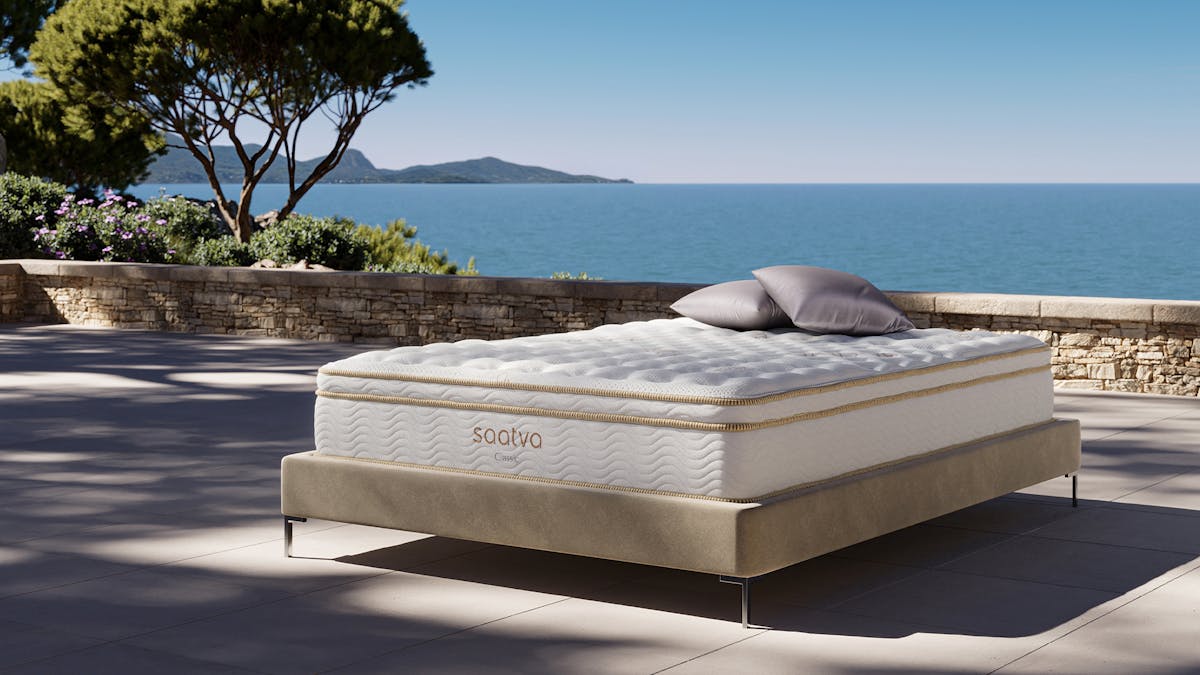
Saatva Classic
9.2/10
- Dual-coil construction with a reinforced lumbar zone pad for genuine spinal support
- GREENGUARD Gold certified, organic cotton cover, CertiPUR-US foam
- Free white-glove delivery, setup, and old-mattress removal
- 365-night home trial and lifetime warranty with no fine print
- Three firmness options (Plush Soft, Luxury Firm, Firm) to match sleep position
- $99 return processing fee applies during the trial window
- Not compressed-in-a-box, ships full size, coordinated delivery required
If you are comparing the DUX Bed against mainstream luxury options, the Saatva Classic is the benchmark: dual innerspring construction, a zoned lumbar pad, lifetime warranty, and 365-night trial. It delivers 90% of the DUX sleep experience at roughly 15% of the price.
Check Price at Saatva
What is the DUX Bed?
Duxiana is a Swedish company founded in 1926 by Johan Adolf Lundqvist. For nearly a century the brand has built one product: a high-end sleep system engineered around a proprietary spring technology rather than foam. DUX Beds are sold exclusively through Duxiana showrooms in major US cities (New York, Los Angeles, Chicago, Houston, Miami) and a small network of authorized dealers. They are not sold online or through retail chains.
The current lineup runs from the DUX 3003 (entry-level, queen $8,450) to the DUX 8008 (flagship, queen $14,605), with the recently updated DUX 6006 sitting between them at around $11,475. Each model includes a Xupport top pad in natural latex and cotton that sits over the spring system and is replaceable independently of the base.
The DUX Spring System: what makes it different
Every other mattress uses one of three support technologies: Bonnell coils, pocketed coils, or foam. The DUX Spring System uses none of these. Instead it uses continuous steel springs arranged in a "coil-within-coil" configuration: an outer barrel spring contains an inner conical spring that engages progressively as load increases. The result is a genuinely progressive response, soft under light pressure (shoulders) and firmer under heavy pressure (hips, torso), without relying on separate foam comfort layers to achieve zoning.
Firmness in the DUX system is not fixed at manufacture. Each bed uses a Pascal cassette system, where replaceable spring cassettes (soft, medium, firm) slot into defined zones across the width of the mattress. Shoulder, hip, and leg zones can each be tuned independently, and each side of a shared bed can be set differently. The DUX 8008 adds a lumbar lever that applies additional support pressure in the mid-back zone, adjustable without tools from the side of the bed.
The DUX 3003 contains approximately 2,000 to 2,500 springs across a queen; the 8008 reaches close to 4,200 springs. Both models use two to three layers of continuous spring coils stacked vertically, which Duxiana describes as creating a "3D spring matrix." This multi-layer architecture is the core engineering distinction from any other mattress on the market.
DUX Bed lineup and pricing (2024-2025)
| Model | Queen price (with Xupport pad) | Spring layers | Total height | Key distinction |
|---|---|---|---|---|
| DUX 3003 | ~$8,450 | 2 | 16" | Entry Pascal system, cotton/latex top pad |
| DUX 6006 | ~$11,475 | 2-3 | 18" | Enhanced spring density, cashmere blend topper |
| DUX 8008 | ~$14,605 | 3 | 20" | Maximum spring count, lumbar lever, bespoke materials |
All models include the Xupport top pad and are sold as a complete sleep system with a proprietary base. Leg heights are available at 4.75", 6.25", 7.75", and 9" depending on the model.
Performance: how the DUX Bed actually sleeps
Support and spinal alignment: The progressive coil-within-coil design produces exceptional support across a wide range of body weights and sleep positions. The Pascal zone adjustability means the DUX Bed can be genuinely optimized for an individual sleeper in a way fixed-firmness mattresses cannot. Back and stomach sleepers benefit most from the precise lumbar zone control. Side sleepers can soften the shoulder zone independently to allow hip and shoulder sinkage without losing lumbar support.
Motion isolation: Good but not the DUX Bed's strongest suit. The interconnected spring matrix transmits more motion between partners than modern individually pocketed coil systems. Couples who are sensitive to motion transfer are better served by the Pascal split-tension configuration, but even then the DUX does not match the motion isolation of a foam-core or individually pocketed coil mattress.
Cooling: Very good. The open spring structure allows airflow through the entire depth of the mattress, and the absence of foam layers removes the primary heat retention mechanism found in most beds. The natural fiber Xupport top pad (latex and cotton, sometimes cashmere on higher models) manages moisture without trapping heat. Hot sleepers will find the DUX among the coolest spring systems available.
Edge support: Excellent. The continuous steel spring construction gives the DUX Bed firm, consistent edge support across the full perimeter. There is no edge softening under seated or sleeping load, which is a notable advantage over foam-core beds.
Durability and serviceability: This is the DUX Bed's most legitimate differentiator. Duxiana designs the entire system to be serviced rather than replaced. Spring cassettes can be swapped out as they wear. The Xupport top pad is replaced independently, typically every 10 to 15 years, at a fraction of the cost of a new mattress. Duxiana technicians can re-tension the spring system in-home. Expected functional lifespan is 25 to 30 years with proper maintenance, compared to 8 to 15 years for most premium mattresses.
Who should buy a DUX Bed
The DUX Bed makes sense for a narrow set of buyers:
- Buyers with medically specific support needs: If a physician or physiatrist has recommended a customized spring tension pattern for a documented spinal condition, the DUX Pascal system is the only mattress that delivers true per-zone firmness adjustment in a clinical sense.
- Couples with dramatically different weight and firmness requirements: The dual-sided Pascal system is unmatched for accommodating a 130 lb soft-preference sleeper and a 250 lb firm-preference sleeper on the same mattress without compromise.
- Long-term total-cost buyers: Over 25 years, the DUX 3003 at $8,450 amortizes to roughly $338 per year. A $1,795 Saatva Classic replaced every 15 years costs approximately $120 per year. The DUX is still more expensive on a per-year basis, but the gap narrows considerably when servicing is included.
The DUX Bed is not the right choice for most buyers because the premium over a top-tier conventional mattress, typically $6,000 to $13,000, is hard to justify on sleep quality alone. The Saatva Classic, PlushBeds Botanical Bliss, and similar options deliver excellent spinal support and durability at a fraction of the price.
The honest verdict
DUX Beds are among the most technically sophisticated sleep systems ever produced. The multi-layer spring engineering, zone-adjustable Pascal system, and 25-to-30-year service lifespan are genuinely unmatched in the mattress industry. For the right buyer, the DUX Bed is a defensible purchase.
For most people considering a premium mattress, the value case does not hold. A Saatva Classic at $1,795 delivers dual innerspring construction, a reinforced lumbar pad, GREENGUARD Gold certification, free white-glove delivery, a 365-night trial, and a lifetime warranty. A PlushBeds Botanical Bliss at roughly $2,999 offers certified organic latex with a 25-year warranty. Either option provides a high-quality sleep surface at 15 to 35 cents on the dollar compared to the DUX entry level.
Buy a DUX Bed if you have specific clinical needs requiring adjustable zone tension, or if you intend to use and service the mattress for 25-plus years. Otherwise, the Saatva Classic is a stronger all-around value and the mattress we recommend first in this category.
The DUX Bed is extraordinary engineering at an extraordinary price ($8,450 to $14,605 queen). For most buyers the Saatva Classic delivers comparable spinal support and durability on a 365-night trial with a lifetime warranty, for roughly $1,795. That is the practical choice for 95% of mattress shoppers in this category.
Saatva Classic
9.2/10
Dual-coil innerspring construction, reinforced lumbar zone, GREENGUARD Gold certified, free white-glove delivery. The best mainstream luxury alternative to the DUX Bed for buyers who want genuine spring engineering without the five-figure price tag.
Check Price at Saatva
Frequently asked questions
How is a DUX Bed different from other mattresses?
DUX Beds use a patented coil-within-coil spring system with multiple spring layers stacked vertically and a Pascal cassette system that allows each zone (shoulder, hip, leg) to be set to a different firmness. Unlike any other mattress, the spring cassettes are replaceable and the entire system can be re-tensioned by Duxiana service technicians in-home, extending functional life to 25 to 30 years.
Is a DUX Bed worth the price?
For most buyers, no. The DUX 3003 starts at $8,450 queen and the DUX 8008 reaches $14,605 queen. A top-tier alternative like the Saatva Classic ($1,795) or PlushBeds Botanical Bliss ($2,999) delivers excellent lumbar support, long warranties, and quality construction at a fraction of the cost. The DUX value case is strongest for buyers with documented medical needs requiring precise zone-adjustable firmness, or those who plan a 25-plus-year ownership with professional servicing.
Where can you try a DUX Bed?
Duxiana operates its own showrooms in New York, Los Angeles, Chicago, Houston, and Miami, among other US cities. They recommend a 15-to-20-minute in-store fitting with a sleep specialist who will configure the Pascal cassettes to your body weight and sleep position. Visit duxiana.com for current showroom locations. DUX Beds are not available through third-party retailers or online direct.
How long does a DUX Bed last?
The DUX spring system is designed to be serviced over a 25-to-30-year lifespan. The Xupport top pad is typically replaced every 10 to 15 years. Spring cassettes can be swapped as they wear. This serviceability model is the core long-term cost argument for the DUX Bed compared to replacing a conventional mattress every 8 to 15 years.
What is the best alternative to a DUX Bed?
For innerspring support, the Saatva Classic is the closest mainstream equivalent: dual innerspring construction, a reinforced lumbar zone pad, three firmness options, free white-glove delivery, a 365-night trial, and a lifetime warranty at around $1,795 queen. For latex with a long warranty, PlushBeds Botanical Bliss offers certified organic latex construction with a 25-year warranty at roughly $2,999 queen.