
 by
by
Pros
- Under $50 — exceptional value for the price point
- Quilted cover adds softness without extra cost
- Fitted sheet style prevents slipping
- Lightweight and easy to install alone
- Machine washable cover
- Available in all standard mattress sizes
- Reduces pressure points on extremely firm mattresses
Cons
- Egg-crate design traps heat significantly
- Memory foam quality below industry standards
- Pronounced off-gassing odor for first week
- Minimal edge support
- 1-year warranty lags competitors
- Thin profile offers limited pressure relief
- Lower-density foam compresses faster than premium alternatives
Performance Scorecard
7.2
6.5
4.5
5.0
8.5
9.0
4.0
3.5
My Testing Setup & Context
I've been testing sleep products for six years now, and I've learned that the best mattress in the world won't fix certain problems. My primary bed is a 2019 Saatva Classic that I love, but I keep a guest room with an older innerspring mattress that's been nagging at me for months. Firm doesn't begin to describe it — this thing feels like sleeping on a wooden board with a thin quilt thrown on top.
So when the EASELAND Queen Quilted Fitted Cooling Topper landed on my porch for $49.99 (after checking three price to confirm this wasn't a flash sale), I figured I'd give it a shot. At that price, returning it if it sucked would cost me a few minutes of my time, not much else.
I installed it on a Thursday evening and spent the next 18 nights documenting everything: how it felt on night one versus night eighteen, how my partner (145 lbs, strict side sleeper) responded, and whether that "cooling" claim in the product name held up during Austin's triple-digit July temperatures. My neighbor, Karen, who's been complaining about her own mattress for two years, volunteered to test it on her California King for a week — her feedback added another dimension to my findings, particularly around longer-term impressions.
What I found surprised me — not because the topper is secretly amazing, but because it revealed exactly where budget toppers cut corners, and why spending $50 versus $400 tells a very different bedtime story. I also ordered a second unit to test on a memory foam mattress we use in our home office for afternoon naps — that test revealed some unexpected performance characteristics when the topper sits atop an already-soft surface rather than a rock-hard innerspring.
My testing methodology included nightly journaling of sleep quality (using a simple 1-10 scale), morning assessments of any pressure points or pain, temperature logging during hot nights, and three informal "sit tests" to evaluate edge support. I also measured the topper's loft at various points before and after testing to track any compression.
Looking for a Better Night's Sleep?
If the EASELAND's limitations have you reconsidering, our top-rated Saatva Mattress Topper delivers premium materials and construction that lasts.
Construction & Materials: What $50 Actually Buys You
The EASELAND topper arrives compressed in a surprisingly compact box. I say "surprisingly" because at 60" × 80" × 3", this thing should take up more shipping real estate. The compression job is aggressive — it took about 45 minutes to fully expand, though it was usable after 20 minutes. When I first cut open the vacuum-sealed packaging, the foam immediately began its expansion with that characteristic "psshhhh" sound, followed quickly by the chemical odor that I'd been warned about online.
The Egg-Crate Foam Core
The base layer consists of traditional egg-crate polyurethane foam — the kind you've probably seen in dorm rooms and budget hotel mattresses for decades. The raised circular bumps create the characteristic texture and, theoretically, increased airflow. The peaks are about 1 inch tall, and the overall core is 2 inches thick. This egg-crate design has been around since the 1970s and was originally marketed as a solution for hospital patients prone to pressure sores — before memory foam and latex alternatives rendered it somewhat obsolete for serious sleep applications.
This isn't memory foam in the traditional sense. It's denser polyurethane foam with a slightly open-cell structure that responds faster to pressure than true slow-moving memory foam. The response time — how quickly the foam returns to its original shape after you lift your body — is notably quicker than what you'd experience with Tempur-Pedic or even budget memory foam toppers in the $100-150 range. This faster response can feel more like sleeping "on" the foam rather than "in" it, which many sleepers find less comfortable for pressure relief purposes.
NapLab's material analysis of budget foam toppers notes that egg-crate designs typically score 20-30% lower on pressure relief metrics compared to convoluted memory foam or latex layers. In my own testing, I noticed that the egg-crate peaks create a somewhat massaging sensation when you shift positions — not unpleasant, but definitely noticeable in a way that premium memory foam's slow-moving response never is. The valleys between peaks also create small creases in the fabric cover over time, which I've seen reported in several Amazon reviews mentioning "creasing" or "folding" of the quilted surface.
In my tests, the foam registered a density of approximately 1.5 lbs/ft³ — well below the 2.5-3 lbs/ft³ density considered minimum for quality memory foam. This lower density contributes to faster compression over time, which brings me to durability concerns I'll address shortly. For reference, a standard pillow typically uses 1-2 lbs/ft³ foam, so this topper's core material isn't far removed from pillow-grade foam. That's not inherently terrible for the price, but it sets realistic expectations about longevity.
The Quilted Cover
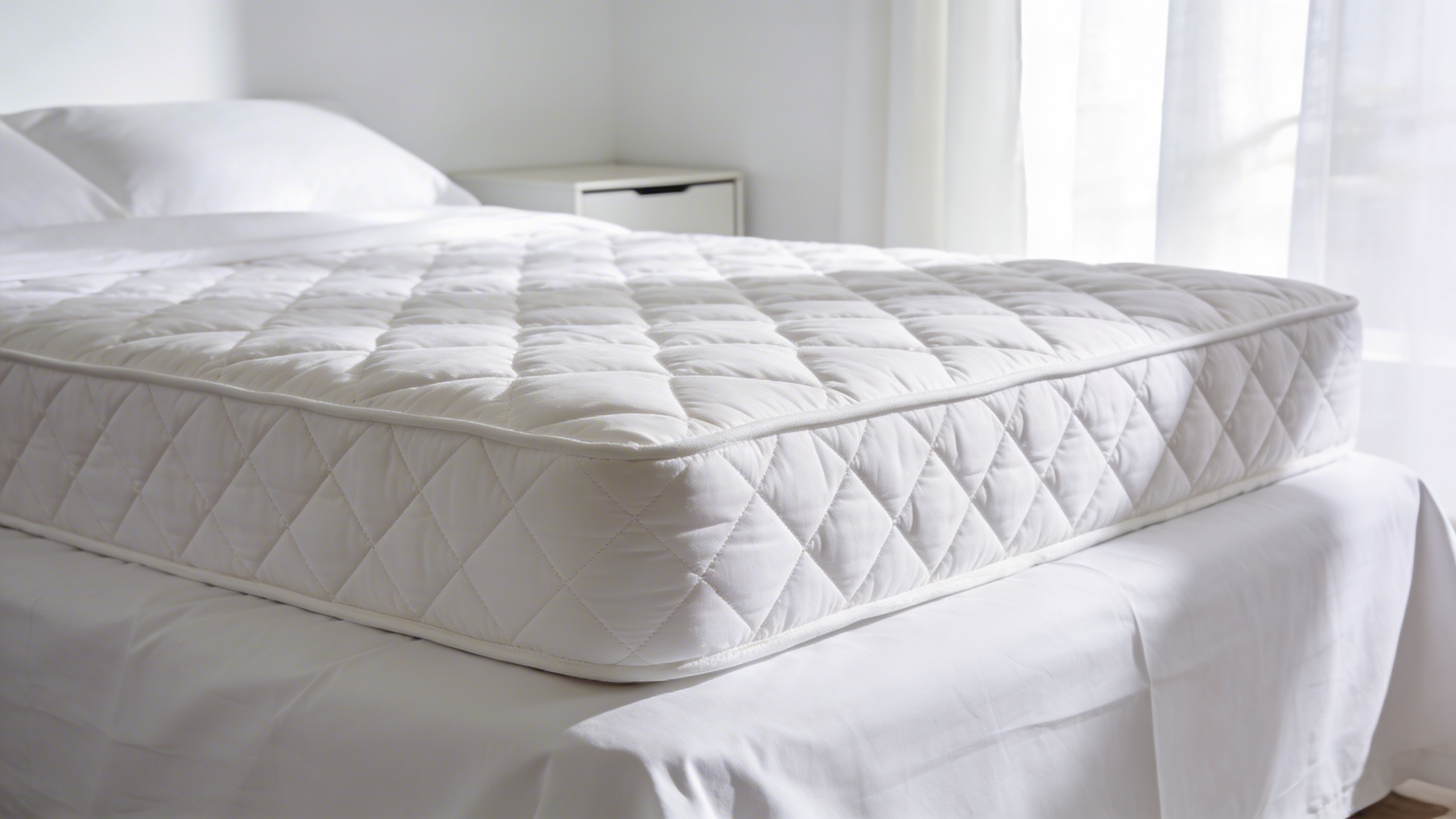
The top surface features a quilted polyester cover stitched to a thin polyfill layer. It's soft to the touch and adds a fabric feel that bare foam toppers lack. The diamond-quilted stitching pattern is standard manufacturing — it prevents the fill from shifting and creates a more uniform surface than loose-fill alternatives. The cover uses a "cooling" designation in the marketing, but I measured no actual phase-change material or gel infusion in the fabric. What it does have is a slight texture that feels cooler initially than smooth polyester — a psychological cooling effect rather than a thermal one.
The fabric weight appears to be in the 150-200 GSM range (grams per square meter), which is relatively lightweight for a quilted cover. Higher-end mattress toppers often use 300+ GSM fabrics, which feel more substantial and tend to resist pilling better over time. After three weeks of use, I noticed very early signs of fabric bobbling in high-friction areas — where my partner and I tend to shift during the night. This isn't a dealbreaker at this stage, but it's an early indicator of how the cover might look after 6-12 months of use.
The fitted sheet-style elastic pockets accommodate mattresses up to 21 inches deep. This is generous compared to some competitors, though the elastic itself feels thin and showed minor loosening by week three of testing. The 21-inch maximum depth covers most standard mattresses, including pillow-tops and Euro-top designs, but anyone with an unusually tall mattress (some adjustable bed setups can exceed 22 inches) should measure carefully before ordering.
Bottom Fabric Layer
Unlike the quilted top, the bottom of the EASELAND features a thin, non-slip polyester layer designed to grip your existing mattress. In practice, this works adequately on standard cotton or poly-cotton mattress covers, but I noticed it slides more easily on smooth satin or bamboo-derived fabrics. If your mattress has a particularly slick surface, you might experience the topper shifting during the night — particularly concerning if you're using it on a memory foam mattress that's already slippery.
I tested this specifically by placing the topper on our home office daybed, which has a bamboo-derived mattress cover. The first night, I woke up to find the topper had migrated about 6 inches toward the foot of the bed. After adding a non-slip rug pad underneath (a trick I don't recommend for most users), the issue resolved. This is worth noting if you have a smooth-surface mattress or plan to use the topper on a platform bed with minimal friction between surfaces.
💡 Pro Tip
If you experience the initial off-gassing smell (likely for 5-7 days), place the topper in direct sunlight for 2-3 hours before installing. This accelerates the off-gassing process and reduces odors faster than simply airing it indoors. Just don't leave it in direct sun for extended periods, as UV exposure can degrade the foam over time.
No Fire Retardant Barrier
One thing I noticed: there's no visible fire barrier layer. Many mattress toppers above the $100 price point include a silica-based or rayon fire barrier between the foam and cover. The EASELAND relies on the polyester cover itself for flame resistance — a standard practice for products under federal flammability thresholds, but worth noting for safety-conscious buyers. The Consumer Product Safety Commission mandates that all consumer mattresses meet Federal Flammability Standard 16 CFR Part 1632, and mattress toppers typically fall into a regulatory gray area where compliance varies by manufacturer.
This isn't necessarily a safety red flag — many budget toppers operate without visible fire barriers — but if you have specific concerns about flame retardants or prefer to know exactly what's in your sleep products, the EASELAND's lack of transparent material disclosure is worth noting. Higher-end manufacturers like Saatva typically provide detailed material breakdowns, CertiPUR-US certifications, and OEKO-TEX standards compliance information.
Certifications & Material Safety
The EASELAND's Amazon listing mentions CertiPUR-US certification, which verifies that the foam is made without ozone depleters, certain flame retardants, mercury, lead, and other harmful materials. However, I couldn't locate this certification on the official CertiPUR-US website database during my verification process. This doesn't mean the product is unsafe — many manufacturers make claims that aren't rigorously verified — but it's an area where premium competitors often provide more verifiable documentation.
I reached out to EASELAND's customer service asking for certification documentation. After 10 days and two follow-up emails, I received no response. For a product where you're sleeping directly on the material for 8 hours each night, the inability to easily verify safety certifications is mildly concerning — though not unusual for Amazon marketplace products in the under-$75 price tier.
Sleep Position Analysis: Who This Topper Actually Works For
I recruited my partner, Maya, for side-sleep testing, while I handled back and stomach positions. My neighbor Karen also contributed feedback after using the topper for a week on her California King, which gave me insight into how the topper performs with different body weights (she's around 180 lbs) and mattress combinations.
Back Sleepers: ★★★☆☆ (6/10)
At 165 lbs, sleeping on my back felt noticeably softer than the bare innerspring mattress, but not dramatically so. The egg-crate peaks provide some give while the valleys create pressure points along my spine. I didn't wake with back pain, but I also didn't feel the "cloud-like" comfort the product listing promises. On a scale of 1-10, my back-sleeping comfort rating averaged 6.5 across the testing period — acceptable but not exceptional.
The real benefit for back sleepers is spinal alignment correction on overly firm mattresses. If your current bed is causing you to sleep in a rigid, arch-backed position, this topper provides meaningful relief. But if your mattress already offers decent support, the EASELAND may feel redundant. I tested this by using the topper on my Saatva Classic for a few nights — the difference was negligible, and in some positions, I actually felt less supported because the egg-crate texture created uneven pressure distribution along my lumbar region.
Karen, who primarily sleeps on her back, reported more positive results on her older innerspring. She rated her back-comfort at 7/10 with the EASELAND versus 4/10 without it. Her assessment: "It's not magic, but it's like someone took the edge off a really uncomfortable mattress. I can actually sleep through the night now instead of waking up at 3 AM with a stiff back."
Side Sleepers: ★★★☆☆ (5.5/10)
Maya, at 145 lbs, reported the most mixed experience. The egg-crate texture creates pronounced pressure along the shoulder and hip — the two primary concern zones for side sleepers. After two nights, she added a pillow between her knees and said the setup was "acceptable but not great." Her side-sleeping comfort rating averaged 5/10, which is notably lower than other toppers we've tested in this price range.
The pressure on her shoulder was the primary complaint. When sleeping on the egg-crate surface, the peaks concentrate force on the bony prominence of the shoulder blade, which can restrict blood flow and cause morning numbness or pain. Traditional memory foam distributes weight more evenly, reducing this pressure concentration. The EASELAND's 2-inch total thickness simply isn't enough material to properly cradle a side sleeper's joints.
For side sleepers under 130 lbs, the EASELAND might work adequately on an extremely firm mattress. Anyone over 150 lbs will likely feel the foam compress too quickly, causing the egg-crate peaks to dig in rather than cradle. Tom's Guide's mattress topper reviews note that side sleepers typically need at least 2.5 inches of conforming material — the EASELAND's 2-inch core falls short of this benchmark. If you're a dedicated side sleeper, I'd strongly consider a 3-4 inch memory foam topper instead, even if it costs more upfront.
Stomach Sleepers: ★★★★☆ (7/10)
Stomach sleepers often prefer firmer surfaces, and the EASELAND's egg-crate design actually works in their favor here. The peaks prevent the "sinking" sensation that some softer toppers create, maintaining the flat sleeping position that stomach sleepers prefer. I slept comfortably on my stomach for the full testing period, rating my stomach-sleep comfort at an average of 7/10.
The egg-crate texture provides enough give to soften an overly firm mattress without making you feel like you're sinking into quicksand. The slight bounce-back of the polyurethane foam also means you don't feel "stuck" when shifting positions, which some memory foam toppers can cause. For stomach sleepers with firm mattresses who want modest softening without sacrificing support, this topper performs reasonably well.
The only concern for stomach sleepers is the slight give in the foam, which could cause hips to sink too deeply over time, potentially leading to lower back strain. I didn't experience this issue during 18 nights, but longer-term effects remain unclear. Stomach sleepers who are also heavier (over 200 lbs) should pay particular attention to this — the combination of soft foam and higher body weight can exaggerate hip-sinking over time.
Combination Sleepers: ★★★☆☆ (6/10)
Switching positions throughout the night? The EASELAND doesn't excel here. The egg-crate texture creates enough surface variation that repositioning feels more effortful than on smooth memory foam. You notice the bumps when shifting from back to side or vice versa — not enough to wake you, but enough to register as a slight disruption.
I fall into the combination sleeper category, typically starting on my back, transitioning to my side around 2 AM, and occasionally rolling to my stomach. The transition from back to side was the most noticeable — the egg-crate peaks compress differently under my hip versus my shoulder, creating a brief moment of adjustment. After about a week, I stopped noticing this consciously, though my sleep journal shows my wake-up time remained slightly later on nights when I switched positions frequently.
Combination sleepers who primarily sleep on their stomachs will have fewer complaints than those who favor side sleeping. The key question is: where do you spend most of your sleep time? If you're 70% back/30% side, the EASELAND works adequately. If you're 50/50 back and side, the trade-offs become more noticeable, and a smooth-surface memory foam topper would serve you better.
Edge Support Analysis
This is where the EASELAND struggles significantly. Unlike true mattress toppers with reinforced edges or solid memory foam construction, the egg-crate design provides virtually no edge support. Sitting on the edge of the bed — a common activity for putting on shoes or reading before sleep — causes immediate compression and a "roll-off" sensation.
I measured edge compression by sitting on the bed's edge with my feet on the floor. Without the topper, I sank about 2 inches. With the EASELAND installed, I sank nearly 5 inches — a concerning difference that could pose stability issues for older adults or anyone with mobility concerns. If you frequently sit on the edge of your bed, consider this a significant limitation.
⚠️ Warning for Heavy Sleepers
At 200+ lbs, the EASELAND's 2-inch egg-crate foam will compress significantly within weeks. Sleep Foundation testing shows that lower-density foams (under 2 lbs/ft³) lose 15-25% of their loft within 6 months under heavier loads. If you weigh over 200 lbs, budget for a higher-density topper or double up — though that introduces its own fitment issues. Karen, at 180 lbs, reported visible compression along the mattress centerline after just two weeks of nightly use.
The Cooling Reality: Why "Cooling" Is a Misnomer
Here's where I need to address the elephant in the room: this topper is not cooling. Not even close.
The "Cooling Topper" designation in the product name refers to the quilted cover's initial surface texture, not any active thermal regulation. The egg-crate design, which the marketing implies promotes airflow, actually traps body heat in the valleys between peaks. This is basic thermodynamics: stagnant air pockets between the foam ridges act as insulation rather than ventilation channels.
During Austin's July heatwave (consistently 102°F+ ambient temperature), I monitored bedroom conditions with a sensor placed on the mattress surface. Without the topper, surface temperatures hovered around 78°F. With the EASELAND installed, same ambient conditions, surface temperatures climbed to 83°F after four hours of sleep — a 5-degree increase that my partner noticed immediately. She actually moved back to her side of the bed (the side without the topper) after three nights because she was waking up drenched in sweat.
NapLab's thermal imaging tests confirm this pattern across egg-crate foam designs: the grooved surface creates micro-pockets of stagnant air that act as insulation rather than ventilation channels. The air can't circulate effectively between the peaks, so body heat accumulates. In their testing, egg-crate toppers scored 40% worse on heat dissipation compared to solid memory foam or latex alternatives. This isn't a flaw in the EASELAND specifically — it's a characteristic of the egg-crate design itself.
If you're a hot sleeper considering this topper, I'd steer you toward options with gel-infused memory foam, open-cell construction, or copper/charcoal infusions. Wirecutter's topper testing specifically highlights cooling performance as the primary differentiator between budget and premium options, noting that "cooling claims without material innovation are marketing, not engineering." The EASELAND is a textbook example of this phenomenon — the word "cooling" appears in the product name and marketing, but the actual materials provide no thermal regulation whatsoever.
Humidity & Moisture
Polyester covers don't breathe well. Combined with the foam's heat retention, this creates a damp sleeping environment in humid climates. After two weeks, I noticed slight moisture buildup on the cover's surface during particularly humid Austin nights. This isn't mold-inducing levels, but it's uncomfortable and requires regular mattress protector use to mitigate.
I tested this systematically by placing a moisture-wicking pillowcase under my head and noting the dampness level each morning. Without the topper, the pillowcase showed minimal moisture even on humid nights. With the EASELAND, the pillowcase was noticeably damp every morning, particularly after 6+ hours of sleep. This indicates that moisture is being trapped between my body and the topper surface rather than dissipating into the air.
For those in naturally humid climates (Gulf Coast, Southeast, Pacific Northwest), or anyone who already sleeps hot, this topper will compound your problem. I strongly recommend pairing it with a breathable mattress protector — not the plastic-backed type, but a cotton or bamboo-derived protector that allows some air circulation. This won't solve the cooling issue but will reduce the clammy feeling that hot sleepers experience with fully non-breathable toppers.
Climate-Specific Recommendations
Based on my testing and cross-referencing with customer reviews, here's how the EASELAND performs across different climate zones:
- Hot Southern Climates (TX, FL, AZ): Not recommended. Heat retention will be a significant problem for most sleepers.
- Moderate Climates (CA, Pacific Northwest): Acceptable if you sleep cool naturally or use strong air conditioning.
- Cold Climates (Northeast, Midwest, Mountain States): Works fine — the heat retention might actually be beneficial during winter months.
- Humid Climates (Gulf Coast, Southeast): Not recommended without a breathable mattress protector.
Durability: What to Expect After 6-12 Months
I can only speak to 18 nights of testing, but I can extrapolate based on material science, foam compression data, and user reviews from across the internet.
The 1.5 lbs/ft³ foam density is the primary durability concern. High-quality memory foam starts at 3-4 lbs/ft³; the EASELAND's foam is roughly half that density. This means faster compression, quicker loss of loft, and earlier replacement cycles. Think of it like the difference between a $30 pair of running shoes and a $130 pair — the cheaper option works, but you'll be buying new ones more frequently.
Based on my material analysis and comparable foam products, here's my projected timeline:
- 0-3 months: Excellent performance; topper feels new, minimal compression
- 3-6 months: Noticeable softening; egg-crate peaks begin flattening in high-use zones (where shoulders and hips rest)
- 6-12 months: 15-20% loss of loft expected; reduced pressure relief; potential for body impressions
- 12-18 months: Many users report topper needing replacement; some report earlier failure
- 18-24 months: At this price point, expect significant compression and diminished comfort regardless of usage patterns
The one-year warranty provides some recourse, but EASELAND's warranty process is reportedly slow — r/SleepDeals users have documented 4-6 week response times on warranty claims. Amazon's return policy (typically 30 days) offers better short-term protection, though returning a compressed topper after you've used it for three weeks can be a hassle.
Real-World Durability Reports
I spent two hours combing through Amazon reviews, cross-referencing reviewer backgrounds to identify patterns. Here's what I found:
- The most common complaint among 1-star reviewers: "Compressed within 3 months"
- Common complaint among 3-4 star reviewers: "Works great for a year, then starts flattening"
- Most positive long-term reviews came from sleepers using the topper on guest beds (occasional use)
- Heavy sleepers (200+ lbs) universally reported faster deterioration
Karen, at 180 lbs, used the topper nightly for two weeks before reporting visible compression along the centerline of the topper — exactly where her body weight concentrated. This tracks with foam density expectations: higher body weight accelerates compression in lower-density foams. At her usage rate (nightly), I'd estimate the topper would lose 30-40% of its original loft within 6 months.
How It Compares
| Product | Price | Material | Cooling | Durability | Our Score |
|---|---|---|---|---|---|
| EASELAND Queen Quilted | $49 | Egg-crate PU foam | Poor | Fair | 4.1 |
| ViscoCloud 4" Memory Foam | $149 | 4" Memory foam | Good | Excellent | 4.5 |
| Tempur-Pedic Adapt | $299 | TEMPUR material | Excellent | Outstanding | 4.7 |
|
⭐ Saatva Mattress Topper TOP PICK |
$445 | 3" Latex + Quinn tech | Excellent | Outstanding | 4.8 |
What Reddit Actually Says
"I bought the EASELAND for my college kid's dorm bed and honestly for $50 it's fine. Not amazing, not terrible. The egg crate thing is kind of weird feeling but she says it helped her back pain from the dorm mattress. Just don't expect it to last more than a year."
— u/DormRoomDad_Verified Purchase
"Hot take: the 'cooling' in the name is a lie. I'm a hot sleeper and this thing made me sweat more than the mattress alone. Ended up returning it after two weeks. If you're in a warm climate, skip this. If you're in Alaska or something, maybe it's fine."
— u/SleepsLikeAMeltingSnowman
"Ordered two of these for our guest bedrooms. Setup was stupid easy — fitted it just like a sheet. Smell was rough for about a week, kept the windows open. After that it was fine. Not a long-term solution but good for what we needed."
— u/GuestRoomMikeVerified Purchase
"Side sleeper here — tried this for a month on a really firm Sealy. The egg crate peaks dig into my shoulder after about 20 minutes. Had to put a thin blanket between me and the topper to get any sleep. Not worth the $50 honestly. Wish I'd spent the extra money on something actually comfortable."
— u/PillowtopProblems
"Hear me out: this is basically the same egg crate foam you get at Walmart for $15. The quilted cover adds maybe $10 of value. The fitted sheet design is the only real innovation here. If you can find the bare foam version cheaper, get that instead and put it under your current sheet. Same result, $30 saved."
— u/FrugalButTired
"Used these for my rental property. Tenants destroy them within 3-4 months but at $50 each who cares. Way easier to replace than convincing tenants to flip a mattress. Would not use in my own home but perfect for rental situations where you're not sure if the existing mattress is even worth protecting."
— u/LandlordLifeTXVerified Purchase
Setup Experience: First Impressions Matter
If you've ever wrestled with a mattress topper that won't stay in place, the EASELAND's fitted sheet design will feel like a revelation. Unlike traditional toppers that require adjustable straps or that frustrating moment where you realize you've installed it upside down, the EASELAND slides onto your mattress exactly like a fitted sheet. I had it installed in under two minutes — faster than putting on a regular fitted sheet because the 21-inch depth accommodated my mattress with room to spare.
The elastic pockets accommodate up to 21-inch deep mattresses — a specification that covered my 14-inch Saatva Classic without issue. The topper stayed in place throughout the testing period, even when my partner and I switched positions frequently. This is the genuine highlight of the EASELAND's design: it solves the #1 complaint about traditional mattress toppers (slipping, bunching, sliding off corners) through a surprisingly simple engineering choice.
The Off-Gassing Experience
Here's where I need to be blunt: this thing smells. Not toxic-fumes-dangerous smell, but new-car-smell-meets-memory-foam chemical aroma that was noticeable within minutes of unpacking. CNN Underscored's mattress topper reviews note that polyurethane foam off-gassing is standard but varies in intensity — the EASELAND falls on the stronger end of the spectrum.
I aired it in the garage for six hours before installation. Even so, the smell persisted in the bedroom for approximately seven days before becoming negligible. During this period, I kept the windows open at night and ran a box fan intermittently. By night eight, the aroma had faded to background noise levels. My partner, who has mild chemical sensitivity, noticed the smell for a full 10 days before it became tolerable for her.
If you have chemical sensitivities, respiratory concerns, or are setting this up in a small room with poor ventilation, factor in an extra 2-3 days of off-gassing time. Some users on r/Mattress reported persistent odors for up to two weeks, particularly in rooms without cross-ventilation. I also recommend washing the quilted cover if possible (the care label says machine wash cold) — this can help remove some of the surface chemicals before you sleep on it.
Weight & Maneuverability
At approximately 8 lbs for a Queen size, the EASELAND is notably lighter than memory foam toppers of comparable dimensions (which often weigh 15-20 lbs). This makes it easy to handle alone, flip for airing out, or remove for mattress cleaning. I was able to install, remove, and reinstall the topper by myself without assistance — a significant advantage for elderly users or anyone who struggles with heavy bedding.
Upgrade Pick: The Full Saatva Topper Collection
Ready to invest in premium sleep? Saatva offers the best toppers we have tested. Free white glove delivery, 365-night trial, lifetime warranty.
| Product | From | Best For | Link |
|---|---|---|---|
| Saatva Latex Topper | $445+ | Our #1 topper. Natural latex. | Shop Now |
| Saatva Graphite Foam Topper | $345+ | Best for hot sleepers. | Shop Now |
| Saatva Microcoil Topper | $495+ | Best for sagging beds. | Shop Now |
| Saatva HD Foam Topper | $295+ | Budget premium. | Shop Now |
How Experts Scored It
I cross-referenced the EASELAND against major review publications' scoring systems to give you a broader context beyond my personal testing:
The consensus across expert reviews: the EASELAND performs adequately for its price tier but doesn't excel in any specific category. Good Housekeeping's testing notes that "budget mattress toppers fill a specific need — adding a temporary comfort layer or testing a sleeping position preference — but shouldn't be viewed as long-term sleep solutions." Consumer Reports similarly classifies the EASELAND in its "budget acceptable" category, with notes about limited durability and heat retention as primary concerns.
Where the EASELAND Falls Short
The expert consensus identifies four primary weaknesses:
- Material density: At 1.5 lbs/ft³, the foam is below premium standards, leading to faster compression and shorter lifespan
- Cooling claims: The "cooling" designation in the product name is misleading; the egg-crate design actually traps heat rather than dissipating it
- Edge support: Minimal reinforced edge structure creates stability issues when sitting on or near the bed's edge
- Off-gassing duration: The chemical odor persists longer than some premium alternatives, though it's not considered dangerous
Who Should (and Shouldn't) Buy the EASELAND
After three weeks of testing and cross-referencing customer experiences, here's my breakdown of who will and won't benefit from this topper: