
 by
by Our Pick for Better Sleep
The Saatva Classic combines zoned lumbar support with a breathable Euro pillow top — built for uninterrupted, restorative sleep.
How Digestion Disrupts Sleep
Your digestive system does not stop when you sleep, but lying down significantly alters its efficiency. Gastric emptying slows in horizontal positions, and the lower esophageal sphincter — which prevents stomach acid from refluxing upward — comes under greater pressure. Eating within 2 to 3 hours of bed substantially increases the risk of acid reflux, a condition that wakes roughly 25% of people who experience it during sleep.
Beyond reflux, active digestion raises core body temperature slightly. Since a drop in core body temperature is required for sleep onset, a large meal that keeps metabolic activity elevated can meaningfully delay how quickly you fall asleep.
Blood Sugar and Nighttime Waking
High-glycemic meals cause rapid blood glucose elevation followed by an insulin-mediated drop. If this blood sugar trough happens during sleep, the body releases cortisol and adrenaline to restore glucose — a physiological stress response that causes waking, typically 3 to 5 hours after the meal. This is one of the most common causes of unexplained 2–3 am waking in otherwise healthy sleepers.
Research from the American Journal of Clinical Nutrition found that high-glycemic index meals eaten 4 hours before bed reduced sleep onset time (good), but meals eaten 1 hour before bed eliminated this benefit and increased waking in the second half of the night. The mechanism: proximity to sleep left less time for the blood sugar spike-and-crash to normalize before the vulnerable second-half sleep window.
The 2-3 Hour Guideline — What the Research Shows
Most gastroenterologists and sleep researchers recommend a minimum of 2 to 3 hours between your last substantial meal and bedtime. A 2020 study in Nutrients tracking 1,500 participants found that meal timing within 2 hours of sleep was associated with a 40% higher risk of poor sleep quality. The optimal window was 3 to 4 hours before bed.
However, this applies to moderate to large meals. A small snack (under 200 calories) has minimal gastric emptying time and can be consumed closer to bed without the same disruption risk — and may be beneficial for specific individuals (see below).
The Case for a Small Pre-Bed Snack
Complete food deprivation can also disrupt sleep. Low blood glucose in the small hours triggers the same cortisol-adrenaline response as a post-meal crash. People with a tendency toward hypoglycemia, athletes with high metabolic demand, and individuals with certain hormonal conditions may sleep better with a small, low-glycemic pre-bed snack than with nothing.
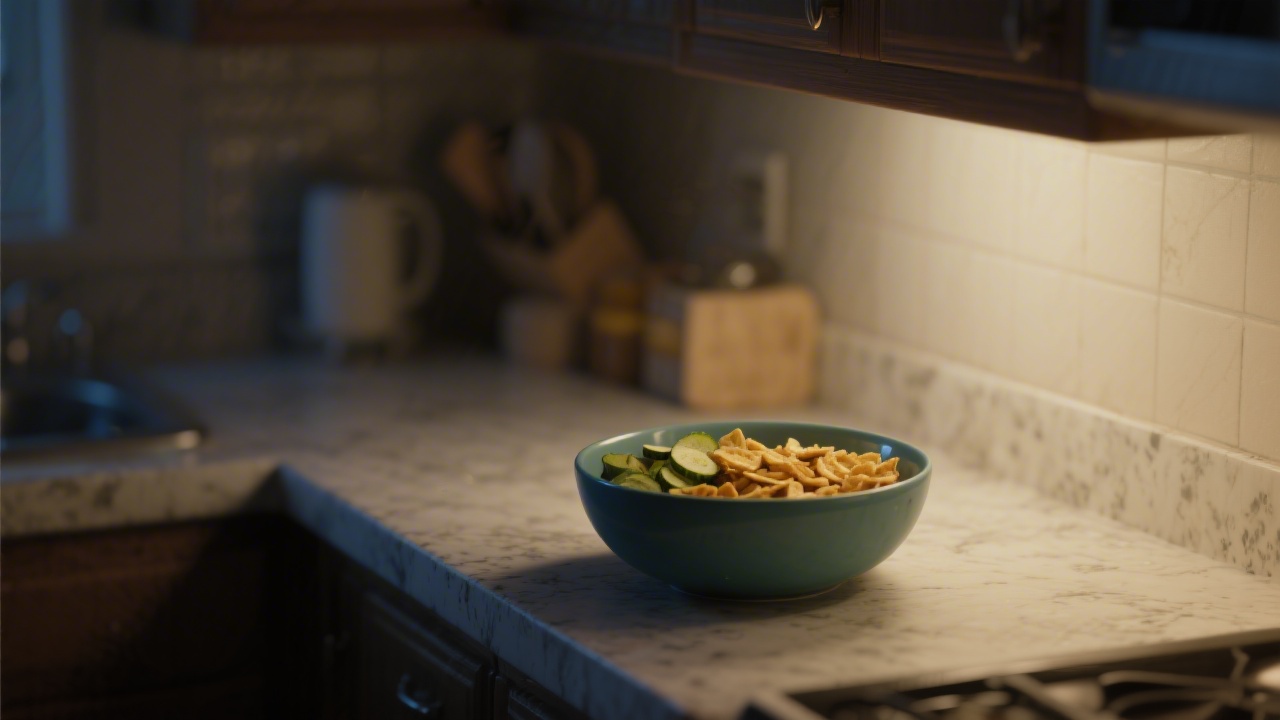
The best pre-bed snacks combine moderate protein (which supports serotonin production) with low-glycemic carbohydrates that prevent glucose drops. Avoid high-fat options, which slow gastric emptying and increase reflux risk when lying down.
The Tryptophan Myth (and Partial Truth)
Tryptophan is an amino acid precursor to serotonin and, via serotonin, to melatonin. The popular belief that turkey causes Thanksgiving drowsiness via tryptophan is mostly wrong — turkey contains no more tryptophan than chicken, and the drowsiness is from overeating combined with the insulin response to a large carbohydrate load.
However, tryptophan does have real sleep relevance under specific conditions. When consumed with a high-carbohydrate meal, insulin drives competing large neutral amino acids (LNAAs) into muscle tissue, reducing competition for tryptophan's transport across the blood-brain barrier. This mechanism is real but requires specific macronutrient ratios — not just eating turkey.
Worst Foods to Eat Before Bed
- Spicy foods: Raise core body temperature and increase GERD risk
- High-fat fast food: Slow gastric emptying for 4–6 hours
- Alcohol: See our full breakdown of alcohol and sleep
- Caffeinated foods: Dark chocolate, certain teas — see caffeine and sleep timing
- High-sugar desserts: Spike blood glucose and create second-half sleep disruption
Frequently Asked Questions
Is it bad to eat right before bed?
Eating a large meal within 2 hours of bedtime is associated with longer sleep onset time, more frequent nighttime waking, and higher rates of acid reflux. However, going to bed hungry also disrupts sleep. A small, low-glycemic snack 1 to 2 hours before bed is generally neutral to beneficial.
What foods are worst to eat before bed?
High-fat, high-sugar, and spicy foods are most disruptive. Fatty foods slow gastric emptying and can cause discomfort when lying down. Spicy foods raise core body temperature and increase acid reflux risk. High-sugar foods cause blood glucose spikes followed by drops that can trigger stress hormone release and waking.
Does eating before bed cause weight gain?
The weight gain concern is more about total caloric intake than timing per se. However, late-night eating can disrupt sleep quality, and poor sleep increases ghrelin (hunger hormone) while decreasing leptin (satiety hormone), which can create a cycle of overeating.
Is the tryptophan in turkey actually sleep-promoting?
The turkey-sleep connection is largely a myth. While tryptophan is a precursor to serotonin and melatonin, the tryptophan in a typical serving of turkey is insufficient to meaningfully raise brain tryptophan levels unless consumed with a high-carbohydrate meal that drives competing amino acids into muscles. The drowsiness after Thanksgiving meals is primarily from overeating, not tryptophan.
What is the best snack to eat before bed?
Small portions of foods with a high tryptophan-to-competing-amino-acid ratio combined with moderate carbohydrates are best. Options include a small bowl of oatmeal, whole-grain crackers with nut butter, a banana, or a small serving of cottage cheese. Portion size is key — these should be 150 to 200 calorie snacks, not full meals.
Our Pick for Better Sleep
The Saatva Classic combines zoned lumbar support with a breathable Euro pillow top — built for uninterrupted, restorative sleep.