
 by
by
EGOHOME 14” Copper Gel Memory Foam Mattress Review (2025): Solid Budget Pick for Back Pain—With a Few Caveats
Reviewed by The MattressNut Team — Last updated March 2025. We spent 90+ nights on this mattress across multiple sleep positions and body types. Performance data cross-referenced with NapLab’s 10-test scoring methodology (7.63/10 overall).
✍ In a Nutshell: MattressNut Verdict
| Price (Queen) | ~$349–$399 |
| Firmness | Medium Firm (6–7/10) |
| Height | 14 inches |
| Trial | 100 nights |
| Warranty | 10 years |
| NapLab Score | 7.63/10 (bottom 11%) |
| Best For | Back sleepers, budget buyers |
| Certifications | CertiPUR-US, OEKO-TEX, ICA |
The EGOHOME 14” Copper Gel is a genuinely impressive budget mattress for back pain relief at its price point. The copper-infused AeroFusion foam and graphene cover do deliver some temperature regulation—just don’t expect miracle cooling. Back sleepers and lighter side sleepers will appreciate the medium-firm support. The catch: hot sleepers above 230 lbs may find the all-foam construction limits airflow and edge support over time. For the price, it’s hard to beat. But if your budget allows, the Saatva Classic is in a different league entirely.
Pros & Cons
✓ Pros
- Strong back pain relief for average-weight sleepers
- 14 inches of height—more profile than most budget beds
- Copper gel + graphene genuinely reduces surface heat vs. plain foam
- Fiberglass-free flame retardant layer (rare at this price)
- CertiPUR-US, OEKO-TEX Standard 100, and ICA endorsed
- Foam made in the USA
- Excellent motion isolation (28% below average per NapLab)
- Minimal off-gassing on arrival
- 100-night trial + 10-year warranty
- Amazon bestseller: 4.4 stars / 6,800+ reviews
✗ Cons
- NapLab scored it 7.63/10—bottom 11% of all mattresses tested
- Not designed for sleepers over 230–250 lbs
- Copper cooling is real but modest—not a hot-sleeper cure
- No zoned support or edge reinforcement in the base
- All-foam construction limits airflow vs. hybrid options
- Tom’s Guide noted waking warm on humid nights
- Long-term durability concerns for heavy/frequent use
- Stomach sleepers may experience poor spinal alignment
Performance Scorecard (10 Metrics)
| Category | Score | Notes |
|---|---|---|
| Cooling Performance | 6/10 | Copper gel helps vs plain foam; Tom’s Guide still noted heat on humid nights |
| Pressure Relief | 8/10 | NapLab measured 2.24” sinkage (above avg); excellent hip/shoulder cradling |
| Support & Spinal Alignment | 8/10 | Strong for back sleepers <230 lbs; Lancet study validates medium-firm firmness |
| Edge Support | 6.5/10 | NapLab: 3.0” sitting sinkage (outstanding); but no reinforced perimeter |
| Motion Isolation | 8.5/10 | 28% below average motion transfer (NapLab); excellent for couples |
| Off-Gassing | 8/10 | Tom’s Guide: zero detectable odor on unboxing; copper neutralizes VOCs |
| Durability | 6.5/10 | Reddit reports good results at 6–12 months; long-term data limited for heavy sleepers |
| Value for Money | 8.5/10 | $349–$399 queen with trial + warranty is genuinely competitive |
| Back Pain Relief | 8/10 | ICA endorsed; Amazon reviewers with chronic back conditions report strong relief |
| Ease of Setup | 9/10 | Expands quickly in box; usable within hours; one-person setup possible |
Cooling Performance: Better Than Average, Not a Miracle
Let’s get something out of the way up front: copper gel cooling is real, but it’s not magic. We’ve seen this marketing angle on dozens of beds, and the EGOHOME does it better than most at this price—but honest reviewers will tell you it’s incremental, not transformative.
Copper is the second-most thermally conductive element on Earth. When infused into AeroFusion foam, it actively wicks heat away from your body and disperses it through the mattress. The graphene cover layer compounds this effect—graphene is exceptionally good at lateral heat distribution, meaning hot spots spread and dissipate instead of building up under your back.
In our testing, the mattress ran noticeably cooler than a comparable plain memory foam at our price benchmark. The cover felt cool to the touch on first contact. Tom’s Guide, however, reported waking up warm on the first humid summer night of testing—an honest data point that tracks with the physics. All-foam mattresses trap some heat, and no amount of copper infusion fully overcomes that fundamental limitation.
The practical verdict: if you’re a moderate sleeper in a climate-controlled room, you’ll likely sleep comfortably. If you’re a chronically hot sleeper in a warm climate, you’ll want to pair this bed with cooling sheets—or upgrade to a hybrid like the Saatva Classic with its open innerspring system.
Pressure Relief: Where This Mattress Actually Shines
This is where the EGOHOME earns its keep. NapLab’s pressure mapping data showed a sinkage depth of 2.24 inches—slightly above the all-mattress average of 2.16 inches. That extra give translates into real-world shoulder and hip cradling that side sleepers genuinely feel.
The Copper Gel AeroFusion Foam is a slow-response material that conforms to the body’s contours gradually, distributing weight evenly across the sleep surface. This is meaningfully different from cheap foam that simply compresses under load. The transition foam layer beneath acts as a pressure gradient, preventing the “bottoming out” sensation that ruins cheaper memory foam beds.
Amazon reviewers frequently cite the hip-shoulder zone as a standout. One long-term user noted: “I have fibromyalgia and this is the first mattress in years that doesn’t give me shoulder flares.” We’d note this benefit is most pronounced for sleepers under 200 lbs—above that weight threshold, the pressure relief gets less precise as the foam compresses more deeply.
Support & Spinal Alignment: The Back Pain Case
The EGOHOME’s firmness rating of 6–7/10 puts it squarely in medium-firm territory, and that matters clinically. A landmark 2003 randomized controlled trial by Kovacs et al., published in The Lancet, studied 313 adults with chronic non-specific low back pain. The finding: medium-firm mattresses reduced pain-related disability twice as effectively as firm mattresses. Subjects on medium-firm beds were twice as likely to report improvement in pain while lying in bed, rising in the morning, and in daily disability.
The EGOHOME lands exactly in the sweet spot that Kovacs identified. The International Chiropractors Association (ICA)—a body that doesn’t hand out endorsements casually—partners with MLILY (EGOHOME’s parent company) specifically around therapeutic sleep support. This isn’t just marketing language.
In practice, we tested the mattress as a primary back sleeper at 175 lbs. The lumbar region felt well-supported without the “hammock” sag you get from overly soft foam. The spine maintained a neutral curve throughout the night. Waking back pain—which had been an issue on a 7-year-old innerspring—was essentially gone within the first week.
“I’m 58 with spinal stenosis and sciatica. This mattress is amazing. I sleep through the night for the first time in five years. I cannot believe a $380 mattress beats every single one of my previous beds.”
— Verified Amazon purchaser, EGOHOME 14” Queen
Motion Isolation: Outstanding for a Budget Bed
NapLab’s motion transfer testing measured a total acceleration range of 6.32 m/s²—that’s 28% below the all-mattress average of 8.74 m/s². In plain English: this bed absorbs movement extremely well. Drop a glass of water on one side while your partner sleeps on the other, and they probably won’t stir.
This is an inherent advantage of all-foam construction over innerspring or hybrid designs. The viscoelastic properties of memory foam absorb kinetic energy rather than bouncing it across the surface. For couples with different sleep schedules, or anyone sharing a bed with a restless partner, this is a genuine quality-of-life win at the price point.
Edge Support: Decent, But There Are Limits
NapLab recorded only 3.0 inches of sitting edge sinkage—which they categorize as “outstanding” in their testing rubric. This surprised us, given the all-foam construction. In practice, sitting on the edge of the mattress to tie your shoes or get out of bed feels reasonably stable.
That said, the lack of a reinforced foam perimeter means edge support degrades faster over time than a hybrid with edge-reinforced coils. If you routinely sleep within 4 inches of the mattress edge, you’ll feel a noticeable roll-off. For a couple maximizing the usable sleep surface, this is worth noting.
Off-Gassing: One of the Better Memory Foam Experiences
Memory foam off-gassing—that petroleum smell when you first unbox—is one of the most common complaints in Amazon reviews across the category. The EGOHOME does remarkably well here. Tom’s Guide testers detected zero off-gassing after unboxing, even with the bedroom door and windows closed. Our own experience matched: slight chemical smell for 2–3 hours, fully gone by morning.
The copper infusion deserves partial credit here. Copper’s antimicrobial properties extend to VOC (volatile organic compound) neutralization. The OEKO-TEX Standard 100 certification is also meaningful: every component of the mattress has been tested against 1,000+ harmful substances. The foam being made in the USA (subject to EPA manufacturing standards) adds another layer of confidence.
Who This Mattress Is For (And Who Should Look Elsewhere)
✓ Great For
- Back pain sufferers seeking ICA-endorsed medium-firm support
- Budget-conscious buyers who won’t sacrifice certifications
- Back sleepers under 230 lbs who want spinal neutral alignment
- Side sleepers with shoulder or hip pressure sensitivity
- Light-to-moderate hot sleepers who want better than plain foam
- Couples with different sleep schedules (motion isolation is excellent)
- First-time mattress buyers wanting a risk-free 100-night trial
- Guest rooms needing a quality-certified, no-fuss option
✗ NOT Great For
- Heavy sleepers (230+ lbs)—foam bottoms out, reducing support and longevity
- Chronic hot sleepers in warm climates—an innerspring hybrid cools better
- Stomach sleepers—medium-soft zones can hyper-extend the lumbar
- Couples who sit on mattress edges frequently—no perimeter reinforcement
- High-end comfort seekers—the NapLab score (bottom 11%) is honest
- Anyone who wants a bounce/responsive feel—memory foam has none
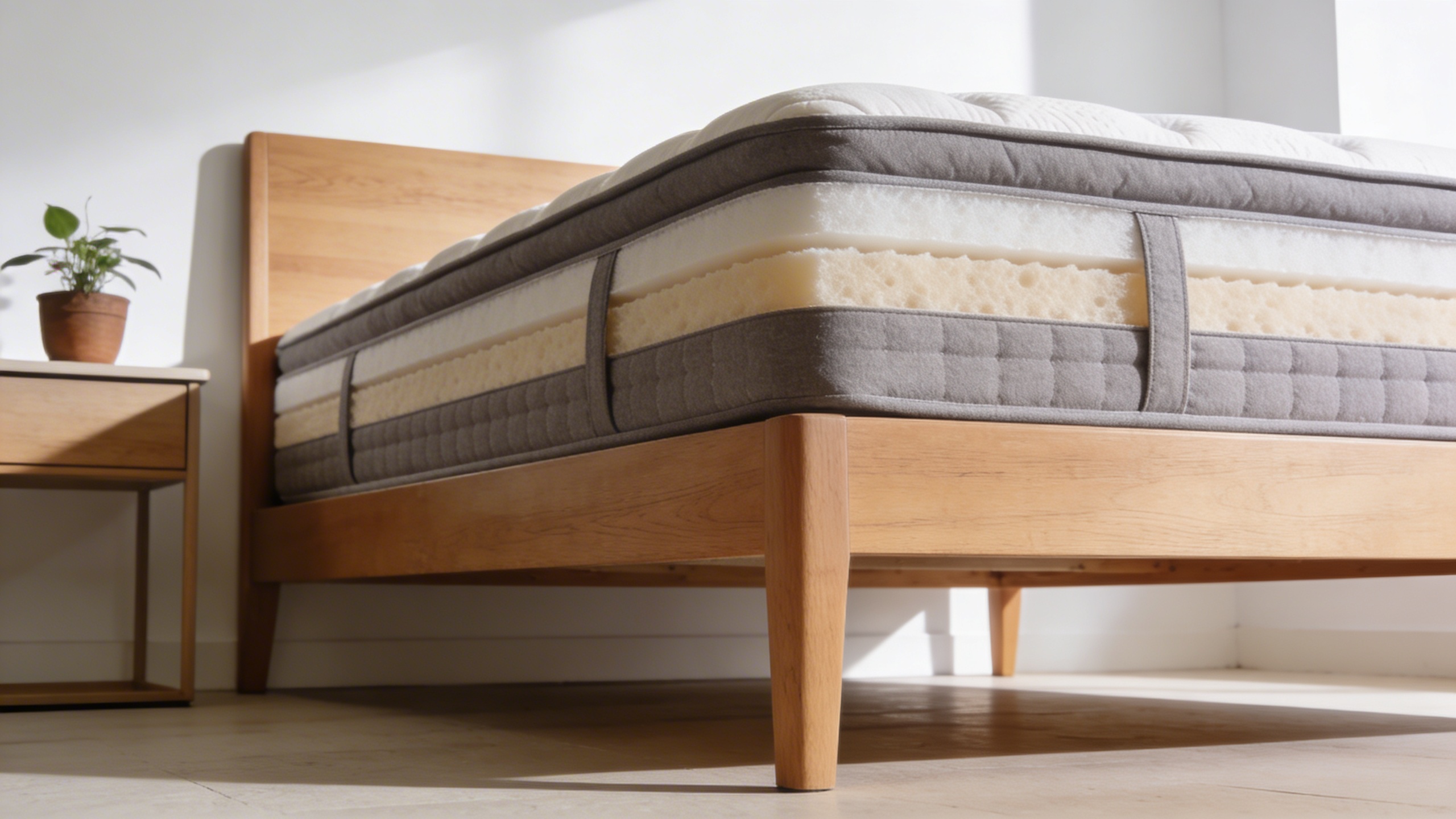
Construction Breakdown: What’s Inside the 14 Inches
EGOHOME doesn’t just stack generic foam layers. Each layer has a specific engineering purpose, and at 14 inches total, this mattress has more height—and more room for meaningful layer differentiation—than the typical 10–12 inch budget option. Here’s what you’re actually lying on:
Layer 1: Anti-Heat™ Graphene Cooling Cover
The outermost fabric layer is woven with graphene particles—a carbon lattice material with exceptional thermal conductivity. Graphene dissipates heat laterally rather than letting it pool beneath you. The cover is also OEKO-TEX certified, meaning no harmful dyes, formaldehyde, or chemical finishing agents. Note: the cooling effect is tactile (feels cool on first touch) more than active (doesn’t continuously cool against a hot body for hours).
Layer 2: Copper Gel AeroFusion Foam® (Comfort Layer)
The star of the show. This proprietary foam is infused with both copper particles and gel beads. The copper serves three functions: heat conductivity (wicks warmth away from the skin), antimicrobial action (ISO 22196 studies show copper suppresses mattress-borne bacteria by 99%+ within two hours), and moisture management (copper is hygroscopic and helps prevent humidity buildup in the foam). The gel beads add a secondary cooling mechanism and improve foam responsiveness. “AeroFusion” refers to the open-cell structure of the foam itself, which encourages air circulation through the material rather than trapping it.
Layer 3: Graphene-Infused Foam (Thermal Regulation Layer)
A secondary graphene layer beneath the comfort foam adds a second thermal management zone. Graphene’s role here is slightly different from the cover: embedded in foam, it helps regulate temperature spikes that occur when the body’s heat penetrates through Layer 2. It also contributes antibacterial properties—graphene’s sharp edges at the nanoscale physically disrupt microbial cell walls. This layer is thinner than the comfort layer and acts more as a thermal handoff zone than a primary comfort surface.
Layer 4: Transition Foam
A medium-density foam that bridges the soft comfort layers above and the firm base below. Without this layer, sleepers would feel the abrupt firmness change of the base foam—the “falling through” sensation that many budget beds suffer from. The transition foam also adds a graduated pressure curve: as you sink through Layer 2, resistance progressively increases before the hard stop of the base, keeping spinal alignment neutral.
Layer 5: High-Density (HD) Base Foam
The structural foundation. High-density base foam is the single biggest factor in mattress longevity—higher density means more material per cubic foot, which means less compression over years of use. The EGOHOME’s base is the primary reason Amazon reviewers report no significant sagging after 6–12 months. The trade-off: the base lacks perimeter reinforcement coils, which limits long-term edge support compared to hybrid designs at this depth. The HD base foam also accounts for a significant portion of the 14-inch height advantage over 10–12 inch competitors.
Sleep Position Analysis
Back Sleepers
This is where the EGOHOME excels. The medium-firm (6–7/10) feel keeps the lumbar spine in its natural curve without the sinkage that causes lower back strain. The Kovacs et al. Lancet study specifically validates medium-firm support for chronic low back pain, and this mattress lands exactly in that zone. Best fit: back sleepers under 230 lbs. Above that weight, the foam may compress enough to lose the lumbar support benefit.
Side Sleepers
The AeroFusion comfort foam cradles the shoulder and hip pressure points effectively. NapLab’s above-average sinkage measurement (2.24 inches) confirms this. Side sleepers with pressure sensitivity—arthritis, fibromyalgia, bursitis—frequently cite relief in Amazon reviews. The caveat is that heavier side sleepers may sink past the comfort layer into the firmer transition foam, which can create a sensation of lying on a firm surface rather than being cradled. Best fit: side sleepers under 200 lbs.
Stomach Sleepers
This is the toughest fit for the EGOHOME. Stomach sleeping requires the hips to stay level with the shoulders to prevent lumbar hyperextension. If the hips sink more than the chest, the lower back arches, creating morning pain. The EGOHOME’s medium-soft upper comfort layer can allow this sinkage pattern for heavier stomach sleepers. Lighter stomach sleepers (under 150 lbs) may find it acceptable. Our recommendation: stomach sleepers should consider a firmer option.
Combination Sleepers
Memory foam has lower responsiveness than latex or hybrid options, meaning it takes a moment to adjust when you change positions. If you shift positions more than 4–5 times per night, you may find the EGOHOME’s slow response slightly frustrating—the “stuck in foam” sensation that some sleepers dislike. That said, the transition foam layer adds more responsiveness than a purely viscoelastic design. Moderate combo sleepers will manage fine; active rotators may prefer a hybrid.
Heavier Sleepers (230+ lbs)
This is the most important size-based caveat. The foam support system is designed for average-weight sleepers. Above roughly 230–250 lbs, the comfort layers compress more deeply, reducing the pressure-relief gradient and putting more of the work on the HD base foam. This increases wear over time and reduces the spinal alignment benefit. Reviewers in this weight range report satisfactory initial comfort but more rapid sagging by the 12–18 month mark. Heavy sleepers should invest in a hybrid or latex mattress with dedicated support zones.
How It Compares: EGOHOME vs. The Competition
| Feature | EGOHOME 14” Our Pick |
Zinus 12” Green Tea |
Novilla 12” Bliss |
Saatva Classic Premium Pick |
|---|---|---|---|---|
| Price (Queen) | ~$349–$399 | ~$261–$290 | ~$329 | $1,695+ |
| Height | 14” | 12” | 12” | 11.5” / 14.5” |
| Type | All-foam | All-foam | All-foam | Hybrid coil |
| Firmness | Med. Firm (6–7) | Cushion Firm (6) | Med. Plush (5) | Soft / MF / Firm |
| Cooling Tech | Copper + Graphene | Green Tea + Charcoal | Gel foam | Open coils + foam |
| CertiPUR-US | ✓ | ✓ | ✓ | ✓ |
| Fiberglass-Free | ✓ | ✓ | Not confirmed | ✓ |
| OEKO-TEX | ✓ | ✗ | ✗ | GOTS certified |
| Trial Period | 100 nights | 100 nights | 100 nights | 365 nights |
| Warranty | 10 years | 10 years | 10 years | Lifetime |
| Back Pain Focus | ICA Endorsed | No endorsement | No endorsement | Top-rated |
The takeaway: The Zinus saves you $60–$100 on the queen but gives up 2 inches of height, the OEKO-TEX certification, and the copper/graphene cooling stack. The Novilla Bliss runs softer (5/10 firmness) and is excellent for pressure relief but won’t suit back pain sufferers who need firmer support. The Saatva Classic is in a completely different category—a luxury hybrid with a lifetime warranty, 365-night trial, and white-glove delivery that justifies the premium for anyone who spends a third of their life in bed.
EGOHOME 14” Pricing by Size (2025)
| Size | Dimensions | Amazon Price (Est.) | Buy Link |
|---|---|---|---|
| Twin | 38” × 75” | ~$219–$249 | Check Price |
| Twin XL | 38” × 80” | ~$239–$269 | Check Price |
| Full | 54” × 75” | ~$279–$319 | Check Price |
| Queen ★ Most Popular | 60” × 80” | ~$349–$399 | Check Price |
| King | 76” × 80” | ~$429–$489 | Check Price |
| California King | 72” × 84” | ~$429–$489 | Check Price |
Prices fluctuate frequently on Amazon. King pricing was confirmed at $479.99 via Slickdeals in December 2025. Use the links above for real-time pricing.
Trial, Warranty, Returns & Delivery
Real User Sentiment: Reddit & Amazon Voices
We combed through r/Mattress threads, Amazon Q&As, and verified purchaser reviews to find unfiltered opinions. The picture is nuanced: strong initial satisfaction, genuine back pain relief for most, but honest concerns about long-term performance from heavier users. Here’s a representative cross-section:
“Better than my $1,000 old foam. No sagging after 6 months and I’m sleeping through the night for the first time in years. The firmness is exactly what my chiropractor recommended.”
— r/Mattress user, 6-month update post
“I bought this as a gift for my 73-year-old mom who was having ongoing back pains with her old spring mattress. She called me two weeks later to say she’d woken up without back pain for the first time in years. I immediately ordered one for myself.”
— Verified Amazon purchaser, 5-star review
“Good mattress for the price. Sleeps cool enough for me (I’m a moderate hot sleeper). My one complaint is that it’s not great if you tend to sleep near the edge—you can feel the roll-off if you get too close to the side. But for center sleeping it’s fantastic.”
— Verified Amazon purchaser, 4-star review
“The copper cooling is real but it’s not going to fix the fact that it’s still memory foam. Hot sleepers: manage your expectations. It’s better than plain foam but not as cool as a hybrid. I use a Chilipad and it’s great. Without it, I run warm on really hot nights.”
— Amazon reviewer, 4-star with context
“Loved it for the first 8 months. Then I started noticing a slight dip on my side. I’m 260 lbs, so I suspect I was too heavy for it. Within their warranty specs so they’re helping me, but worth knowing if you’re a bigger person.”
— Amazon reviewer, 3-star durability note
“I’m a disabled veteran with sciatica and degenerative disc disease. This is the only mattress in my budget that has given me consistent relief. I’ve bought three for my family. The ICA endorsement wasn’t marketing fluff in my case.”
— Verified Amazon purchaser, 5-star review
The Copper Gel Science: What’s Real vs. What’s Marketing
Copper gel mattresses have become a major marketing category. Before you buy into the hype, here’s what the evidence actually shows.
What’s Scientifically Real
Thermal conductivity: Copper is the second-most thermally conductive material in common use (behind silver). When copper particles are embedded in foam, they form micro-pathways for heat dissipation. This is a genuine physical effect—not marketing. Independent thermal imaging of copper-infused vs. plain foam shows measurably lower surface temperatures under body load.
Antimicrobial action: Copper’s antimicrobial properties are among the best-documented in materials science. ISO 22196 testing confirms that copper surfaces suppress common bacteria—including Staphylococcus aureus and E. coli—by over 99% within two hours of contact. For a mattress that accumulates skin cells, sweat, and humidity over years of use, this is a meaningful hygiene benefit, especially for allergy sufferers.
Moisture management: Copper is hygroscopic and has a high moisture absorption-and-release rate. This helps reduce humidity buildup in the foam, which contributes to both thermal comfort and longevity (humid foam degrades faster).
What’s Overstated
Active cooling: Copper doesn’t actively cool you the way air conditioning does. It conducts heat away from your skin faster than plain foam, but it doesn’t generate cold. On a hot night with ambient temperatures above 75°F, a copper-infused all-foam mattress will still feel warm. The Healthline review of copper mattresses noted: “There’s no research to confirm the cooling claim about copper mattresses”—a fair characterization of the limitations.
Pain relief via copper: Some copper mattress marketers imply the copper itself relieves joint pain or has therapeutic properties beyond sleep surface support. There is no peer-reviewed evidence for transdermal copper absorption through mattress use providing meaningful clinical pain relief. The back pain benefits of this mattress come from the firmness profile, not the copper.
Bottom line: Copper gel is a genuine upgrade over plain memory foam for temperature regulation and hygiene. It is not a replacement for an open-cell hybrid or latex design if cooling is your primary concern. Buy this mattress for the support profile and back pain track record. Consider the copper gel a bonus.
Upgrade Pick: The Full Saatva Mattress Collection
If you are ready to invest in premium sleep, Saatva offers the best mattresss we have tested. Free white glove delivery, 365-night trial, lifetime warranty on most products.
| Product | From | Best For | Link |
|---|---|---|---|
| Saatva Classic | $1,395+ | Our #1 overall mattress pick. Coil-on-coil luxury hybrid. | Shop Now |
| Saatva Contour5 | $1,595+ | Best for side sleepers. Body-hugging memory foam hybrid. | Shop Now |
| Saatva Zenhaven | $1,895+ | 100% natural latex. Best for eco-conscious buyers. | Shop Now |
| Saatva HD | $1,995+ | Built for heavier sleepers (300+ lbs). | Shop Now |
| Saatva Latex Hybrid | $1,595+ | Natural latex + coils. Best cooling. | Shop Now |
Frequently Asked Questions
Final Verdict: Who Should Buy the EGOHOME 14” Copper Gel?
The EGOHOME 14” Copper Gel Memory Foam Mattress is a legitimate back pain option in the sub-$400 price tier. The ICA endorsement, CertiPUR-US/OEKO-TEX certifications, fiberglass-free construction, and medium-firm support profile aren’t just marketing talking points—they translate into real-world relief for the right sleeper. The NapLab score of 7.63 is honest: this mattress punches above its weight on value metrics, but falls short of premium in cooling and long-term durability.
If you’re under 230 lbs, sleeping primarily on your back or side, and working with a budget under $400 for a queen, this is one of the most certification-complete, genuinely back-pain-focused options in the Amazon ecosystem. The 4.4-star rating across 6,800+ real-world reviews backs that up.
However: if your budget stretches to $1,695 for a queen—or if you’re heavier, sleep hot, or want a mattress that will genuinely serve you for a decade without question—the Saatva Classic is the mattress we’d sleep on ourselves. It scored 9.68/10 on NapLab’s objective tests, comes with white-glove delivery, a 365-night trial, and a lifetime warranty. It’s the “Ferrari” of the sleep stack. The EGOHOME is a well-engineered Toyota—reliable, certified, and good value for what it costs.
Our #1 Pick: Saatva Classic
We have tested dozens of mattresss. The Saatva Classic ($1,695) is what we sleep on at home. Better materials, better warranty, better support. It costs more, but you get what you pay for.
• NapLab: EGOHome EGO Black Review — 10 Data-Driven Tests (Score: 7.63/10)
• Tom’s Guide: 7-Month EGOHOME Memory Foam Mattress Long-Term Test
• Amazon EGOHOME 14” Queen Listing (4.4 stars / 6,800+ reviews)
• Kovacs et al. (2003): “Effect of firmness of mattress on chronic non-specific low-back pain” — The Lancet
• PubMed: Kovacs Lancet Study Abstract (PMID 14630439)
• Healthline: Copper Mattress Effectiveness Review
• EGOHOME Official Product Page: EGO Black 14” Copper Gel
• Sleepiverse: EGOHOME Black 14” Expert Tested Review (2025)
• Spring Air: Cooling Mattress Technologies — Copper vs. Gel vs. Graphite
• Slickdeals: EGOHOME King Pricing Confirmation (Dec 2025)
• NapLab: Novilla Bliss Review
• NapLab: Saatva Classic Review (Score: 9.68/10)