
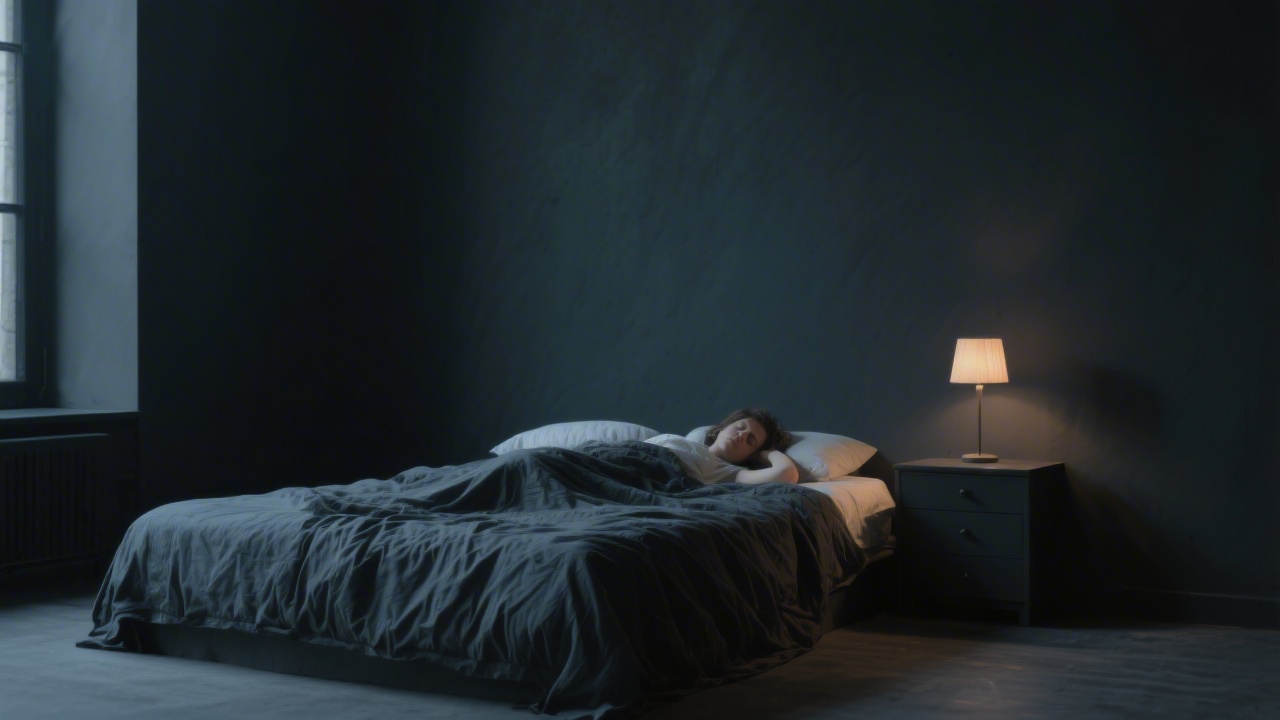
 by
by Recommended: Saatva Classic Mattress
A supportive, pressure-relieving sleep surface can meaningfully reduce the physical tension that amplifies anxiety at night. Saatva's luxury innerspring hybrid is consistently rated among the best for anxious sleepers.
The Qualitative Difference of Existential Dread
Existential dread at bedtime is phenomenologically distinct from other forms of nighttime anxiety. Practical worries — financial, relational, health-related — are amenable to cognitive problem-solving: even if imperfect solutions exist, the mind can generate action plans that reduce the emotional urgency. Existential dread is different in kind. The contemplation of meaninglessness, the impermanence of self, the arbitrariness of existence, the certainty of death — these are not problems with solutions. They are features of the human condition.
This distinction matters clinically because therapeutic approaches designed for practical anxiety are largely ineffective for existential dread. Reassurance that "everything will be fine" is experienced as hollow; cognitive restructuring that reframes a catastrophic belief stumbles when the "catastrophic belief" is simply an accurate observation about mortality. anxiety and sleep
Why Night Amplifies Existential Awareness
Darkness and silence create the conditions for what phenomenologists call "existential confrontation" — the encounter with fundamental questions that social engagement and purposeful activity ordinarily suppress. Heidegger's concept of Angst describes precisely this: anxiety without a specific object, arising not from a particular threat but from the recognition of finitude itself.
Neurologically, the default mode network's dominance during the pre-sleep period supports exactly the self-referential, temporally extended thinking that enables existential contemplation. The brain at bedtime is thinking about the self, about time, about narrative — the raw ingredients for existential dread. The prefrontal cortex, which is capable of philosophical equanimity during daylight, begins its nightly fade, leaving existential awareness without its usual moderating companion.
Philosophical Traditions and Their Practical Value
Several philosophical traditions offer resources specifically relevant to nocturnal existential dread:
- Stoicism: The practice of memento mori — deliberate, regular contemplation of death — has the counterintuitive effect of reducing its nighttime power. What is rehearsed daily loses its capacity for ambush. Marcus Aurelius's nightly review practice explicitly engaged with mortality and impermanence as a path to equanimity.
- Buddhism: The recognition of impermanence as a fundamental feature of reality, rather than a problem to be solved, shifts the frame from resistance to acceptance. Loving-kindness (metta) meditation practiced before sleep reduces existential isolation.
- Existentialism: Sartre and Camus approached meaninglessness not as a problem requiring resolution but as the condition within which authentic freedom is exercised. The absurd is not an enemy; it is the stage on which a self-authored life is lived.
- Logotherapy: Viktor Frankl's therapeutic approach holds that meaning — in work, love, or the stance taken toward unavoidable suffering — is always available as a response to existential emptiness. best mattress for sleep anxiety
Therapeutic Approaches
Existential therapy (Yalom, May, van Deurzen) is the primary clinical approach for existential dread. Unlike CBT, which targets cognitive errors, existential therapy works with the real existential concerns directly: death, freedom, isolation, and meaninglessness. The therapeutic goal is not elimination of existential awareness but integration — the development of a relationship with finitude that permits rather than prevents rest.
MBSR has specific applicability because it trains non-judgmental present-moment awareness, which interrupts the temporal extension (projection into future non-existence, reflection on present meaninglessness) that characterizes existential dread. The practice does not resolve existential questions; it reduces the compulsive engagement with them. sleep hygiene tips
Physical Grounding as a Bridge
Existential dread is most activated in conditions of physical uncertainty — cold, discomfort, or pain that the mind reads as vulnerability. A physically secure, comfortable sleep environment does not resolve existential questions, but it reduces the somatic vulnerability that amplifies them. insomnia remedies
Recommended: Saatva Classic Mattress
A supportive, pressure-relieving sleep surface can meaningfully reduce the physical tension that amplifies anxiety at night. Saatva's luxury innerspring hybrid is consistently rated among the best for anxious sleepers.
Frequently Asked Questions
Is existential dread at bedtime a mental health problem?
Not necessarily. Existential awareness is a normal feature of human consciousness. It becomes a clinical concern when it produces significant distress or impairment — for instance, when it consistently prevents sleep or produces panic attacks. Subclinical existential dread is extremely common and not pathological.
Why does existential dread often feel worse at 3am?
The combination of reduced prefrontal regulation, circadian cortisol rise, and cognitive isolation from the moderating effects of social engagement creates a phenomenological window in which existential awareness is intense and unmoderated. This is historically recognized — the "dark night of the soul" literature describes exactly this pattern.
Can psychedelics help with existential dread?
Clinical trials of psilocybin for existential distress in terminally ill patients show significant and durable reductions in death anxiety. This is an active area of research. Outside of clinical trials, psychedelic use carries legal and safety risks and should not be pursued outside medical supervision.
Is existential dread different in atheists vs. religious individuals?
Research on this is mixed. Religious belief provides meaning structures that buffer existential dread for some individuals, but certainty of belief (either religious or secular) is more protective than ambivalence. Religious doubt can amplify existential dread significantly.
What if I don't believe therapy can address existential questions?
This is a legitimate concern, and existential therapists explicitly agree that therapy cannot answer existential questions. The therapeutic goal is developing a more tolerable, less disruptive relationship with those questions — not resolving them. The integration of existential awareness, not its elimination, is the aim.
Key Takeaways
Existential Dread and Sleep is a topic that depends heavily on individual needs and preferences. The most important thing is to consider your specific situation — your body type, sleep position, and personal comfort preferences — before making any decisions. When in doubt, take advantage of trial periods to test before committing.