
 by
by Fever is uncomfortable, but it is not the enemy — it is the immune system doing its job. The elevated temperature creates an environment that is directly hostile to many pathogens while simultaneously accelerating immune cell activity. The challenge is sleeping through it.
Editor's Pick for Better Sleep
The Saatva Classic is our top-rated mattress for restorative sleep — innerspring support with Euro pillow-top comfort, available in three firmness levels.
See the Saatva Mattress →Why Fever Exists: The Immunological Purpose
A fever is not an accident or a malfunction. It is a precisely regulated response coordinated by the hypothalamus in response to pyrogens — molecules released by immune cells when pathogens are detected. The hypothalamus raises the body's temperature set point, triggering the familiar sensations of chills (as the body works to reach the new higher target) and then heat once that target is reached.
The benefits are real and measurable. Most bacteria and viruses replicate optimally at 37°C (98.6°F). A fever of 39–40°C (102–104°F) reduces bacterial and viral replication rates significantly. Meanwhile, the elevated temperature increases the speed of enzymatic immune reactions and enhances leukocyte migration to infection sites. T-cell proliferation is measurably faster at 39°C than at 37°C.
This means that moderately suppressing a fever (with acetaminophen) when symptoms are tolerable may slightly prolong illness. The clinical guidance: suppress fever to improve comfort and ensure sleep, but routine suppression of every low-grade fever is not immunologically optimal.
Sleep Architecture During Fever
Fever disrupts normal sleep architecture in two primary ways. First, it interferes with the body's core temperature drop that normally triggers sleep onset. Core temperature needs to fall 1–2°F to initiate NREM stage transitions; a fever keeps temperature elevated, delaying and fragmenting this process.
Second, fever increases the proportion of deep slow-wave sleep (N3) relative to REM sleep. This shift is actually adaptive — N3 is where the most intensive immune restoration occurs. The immune cytokines that drive fever (particularly IL-1 and TNF-alpha) are also the primary drivers of slow-wave sleep. The two systems are deeply integrated.
The result: sleep during fever tends to be deeper but more fragmented. Night sweats, temperature swings, and physical discomfort cause more frequent arousals, but the sleep that occurs is heavily weighted toward the most immunologically productive phase.
Practical Temperature Management for Fever Sleep
Room temperature: 65–68°F. Slightly cooler than normal, but not cold. Cold rooms trigger shivering thermogenesis, which raises body temperature — counterproductive when you are trying to manage fever.
Layering over insulation. Use a light cotton sheet with a blanket you can easily remove rather than a heavy down comforter. During fever, the temperature swings from chilled to overheated rapidly. Quick adjustment is more useful than a single heavy cover.
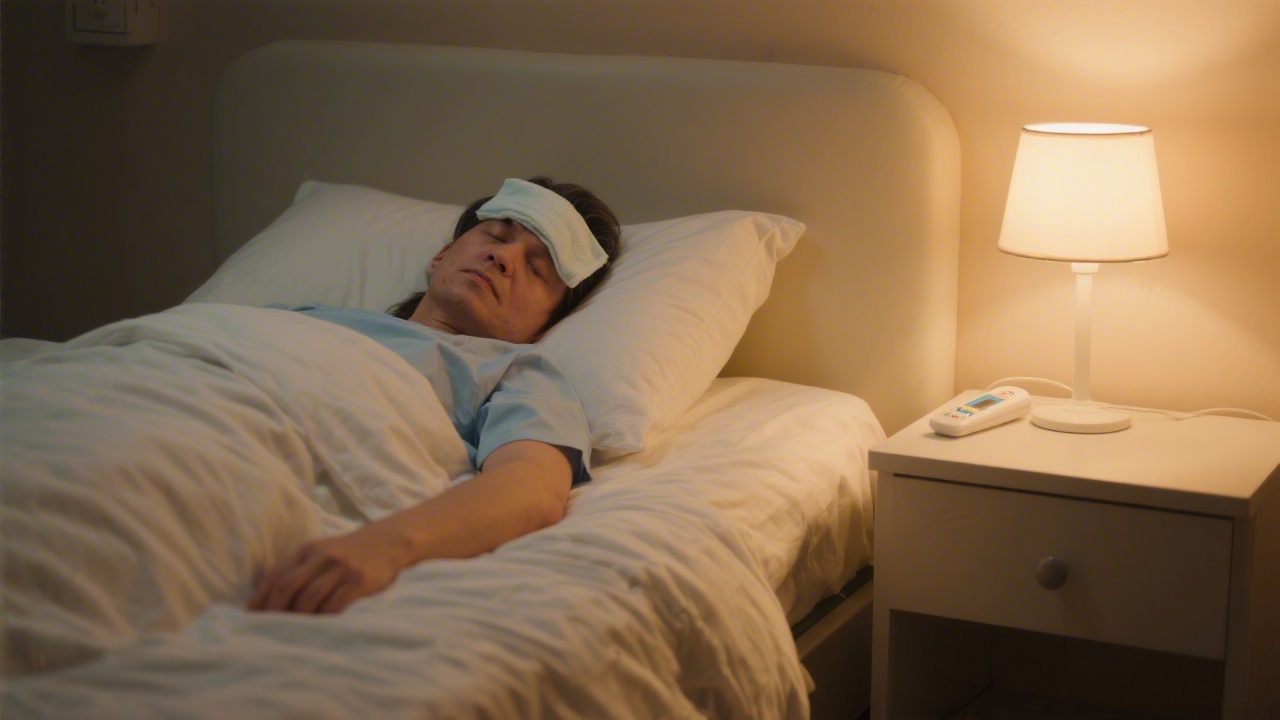
Cool cloth to the forehead. A damp (not ice-cold) cloth applied to the forehead provides localized cooling and tactile comfort without triggering full-body chill response. Rewet every 10–15 minutes as needed.
Hydration before sleep. Fever increases insensible fluid loss through sweating and increased respiratory rate. Drinking 8–12 oz of water or a dilute electrolyte solution before bed reduces the severity of dehydration that compounds overnight discomfort.
Acetaminophen timing. If you choose to use acetaminophen to reduce fever for sleep, take it 30 minutes before bed. This allows peak plasma levels to coincide with sleep onset. Avoid ibuprofen on an empty stomach (common when sick and not eating well).
What Are Fever Dreams — and Are They Dangerous?
Fever dreams are vivid, often bizarre and emotionally intense dreams that occur during febrile illness. Research suggests they differ qualitatively from normal dreams: they are more negative in emotional tone, more spatially distorted, and more likely to involve themes of hot or constricted environments.
The mechanism is not fully established, but likely involves REM sleep under the influence of elevated body temperature and fever-associated neurotransmitter changes. The elevated temperature may directly alter the dreaming brain's pattern-matching activity, producing the characteristic spatial distortions.
Fever dreams are not dangerous and do not indicate neurological problems. They are a subjectively unpleasant feature of febrile sleep, not a symptom requiring intervention beyond fever management.
When to Break a Fever vs. When to Let It Run
General guidance from infectious disease medicine: do not routinely suppress low-grade fever (below 101°F / 38.3°C) in healthy adults if discomfort is manageable. Allow moderate fever (101–103°F / 38.3–39.4°C) to assist immune function while managing comfort as needed. Actively reduce fever above 103°F (39.4°C), particularly if it is preventing sleep or causing significant distress.
Seek emergency care for: fever above 104°F (40°C) not responding to antipyretics; fever with severe headache and stiff neck (potential meningitis); fever with confusion, rash, or difficulty breathing; any fever in infants under three months; or febrile seizure activity.
Related reading: How to Sleep When You're Sick · Sleep and Physical Recovery · Sleep and Chronic Illness
Editor's Pick for Better Sleep
The Saatva Classic is our top-rated mattress for restorative sleep — innerspring support with Euro pillow-top comfort, available in three firmness levels.
See the Saatva Mattress →Frequently Asked Questions
Should I try to sleep off a fever without medication?
For mild to moderate fever (below 103°F) in healthy adults where discomfort is manageable, allowing the fever to run while resting is immunologically reasonable. If the fever is preventing sleep entirely, managing it pharmacologically to enable rest is a better trade-off — sleep is more immunologically valuable than an unmanaged fever.
Why do I feel cold when I have a fever?
During the rising phase of fever, the hypothalamus has raised the body's set point but core temperature has not yet reached the new target. The body responds by conserving and generating heat — causing vasoconstriction (cold-feeling skin) and shivering. Once temperature reaches the new set point, the chills resolve and heat sensation replaces them.
Is it safe to sleep alone with a high fever?
For adults with moderate fever who are otherwise alert and oriented, sleeping alone is generally safe. Have water within reach. Set a phone alarm to check-in every four to six hours if fever is above 102°F. If you live alone and fever exceeds 103°F, informing a friend or family member to check in is prudent.
Does sweating during sleep mean the fever is breaking?
Sweating during sleep typically means the body's hypothalamic set point is resetting downward — the fever is resolving and the body is dumping excess heat through sweat. This is a positive sign. The wet sheets and night sweats are uncomfortable but indicate progress.
Why are fever dreams so strange and scary?
Elevated brain temperature appears to alter the normal associative processing during REM sleep, producing more extreme spatial distortions and more negatively valenced emotional content. The brainstem thermoregulatory signals during fever also influence limbic activity during dreaming. Fever dreams are unpleasant but not indicative of neurological pathology.