
 by
by Our Top Pick
Saatva Classic
Affiliate link — we earn a commission at no extra cost to you.
Mattress firmness is the single most important variable in whether a mattress works for your body. Get it wrong and even the most expensive mattress will cause pain. Get it right and a reasonably constructed mid-range mattress can outperform a premium one bought at the wrong firmness.
This guide gives you a systematic way to identify your target firmness before you shop. It combines your sleep position, body weight, and personal preference into a specific number on the 1–10 firmness scale — so you are not guessing in the store.
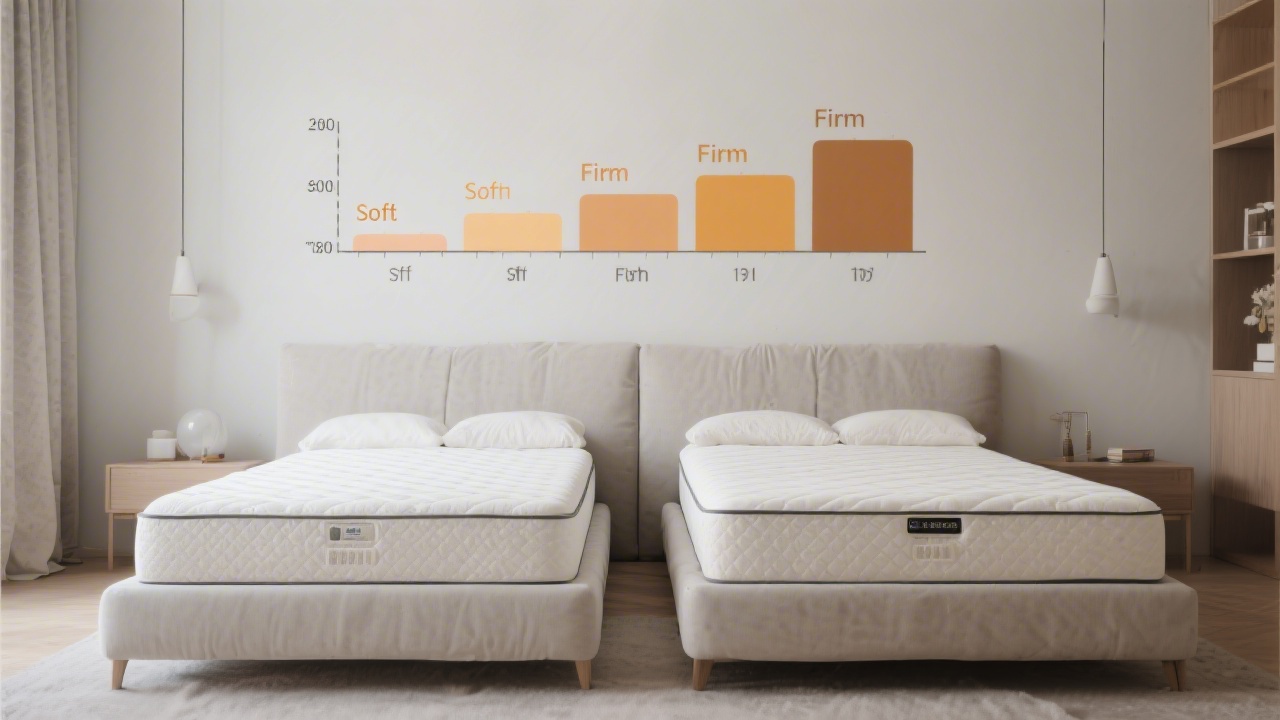
The Firmness Scale Explained
Firmness in the mattress industry is typically rated on a 1–10 scale:
- 1–2: Extra Soft. Rare. Deep sinkage, minimal support. Only appropriate for very light sleepers with specific pressure relief needs.
- 3–4: Soft. Significant contouring and sinkage. Best for light side sleepers.
- 5–6: Medium. The most common range. Balanced contouring and support. Works for most side sleepers at average weight and most back sleepers at average weight.
- 6–7: Medium Firm. Less sinkage, more support. Best for back sleepers, heavier side sleepers, and combination sleepers who spend significant time on their back.
- 8–9: Firm. Minimal contouring. Best for stomach sleepers and very heavy sleepers.
- 10: Extra Firm. Almost no give. Appropriate only for specific therapeutic uses or very heavy sleepers who bottom out firm mattresses.
Step 1: Identify Your Primary Sleep Position
Your sleep position is the primary driver of your firmness need. Most people have one dominant position they spend 70%+ of the night in, even if they shift occasionally.
- Side sleeper: Start at soft to medium (3–5). The shoulder and hip need to sink in to relieve pressure and allow the spine to stay straight.
- Back sleeper: Start at medium to medium-firm (5–7). The lumbar curve needs support without excessive sinkage of the hips.
- Stomach sleeper: Start at firm (7–8). A softer mattress allows the hips to sink, which hyperextends the lumbar spine and causes lower back pain.
- Combination sleeper: Start at medium (5–6). You need a mattress that handles transitions without a jarring change in feel.
Step 2: Adjust for Body Weight
Body weight changes how far you compress the comfort layers, which changes how the mattress actually feels at your contact points. Apply these adjustments to the baseline from Step 1:
- Under 130 lbs: Go 1 point softer than baseline. Light sleepers compress foam less and will feel a medium mattress as much firmer than average.
- 130–180 lbs: No adjustment. The firmness scale is calibrated around this weight range.
- 180–230 lbs: Go 1 point firmer than baseline. At this weight you begin to compress comfort layers more than average.
- 230–280 lbs: Go 1–2 points firmer than baseline. Heavier sleepers risk bottoming out softer comfort layers overnight.
- Over 280 lbs: Go 2 points firmer and prioritize high-density foam and reinforced coil construction over firmness number alone.
The Weight-Position Matrix
Combining Steps 1 and 2 gives you a target firmness number:
| Weight | Side | Back | Stomach | Combo |
|---|---|---|---|---|
| Under 130 lbs | 2–3 | 4–5 | 6–7 | 4 |
| 130–180 lbs | 3–5 | 5–7 | 7–8 | 5–6 |
| 180–230 lbs | 4–6 | 6–7 | 7–8 | 5–6 |
| 230–280 lbs | 5–6 | 6–7 | 8 | 6–7 |
| Over 280 lbs | 6 | 7–8 | 8–9 | 7 |
Step 3: Adjust for Personal Preference
The matrix gives you a range, not a single number. Within that range, lean toward the softer end if you:
- Sleep warmer than average (softer foam provides more surface area contact, but is usually combined with more responsive materials at higher price points)
- Have had pressure point issues in the past
- Prefer a "sleeping in" versus "sleeping on" feel
Lean toward the firmer end within your range if you:
- Have had lower back pain from past mattresses (often caused by too-soft support)
- Prefer a more responsive feel with less sinkage
- Frequently change positions at night (firmer surfaces are easier to move on)
How Mattress Firmness Relates to Type
The same firmness number feels different depending on mattress construction. A memory foam medium (6) sinks more slowly and deeply than a hybrid medium (6) of the same rating. An innerspring medium sleeps much more responsive than a latex medium. When comparing mattresses across brands, firmness numbers are not directly comparable — they are brand-specific ratings. Always reference independent reviews for actual feel descriptions.
Our mattress firmness scale guide covers how different manufacturers define their firmness levels. Our complete mattress rankings include firmness feel descriptions standardized across brands. For firmness options specifically on the Saatva Classic, see our Saatva mattress review — available in Plush Soft, Luxury Firm, and Firm.
Frequently Asked Questions
Is medium firmness good for everyone?
Medium firmness (around 5–6 on a 10-point scale) is the most versatile option and works for a wide range of sleepers. However, it is not optimal for everyone. Very light side sleepers typically need softer support, while heavy stomach sleepers need firmer. Medium is the best starting point when you are unsure, but it is a compromise, not a universal solution.
Does firmness change over time?
Yes. Most mattresses soften over the first 30–90 nights as the comfort layers compress and conform to your body. This break-in period is normal. After break-in, quality mattresses should maintain their feel for 7–10 years. Mattresses that soften significantly after the first year typically have low-density foams that are breaking down prematurely.
Can a mattress topper fix a firmness problem?
A mattress topper can soften a too-firm mattress effectively. It cannot make a too-soft mattress firmer — adding material on top does not improve support. If your mattress is too soft, a topper is not the solution. If it is firm but you are experiencing pressure points, a 2–3 inch memory foam or latex topper can help.
How do I know if my current mattress firmness is wrong?
Key signals: waking with lower back pain that resolves within an hour (too soft or too firm depending on position), numbness or tingling in shoulders, hips, or arms (too firm for your sleep position), or waking feeling unrested despite adequate sleep time. If the pain appears only on the mattress and not when sleeping elsewhere, firmness mismatch is a likely cause.
Should couples choose a compromise firmness?
If both partners sleep in the same position, a compromise firmness often works. If sleep positions differ significantly — one side sleeper and one back sleeper, for example — a split mattress or dual-sided mattress may be worth the additional cost. Forcing one person into the wrong firmness creates long-term sleep disruption that outweighs the cost of a better solution.
Our Top Pick
Saatva Classic
Affiliate link — we earn a commission at no extra cost to you.