
 by
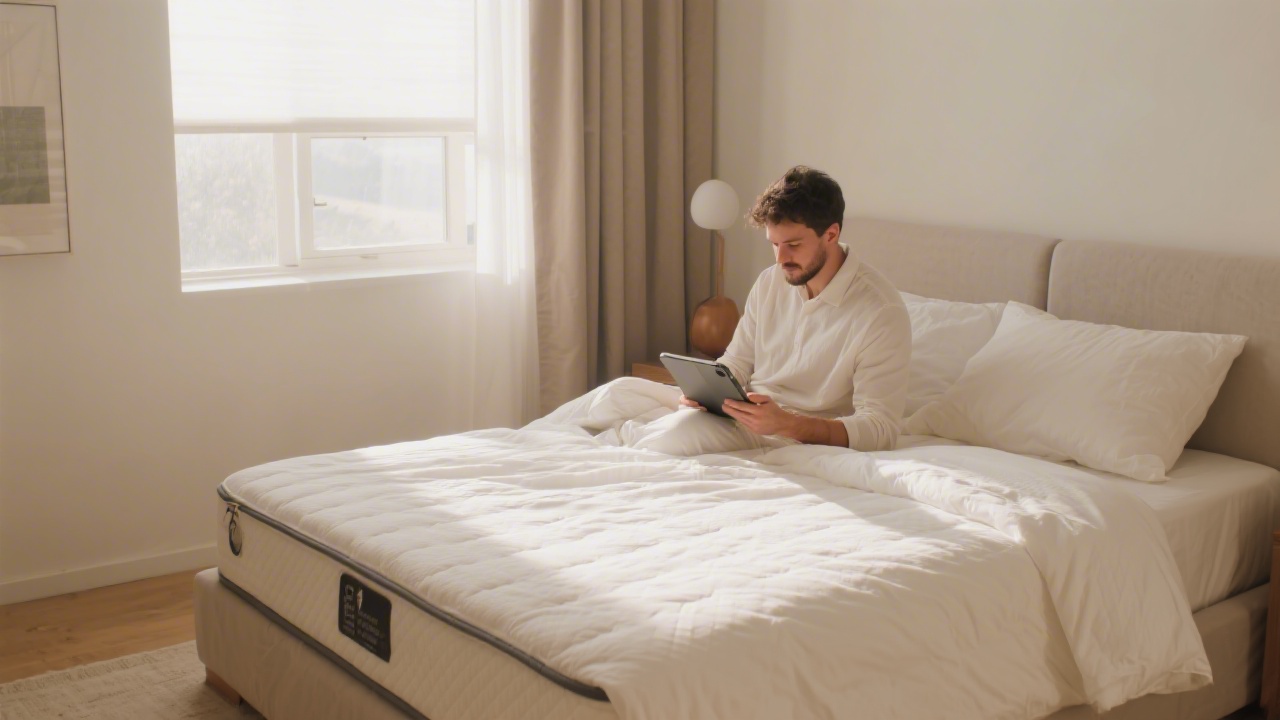
by Our Pick: The Saatva Classic earns top marks for support, durability, and customer service — a strong choice at any stage of your mattress search.
Buying a mattress for the first time — whether you're furnishing your first apartment, replacing a hand-me-down, or upgrading after years of sleeping on whatever was available — comes with a learning curve that the mattress industry does not make easier.
This guide covers the full process in order: how to assess your needs, how to navigate the overwhelming number of options, what to look for in a trial period, and how to make sure you're not making the mistakes most first-time buyers make.
Step 1: Assess Your Actual Sleep Needs Before You Start Shopping
Most first-time buyers skip this step and go straight to reviews. That's backward. Before you evaluate a single mattress, you need to know three things about yourself:
- Your primary sleep position: Side sleepers need pressure relief at the shoulder and hip. Back sleepers need lumbar support. Stomach sleepers need a firm surface to prevent lower back sink. Combination sleepers need a mattress that handles transitions.
- Your body weight and build: Heavier sleepers (230+ lbs) need firmer, more durable materials — coil support systems with thicker gauge wire, or high-density foam bases. Lighter sleepers (under 150 lbs) often find softer mattresses comfortable.
- Your temperature regulation: If you sleep hot, foam-only mattresses trap heat. Look for hybrid construction (foam + coils), latex, or mattresses with cooling covers.
Step 2: Understand the Core Mattress Types
You don't need to become an expert in mattress construction, but knowing the four main types prevents you from getting sold something mismatched to your needs:
- Innerspring: Traditional coil construction. Responsive, cool, durable. Often less pressure relief than newer options.
- Memory foam: Conforms closely to your body. Good pressure relief, poor temperature regulation, slow response to movement.
- Hybrid: Foam or latex comfort layers over a coil support system. Best of both worlds for most sleepers — the most popular category for good reason.
- Latex: Responsive, durable, naturally cooling. More expensive. Natural latex is the most breathable option available.
Step 3: Set a Realistic Budget
First-time buyers often underestimate what quality costs. Here's a practical framework for 2026:
- Under $500: Entry-level. Fine for a guest room or temporary use. Expect a 5–6 year lifespan.
- $800–$1,200: Mid-range. Many solid online brands operate here. Expect 7–9 years with proper care.
- $1,200–$2,500: Premium. Better materials, longer warranties, more rigorous testing. The Saatva Classic at $1,695+ (queen) lands here.
- $2,500+: Luxury. Diminishing returns in most cases unless you have specific needs (adjustable firmness, organic certification, etc.).
Step 4: Use Trial Periods — That's What They're For
One advantage first-time buyers have today that didn't exist 15 years ago: generous home trial periods. Most online brands offer 90–365 nights. This is the real test — you sleep on the mattress in your home, with your pillow, in your room temperature, in your actual positions.
The rule: give it 30 nights before you evaluate. Your body adjusts from your old mattress. Discomfort in the first two weeks is normal. Pain that persists beyond week four is a signal worth acting on.
For a deeper look at the research process, see our evidence-based mattress research guide. If you want to understand how trial periods and returns actually work, our mattress return experience guide walks through the real process brand by brand.
Step 5: Avoid the Most Common First-Time Buyer Mistakes
The most expensive mistake is buying based on a single in-store visit after 5 minutes of lying down. The second most expensive is buying purely on price. The third is ignoring return policy terms until you need them.
See our complete 2026 mattress shopping mistakes guide for a detailed breakdown of what to avoid — including newer issues like fake AI reviews and greenwashing claims.
Step 6: The Purchase and Setup Process
Once you've selected your mattress:
- Confirm foundation compatibility: Ask explicitly whether your planned frame or foundation meets warranty requirements.
- Schedule delivery strategically: If possible, take the delivery day off. White-glove delivery (offered by brands like Saatva) includes setup and old mattress removal.
- Allow off-gassing time: Foam mattresses may have a chemical smell for 24–72 hours after unboxing. This is normal and dissipates quickly with ventilation.
- Use a mattress protector from night one: This protects your warranty, which often voids if the mattress shows stains.
- Note your start date: Mark your calendar for 30, 60, and 90 days. If you're going to return, you need time to act before the trial expires.
The Optimal Shopping Timeline
Rushing mattress shopping is one of the most common first-time buyer errors. Our mattress shopping timeline guide outlines the ideal 2–3 week research and decision process that gives you confidence without analysis paralysis.
Frequently Asked Questions
How much should a first-time mattress buyer spend?
A quality mattress typically runs $800–$2,000 for a queen. Spending less risks buying something you'll replace in 3–4 years. Many brands offer 0% financing, making a quality investment accessible.
Should I buy a mattress online or in a store as a first-timer?
Online brands offer longer trial periods (90–365 nights) which actually gives you more time to test than an in-store visit. Many first-time buyers do better buying online for that reason.
What firmness level should a first-time buyer choose?
Medium-firm works for roughly 60% of sleepers. Start there unless you're a strict side sleeper (go softer) or stomach sleeper over 180 lbs (go firmer).
Do I need a box spring or foundation with a new mattress?
Most modern mattresses work on a platform frame, adjustable base, or slatted foundation. Check the warranty requirements — some void coverage if slats are more than 3 inches apart.
How long does it take to know if a mattress is right for you?
Give it 30 nights minimum. Your body needs time to adjust from your old mattress. Most brands offer at least 90 nights, which is enough to get a true verdict.
Ready to Make Your Decision?
The Saatva Classic offers a 365-night home trial, free white-glove delivery, and one of the best return experiences in the industry.
Our Top Mattress Pick
The Saatva Classic consistently ranks #1 for comfort, support, and long-term durability.
View Saatva Classic Pricing & Details