
 by
by Our Top Mattress Pick
Whatever sleep technology you use, it only works as well as the mattress underneath you. Saatva's handcrafted innerspring hybrid tops our testing for support, temperature regulation, and durability.
How Fitbit Tracks Sleep
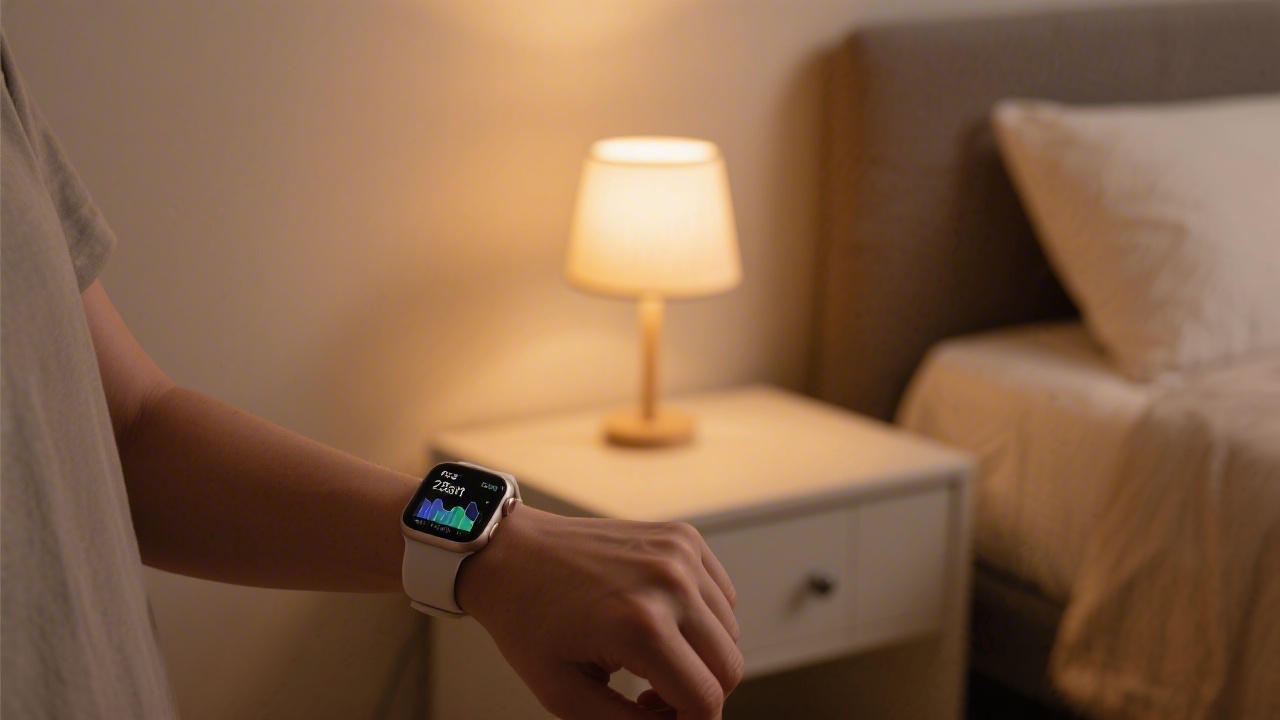
Fitbit uses a combination of accelerometer motion data and heart rate variability (HRV) to estimate sleep stages. When movement drops below a threshold and heart rate follows a predictable pattern, Fitbit's algorithm classifies you as asleep, then categorizes each 30-second epoch as light, deep, or REM sleep.
This approach — called actigraphy plus photoplethysmography (PPG) heart rate — is how most consumer sleep trackers operate. The question is how accurately it maps to what a sleep lab would measure using polysomnography (PSG), the gold standard involving electrode arrays on your scalp.
Fitbit Accuracy: What the Research Says
Independent validation studies give Fitbit a nuanced scorecard. The headline number is roughly 78% epoch-by-epoch accuracy for sleep stage classification versus PSG — meaning about 1 in 5 30-second windows is miscategorized. That sounds concerning, but context matters enormously.
Total sleep time accuracy is considerably better. Fitbit tends to overestimate total sleep by 5–10 minutes on average across a night, which is clinically negligible. Where accuracy drops is in individual stage detection:
- Light sleep (N1+N2): Most accurately captured, typically within 10–15%
- Deep sleep (N3): Moderately accurate — Fitbit often underestimates deep sleep, particularly in people over 50
- REM sleep: The weakest link — overestimated by 15–30% in many studies, partly because the algorithm conflates quiet wakefulness with REM
- Awakenings: Fitbit misses most brief awakenings under 3 minutes, which inflates sleep efficiency scores
Fitbit Model Comparison for Sleep Tracking
Not all Fitbits track sleep equally. Optical heart rate quality, processor speed, and sensor placement all affect algorithm accuracy.
| Model | Heart Rate Sensor | Sleep Score | SpO2 | Best For |
|---|---|---|---|---|
| Fitbit Sense 2 | 6 PurePulse sensors | Yes | All-night | Most accurate overall |
| Fitbit Versa 4 | PurePulse 2.0 | Yes | All-night | Best value for sleep tracking |
| Fitbit Charge 6 | PurePulse 2.0 | Yes | Yes | Best band form factor |
| Fitbit Inspire 3 | PurePulse 2.0 | Yes | Spot-check only | Budget option |
| Fitbit Luxe | PurePulse 2.0 | Yes | Spot-check only | Lifestyle + sleep |
Fitbit Sleep Score: What It Measures
Fitbit's Sleep Score (0–100) combines three components: duration (50 points), sleep quality including deep and REM percentage (25 points), and restoration — a combination of resting heart rate, SpO2, and HRV during sleep (25 points). A score of 80–88 is considered "Good." Most healthy adults hit 72–83 on most nights.
The restoration component is arguably the most useful piece. It captures whether your heart rate dipped appropriately during sleep, which correlates with parasympathetic nervous system recovery. A consistently low restoration score often precedes illness or overtraining by 1–2 days.
What Fitbit Gets Wrong
Three systematic errors consistently appear in Fitbit sleep data. First, the algorithm is too generous about sleep onset — it often logs you as asleep while you're still falling asleep, inflating total sleep time. Second, REM sleep tends to be overestimated in people who lie still while awake. Third, the SpO2 data, while collected all night on premium models, is only shown as a nightly range and average — not the time-series data clinicians need to screen for sleep apnea.
If sleep apnea is a concern, Fitbit data is a conversation starter with a doctor, not a diagnostic tool. No consumer wearable replaces a sleep study for apnea diagnosis.
How to Get Better Data from Fitbit
Wear the device snugly — the optical sensor needs consistent skin contact. Even one finger-width of looseness measurably degrades heart rate accuracy during sleep. Keep the device charged above 20% before bed, as low battery reduces sensor sampling frequency on some models. And review your data over 7-night rolling averages rather than reacting to single-night anomalies; sleep stage variability night-to-night is high even in perfect sleepers.
Your mattress matters too. Motion transfer on a poor mattress causes partner movement to register as your own, and temperature dysregulation affects heart rate patterns that the algorithm interprets as sleep disruption. See our guide to the best cooling mattresses if heat is a factor in your sleep data.
Fitbit vs. Other Sleep Trackers
Compared to Oura Ring, Fitbit tends to show more variability in deep sleep estimates but similar accuracy for total sleep time. Compared to Garmin, Fitbit's sleep score is more consumer-friendly but Garmin's Body Battery gives a better picture of cumulative recovery. Apple Watch (watchOS 9+) has improved substantially but still lacks a meaningful sleep score. See our comparisons of sleep setup optimization and morning alertness testing for context on using these numbers.
For consistent long-term sleep monitoring, Fitbit remains one of the most accessible and battery-efficient options. The 4–6 day battery life of the Charge 6 and Versa 4 means you never skip a night charging, which is a major practical advantage over Apple Watch.
Our Top Mattress Pick
Whatever sleep technology you use, it only works as well as the mattress underneath you. Saatva's handcrafted innerspring hybrid tops our testing for support, temperature regulation, and durability.
Frequently Asked Questions
How accurate is Fitbit sleep tracking?
Fitbit achieves approximately 78% epoch-by-epoch accuracy for sleep stage classification versus polysomnography lab testing. Total sleep time accuracy is higher — typically within 5–10 minutes per night. REM sleep tends to be the least accurate stage.
Can Fitbit detect sleep apnea?
Fitbit cannot diagnose sleep apnea. Its SpO2 sensor can flag nightly oxygen variability that might warrant a clinical evaluation, but it lacks the sensitivity and specificity for medical diagnosis. If you suspect sleep apnea, consult a doctor and request a sleep study.
Which Fitbit is best for sleep tracking?
The Fitbit Sense 2 has the most advanced sensor array and produces the most reliable sleep data. The Charge 6 is close behind with better form factor for all-day wear. Both offer all-night SpO2 tracking, HRV monitoring, and the full Sleep Score breakdown.
What is a good Fitbit sleep score?
Fitbit defines scores of 90–100 as Excellent, 80–89 as Good, 60–79 as Fair, and below 60 as Poor. Most healthy adults average 72–83. Consistent scores below 70 may indicate poor sleep habits, elevated stress, or underlying health issues worth discussing with a doctor.
Does wearing Fitbit too loose affect sleep tracking?
Yes significantly. Even slight looseness causes the optical heart rate sensor to miss beats or register noise, which directly degrades sleep stage accuracy. The band should feel snug but not tight — you should not be able to easily rotate the device on your wrist.
Key Takeaways
Fitbit Sleep Tracking is a topic that depends heavily on individual needs and preferences. The most important thing is to consider your specific situation — your body type, sleep position, and personal comfort preferences — before making any decisions. When in doubt, take advantage of trial periods to test before committing.