 by
by Quick answer: A flame retardant mattress should be chosen for transparent fire-barrier materials, not a vague label. I’d consider the Saatva Classic only after confirming its current materials and safety disclosures on the official site.
- U.S. mattresses must meet federal open-flame resistance requirements under 16 CFR 1632 and 16 CFR 1633.
- Fire resistance can come from barrier fabrics and natural materials, not only added chemical treatments.
- Federal compliance does not automatically reveal every material used to achieve it.
Updated July 2026 · Reviewed for accuracy
A flame retardant mattress is not automatically a bad mattress. But I would never treat the phrase as proof that a bed is low-chemical, natural, or especially transparent. It usually means the mattress meets a fire-safety rule. The useful question is how it meets that rule.
My verdict is simple: favor brands that explain their fire barrier in plain language, publish a complete materials list, and answer direct questions without sidestepping. If a mattress page only says “flame retardant” or “fire resistant,” I see an information gap, not a selling point.
Federal fire resistance is the baseline, not the whole story
Every new mattress sold in the United States has to clear federal flammability requirements. The relevant rules, 16 CFR 1632 and 16 CFR 1633, address cigarette ignition and open-flame performance. Those standards set the minimum safety floor for manufacturers selling mattresses in the U.S.
That matters because a mattress contains materials that can burn. Foam, fibers, fabrics, adhesives, and batting all behave differently under heat. Federal open-flame rules are intended to slow fire growth and limit the heat released during a prescribed test, according to the federal mattress flammability standards.
Still, compliance tells me only one part of the story. It says a finished mattress has met the applicable standard. It does not, by itself, tell me whether the manufacturer used a barrier fabric, wool, treated fiber, a chemical additive, or a combination of methods. That distinction is where a careful shopper should focus.
The Nut’s take: “Flame retardant” describes a safety outcome. It does not reliably identify the material path used to get there. I want the material path spelled out.
I also wouldn’t confuse fire resistance with total fire protection. A compliant mattress is designed to satisfy a specific regulatory test. It cannot make a bedroom fire harmless, and it does not replace smoke alarms, safe charging habits, or basic household fire precautions.
The fire barrier matters more than the marketing label
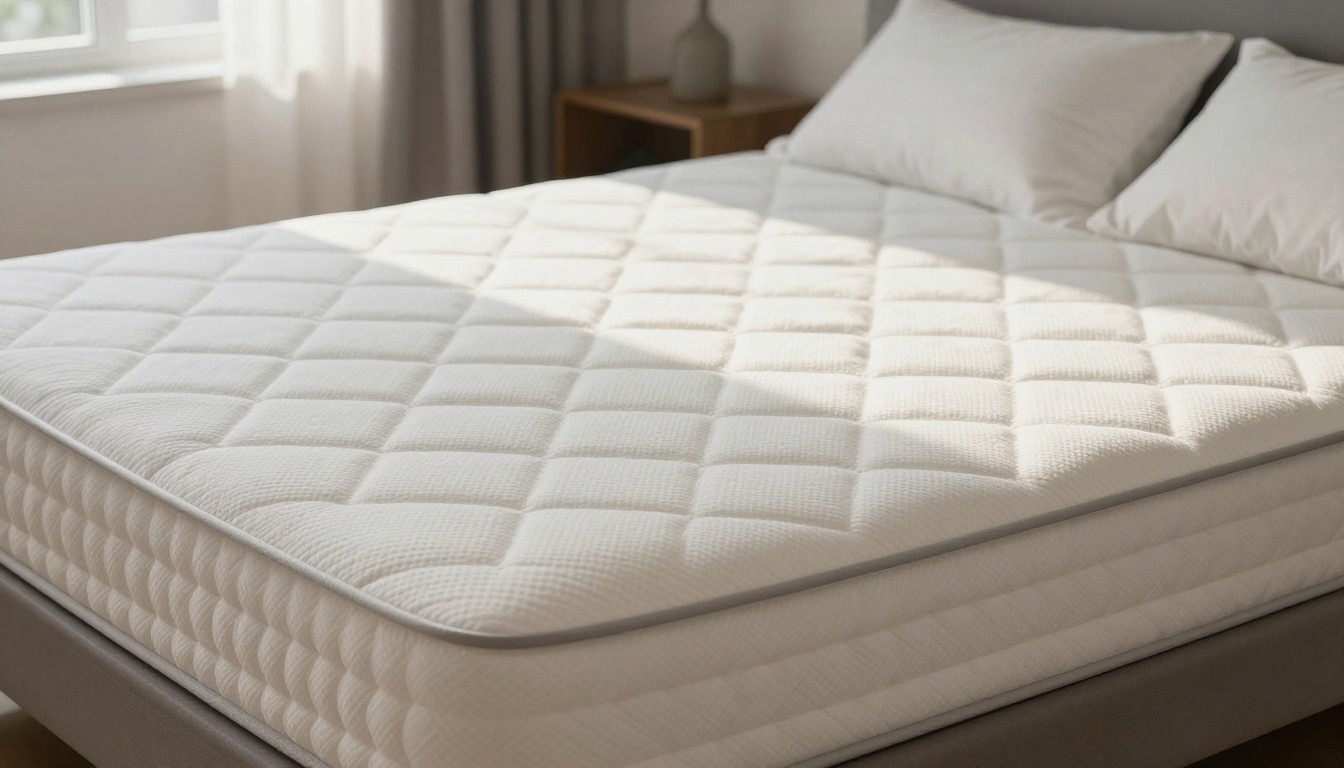
A mattress can meet fire standards through a physical barrier around its comfort layers. Barrier fabrics are designed to slow the spread of flame and help protect the materials beneath them. This is a construction choice, and it can be separate from the foam or latex you actually sleep on.
Some brands describe natural approaches such as wool, cotton blends, or latex-containing builds. Others refer to proprietary fire socks, fire barriers, special ticking, or engineered fabrics. Those labels are not interchangeable. A wool-based approach and a synthetic barrier fabric may both support compliance, but they are different material stories.
Traditional halogenated flame retardants have drawn consumer concern because of health questions raised around some chemical classes. Many mattress makers have moved away from certain older chemical approaches, while interest in barrier-based and natural-material methods has grown, according to consumer safety guidance on mattress flame retardants. That shift is useful context, but it does not let me assume every “non-toxic” claim means the same thing.
The practical move is to read beyond the headline. Search a product page for terms such as “fire barrier,” “flame barrier,” “wool,” “chemical flame retardants,” “fiberglass,” and “materials.” If the language is precise, you have something to assess. If it is broad and polished but never names the barrier, I would ask the company directly before buying.
Questions I’d send customer service:
- What material provides the mattress’s fire resistance?
- Is the fire barrier a separate fabric layer, and where is it located?
- Are flame-retardant chemicals added to the foam, fabric, or fiber?
- Can you provide the complete materials list and any applicable certifications?
Comparing options? The Saatva Classic is the pick we keep coming back to — see the final verdict ↓
Disclosure is where many flame retardant mattress listings fall short
Manufacturers are not generally required to publish a complete public list of every flame-retardant chemical that may be used in a mattress. That disclosure gap makes it hard for shoppers to compare vague safety claims with confidence. A law label can identify broad filling categories, but it may not answer every question about fire-resistance treatment.
This is why I put transparency ahead of slogans. “Safe,” “clean,” and “eco-friendly” are not construction details. A stronger product page tells you what is in the cover, what is in the comfort layers, what creates the fire barrier, and whether a certification applies to a particular material or to the finished mattress.
Independent certifications can be helpful, provided you read what they actually cover. A certification may address emissions, textile inputs, organic content, or a defined group of substances. It is not a universal stamp that answers every question about a mattress’s fire barrier. Check the certifier’s scope and the manufacturer’s own materials statement together.
I’d also watch for wording that leaves too much room. “Meets all safety standards” is a compliance statement. “Uses a wool fire barrier” is a materials statement. The second one gives me a concrete basis for comparison. The first one does not.
For shoppers already concerned about barrier construction, this guide to mattress fiberglass questions shows why it pays to distinguish a named component from a blanket safety claim. The key is not to panic at a single word. The key is to get a clear answer about what is inside the bed.
Foam, latex, wool, and fabric barriers need different scrutiny
Foam mattresses often place a fire barrier beneath the cover and around the foam core. That arrangement can preserve the feel of the foam layers while keeping the fire-resistance component separate. Whether that is a good fit depends on what the barrier is made from and how openly the brand explains it.
Latex mattresses are often marketed with natural-material language because latex, wool, and cotton can appear in their construction. I still read the complete specification. Natural latex in a comfort layer does not automatically tell me what the fire barrier is, and an organic cover does not automatically describe the entire mattress.
Wool is commonly discussed as a natural fire-resistant material. It can be part of a mattress’s strategy for meeting flammability requirements, according to mattress materials guidance. But a wool claim should still be specific: Is it the actual barrier? Is it blended with other fibers? Is it only in the quilting? Those details affect how useful the claim is.
Fabric barriers deserve the same attention. A thin fire sock may sit underneath the cover, while a heavier barrier can be built into the quilted panel or wrap the core. Neither layout is inherently better from a shopper’s perspective without knowing the material and the rest of the construction. What I value is a direct explanation rather than a mystery layer.
Material reading rule: A named comfort material is not necessarily the flame barrier. Treat “organic cotton cover,” “memory foam,” and “natural latex” as separate claims until the manufacturer explains how the mattress handles fire resistance.
How I’d compare a flame retardant mattress before ordering
The first comparison point is the stated barrier method. I would put a fully described physical barrier ahead of a generic “fire retardant” claim because it gives me something tangible to evaluate. That does not make every barrier fabric identical. It simply means the manufacturer has done the basic work of explaining its construction.
The second point is material disclosure. A mattress can feel comfortable and still be a poor choice for a shopper who wants detailed ingredient information. If the company will not identify the barrier material or explain whether treatments are used, I would move on to a more transparent option.
The third point is overall build. A fire barrier is one layer in a much larger system. I want to know what supports the body, what provides pressure relief, how the cover is made, and whether the edge construction matches the price tier. Fire compliance is necessary. Sleep comfort and long-term construction still matter every night.
| What to compare | A useful answer | What gives me pause |
|---|---|---|
| Fire-resistance method | The barrier material and placement are named. | Only a broad compliance statement appears. |
| Materials list | Cover, comfort layers, support layers, and barrier are described. | Marketing terms replace component details. |
| Certification language | The brand identifies the certification and what it covers. | A badge appears without scope or explanation. |
| Value | The price aligns with clear construction and policies. | You are asked to pay more for claims that remain vague. |
A mattress listing should also make it easy to find the manufacturer’s policies and materials documentation. Clear policy pages do not prove a particular construction is right for you, but they show whether the brand is willing to stand behind its information. If a company’s answers change depending on where you ask, I would not be comfortable treating its safety language as settled.
Who should lean toward a more transparent build
Material-sensitive shoppers should be especially strict about documentation. That does not mean I can diagnose a health issue or promise that a given mattress will solve one. It means a shopper with strong preferences about additives, fibers, foam, or certifications should choose a company that makes those choices visible before checkout.
Parents furnishing a child’s room may also want more than a generic compliance statement. Federal standards apply, but a parent may reasonably want to know whether the mattress uses a barrier fabric, wool, cotton blend, or another disclosed approach. Asking first is simpler than trying to decode a label after delivery.
Budget shoppers should resist assuming that a lower price necessarily means more chemicals, or that a higher price necessarily means greater transparency. The market contains both simple and complex builds at many price levels. Compare what is actually disclosed, then check the current price on the official site.
People shopping for a hybrid mattress should assess the entire design as well. Coils affect support, foam affects contouring, and the fire barrier is its own layer or treatment. If you are comparing construction styles, my overview of hybrid mattress construction can help separate support-system questions from safety-material questions.
Skip the guesswork: If the fire-barrier answer is unclear before purchase, assume you will not get a clearer answer after the mattress arrives. Buy the disclosure level you are comfortable living with.
My buying decision on a flame retardant mattress
I would buy a flame retardant mattress only when the brand clearly distinguishes legal compliance from material disclosure. I do not need every mattress to use the same approach. I do need the maker to tell me what the approach is, where it sits in the build, and what any certification actually covers.
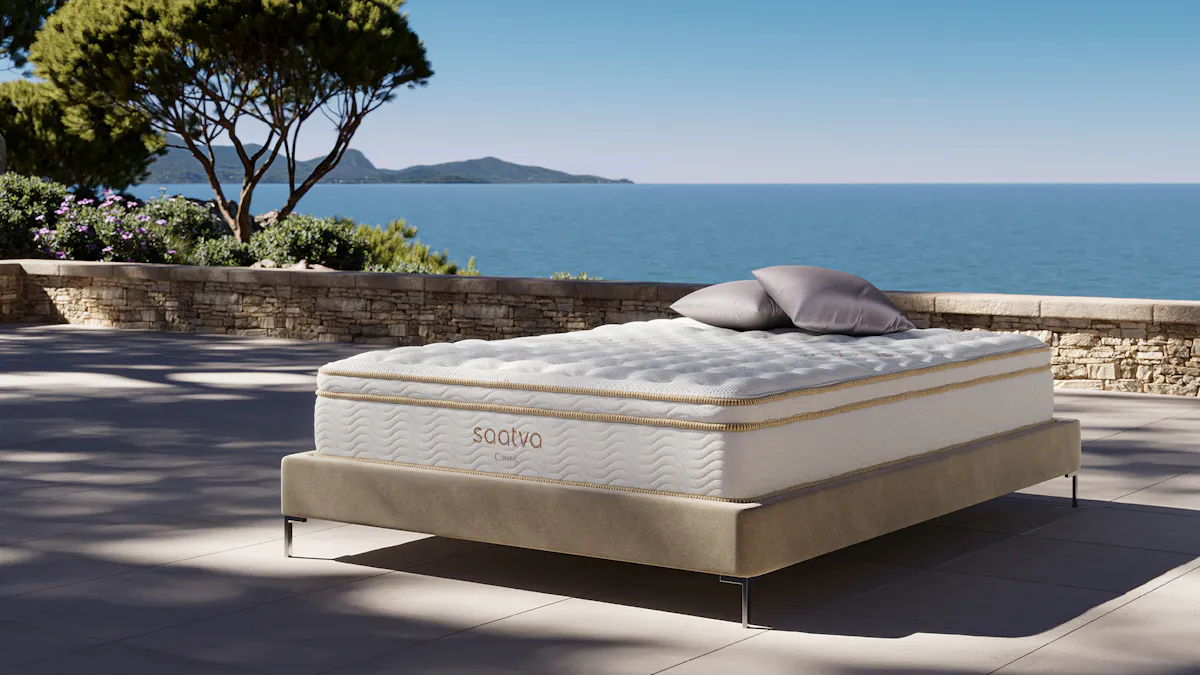
For a shopper who also wants a traditionally constructed luxury mattress, the Saatva Classic is a reasonable model to investigate on its official site. I would still verify its current fire-barrier language, full materials details, delivery terms, financing options, sleep-trial terms, and warranty terms before treating it as the right purchase for your room.
That is the real standard here. A clear answer does not have to be lengthy or technical. It just has to be specific. A manufacturer that names the barrier and explains its construction earns more trust from me than one that relies on broad reassurance.
Don’t let the phrase “flame retardant” make the decision for you. Use it as the starting point for better questions. The best fit is the mattress whose materials, construction, and stated fire-safety approach you can understand without filling in the blanks yourself.
FAQ
Are all mattresses flame retardant?
New mattresses sold in the United States must comply with federal flammability requirements, including the standards identified as 16 CFR 1632 and 16 CFR 1633. That does not mean every mattress uses the same fire-resistance material or method.
Some use barrier fabrics, while others may use wool, fiber blends, or other construction approaches. Check the manufacturer’s materials information for the specific mattress you are considering.
Does flame retardant mean a mattress contains chemicals?
No. The phrase can refer to a mattress meeting a fire-safety standard, not to one particular ingredient. Fire resistance may be achieved with a physical barrier, natural materials, treated fibers, or another method described by the manufacturer.
If chemical exposure is a concern for you, ask the brand what provides the fire resistance and whether any treatments are applied to the foam, cover, or barrier fabric.
What is the safest fire barrier in a mattress?
There is no single answer that fits every shopper or every construction. I would prioritize a barrier that is specifically identified, paired with a complete materials list and clear certification language where applicable.
A transparent explanation lets you make a choice based on your own preferences. A vague safety claim does not give you enough information to compare one mattress with another.
Should I avoid a mattress that does not list its flame barrier?
I would be cautious, especially if material transparency is central to your buying decision. The mattress may still meet federal requirements, but you cannot fairly assess the construction if the company will not explain how it achieves fire resistance.
Ask customer service for a written answer before ordering. If the answer remains broad or inconsistent, choose a brand that publishes more useful details.
Do certifications prove a flame retardant mattress is chemical-free?
No certification should be read that broadly unless its own published scope says so. Certifications can be valuable, but they may address emissions, textile inputs, organic content, or particular substances rather than every material in the finished mattress.
Read the certification’s scope alongside the manufacturer’s barrier disclosure. I want both pieces before I draw a conclusion about the bed’s materials.
FINAL VERDICT
Before you settle: if flame retardant mattress is what brought you here, the Saatva Classic is the value pick on this page — more home-trial and warranty coverage than the alternatives covered here. Confirm current price, dimensions and terms on the official product page before ordering.
OUR CATEGORY-MATCHED PICK · UP TO $625 OFF
Saatva Classic
- 365-night home trial and lifetime warranty, per saatva.com
- Handcrafted in the USA, free white-glove delivery
- Flexible financing available