
 by
by What you eat in the hours before bed has a measurable effect on how quickly you fall asleep, how often you wake, and how rested you feel in the morning. The mechanisms are specific — not just "heavy food makes you sleepy." The right foods elevate tryptophan availability, support melatonin synthesis, lower cortisol, and cool your core body temperature. The wrong foods do the opposite.
Upgrade your sleep with the right mattress
The supplements above work best on a supportive mattress. The Saatva Classic consistently tops our comfort and longevity tests.
Foods That Promote Sleep
1. Tart Cherries
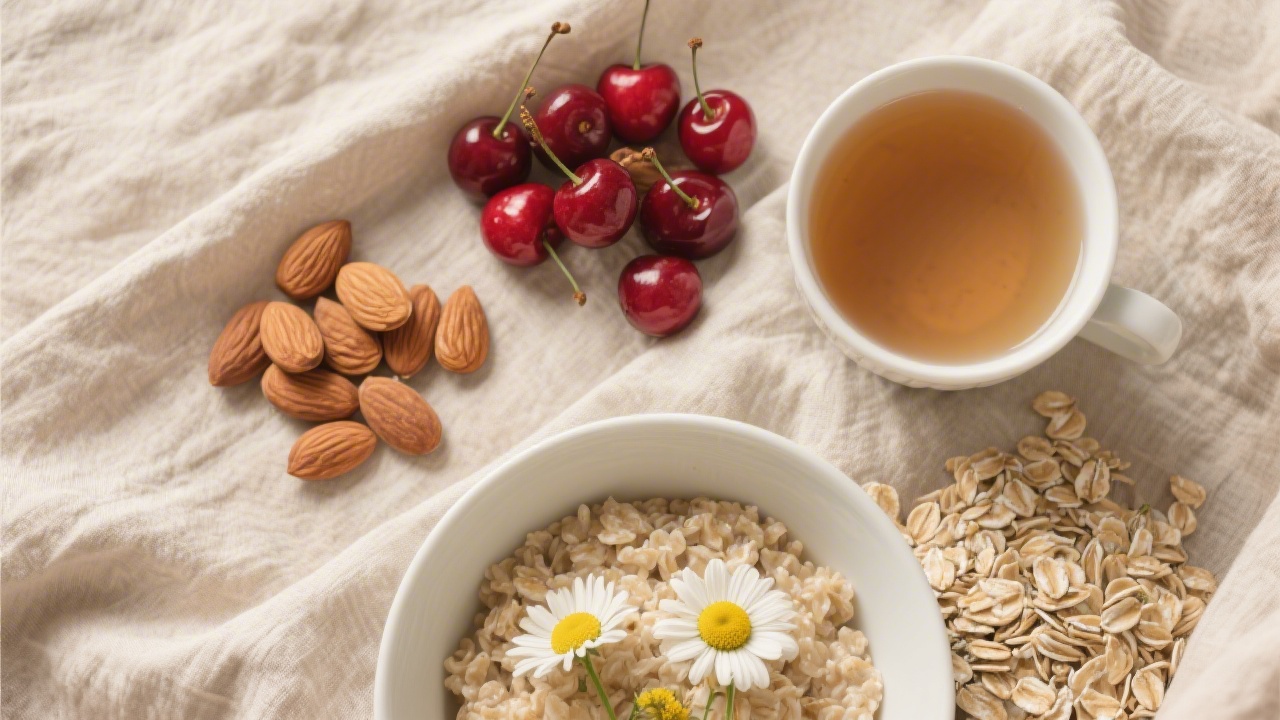
Montmorency tart cherries are the most evidence-backed sleep food. They contain natural melatonin, tryptophan, and anti-inflammatory anthocyanins. Studies show 2 cups of tart cherry juice daily increases total sleep time by up to 84 minutes. Fresh or frozen Montmorency cherries, tart cherry juice, or concentrate capsules all work.
2. Kiwi
Kiwi fruit is surprisingly well-studied for sleep. A 2011 study at Taipei Medical University had adults eat 2 kiwis one hour before bed for 4 weeks. Results showed 35% faster sleep onset, 28% less waking after sleep onset, and 13% more total sleep time. Kiwi is high in serotonin precursors, antioxidants, and folate, all of which support sleep pathways.
3. Oatmeal
Oats are one of the few grains with naturally occurring melatonin. Their complex carbohydrates raise insulin modestly, which facilitates tryptophan crossing the blood-brain barrier. A small serving (half cup dry) an hour before bed supports both mechanisms. Avoid high-sugar instant versions.
4. Almonds and Walnuts
Both contain magnesium, melatonin, and healthy fats that support hormone regulation. Walnuts are one of the best dietary sources of melatonin. A small handful (1 oz) 1-2 hours before bed is sufficient — larger portions may cause digestive activity that disrupts sleep.
5. Turkey and Eggs
High-tryptophan proteins. The tryptophan-to-sleep connection requires pairing with a small amount of carbohydrate, which triggers insulin and preferentially drives tryptophan into the brain. Turkey and eggs alone are modestly helpful; combined with a starchy food, the effect improves significantly.
6. Fatty Fish (Salmon, Mackerel, Sardines)
Fatty fish combines vitamin D and omega-3 fatty acids, both of which regulate serotonin production. A 2014 study in the Journal of Clinical Sleep Medicine found that eating Atlantic salmon 3 times per week for 6 months improved sleep onset and overall sleep quality compared to chicken, pork, or beef.
7. Chamomile Tea
Chamomile contains apigenin, which binds to GABA-A receptors with a mild sedative effect. It is one of the most widely used sleep-supporting beverages with consistent if modest clinical evidence. See our full chamomile tea for sleep guide for dosing details.
Foods That Disrupt Sleep
High-Sugar Foods and Drinks
A blood sugar spike before bed triggers an insulin response, followed by a blood sugar drop that can activate the sympathetic nervous system around 2-3 AM, causing early morning waking. This is a very common and underappreciated cause of sleep maintenance insomnia. Avoid desserts, fruit juice, and sweetened beverages within 2 hours of bed.
Alcohol
Alcohol accelerates sleep onset (which feels helpful) but fragments sleep architecture in the second half of the night. REM sleep is particularly suppressed by alcohol metabolism. The net effect is less restorative sleep even when total sleep time is maintained.
Caffeine
Caffeine's half-life is 5-7 hours in most adults. A coffee consumed at 2 PM still has significant caffeine activity at 9 PM. The sleep threshold for caffeine sensitivity is individual — some people cannot tolerate caffeine after noon; others are less affected. Erring on the side of cutoff before noon is conservative but effective.
Spicy and Acidic Foods
Spicy foods raise core body temperature (thermogenic effect of capsaicin) at the wrong time — the body needs to be cooling to facilitate deep sleep. Acidic foods increase the risk of reflux when lying down, causing fragmented sleep even when it does not rise to the level of conscious heartburn.
High-Fat Meals Late at Night
Large, fat-heavy meals slow gastric emptying significantly and increase metabolic activity during what should be a rest phase. This elevates core temperature and increases arousal. Save heavy meals for at least 3 hours before bed.
Timing: When You Eat Matters as Much as What You Eat
The optimal window for your last significant meal is 2-3 hours before bed. This gives digestion time to settle without leaving you in a blood sugar trough. A small, tryptophan + carb snack within 60 minutes of sleep is beneficial for many people — particularly those who wake early from blood sugar fluctuations.
Related Sleep Guides
Frequently Asked Questions
What is the best food to eat before bed for sleep?
A small combination of complex carbohydrates and tryptophan-rich protein is most effective — for example, a small bowl of oatmeal with a handful of walnuts, or whole grain crackers with turkey. This combination raises tryptophan availability in the brain without blood sugar spikes that can fragment sleep.
Does warm milk actually help you sleep?
Modestly. Milk contains tryptophan, calcium, and small amounts of melatonin. The effect is real but mild. The warmth also has a minor relaxation effect via core body temperature response. It is not a powerful sleep aid but is not a myth either.
What foods disrupt sleep the most?
The biggest disruptors are high-sugar foods (cause blood glucose fluctuations that trigger cortisol), spicy or acidic foods (can cause reflux during sleep), high-fat meals close to bed (delay gastric emptying, increasing metabolic activity), and alcohol (fragments sleep architecture in the second half of the night).
How long before bed should I stop eating?
Finishing your last significant meal 2-3 hours before bed is the most research-supported window. A small sleep-supporting snack (under 200 calories) 30-60 minutes before bed does not appear to disrupt sleep and may help tryptophan conversion.
Does eating late at night cause poor sleep?
Late eating disrupts sleep primarily through two mechanisms: elevated core body temperature from digestion (body needs to cool to enter deep sleep) and blood sugar fluctuations from higher-glycemic evening meals. Timing and food composition both matter.
Upgrade your sleep with the right mattress
The supplements above work best on a supportive mattress. The Saatva Classic consistently tops our comfort and longevity tests.