
 by
by Our Top Mattress Pick
Whatever sleep technology you use, it only works as well as the mattress underneath you. Saatva's handcrafted innerspring hybrid tops our testing for support, temperature regulation, and durability.
Garmin's Approach to Sleep Tracking
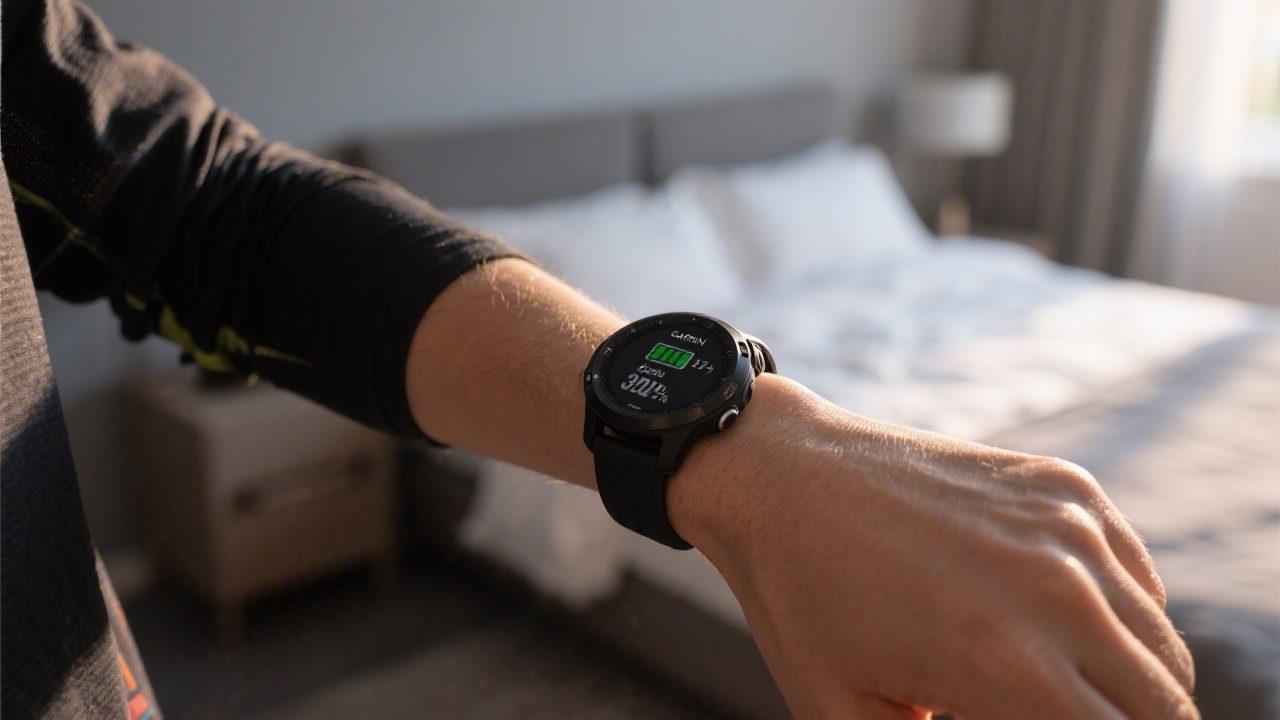
Garmin takes a different philosophy than Fitbit or Apple Watch. Rather than giving you a sleep score based on last night alone, Garmin emphasizes Body Battery — a composite 0–100 metric that tracks recovery across the full 24-hour cycle. Body Battery drains during activity and stress, and recharges during sleep. It's a running ledger of your physiological reserves, not just a nightly snapshot.
This approach is more useful for athletes and people with variable schedules, because it shows the cumulative cost of poor sleep over multiple nights, not just whether last night was "good" or "fair."
Garmin Sleep Metrics Explained
Every Garmin watch with an optical heart rate sensor tracks the following sleep metrics: total sleep duration, sleep stages (light, deep, REM, awake), sleep score (0–100), average resting heart rate during sleep, average SpO2 (on compatible models), HRV status, and Body Battery recharge during the night.
The Sleep Score is calculated from duration, percentage of restorative sleep (deep + REM combined), and stress levels during sleep as measured by HRV. A score above 80 is Good, 60–80 is Fair, below 60 is Poor.
The HRV Status metric — unique to Garmin — shows whether your nightly HRV falls within your personal baseline range, above it (good recovery), or below it (stress or illness). After 3 weeks of consistent wearing, Garmin builds a personalized HRV baseline that makes this metric far more meaningful than population averages.
Best Garmin Watches for Sleep Tracking
| Model | Battery (smartwatch) | SpO2 | HRV Status | Best For |
|---|---|---|---|---|
| Fenix 7 Pro | 18 days | All-night | Yes | Athletes, outdoor use |
| Epix Pro (Gen 2) | 16 days | All-night | Yes | AMOLED display preference |
| Forerunner 965 | 23 days | All-night | Yes | Runners, best battery |
| Venu 3 | 14 days | All-night | Yes | Lifestyle + sleep focus |
| Vivosmart 5 | 7 days | Spot-check | No | Budget sleep tracker |
| Instinct 2 | 28 days | No | Yes | Rugged, longest battery |
Body Battery: The Most Underrated Feature in Sleep Wearables
Body Battery is Garmin's composite energy reserve metric, calculated from HRV, stress, sleep quality, and activity. It typically starts each morning between 70–95 (depending on sleep quality) and drains across the day. The practical insight is in the pattern: if you wake with Body Battery at 85 most mornings and it's been at 55–65 for a week, something is degrading your recovery — poor sleep environment, stress, overtraining, or early illness.
For sleep optimization specifically, watch what happens to Body Battery during sleep: it should charge steadily from the moment you fall asleep through wake-up. A flat or slowly rising Body Battery during sleep suggests fragmented sleep or elevated nighttime stress. A bedroom that's too warm is a common culprit — your mattress's temperature regulation directly affects this metric.
Garmin Sleep Tracking Accuracy
Garmin's sleep stage detection performs similarly to Fitbit in independent comparisons — approximately 75–78% epoch accuracy against PSG. Where Garmin distinguishes itself is in HRV measurement. The Garmin optical sensor and algorithm for HRV produces readings that correlate more closely with chest strap ECG measurements than most wrist-worn alternatives, making the HRV Status feature genuinely reliable.
The weakest area is deep sleep detection. Garmin, like other wrist-worn trackers, tends to underestimate deep sleep percentage in older adults and people with sleep disorders. Use the percentage as a trend indicator rather than an absolute value.
Interpreting Your Garmin Sleep Data
Focus on three signals: (1) Body Battery at wake-up — your daily reset number; (2) HRV Status — in baseline, above, or below; (3) Sleep score trend over 7 days. Single nights are noise; weekly patterns are signal. If all three metrics trend negative over 5+ days, that's a recovery debt that warrants lifestyle investigation. See our morning alertness assessment and sleep setup optimization guide for actionable next steps. A supportive mattress with proper temperature regulation also directly affects your Body Battery recharge rate — see our cooling mattress guide.
Our Top Mattress Pick
Whatever sleep technology you use, it only works as well as the mattress underneath you. Saatva's handcrafted innerspring hybrid tops our testing for support, temperature regulation, and durability.
Frequently Asked Questions
What is Garmin Body Battery and how does sleep affect it?
Body Battery is a 0–100 composite metric estimating your energy reserves, calculated from HRV, stress, sleep quality, and activity. It drains during exercise and stress, and recharges during sleep. A high-quality night of sleep typically recharges Body Battery by 40–60 points. Consistently waking with low Body Battery (under 50) suggests poor sleep quality or excessive training load.
Which Garmin watches have the best sleep tracking?
The Fenix 7 Pro, Forerunner 965, and Venu 3 offer the most comprehensive sleep tracking with all-night SpO2, HRV Status, full sleep stage breakdown, and Body Battery. The Forerunner 965 has the best battery life among them at 23 days in smartwatch mode.
Is Garmin sleep tracking accurate?
Garmin's sleep stage detection achieves approximately 75–78% epoch-by-epoch accuracy versus polysomnography. Total sleep time accuracy is typically within 10 minutes. HRV measurement is one of Garmin's stronger metrics, correlating well with ECG chest strap readings compared to other consumer wearables.
How do I improve my Garmin sleep score?
Focus on consistency — same bedtime and wake time builds circadian rhythm strength, which improves deep sleep percentage. Keep your bedroom cool (65–68F / 18–20C), limit screens 60 minutes before bed, and avoid alcohol, which fragments sleep and reduces HRV. Your Garmin data will reflect these changes within 2–3 weeks.
Why is my Body Battery not fully charging during sleep?
Incomplete Body Battery recharge during sleep usually points to elevated nighttime stress (high HRV-based stress readings), sleep fragmentation from a poor sleep environment, too warm a room temperature, or accumulated training fatigue. If it persists more than 5 nights, investigate your sleep environment and training load.