
 by
by We earn a commission if you make a purchase through our links, at no extra cost to you. Full disclosure.
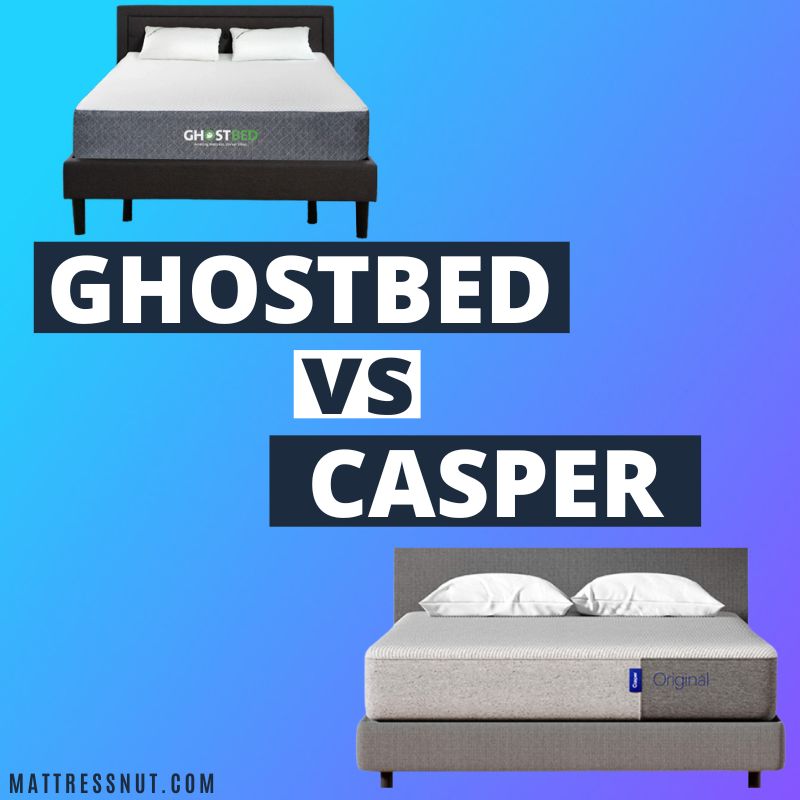
GhostBed and Casper are two of the most recognizable names in the online mattress space, and for good reason. Both brands target the same mid-range buyer, price their queen models around $900 to $1,100, and ship free to your door in a box. But the way they build their mattresses is completely different, and that difference matters depending on how you sleep.
GhostBed leans into latex-influenced construction with an aerated gel memory foam top and a firm support core. Casper takes a pure all-foam approach with a patented zoned support layer designed to align your spine differently for shoulders versus hips. One runs cool and bouncy. The other is softer and more contouring. Neither is universally better, but one is almost certainly better for you.
This comparison breaks down everything: materials, feel, firmness, pressure relief, motion isolation, edge support, temperature regulation, pricing, trials, and warranties. By the end, you will know exactly which mattress fits your sleep style.
GhostBed wins for back sleepers, stomach sleepers, and hot sleepers who want a firmer, cooler surface with excellent bounce.
Casper wins for side sleepers and combination sleepers who want targeted pressure relief and a softer shoulder zone.
Quick Comparison at a Glance
| GhostBed Original ($1,095 queen) | Casper One ($895 queen) | |
|---|---|---|
| Construction | Aerated gel memory foam + latex-style foam + firm base | Zoned polyfoam + memory foam + durable base |
| Firmness | Firm (6.5–7/10) | Medium (5.5–6/10) |
| Feel | Bouncy, responsive, sleeps on top | Contouring, body-hugging, softer sink |
| Cooling | Excellent (aerated top layer) | Average (standard foam) |
| Motion Isolation | Good | Excellent |
| Edge Support | Good | Average |
| Best For | Back, stomach, hot sleepers | Side sleepers, couples, light sleepers |
| Trial Period | 101 nights | 100 nights |
| Warranty | 20 years | 10 years |
| Free Shipping | Yes | Yes |
Construction and Materials
GhostBed Original: What Is Inside
The GhostBed Original is an 11-inch mattress built with three layers. The top is a 1.5-inch aerated gel memory foam that GhostBed calls their Ghost Ice fiber layer when combined with their cover. This layer is perforated to allow air to pass through, which actively resists heat retention. Beneath it sits a 2-inch layer of aerated latex-inspired foam that provides the bounce and responsiveness that sets GhostBed apart from standard memory foam beds. The base is a 7.5-inch high-density polyfoam support core that handles durability and weight distribution.
The cover is a soft stretch knit with cooling fibers blended in. The overall construction skews firmer and more responsive than a traditional memory foam mattress. You sleep more on top of the GhostBed than inside it. The latex-feel layer gives it a springiness that makes moving around and changing positions easy, which benefits combination sleepers who rotate from back to side during the night.
GhostBed also makes several other models: the GhostBed Luxe (their flagship cooling bed), the GhostBed Flex (hybrid with coils), the GhostBed Natural (organic latex), and the GhostBed 3D Matrix (phase-change cooling). For this comparison, the Original is the head-to-head match for the Casper One in terms of price and positioning.
Casper One: What Is Inside
The Casper One (formerly called the Casper Original) is a 12-inch mattress with four layers. The top is a 1.5-inch AirScape perforated foam designed to allow airflow, though it performs modestly compared to GhostBed's aeration. Beneath that is a 1.5-inch memory foam comfort layer that softens the feel and provides contouring. The third layer is Casper's signature Zoned Support foam at 1.5 inches thick. This layer has wider cutouts under the shoulders to allow them to sink in, and firmer sections under the hips and torso to prevent them from collapsing. The base is a 7.5-inch durable polyfoam support core.
The zoned layer is Casper's most differentiating feature. Rather than treating every part of your body the same, it applies more give where your shoulder needs pressure relief and more resistance where your lumbar needs support. For side sleepers especially, this design can reduce shoulder pain significantly compared to a uniform-density foam mattress.
Casper also sells premium tiers: the Casper Nova (softer, more plush), the Casper Snow (cooling upgrade), and the Casper Element (budget option). The Casper One sits in the same pricing tier as GhostBed Original, making this a clean direct comparison.
Firmness and Feel
GhostBed Firmness
On the standard 1-to-10 firmness scale, the GhostBed Original lands at about 6.5 to 7. That puts it solidly in the medium-firm to firm category. When you first lie down, you notice the support immediately. There is minimal sink or hug. The aerated foam and latex-inspired layer push back against your body weight rather than conforming to it. This makes the surface feel stable and crisp, more like a traditional innerspring than a plush memory foam bed.
The bounce is noticeable. If you press your hand into the surface and release, it springs back quickly, in under a second. This responsive feel makes it easy to move around, get out of bed, and change sleep positions. Couples who are active during the night appreciate this quality because you never feel like you are fighting the mattress to roll over.
The firmness works best for back sleepers between 130 and 230 pounds. Stomach sleepers in that same range also get solid hip support without excessive sink. Lighter side sleepers may find it too firm at the shoulder and hip, potentially creating pressure points. Heavier sleepers over 230 pounds may actually find it ideal because their weight compresses the foam enough to feel like a medium firmness.
Casper Firmness
The Casper One registers around 5.5 to 6 on the firmness scale, making it a true medium. It is softer than the GhostBed, and the feel is noticeably different. When you lie down, the memory foam comfort layer initiates a slow, contouring hug. Your body sinks into the mattress gradually rather than being immediately supported on top.
Because of the zoned support layer, the feel changes depending on where you are lying. Under your shoulders, the mattress gives more freely, allowing them to drop into the surface without resistance. Under your hips and lumbar, the firmer zones prevent excessive sinkage. This targeted response is more nuanced than the GhostBed's uniform approach and makes the Casper feel customized even though it is a mass-market product.
The Casper's feel is slower and more enveloping. Movement takes more effort. It is not as easy to roll over or reposition as the GhostBed. But for sleepers who stay in one position all night, especially side sleepers, the contouring and zoning create a noticeably more comfortable pressure-relief experience.
Pressure Relief
Pressure relief measures how well a mattress redistributes your body weight away from sensitive pressure points like your shoulders, hips, and knees.
The Casper wins this category for side sleepers. The combination of the memory foam comfort layer and the zoned shoulder relief creates a surface that accommodates the natural protruding shape of your shoulder while keeping your hip properly aligned. Side sleepers who have experienced shoulder pain or hip pressure on firm mattresses often find immediate relief on the Casper.
The GhostBed provides adequate pressure relief for back sleepers. Lying on your back, your weight distributes more evenly across the mattress surface, so the firmer, less-contouring GhostBed still manages pressure effectively. For stomach sleepers, the GhostBed's firmness actually prevents the pelvis from sinking too deeply, which protects lumbar alignment.
For side sleepers specifically, particularly those under 200 pounds, the GhostBed can feel too firm at the shoulder and hip. The latex-inspired foam rebounds quickly and does not hold the body shape long enough to truly relieve shoulder pressure. Heavy side sleepers over 230 pounds may compress the foam enough to mitigate this issue, but lighter sleepers are better served by the Casper.
Motion Isolation
Motion isolation measures how much of a sleeping partner's movement transfers across the mattress to your side. This matters most for couples with different sleep schedules or one partner who tosses and turns.
The Casper is the clear winner in this category. Its all-foam construction, especially the memory foam comfort layer, absorbs and localizes movement effectively. When your partner rolls over or gets out of bed, you feel very little disturbance on your side of the mattress. This is one of the primary reasons couples choose foam mattresses over innerspring or hybrid models.
The GhostBed also performs well here for an all-foam mattress, but the bouncy latex-inspired layer transfers slightly more motion than Casper's purely contouring design. It is still significantly better than most hybrid or coil mattresses, but when compared directly to the Casper in a couple sleeping scenario, the Casper produces noticeably less motion transfer.
If you or your partner is a light sleeper and nighttime disturbances are a frequent problem in your household, the Casper is the better choice for preserving sleep quality.
Edge Support
Edge support determines how stable the mattress feels when you sit or sleep near the perimeter. Poor edge support means the sides collapse when you sit on them, which reduces the usable sleeping surface and makes getting in and out of bed harder.
GhostBed has better edge support than Casper. The firm base layer and the overall firmer construction mean the edges hold up reasonably well under pressure. You can sit on the side without the edge completely collapsing, and sleeping near the perimeter does not create a sensation of rolling off. For people who share a bed and use the full width of the mattress, this matters.
The Casper's edges are softer and compress more readily. Sitting on the edge produces noticeable compression. The usable sleeping surface is effectively reduced if you sleep near the perimeter because the edge gives way more easily. Neither mattress includes reinforced perimeter coils like a hybrid, so neither excels at edge support in an absolute sense. But GhostBed holds the advantage here over the Casper.
Temperature and Cooling
Heat retention is one of the most common complaints about all-foam mattresses. Dense foam traps body heat and can make sleeping uncomfortably warm by the middle of the night.
GhostBed is the better choice for hot sleepers. The aerated top foam layer is perforated throughout, creating channels for air to circulate rather than getting trapped near your body. The latex-inspired middle layer also has an open-cell structure that resists heat buildup. The result is a mattress that sleeps noticeably cooler than most all-foam beds. GhostBed markets their cooling aggressively, and in this price range, it is a legitimate differentiator.
Casper's AirScape top layer is also perforated, but the memory foam comfort layer beneath it is denser and retains heat more readily. The overall thermal performance of the Casper is average to slightly below average for a foam mattress. It is not an exceptionally hot mattress, but it does not perform at the cooling level of GhostBed. Sleepers who tend to run warm at night or live in hot climates will almost always prefer the GhostBed from a temperature standpoint.
If cooling is your top priority, GhostBed's higher-end models like the GhostBed Luxe or 3D Matrix are even more aggressive, but within the Original tier, GhostBed still leads Casper substantially.
Pricing and Value
GhostBed Original Pricing
The GhostBed Original retails at $1,095 for a queen. GhostBed frequently runs promotions that bring this down by $200 to $300. Other sizes range from $795 for a twin up to $1,295 for a king. GhostBed also offers financing through Affirm, making monthly payment options available.
Casper One Pricing
The Casper One retails at $895 for a queen, making it $200 less expensive than GhostBed at full price. Twin sizes start around $595, and kings reach approximately $1,195. Casper also runs regular sales and offers financing through partners.
Which Offers Better Value
On pure price, Casper is cheaper. On value per feature, the comparison depends on what you prioritize. GhostBed offers a 20-year warranty compared to Casper's 10-year warranty, which is a significant long-term value advantage. GhostBed's cooling performance is substantially better, which matters for a large portion of sleepers. Casper's zoned support system provides more sophisticated pressure relief for side sleepers.
If you are comparing at sale prices, the two often come within $100 of each other, at which point the GhostBed's longer warranty and better cooling make it the stronger overall value for back and stomach sleepers. For side sleepers who prioritize zoned pressure relief, Casper's lower price combined with its superior targeted support gives it better value in that specific use case.
Trial Periods and Warranties
GhostBed offers a 101-night sleep trial and a 20-year warranty. The trial allows you to return the mattress for a full refund if you are not satisfied within the trial window. The 20-year warranty is among the longest in the mattress industry and covers manufacturing defects and sagging beyond 1 inch. This warranty length signals strong confidence in product durability.
Casper offers a 100-night sleep trial and a 10-year warranty. The trial is nearly identical in length to GhostBed. The warranty is standard for the industry but half the length of GhostBed's. Both brands offer free returns during the trial period and work with local charities to donate returned mattresses rather than sending them to landfills.
The warranty difference is worth taking seriously. A mattress you keep for 10 to 15 years benefits from longer coverage. GhostBed's 20-year warranty provides more peace of mind over the full ownership lifecycle of the product.
Sleep Position Verdicts
Side Sleepers: Casper Wins
Side sleepers put significant pressure on their shoulders and hips. They need a mattress that allows these pressure points to sink in without resistance while still keeping the spine aligned laterally. The Casper's zoned support system was essentially designed for this. The softer shoulder zones provide genuine relief for side sleepers, and the memory foam comfort layer hugs the body's curves more effectively than GhostBed's bouncier construction. Side sleepers under 230 pounds will almost always find the Casper more comfortable.
Back Sleepers: GhostBed Wins
Back sleepers need a mattress that supports the natural lumbar curve without allowing the hips to sink too deeply. A mattress that is too soft causes the hips to drop, which flattens or reverses the lumbar curve and creates lower back pain. GhostBed's firmer surface and responsive support keep the hips elevated and properly aligned. The firm-to-medium feel holds the spine in a healthy neutral position throughout the night. Back sleepers between 130 and 250 pounds will likely find GhostBed the more supportive and pain-free choice.
Stomach Sleepers: GhostBed Wins
Stomach sleeping is the most demanding position for a mattress. It requires a firm surface that prevents the hips from sinking and the lumbar spine from hyperextending. A too-soft mattress in this position creates an exaggerated arch in the lower back that leads to chronic pain. GhostBed's 6.5 to 7 firmness rating makes it appropriate for stomach sleepers, particularly those in the light to average weight range. The Casper's softer medium feel and contouring memory foam are not ideal for stomach sleeping because they allow the pelvis to sink more than is healthy for spinal alignment.
Couples: Depends on Sleep Styles
Couples need to weigh motion isolation, edge support, and individual comfort preferences. The Casper leads on motion isolation, making it the better choice if one partner is a light sleeper easily disturbed by the other's movement. GhostBed leads on edge support and cooling, making it better if both partners sleep warm or if maximizing the usable bed surface is important. If the two partners have different sleep positions, such as one back sleeper and one side sleeper, the decision becomes a compromise. The Casper's slightly softer feel bridges more sleep positions adequately than the GhostBed, making it marginally more versatile for couples with different preferences.
Hot Sleepers: GhostBed Wins Decisively
If sleeping hot is your primary complaint with your current mattress, GhostBed is the better investment. The aerated foam construction makes a measurable difference in surface temperature over the course of a night, and the cooling performance gap between GhostBed and Casper is significant enough that hot sleepers consistently report better results on the GhostBed.
Heavier Sleepers (Over 230 lbs): GhostBed is the Safer Pick
Heavier sleepers compress foam more quickly and more deeply. The GhostBed's firmer construction holds up better under higher body weight, providing sustained support without bottoming out. The Casper can work for heavier side sleepers who need pressure relief, but heavier back and stomach sleepers may find the Casper too soft over time. For longevity and consistent support, GhostBed is the safer pick for heavier individuals.
Shipping, Setup, and Customer Experience
Both GhostBed and Casper ship free to the contiguous United States. Both compress and roll their mattresses into a box for easy delivery. Both offer white-glove delivery and old mattress removal for an additional fee.
GhostBed ships directly from their warehouses and typically delivers within 5 to 10 business days. Casper ships from fulfillment centers across the country and has similar delivery timelines. Both brands have solid customer service reputations with accessible phone and chat support during business hours.
Setup for both mattresses is straightforward: unbox, unroll, and allow up to 48 hours for full expansion. Both mattresses expand quickly enough to sleep on within a few hours of unboxing, though performance fully develops after 24 to 48 hours of off-gassing and expansion.
Final Verdict
GhostBed and Casper are both quality mattresses in the mid-range price category, but they serve different sleepers well.
Choose GhostBed if you are a back sleeper, stomach sleeper, or hot sleeper. Its firmer feel, excellent cooling, longer warranty, and responsive surface make it the better mattress for keeping your spine aligned and your body temperature comfortable through the night.
Choose Casper if you are a side sleeper, a light sleeper sharing a bed with a restless partner, or someone who prioritizes zoned pressure relief over cooling performance. The Casper's softer medium feel and patented zoned support layer deliver real benefits for pressure-sensitive sleepers, and the lower price point is a legitimate advantage.
Neither mattress is wrong. They are optimized for different sleep needs. Match the mattress to your sleep position and temperature preferences, and you will be happy with either decision.
If your budget allows, the Saatva Classic is a luxury innerspring hybrid that outperforms both GhostBed and Casper in edge support, durability, and long-term comfort. It is available in three firmness options (Plush Soft, Luxury Firm, and Firm), ships free with white-glove delivery included at no extra charge, and comes with a 365-night home trial and lifetime warranty. For sleepers who want a hotel-quality bed built to last a decade or more, Saatva Classic is the premium option worth considering alongside these two.