
 by
by Ready to complete your sleep bedroom? The Saatva Classic is our top-rated luxury innerspring hybrid — individually wrapped coils, organic cotton cover, three firmness options, and white-glove delivery. See current pricing and configurations at Saatva.
Green is the color of living systems — forests, fields, healthy growth. Evolutionary psychology suggests the brain reads green environments as safe and resource-rich, which reduces the vigilance state that prevents sleep onset. Pale sage and muted olive greens rank second only to blue in sleep studies measuring time asleep per night. The Travelodge survey found green-bedroom occupants averaged 7 hours 43 minutes of sleep — 31 minutes above the tested average.
The Evidence for Green
The mechanism is partly biophilic and partly physiological. Biophilia research (most notably E.O. Wilson's framework, developed through environmental psychology studies at institutions including the University of Exeter) consistently shows that visual access to natural colors — particularly green — reduces cortisol, lowers heart rate, and decreases reported anxiety. These are precisely the physiological conditions that facilitate sleep.
A 2019 study in Frontiers in Psychology found that participants exposed to green visual environments for 10 minutes showed measurable reductions in sympathetic nervous system activity (the "alert" state) compared to red and neutral control environments. Reduced sympathetic activation is associated with faster sleep onset and fewer nighttime awakenings.
Which Greens Work Best for Sleep
The variables are the same as with any color: saturation and value.
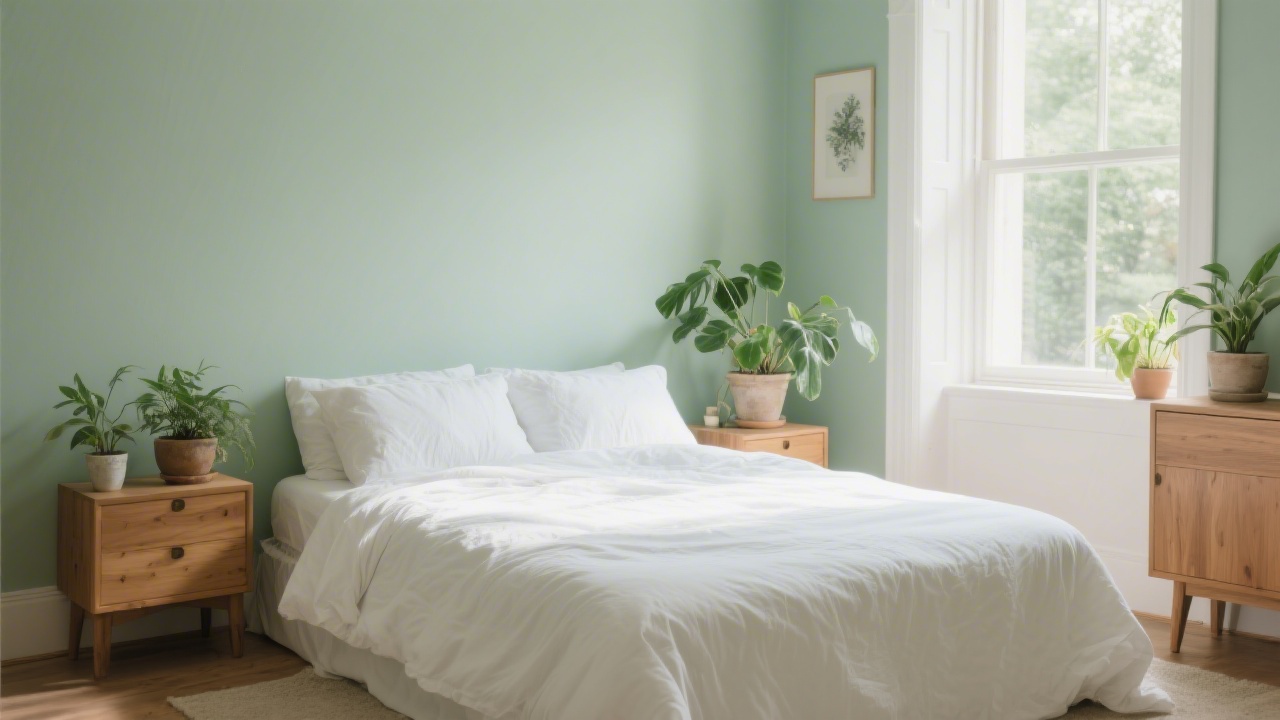
- Pale sage: The most consistently recommended green for sleep environments. Low saturation, high value. Almost gray-green. Associates strongly with the natural world without being stimulating. Benjamin Moore "Healing Aloe" (1562), Farrow & Ball "Mizzle" (266).
- Muted olive: Warmer than sage, with yellow undertones. Pairs well with warm wood and terracotta accents. Avoid if the room is north-facing — olive can read as brown in low light.
- Soft celadon: Blue-green with high value and low saturation. The most spa-like of the sleep greens. Works exceptionally well in bathrooms-adjacent master bedrooms.
- Avoid: Lime green, hunter green, emerald, neon green. High-saturation or high-value greens are stimulating — they are the colors of spring energy, not evening rest. Deep forest green works as a single accent wall but becomes oppressive at full-room saturation.
Bringing Nature Into a Green Bedroom
The biophilic benefit of green walls is amplified by live plants. Pothos, snake plants, and peace lilies are low-maintenance and effective. Beyond psychology, plants slightly raise humidity (often beneficial for sleep, as dry air irritates airways) and produce oxygen. One or two medium-size plants on a dresser or windowsill is enough — the goal is visual presence, not a greenhouse.
Natural materials complete the palette: linen or cotton bedding (never synthetic), wood furniture with visible grain, a jute or wool rug. The overall impression should be "forest cabin" rather than "painted room."
Combining Green With Other Colors
Green's best sleep-environment pairings:
- Warm white: The most reliable combination. Sage walls + warm white linen is a proven pairing in residential and hotel sleep spaces. Use white with cream or yellow undertones, not cool blue-white.
- Warm wood (oak, walnut): Organic warmth that grounds the green palette. Avoids the "medical" feel that some greens can produce against all-white or all-metal environments.
- Muted terracotta accents: One throw pillow or ceramic vase. The complementary contrast (green/red on the color wheel) reads as natural — like moss on clay. Keeps the room from feeling one-dimensional.
- Avoid: Purple and pink accents — they pull the palette toward a color range with no coherent emotional signature for sleep.
See how bedroom layout affects how color reads at different distances in our bedroom floor plan guide. For furniture placement that maximizes visual calm, see bedroom furniture spacing.
The Mattress in a Green Bedroom
A biophilic bedroom designed for sleep deserves a mattress built for sleep. The Saatva Classic uses an organic cotton cover and natural materials throughout its construction — consistent with the material ethos of a well-designed green bedroom. Its individually wrapped coil system provides responsive support, and the Euro pillow top delivers the pressure relief that reduces repositioning (and therefore sleep disruption) through the night.
Frequently Asked Questions
Is green a good color for a bedroom?
Yes. Green ranks second in sleep research after blue. Its association with nature and living systems triggers the parasympathetic nervous system and reduces cortisol. Pale sage and muted olive are the most consistently effective shades for sleep environments.
What shade of green is best for a bedroom?
Pale sage (low saturation, high value, gray-green) is the most recommended shade for sleep. It reads as natural without being energizing. Muted olive and soft celadon are strong alternatives depending on room orientation and existing furniture.
Can dark green work in a bedroom?
Dark green (forest green, deep olive) can work as a single feature wall — particularly the headboard wall — to create an enveloping effect. At full-room saturation, dark green absorbs too much light and can feel oppressive rather than calm.
Do real plants in a bedroom help sleep?
Research suggests modest benefits: plants slightly raise humidity (beneficial for airway comfort), produce oxygen, and add to the biophilic visual environment. The effect is real but small — the color of walls and quality of bedding have larger measurable impacts on sleep quality.
What colors pair best with green bedroom walls?
Warm white, warm wood tones (oak, walnut), and muted terracotta accents are the most consistent pairings. Avoid purple and pink. The goal is a palette that reads as "natural" rather than "decorative."
Ready to complete your sleep bedroom? The Saatva Classic is our top-rated luxury innerspring hybrid — individually wrapped coils, organic cotton cover, three firmness options, and white-glove delivery. See current pricing and configurations at Saatva.