
 by
by Ready to complete your sleep bedroom? The Saatva Classic is our top-rated luxury innerspring hybrid — individually wrapped coils, organic cotton cover, three firmness options, and white-glove delivery. See current pricing and configurations at Saatva.
Gray is the most common bedroom color among interior designers working on sleep-focused projects — and for a practical reason. Gray is visually neutral: it makes no demands on the brain. Unlike blue (which has calming psychological associations) or green (which triggers nature responses), gray simply recedes. It provides a background against which the brain does not feel compelled to process, categorize, or respond. That cognitive silence supports the transition from wakefulness to sleep.
The Psychology of Gray in Sleep Spaces
Research on color and arousal consistently shows that high-saturation colors increase measurable physiological markers of alertness — heart rate, skin conductance, cortisol. Achromatic neutrals (white, gray, beige) do not. Among neutrals, gray occupies the middle ground: it is less reflective than white (reducing sensitivity to light changes) and less warm than beige (which some sleepers find slightly stimulating due to orange undertones).
The risk with gray is the opposite of stimulation: depression and coldness. A room that reads as institutional or colorless does not create the physiological safety cue (warmth, softness, familiarity) that facilitates sleep onset. The design challenge is to use gray in a way that feels quiet, not bleak.
Cool Gray vs. Warm Gray: Which to Choose
All grays have an undertone. Identifying it before you buy paint will save you from a room that looks blue-gray under incandescent light and green-gray under daylight.
- Warm grays (greige, mushroom, putty): Gray with beige or pink undertones. These test best for sleep environments because the warm undertone adds psychological comfort without saturation. Benjamin Moore "Revere Pewter" (HC-172), Sherwin-Williams "Accessible Beige" (SW 7036). Best for north-facing rooms that need warmth.
- Cool grays (blue-gray, silver): Gray with blue or purple undertones. These pair naturally with blue-toned bedding and create a crisp, minimal aesthetic. Best for south-facing rooms with abundant warm light that can counterbalance the coolness. Farrow & Ball "Purbeck Stone" (275).
- True neutral grays: Balanced undertones. Hardest to find — most "neutral" grays reveal undertones under specific lighting. Test with large paint chips (at least 8"×8") in your specific room lighting before committing.
How to Avoid the Hospital Effect
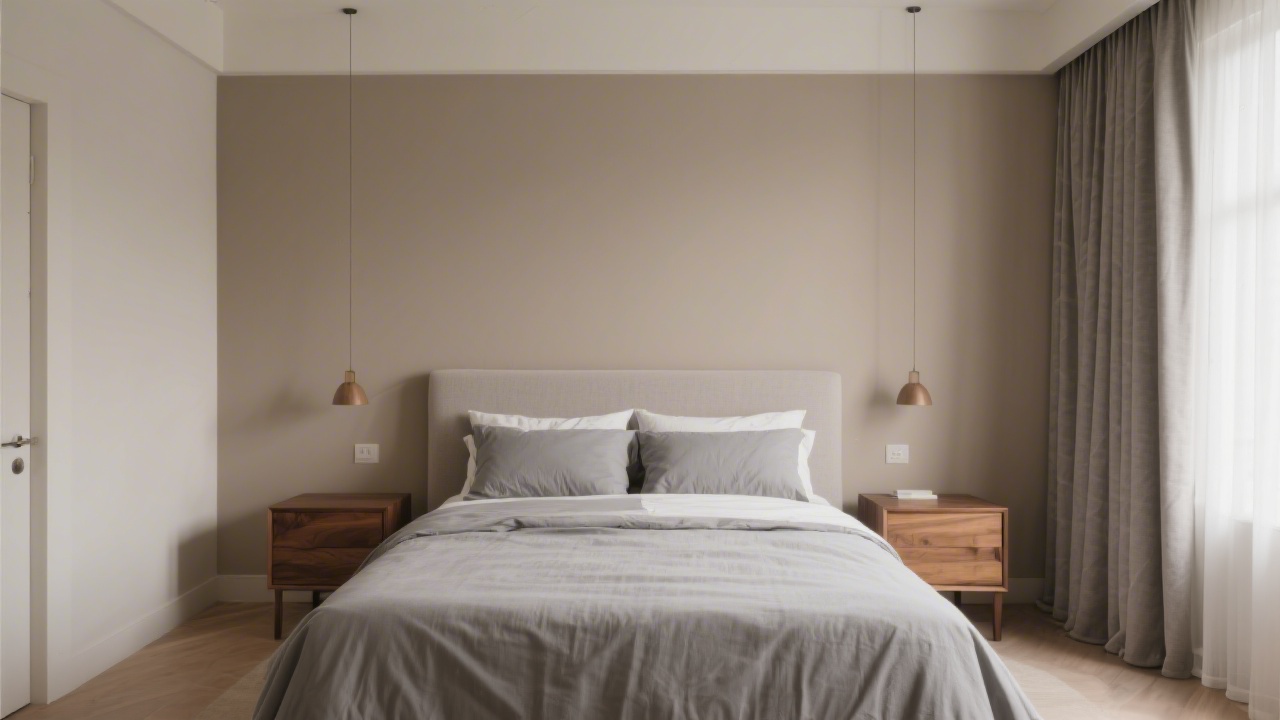
Gray walls become clinical when every other element in the room is also cool-toned and reflective. The antidote is layering with organic warmth: raw linen bedding, a jute or wool rug, wood furniture with visible grain, a ceramic lamp in a natural tone. These materials introduce warmth and texture that prevents the gray from reading as sterile.
Lighting temperature is especially critical in gray bedrooms. Bulbs at 2700K–3000K (warm white) pull the warm undertones out of greige walls. Bulbs at 4000K–5000K (cool daylight) will make the same wall look slate gray. For nighttime sleep preparation, stay at or below 2700K.
Best Pairing Colors for Gray Bedrooms
Gray is a background, not a palette. It works with almost any accent color, but for sleep-specific rooms, the best pairings are those that maintain calm:
- Soft white trim: Creates definition without contrast shock. Use a white with yellow or pink undertones (not blue-white) to maintain warmth.
- Muted sage or dusty blue accents: One throw pillow, one piece of art. Enough color to prevent the room from reading as a grayscale photograph.
- Warm wood tones: The single most reliable gray pairing. Walnut or medium oak furniture visually anchors a gray room and provides the warmth the wall color does not.
For additional layout and spacing guidance that affects how color reads in a room, see our bedroom furniture spacing guide and the research on bedroom floor plans for sleep.
The Mattress in Your Gray Bedroom
A well-designed gray bedroom sets the stage. The mattress determines the outcome. The Saatva Classic is a luxury innerspring hybrid — individually wrapped coils, a foam encasement, and an organic cotton Euro pillow top — that delivers pressure relief and support without heat retention. It ships with white-glove delivery: brought into your room, assembled, and old mattress removed.
Frequently Asked Questions
Is gray a good color for a bedroom?
Yes. Gray is visually neutral and does not stimulate the brain's arousal systems the way saturated colors do. It is the most commonly specified color in sleep-focused interior design. The key is choosing the right undertone (warm grays for comfort, cool grays with warm accents) and pairing with organic materials to prevent a clinical feel.
What is the difference between cool gray and warm gray for sleep?
Cool grays have blue or purple undertones and feel crisp and minimal. Warm grays (greige) have beige or pink undertones and feel more comfortable and residential. For sleep environments, warm grays are generally more effective because they add psychological warmth without saturation.
How do I prevent a gray bedroom from looking cold?
Layer with warm-toned materials: natural linen bedding, a jute or wool rug, wood furniture, ceramic accessories. Use bulbs at 2700K (warm white) rather than cool daylight bulbs. Choose a gray with a beige or pink undertone rather than a blue undertone.
Should the bedding match the gray walls?
Not exactly. A monochromatic gray-on-gray room can feel flat. The best approach is to pair gray walls with white or warm linen bedding, using a muted accent color (sage, dusty blue, terracotta) in a throw or pillow. This creates visual depth without stimulating contrast.
Is dark gray or light gray better for sleep?
Light to mid-value gray is generally better. Dark gray absorbs light and can make a room feel smaller and more pressured — which some sleepers find enveloping (positive) but others find oppressive (negative). A dark gray headboard wall with light gray remaining walls is a good compromise that tests well for the "cocoon" effect without overwhelming the space.
Ready to complete your sleep bedroom? The Saatva Classic is our top-rated luxury innerspring hybrid — individually wrapped coils, organic cotton cover, three firmness options, and white-glove delivery. See current pricing and configurations at Saatva.