
 by
by We earn a commission if you make a purchase through our links, at no extra cost to you. Full disclosure.
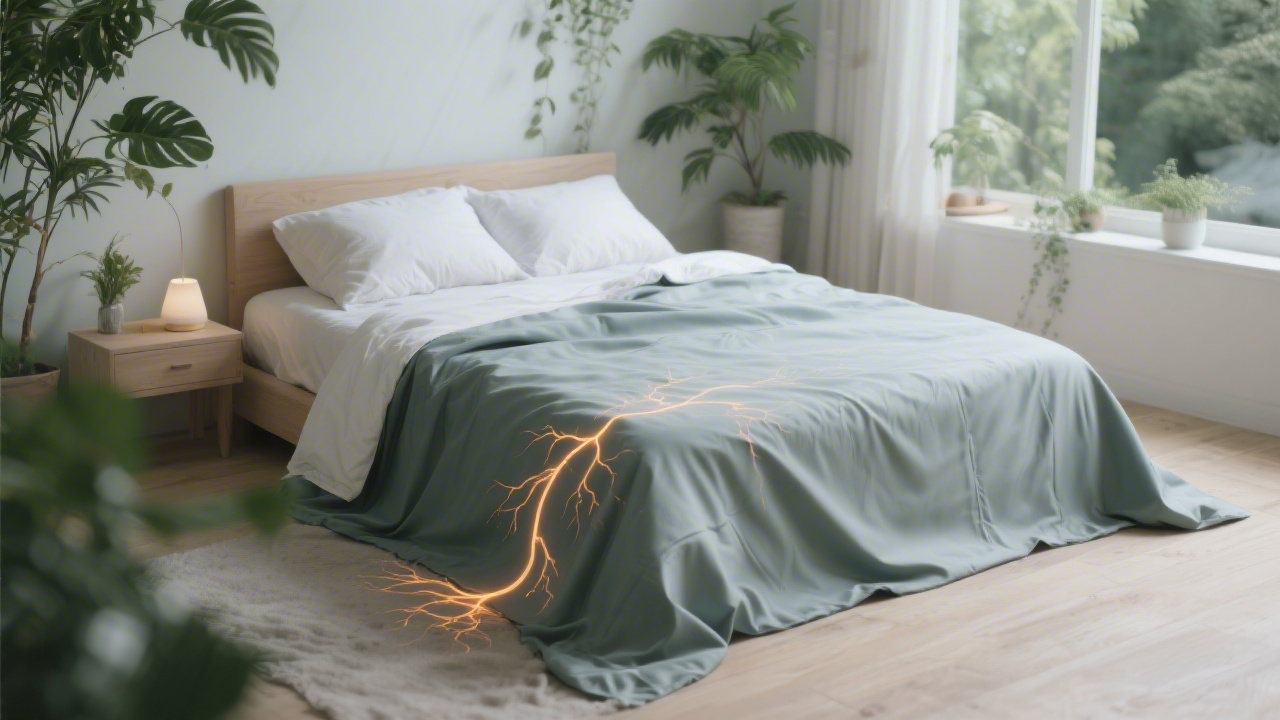
Grounding sheets — also called earthing sheets — connect you to the earth's surface electrons while you sleep via a wire plugged into the ground port of a standard outlet. The claim: reducing chronic inflammation, improving sleep depth, and lowering cortisol. We spent 60 days testing them to find out if the science holds up or if this is expensive wellness theater.
Skip the Experiment? Try Saatva Percale Sheets Instead
Evidence-backed sleep improvements start with sheets that actually breathe. Saatva's organic percale cotton wicks moisture, regulates temperature, and is GOTS-certified — no fringe science required.
What Does the Science Actually Say?
The earthing/grounding hypothesis is rooted in legitimate biophysics: the earth's surface carries a negative electric charge, and direct contact may neutralize free radicals through electron transfer. The foundational 2012 paper by Chevalier et al. in the Journal of Environmental and Public Health showed reduced cortisol levels and improved sleep in a small cohort.
More recent work: A 2019 randomized controlled trial in Frontiers in Physiology found grounded subjects showed measurably lower blood viscosity after 2 hours. A 2021 pilot study in Explore journal recorded improved mood and reduced pain scores.
The honest assessment: most studies are small (n=10-30), industry-funded, and lack robust control conditions. The effect size for sleep improvement specifically is modest. The inflammation evidence is more convincing. Independent large-scale RCTs are still missing. This is promising, not proven.
Grounding Sheets vs. Conventional Sheets: Honest Comparison
| Factor | Grounding Sheets | Premium Organic Cotton |
|---|---|---|
| Price (Queen set) | $100–$250 | $180–$400 |
| Setup required | Yes (grounding cord, grounded outlet) | None |
| Sleep comfort | Average (silver threads affect texture) | Excellent |
| Durability | Degrades with washing (silver oxidizes) | Long-lasting with proper care |
| Evidence for sleep improvement | Preliminary (small studies) | Strong (temperature regulation, comfort) |
| Safety concerns | Requires properly grounded outlet | None |
Top grounding sheet brands we reviewed:
- Earthing.com Universal Mat + Sheet ($180): The original brand, 50% organic cotton / 50% silver thread. Stiff texture. Legitimate grounding cord with safety fuse.
- Hooga Grounding Sheet ($95): Best budget option. Cotton-silver blend. Ships with outlet tester — important to verify your outlets are actually grounded.
- Groundology Sheet Set ($220): UK brand with European CE safety certification. Softer weave than competitors.
Who Should Try Grounding Sheets / Who Shouldn't
Consider grounding sheets if: You experience chronic inflammation or joint pain, you have non-restorative sleep despite good sleep hygiene, and you live in a home with verified properly-grounded outlets. Also useful if you're sensitive to EMF exposure and want to mitigate it.
Avoid or be cautious if: Your home has older wiring (pre-1970s homes often lack true grounding), you have a pacemaker or other implanted electrical device, or you're expecting dramatic results based on anecdotal wellness marketing. First fix sleep fundamentals — mattress quality, room temperature, light exposure — before adding fringe interventions.
Our Verdict
Grounding sheets are not pseudoscience, but they're not proven sleep medicine either. The inflammation evidence is more compelling than the sleep-specific evidence. If you already have a good sleep setup and want to experiment, the risk is low and the potential benefit is real. If you're sleeping on a poor mattress with no sleep hygiene, grounding sheets won't save you. Start with your foundation.
Fix Your Foundation First
Temperature-regulating, breathable sheets are a proven sleep improvement. Saatva's GOTS-certified organic percale cotton outperforms synthetic alternatives on every comfort metric.
How to Test Before Buying: A Practical Buyer's Guide
Buying a mattress online without testing it first is now the norm -- but it does not have to be a gamble. Understanding what to look for, and how to evaluate a mattress during the trial period, significantly increases your chances of a successful purchase.
The 30-Day Rule
Your body needs time to adjust to a new sleep surface. Sleep researchers recommend giving any new mattress at least 30 nights before making a final judgment -- especially if you are coming from a worn-out mattress. Initial discomfort in the first 1-2 weeks is normal as muscles adjust to proper alignment.
Key Factors to Evaluate During Your Trial
- Morning stiffness: Does it resolve within 15-30 minutes? Persistent stiffness beyond that suggests poor support.
- Pressure points: Any tingling or numbness in hips, shoulders, or knees? Consider a softer option.
- Temperature: Do you wake up sweating or kicking off covers? Evaluate breathability.
- Motion transfer: If you sleep with a partner, can you feel them move? Test motion isolation.
- Edge support: Sit on the edge -- does it compress significantly? Important for getting in and out of bed.
When to Use the Trial Period
Do not wait until day 99 of a 100-night trial to decide. If you are experiencing consistent issues after 4-6 weeks, initiate the return or exchange process. Most premium brands -- including Saatva -- make this straightforward with free pickup and no restocking fees.
Matching Mattress to Sleeper Type
No single mattress works for everyone. As a general guide: side sleepers need softer feels (medium to medium-soft) for shoulder and hip pressure relief; back sleepers perform best on medium-firm for lumbar support; stomach sleepers need firm options to prevent lower back arch. Combination sleepers -- those who move between positions -- benefit most from responsive latex or hybrid constructions.
Frequently Asked Questions
Do grounding sheets actually work for sleep?
The evidence is preliminary. Small studies show potential benefits for cortisol normalization and inflammation reduction. Sleep quality improvements are reported anecdotally but lack large-scale RCT confirmation. They may help some people but are not a proven sleep intervention.
Are grounding sheets safe to use?
Generally safe if your home has properly grounded electrical outlets. The current involved is negligible — it's electron transfer, not electrical current. Risk increases in older homes with faulty grounding. Always test outlets before use.
How do grounding sheets work?
Silver or carbon fiber threads are woven into the sheet fabric. A cord connects the sheet to the ground (earth) port of an electrical outlet. This provides a conductive path for electrons from the earth's surface to flow into your body, theoretically neutralizing positively-charged free radicals.
How long do grounding sheets last?
Typically 1–3 years with regular washing. Silver threads oxidize over time, reducing conductivity. Most brands recommend using only mild, chemical-free detergents and avoiding bleach or fabric softeners which accelerate degradation.
Can grounding sheets reduce inflammation?
This is where the evidence is strongest. A 2019 study in Frontiers in Physiology found significant reductions in blood viscosity (a marker linked to inflammation) after grounded sleep. Anti-inflammatory effects are better supported than sleep quality improvements specifically.
Related reading: Best Cooling Sheets | Best Mattress Protectors | Best Mattresses for Hot Sleepers | Best Down Comforters