
 by
by A headboard changes the visual weight of a bedroom more than almost any other single piece of furniture. It also serves practical purposes: protecting the wall, providing back support for reading, and anchoring the bed's position in the room. The type you choose affects all of these functions differently.
TL;DR
Bed frame buying = material (solid wood best), weight capacity, box spring requirement, assembly complexity, and aesthetic. Saatva Santorini ($1,295) is our premium pick for solid kiln-dried wood + lifetime warranty.
Jump to section
The 7 Main Types of Headboards
1. Upholstered Headboards
Best for: Comfort, sound absorption, primary bedrooms
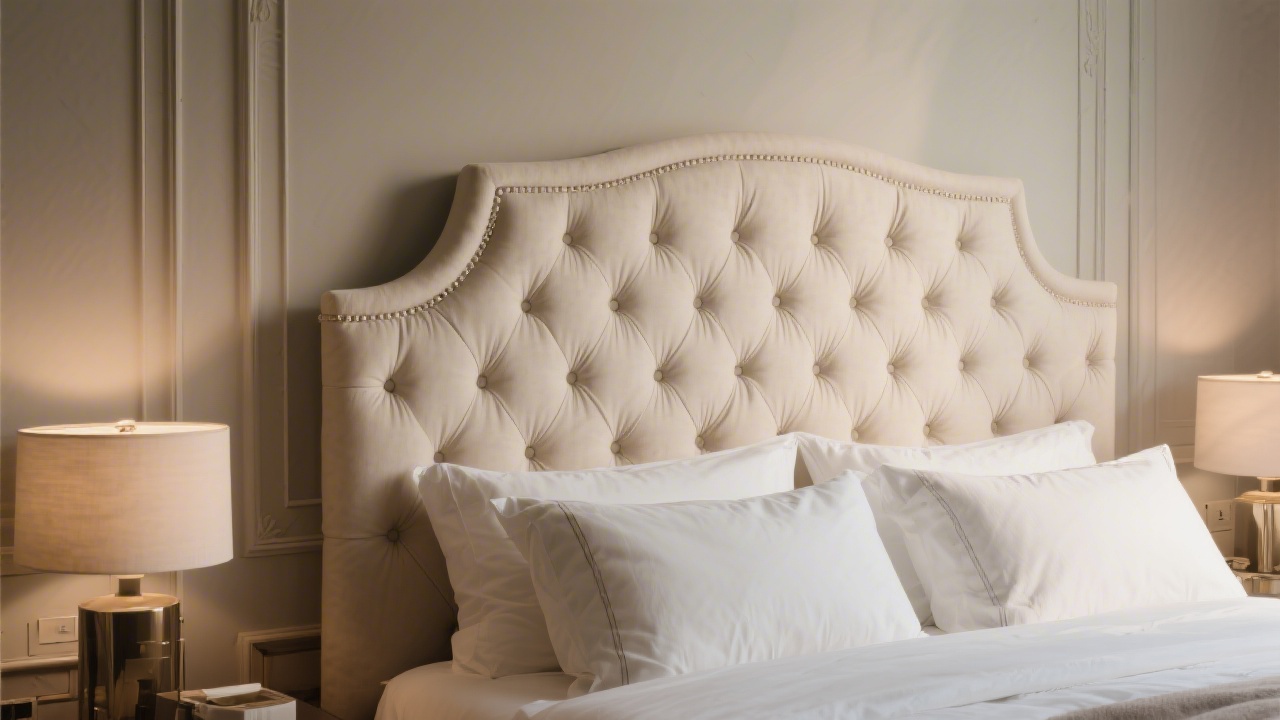
Upholstered headboards are padded and covered in fabric (linen, velvet, boucle) or leather. They're the most popular type for master bedrooms because they're comfortable to lean against and absorb sound better than hard surfaces.
Pros: Comfortable, wide style range, works in most room sizes, reduces echo
Cons: Accumulates dust, harder to clean, fabric can snag or stain
Styles within this type: Tufted (button pattern), panel (flat, clean), wingback (extends to sides), arched (curved top)
2. Wooden Headboards
Best for: Farmhouse, Scandinavian, mid-century modern aesthetics
Wood headboards range from solid hardwood slabs to slatted designs. Solid wood is durable and develops character over time. Slatted designs add airiness to smaller rooms.
Pros: Durable, easy to clean, ages well, pairs with many aesthetics
Cons: Less comfortable to lean against without pillows, heavier to install
Room size note: A wide solid wood headboard in a small room can feel heavy. In rooms under 150 sq ft, opt for slatted wood designs that allow visual breathing room.
3. Metal Headboards
Best for: Industrial, vintage, eclectic bedrooms
Metal headboards - wrought iron, brushed steel, brass - are lightweight, durable, and distinctive. They work particularly well in rooms with other metal accents (light fixtures, hardware).
Pros: Lightweight, easy to clean, long-lasting, distinctive look
Cons: Cold to touch, can be uncomfortable to lean against, may rattle if not secured properly
Installation note: Metal headboards attached to the bed frame can develop rattles over time. Wall-mounted versions eliminate this issue entirely.
4. Floating (Wall-Mounted) Headboards
Best for: Modern aesthetics, rooms where bed position may change
Floating headboards mount directly to the wall, independent of the bed frame. This allows for flexible bed positioning and creates a clean, architectural look. They can extend floor-to-ceiling for dramatic effect.
Pros: No rattle, flexible placement, architectural impact, works with any frame
Cons: Requires wall anchoring (can damage plaster), not ideal for renters, bed movement can create a gap between headboard and mattress
5. Bookcase / Storage Headboards
Best for: Small bedrooms, bedrooms without nightstands
Storage headboards include shelves, cubbies, or drawers built into the headboard structure. They're functional in tight spaces where floor area is limited.
Pros: Storage without floor footprint, charging station integration in modern versions
Cons: Bulkier than standard headboards, limits positioning flexibility, can look utilitarian
6. Rattan / Wicker Headboards
Best for: Coastal, bohemian, tropical bedroom aesthetics
Natural rattan brings texture and warmth to a bedroom without visual weight. Lightweight and easy to install. The airy construction works particularly well in rooms that receive abundant natural light.
Pros: Lightweight, textured, works in warm climates, easy to move
Cons: Less durable than wood or metal, can snag fabrics, limited aesthetic range
7. Panel / Upholstered Wall Panels
Best for: Hotel-style bedrooms, rooms where the bed is the focal point
Large upholstered panels that cover a significant portion of the wall behind the bed. These create a statement visual anchor and dramatically increase sound absorption in the room.
Pros: Maximum visual impact, excellent acoustics, luxurious feel
Cons: High cost, requires professional installation, difficult to remove or change
Headboard Mounting Methods
Frame-Attached
Bolts directly to the bed frame via brackets. The most common method. Straightforward to install but can develop play (and noise) over time as bolts loosen with mattress movement.
Wall-Mounted
Anchored to wall studs, independent of the bed. Stable, no rattle risk, but requires precision placement to align with the bed. Best for permanent bedroom setups.
Freestanding
Stands independently, with feet that rest on the floor. No drilling, no frame attachment. Good for renters or frequently rearranged rooms. Can shift with vigorous movement.
Choosing by Room Size
Frequently asked questions about bed frames
Our top frame pick
Saatva Santorini Platform Bed — from $1,295
Upholstered platform bed with wooden slats at 2" spacing (foam-mattress-safe), rated to 1,000 lbs. 365-night trial, free white-glove delivery and assembly.
Do you need a box spring with a modern mattress?
Usually no. Most mainstream foam, hybrid, and latex mattresses are designed to work on a solid platform, slatted platform, or foundation — all of which can replace a box spring. Box springs are still needed for old-style innerspring mattresses that assume a flexible base. A modern Saatva Foundation is a direct replacement.
What slat spacing works with a foam mattress?
Slats must be 3" or less apart or the mattress warranty is usually void. 2" is safer. Wider spacing lets foam mattresses sag into the gaps within months and creates an uneven surface.
Do I need a platform bed or can I use a regular frame?
A platform bed is a self-contained frame with slats/solid deck built in. Regular frames are metal rails that need a box spring or foundation on top. Platform beds = simpler, shorter overall height. Regular frames + foundation = more traditional height, box-spring flexibility. Both work.
How much weight can a bed frame hold?
Queen frames typically handle 500–700 lbs; king frames 700–1,000 lbs. Heavy-duty frames rated to 1,500+ lbs exist for heavier sleepers. The Saatva Santorini is rated to 1,000 lbs.
Do adjustable bases work with every mattress?
Most foam, hybrid, and latex mattresses work. Traditional innerspring mattresses with interconnected coils usually don't — they lose support when flexed. If you're buying an adjustable base, confirm with your mattress brand that the model is "adjustable-base compatible".
Under 150 sq ft: Avoid wide solid panels. Opt for slatted wood, metal, or rattan that allow visual space to pass through.
150–250 sq ft: Most styles work. Upholstered headboards in neutral tones are the most versatile choice.
Over 250 sq ft: Statement headboards - large upholstered panels, floor-to-ceiling floating designs - work well and fill the visual space appropriately.
See our best bed frame guide to match your headboard style to a compatible frame, and our bedroom setup guide for placement recommendations.
The Saatva Santorini Bed Frame pairs with a range of headboard styles and is built to accommodate both frame-attached and wall-mounted options without modification.
→ See the Saatva Santorini Bed Frame
Frequently Asked Questions
What is the most popular type of headboard?
Upholstered headboards are the most popular type for primary bedrooms. They're comfortable to lean against, absorb sound, and come in the widest variety of styles and fabrics.
Do I need a headboard?
No, but they serve real purposes: wall protection, reading comfort, visual anchoring for the bed, and minor sound absorption. Whether you need one depends on how you use your bedroom.
What height should a headboard be?
Standard headboard height is 14–58 inches above the top of the mattress. For sitting up in bed comfortably, at least 28–36 inches above the mattress is recommended. Taller ceilings can accommodate floor-to-ceiling designs (48–60+ inches).
Can I attach any headboard to any bed frame?
Most headboards use standard bracket spacing, but not all frames include headboard brackets. Check your frame's specifications. Universal headboard brackets ($15–$30) can be added to most frames to accommodate any headboard style.
Are floating headboards hard to install?
Floating headboards require locating wall studs and anchoring properly - a 30–60 minute job for most people with basic tools. The main challenge is precise height placement so the headboard aligns with the top of the mattress.