
 by
by Editor's Pick — Best Sleep Investment
Saatva Classic Mattress — Engineered for Deeper Sleep
Individually wrapped coils + dual-tempered steel support system = the spinal alignment your brain needs to complete all 4 sleep cycles.
The Hippocampus: Memory's First Stop
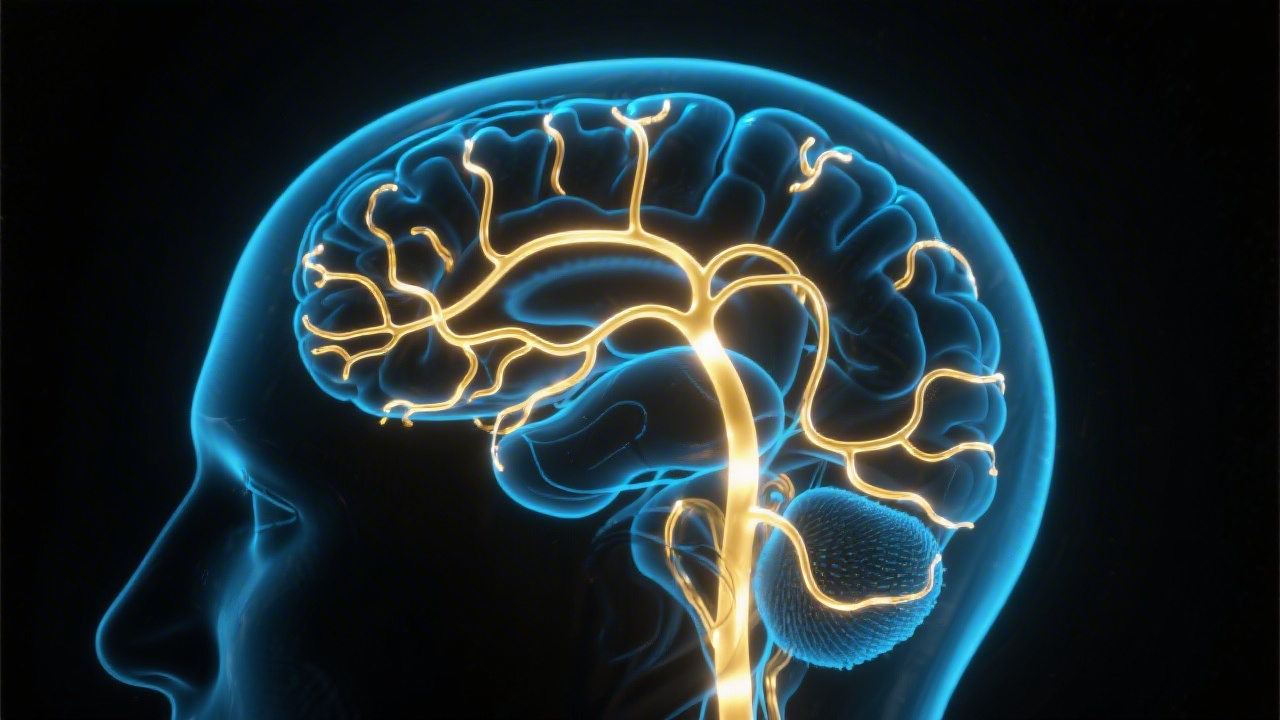
The hippocampus — a seahorse-shaped structure in the medial temporal lobe — is the brain's primary site for forming new declarative memories: facts, events, experiences, and their spatial and temporal context. It acts as a temporary holding buffer, encoding experiences from the day and preparing them for transfer to cortical long-term storage.
What makes the hippocampus critical to sleep science is what happens when you close your eyes: the hippocampus does not simply rest. It actively replays the day's experiences, strengthening neural traces and orchestrating their transfer to neocortical networks where they will be stored permanently.
Two-Stage Memory Consolidation: The Standard Model
The dominant model of sleep-dependent memory consolidation, developed by Buzsáki (1989) and refined by subsequent researchers, proposes a two-stage process:
- Waking encoding (hippocampus): During the day, the hippocampus rapidly encodes new experiences using its fast synaptic plasticity. These memories are held in a labile, temporary form that is vulnerable to interference and forgetting.
- Sleep consolidation (hippocampus → neocortex): During NREM sleep, the hippocampus replays compressed sequences of waking neural activity — a process called "memory replay" or "sharp-wave ripples." These replays are coordinated with cortical slow oscillations and thalamic sleep spindles to drive the transfer of memory traces from hippocampus to neocortex for long-term storage.
After successful consolidation, memories become hippocampus-independent — they can be retrieved even if hippocampal function is disrupted.
Sharp-Wave Ripples and Memory Replay
The mechanisms of hippocampal memory replay have been studied extensively in rodents (where single neurons can be recorded during sleep) and more recently in humans via intracranial EEG. During NREM sleep, the hippocampus generates sharp-wave ripples — bursts of high-frequency (80–100 Hz) oscillatory activity that compress and replay the sequence of place cells (and other neural patterns) active during waking experiences.
This replay occurs at approximately 20x the original speed, allowing hours of waking experience to be "processed" during a single sleep cycle. The replays are preferentially directed toward recently learned, emotionally significant, and rewarded experiences — the hippocampus is not a neutral recorder but a selective editor.
Sleep, the Hippocampus, and Alzheimer's Disease
The connection between hippocampal sleep function and dementia risk is one of the most significant recent findings in sleep medicine. Several converging lines of evidence establish the relationship:
- Alzheimer's pathology begins in the hippocampus: Amyloid-beta plaques and tau tangles preferentially accumulate in the entorhinal cortex and hippocampus in early Alzheimer's disease — the same regions most critical for sleep-dependent memory consolidation.
- Amyloid clearance during sleep: The glymphatic system — active primarily during NREM sleep — clears amyloid-beta from the brain's interstitial spaces at roughly twice the rate during sleep compared to waking. Chronic sleep deprivation accelerates amyloid accumulation.
- Disrupted sleep precedes dementia: Multiple longitudinal studies have found that self-reported poor sleep quality 15–25 years before diagnosis is associated with significantly increased Alzheimer's risk, even after controlling for other risk factors.
Learning, Exams, and Sleep: Practical Implications
The hippocampus's dependence on sleep for memory consolidation has direct practical implications for learning:
- Sleep before learning: Walker's group at Berkeley showed that a 90-minute nap after learning (vs. remaining awake) produced a 20% improvement in learning ability afterward. Sleep clears the hippocampus's encoding buffer, making room for new information.
- Sleep after learning: Post-learning sleep within 24 hours provides the greatest consolidation benefit. The widely documented "spacing effect" (distributing study sessions over multiple days) works partly because each night of sleep consolidates the previous session's learning.
- All-night studying is counterproductive: Sleep deprivation impairs hippocampal encoding capacity by up to 40% (Yoo et al., 2007), meaning information studied while sleep-deprived is far less likely to be retained.
Frequently Asked Questions
What does the hippocampus do during sleep?
During NREM sleep, the hippocampus replays compressed sequences of neural activity patterns from waking experiences. These replays — called sharp-wave ripples — are coordinated with cortical slow oscillations and thalamic sleep spindles to transfer memories from the hippocampus to neocortical long-term storage.
How does poor sleep affect hippocampal memory function?
Sleep deprivation reduces hippocampal encoding capacity by approximately 40%, according to fMRI studies. Memories formed during sleep deprivation show reduced hippocampal activation and poorer long-term retention. Additionally, without sleep's consolidation process, memories remain in a fragile state and are highly vulnerable to interference and forgetting.
Why does Alzheimer's disease affect sleep and memory together?
Alzheimer's pathology begins in the entorhinal cortex and hippocampus — the same regions critical for sleep-dependent memory consolidation. As these regions are destroyed, both new memory formation and the sleep-based consolidation process fail together. Additionally, amyloid-beta accumulates faster with poor sleep, creating a bidirectional relationship between sleep disruption and Alzheimer's progression.
Does napping help hippocampal memory consolidation?
Yes. Research shows that a 90-minute nap containing NREM Stage 2 and Stage 3 sleep can substantially consolidate hippocampal memories and restore encoding capacity. Even shorter naps (20–45 minutes) containing NREM Stage 2 improve memory performance. The key appears to be the presence of sleep spindles, which facilitate hippocampal-neocortical memory transfer.
What is the connection between sleep spindles and hippocampal memory?
Sleep spindles — bursts of 12–15 Hz oscillatory activity generated in the thalamus during NREM Stage 2 — are thought to provide the timing signal that coordinates hippocampal sharp-wave ripples with neocortical slow oscillations, enabling memory transfer. Individuals with more sleep spindles per night show better declarative memory consolidation, and spindle density decreases with age in parallel with memory decline.
Related reading: Thalamus and sleep spindle generation | Default mode network and memory integration | Brainstem sleep-wake switch
Upgrade Your Sleep Environment
The neuroscience is clear: mattress quality directly affects brain function. The Saatva Classic delivers the support your brain needs to consolidate memories, regulate emotions, and restore prefrontal function.