
 by
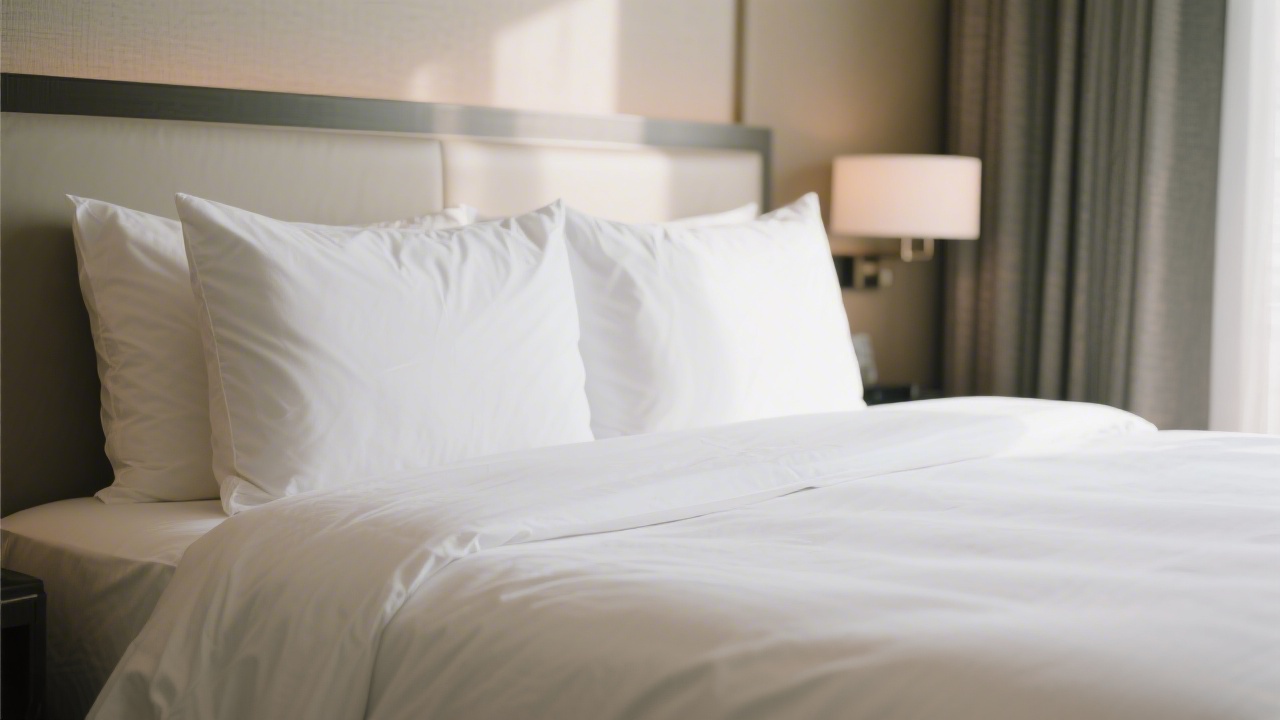
by Walk into any five-star hotel and the bedding hits differently. The white looks whiter. The sheets look sharper. The whole bed radiates a cleanliness that home laundry rarely achieves. This is not an accident — it is a repeatable formula built around three specific factors.
Making your bed like a hotel starts with understanding what hotels actually buy. The linen programs at major chains like Westin and Hilton are engineered for durability, appearance, and laundry-cycle longevity simultaneously.
Affiliate link — we earn a commission at no cost to you.
Factor 1: The Fabric Is Cotton Percale, Not Microfiber
Hotels that want a crisp, cool, matte-white look use 100% long-staple cotton percale. Percale is woven in a one-over-one-under pattern that produces a tight, flat surface. Thread count typically runs 200–400. This is deliberately lower than the inflated 1,000-thread-count sets sold in retail — because tighter weaves at moderate thread counts are actually crisper and more breathable.
Microfiber and polyester blends pill faster, trap heat, and — critically — cannot be laundered at the high temperatures hotels use. They also develop a faint grey cast after 20–30 wash cycles, which explains why budget hotel sheets look dingy within months.
What to look for when buying hotel-equivalent sheets:
- 100% long-staple or extra-long-staple cotton (Egyptian, Pima, or Supima)
- Percale weave (not sateen — sateen is silkier but more prone to snagging)
- Thread count 200–400 (ignore anything marketed above 600)
- No polyester in the fiber blend
Factor 2: Optical Brighteners and Hot-Water Laundering
Commercial laundry at hotels uses water temperatures between 60°C and 90°C (140°F–194°F). Most home washing machines are set at 30°C–40°C by default. Hot-water washing kills bacteria and dissolves body oils that accumulate in fabric fibers — oils that cause that yellow tint that develops over time on home sheets.
Optical brightening agents (OBAs) are compounds that absorb UV light and re-emit it as visible blue light, counteracting the natural yellowing of white cotton. Commercial laundry detergents contain much higher concentrations of OBAs than consumer products. At home, you can get partial results by adding a scoop of oxygen-based whitener (sodium percarbonate) to your wash cycle.
Home replication protocol:
- Wash at the hottest temperature your sheets allow (usually 60°C / 140°F for quality percale)
- Add oxygen-based whitener (not chlorine bleach — bleach degrades cotton fibers)
- Use a detergent that contains OBAs (most quality laundry detergents do)
- Dry on medium heat and remove promptly to prevent wrinkle-set
Factor 3: Industrial Pressing (and the Home Alternative)
Hotels use flatwork ironers — large commercial machines that pass damp linens between heated rollers, pressing and drying simultaneously. The result is a surface flatness that no home iron can fully replicate.
The closest home alternative: remove sheets from the dryer while still slightly damp and stretch them taut over the mattress immediately. The heat from your body and the tension of the fitted corners does much of the smoothing work. For flat sheets, pressing with a hot iron while damp (not dry) is far more effective than ironing after the sheet has fully dried.
The trick professional housekeepers use for the hospital corner: the flat sheet is tucked in at the foot, then a 45-degree fold is made at each bottom corner before tucking the side in. This creates tension across the whole sheet surface that naturally removes wrinkles.
The Sheet Set Hotels Actually Use
Many luxury hotel chains source custom percale through commercial linen suppliers. Westin uses a proprietary Heavenly Bed linen program. The Ritz-Carlton uses Frette. What they have in common: long-staple cotton percale at 300 thread count, white (never off-white), and laundered on a commercial cycle multiple times per week.
For home use, the goal is to approximate this with retail-available percale. Look for sheets with a crisp hand feel in the store — if they feel soft and silky out of the bag, they are likely sateen, not percale.
See our full comparison of cooling bedding options and our guide to the layered bedding look for styling context.
Replicate the Hotel White Look at Home
Saatva's Percale Sheet Set uses long-staple cotton in a classic percale weave — the same construction used in luxury hotel linen programs.
Frequently Asked Questions
Why do hotel sheets feel so much crisper than home sheets?
Hotel sheets are almost always 100% cotton percale, laundered at high temperatures with commercial detergents containing optical brighteners. The combination of the tight percale weave, hot-water washing, and industrial pressing produces a crispness that microfiber and low-temperature home washing cannot replicate.
What thread count do hotels use for sheets?
Most luxury hotels use percale sheets in the 200–400 thread count range. Higher thread counts do not mean better sheets — they often indicate thinner individual threads that wear faster. A 300 TC long-staple cotton percale sheet outperforms a 1,000 TC polyester blend in every measurable way.
Can I use bleach to keep white sheets white like hotels do?
Hotels use oxygen-based whiteners rather than chlorine bleach for regular washing. Chlorine bleach degrades cotton fibers over time and can cause yellowing rather than whitening after repeated use. Oxygen bleach (sodium percarbonate) is effective, gentler on fabric, and closer to the commercial laundry approach hotels use.
What is the difference between percale and sateen for hotel-style bedding?
Percale has a matte, cool, crisp feel — it is the classic hotel look. Sateen has a silky, lustrous feel and a slight sheen. Hotels that aim for a crisp, pressed appearance use percale. Sateen looks more opulent but wrinkles more easily and feels warmer, making it less practical for the hotel context.
How do I iron sheets to get a hotel-flat finish?
Remove sheets from the dryer while still slightly damp (not fully dry). Either iron immediately with a hot iron and steam, or stretch the fitted sheet taut over the mattress and smooth the flat sheet by hand before the fabric fully dries. This is the single biggest difference-maker outside of commercial pressing equipment.
Key Takeaways
How Hotels Achieve That Crisp White Look is a topic that depends heavily on individual needs and preferences. The most important thing is to consider your specific situation — your body type, sleep position, and personal comfort preferences — before making any decisions. When in doubt, take advantage of trial periods to test before committing.