
 by
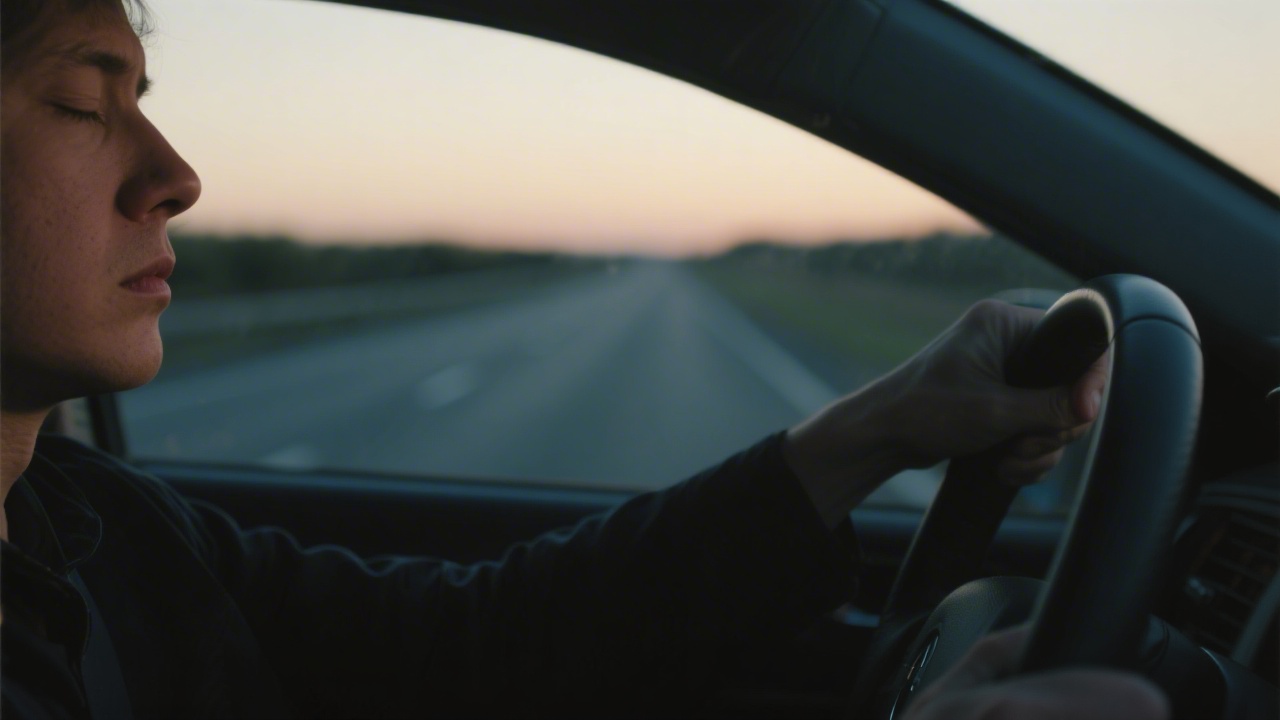
by There is no legal limit for fatigue the way there is for alcohol. But the science is equally clear: driving tired is driving impaired. The question “how tired is too tired to drive?” has both a physiological and a practical answer—and knowing both could prevent a crash.
Editor's Pick
The right mattress is the foundation of better sleep—and safer days.
If poor sleep is affecting your alertness, reaction time, or safety, the quality of your sleep surface matters more than most people realize. The Saatva Classic consistently tops our testing for spinal support, pressure relief, and the deep sleep architecture that restores daytime performance.
Read Our Saatva Review →The Physiological Threshold
Researchers at the University of New South Wales gave healthy adults a standard driving simulation test at increasing intervals of wakefulness. Their findings established a clear performance-impairment curve:
- 14–16 hours awake: Subtle performance degradation, most drivers unaware
- 17–18 hours awake: Equivalent to 0.05% BAC—impairment is measurable and significant
- 21 hours awake: Equivalent to 0.08% BAC—the US legal drunk driving limit
- 24–25 hours awake: Equivalent to 0.10% BAC—illegal to drive in every US state
The alarming part: subjective awareness of impairment plateaus while actual performance continues to deteriorate. After 20+ hours awake, drivers often rate themselves as “slightly tired” while performing at the equivalent of intoxication.
The Rule-of-Thumb Self-Test
Because self-assessment is unreliable after sleep loss, practical heuristics matter more than subjective feeling. Use this decision hierarchy:
- Sleep quantity check: Did you get fewer than 6 hours last night? If yes, treat the drive as elevated-risk.
- Time-of-day check: Are you driving between midnight and 6 AM, or between 2–4 PM? These windows carry higher crash risk independent of how you feel.
- Symptom check: Do you notice any of the 10 warning signs of fatigue while driving? If two or more are present, pull over.
- The “blinking” test: Are you blinking more than usual or fighting to keep your eyes open? This is a late-stage warning sign.
- The “missing time” test: Can you clearly recall the last 2–3 minutes of driving? If not, you have likely had a microsleep.
Cumulative Sleep Debt: Why Last Night Isn’t the Whole Picture
A single night of 6 hours of sleep may feel manageable. Two weeks of 6-hour nights is a different matter. Chronic partial sleep restriction produces cumulative cognitive impairment that mirrors two full nights of total sleep deprivation—yet most people report only mild sleepiness and believe they are adapting. They are not adapting. They are losing the ability to accurately assess their own impairment.
The practical implication: if you have been sleeping fewer than 7 hours per night for a week or more, your driving is impaired even if you feel “fine.” This is especially relevant for night shift workers whose schedules structurally limit sleep.
What Happens Physiologically When You Drive Tired
Sleep deprivation impairs driving through four primary mechanisms:
- Slowed reaction time: Even moderate fatigue slows brake reaction time by 100–300ms. At 60 mph, that is 8–26 extra feet before braking begins.
- Microsleeps: Involuntary 1–30 second sleep episodes that occur without warning. The driver is unaware they happened.
- Reduced hazard perception: Tired drivers are slower to identify and respond to unexpected hazards like pedestrians or merging vehicles.
- Risk tolerance increase: Fatigue impairs the prefrontal cortex, which governs judgment and risk assessment. Tired drivers make worse decisions and underestimate danger.
If You Must Drive: Risk Reduction
The only true solution to drowsy driving is sleep. But when driving is unavoidable:
- Take a coffee nap before a high-fatigue drive: 200mg caffeine followed immediately by a 20-minute nap outperforms either intervention alone
- Drive during your circadian peak (typically 9–11 AM and 5–7 PM) rather than during trough windows
- Take mandatory breaks every 2 hours—not just when you feel tired
- Travel with a second awake driver when possible for any drive over 2 hours
- Know and recognize the drowsy driving statistics so you treat the risk seriously rather than theoretically
Editor's Pick
The right mattress is the foundation of better sleep—and safer days.
If poor sleep is affecting your alertness, reaction time, or safety, the quality of your sleep surface matters more than most people realize. The Saatva Classic consistently tops our testing for spinal support, pressure relief, and the deep sleep architecture that restores daytime performance.
Read Our Saatva Review →Frequently Asked Questions
What is the exact threshold where sleep deprivation impairs driving?
Research shows measurable impairment begins after 17–18 hours without sleep, equivalent to approximately 0.05% BAC. At 21 hours, impairment reaches the US legal driving limit of 0.08% BAC.
Can I assess my own fitness to drive?
Partially. The Epworth Sleepiness Scale and the Karolinska Sleepiness Scale are validated self-assessment tools. However, research consistently shows people overestimate their alertness after sleep loss. A conservative rule: if you’re asking whether you’re too tired, you probably are.
Does caffeine make it safe to drive tired?
Caffeine can temporarily reduce subjective sleepiness and modestly improve reaction time, but it does not restore the full cognitive restoration of sleep. A coffee nap is more effective than caffeine alone.
What are microsleeps and are they dangerous?
Microsleeps are involuntary sleep episodes lasting 1–30 seconds. They occur without warning and without awareness. At highway speeds, a 2-second microsleep means approximately 190 feet of uncontrolled travel. They are a primary mechanism in drowsy driving crashes.
How many hours of sleep do I need to drive safely?
Most adults need 7–9 hours. Consistent sleep below 6 hours creates cumulative impairment that is not fully perceived. If you slept 6 hours or fewer last night, treat the drive as higher-risk than usual.
Our Top Mattress Pick
The Saatva Classic consistently ranks #1 for comfort, support, and long-term durability.
View Saatva Classic Pricing & DetailsKey Takeaways
How Tired Is Too Tired to Drive? Know Before You Get Behind the Wheel is a topic that depends heavily on individual needs and preferences. The most important thing is to consider your specific situation — your body type, sleep position, and personal comfort preferences — before making any decisions. When in doubt, take advantage of trial periods to test before committing.