
 by
by Quick answer: Arrange firm pillows as an overlapping ramp from your lower back to your head, then fill the neck, waist, and side gaps. Skip a tall stack that bends only your neck.
- The base should begin behind the lower torso, not just the shoulders.
- Each pillow should overlap the pillow below it so your torso rests on a continuous incline.
- The head pillow should support your skull without forcing your chin toward your chest.
Updated July 2026 · Reviewed for accuracy
To sleep upright comfortably, support your whole torso on a gradual slope. Propping up only your head usually creates a sharp bend at the neck and leaves the rest of your body fighting the stack.
I’d build the arrangement from the mattress upward. Put the firmest support low, overlap the remaining pillows, then add thinner support only where your neck, lower back, arms, or sides need it.
If a clinician has instructed you to sleep upright, follow the position and support guidance they gave you. This guide covers pillow arrangement and comfort, not medical treatment.
Build a pillow ramp instead of a vertical wall
The lowest pillow belongs behind your lower torso. If the arrangement begins at your shoulders, your upper body hinges forward while your hips remain flat, which is the slumped position you’re trying to avoid.
Clear away decorative cushions and start with the pillows that hold their shape best. The aim is a broad, overlapping surface rather than a pile of isolated lumps.
- Set the base low. Lay a firm pillow against the headboard or backrest with its lower edge reaching toward your waist. Keep it angled rather than standing straight up.
- Overlap the middle support. Place another pillow partly over the base. Its lower edge should cover the transition instead of leaving a hollow behind your mid-back.
- Support the shoulders. Continue the slope until your shoulder blades and upper back can settle against it without being pushed forward.
- Add the head pillow last. Use enough loft to meet the back of your head. Don’t use it to create the entire incline.
- Fill small gaps separately. A thin pillow or loosely rolled towel can fill an empty space behind the neck or lower back without changing the main ramp.
Once assembled, press your forearm down the center of the arrangement. You should feel a reasonably continuous surface from the lower section to the head support. A deep hollow means the pillows need more overlap.
The Nut’s rule: Your back pillows create the incline. Your head pillow fine-tunes neck comfort. Asking a soft head pillow to do both jobs usually produces an unstable stack.
Make the base firm enough to resist sliding
Most upright pillow arrangements fail at the bottom edge. The base compresses, the upper pillows drop into the space, and the sleeper gradually slides toward the foot of the bed.
Use your densest, most shape-stable pillow at the bottom. Solid foam and tightly packed fills are generally better suited to this structural role than loose down or airy fiber pillows. Softer pillows can still work near the top, where contouring matters more than load-bearing support.
Don’t stand standard pillows on their narrow edges. That creates height quickly, but it also makes them prone to folding or tipping. Lay them flatter and build height through overlap.
- Put smooth or slippery pillowcases near the top, not at the foundation.
- Keep the base fully on the mattress rather than balanced across a mattress-headboard gap.
- Let the headboard act as a rear stop, but don’t depend on it to support an upright pillow standing on edge.
- Check that fitted sheets and mattress protectors aren’t bunching beneath the stack.
If the base still moves, extend the arrangement farther down your back. A longer, shallower ramp usually feels more settled than a short, abrupt rise. You’re distributing support across more of the torso instead of concentrating it behind the shoulders.
A purpose-built wedge can serve as the base if ordinary pillows keep collapsing. Place softer pillows over or around it for contouring, but avoid burying a stable wedge beneath a deep pile that recreates the same shifting problem.
Fill the neck, lower-back, arm, and side gaps
Once the main ramp is stable, comfort depends on the smaller unsupported spaces. These gaps vary with your body shape, pillow fill, mattress softness, and how far upright you’re trying to rest.
Keep the head over the torso
The head pillow should meet the back of your skull without pushing your face toward your chest. If your chin feels tucked, the top pillow is too thick, too upright, or sitting too low behind your neck.
If your head falls backward, bring the pillow higher behind the skull or add a thin layer behind it. If it tips toward a shoulder, use small side supports instead of adding more height directly behind your head.
Use lumbar support as a gap filler
A hollow behind the waist can make the entire arrangement feel as though it’s folding you in half. Fill that space with a thin, compressible pillow. It should make contact without shoving your abdomen forward.
Don’t use the lumbar pillow as the main base. If it’s carrying most of your weight, it can roll or flatten independently of the upper stack. Build the torso ramp first, then fill the remaining curve.
Support the arms and shoulders
Place a pillow beneath each forearm if your arms otherwise pull downward beside you. The support should let your elbows rest without forcing your shoulders toward your ears.
Side pillows can also limit drifting. Position them along the outer arms and ribs, creating a shallow cradle around the torso. Keep them low enough that they don’t press the shoulders inward.
Alignment check
- Your pelvis remains centered rather than twisted toward a hip.
- Your back stays in contact with the ramp without a pronounced hollow.
- Your shoulders can relax instead of rounding forward.
- Your chin feels neutral rather than pressed toward your chest.
- Your head doesn’t need constant muscular effort to stay centered.
A pillow beneath bent knees can help create a more settled posture on a bed. It shouldn’t force the legs into an uncomfortable bend. Remove or reposition it if it creates pressure behind the knees or makes getting out of bed awkward.
Comparing options? The Saatva Pillow is one category-matched product to investigate, not a documented winner — see the product note ↓
Adapt the arrangement to your sleeping surface
A bed, sofa, and recliner hold the body differently. Copying the same pillow tower across every surface ignores the support already built into that surface.
| Surface | How to arrange the pillows | Main watchpoint |
|---|---|---|
| Flat bed | Create the full ramp from the lower torso upward, then add head and side support. | A short stack may slide because the mattress provides no fixed backrest. |
| Adjustable bed | Let the raised bed provide the incline. Use pillows mainly for the neck, lumbar curve, arms, and sides. | Too many back pillows can push you away from the bed’s intended support shape. |
| Sofa | Square your hips to the backrest and use thin pillows to smooth gaps behind your back and head. | Sleeping diagonally in a corner can leave the torso twisted. |
| Recliner | Use the chair as the main support. Add only the pillows needed to fill the neck, waist, or arm gaps. | A thick stack may fight the chair’s contours or interfere with its moving parts. |
On a flat bed, make the ramp long enough to carry your torso. Don’t leave the lowest pillow perched behind the shoulder blades. The lower edge should reach far enough down that your body isn’t folding at a single point.
On a sofa, resist using the armrest as a head pillow while your torso faces upward. That rotates the neck and usually encourages the hips to twist in the opposite direction. Face the backrest squarely or build a centered arrangement across the cushions.
A recliner already supplies a continuous shape, so use fewer loose pillows. Thin gap fillers are more useful than a bulky pile. Keep all loose bedding clear of hinges, controls, and moving sections.
Keep an exit path: Arrange side and leg pillows so you can get up without stepping onto loose bedding. Upright support shouldn’t turn the floor beside the bed into an obstacle course.
Fix slipping, chin tuck, tilting, and collapsed pillows
If you wake lower than where you started, the issue is usually the arrangement rather than a simple lack of loft. Adding another pillow on top can make the slope steeper and the sliding worse.
| What you notice | Likely arrangement issue | What to change |
|---|---|---|
| You slide toward the foot of the bed | The ramp is short, abrupt, or unstable at its base. | Start the support lower, reduce the abrupt rise, and add gentle support beneath the knees if comfortable. |
| Your chin presses toward your chest | The head pillow is too thick or positioned behind the neck instead of the skull. | Remove loft at the top and let the torso ramp provide more of the rise. |
| Your head falls toward a shoulder | The central head support is soft or there’s no lateral support. | Add small side cushions near the head without squeezing the ears or shoulders. |
| Your lower back feels unsupported | The ramp bridges over the waist. | Insert a thin lumbar filler after the main ramp is stable. |
| The stack changes shape overnight | Soft, shifting fills are carrying the structure. | Move firmer pillows to the base and reserve moldable fills for surface comfort. |
If your shoulders feel crowded, remove material from behind the neck before changing the lower ramp. A pillow lodged too low beneath the head can push the shoulders forward even when the rest of the incline is sound.
If heat builds around your head, simplify the side supports and use removable, breathable pillowcases. A deep nest may control head movement, but it also places more material close to the face. Keep the arrangement open enough that nothing covers your nose or mouth.
Persistent pain, numbness, breathing difficulty, dizziness, or new symptoms aren’t pillow-adjustment problems to troubleshoot through the night. Stop using the setup and seek appropriate medical advice.
Do a final comfort and stability check
The finished arrangement should hold its shape before you fall asleep. Settle into it while awake, make normal head and arm movements, then see whether the pillows separate or fold.
- Enter the bed from the side instead of diving backward into the stack.
- Set your hips first, then lower your back onto the center of the ramp.
- Check that the head pillow contacts the skull without bunching beneath the neck.
- Rest your arms on their supports and confirm that your shoulders can drop naturally.
- Shift gently from side to side and reset any pillow that separates from the layer below.
- Make sure you can remove the side pillows and get out of bed easily.
If your existing pillows can’t form a stable incline, my guide to choosing a pillow for upright sleep explains the support formats worth considering. A continuous wedge is less adjustable than loose pillows, but its unified core avoids the seams that allow a conventional stack to separate.
If diagnosed sleep apnea is the reason you’re considering an inclined position, read the separate guide to wedge pillows and sleep apnea and follow guidance from your clinician. A pillow arrangement shouldn’t be treated as a substitute for prescribed care.
My bottom line is simple: start low, build a continuous ramp, and use the softest pieces only for fine adjustment. If your torso is stable and your head stays centered without a sharp neck bend, the arrangement is doing its job.
ONE OPTION WORTH COMPARING
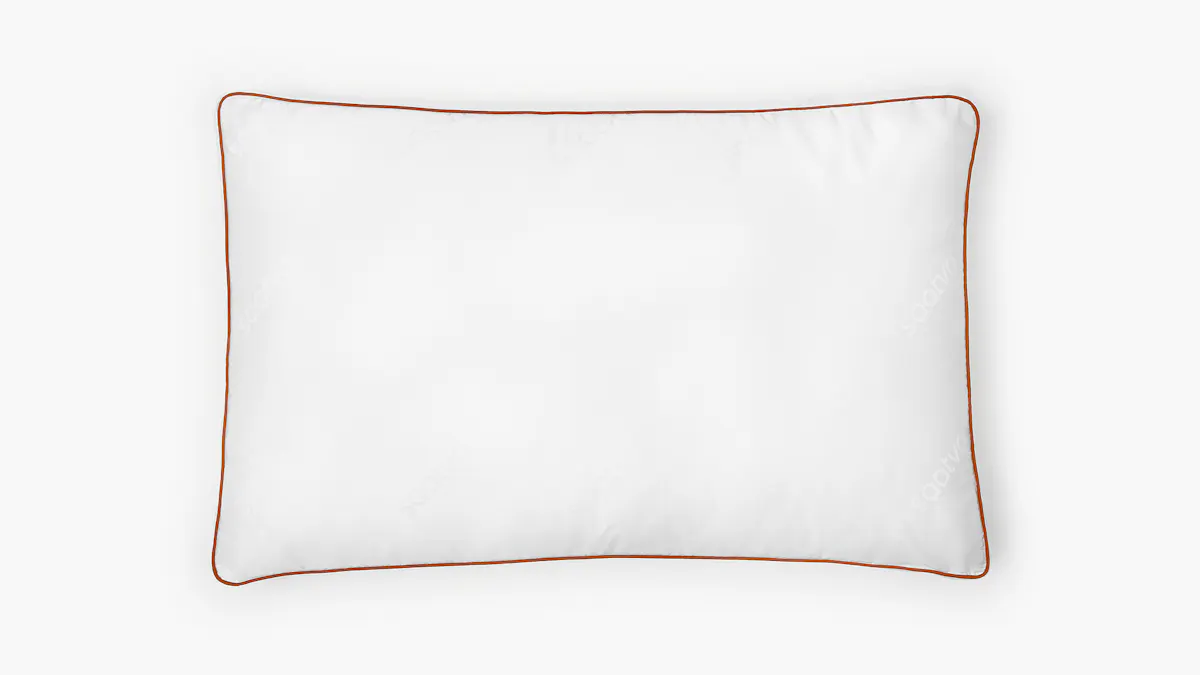
Shopping as well as reading? Here is one current option worth comparing: the Saatva Pillow. Check today’s price, sizing and return terms on the official product page before you order.
Saatva Pillow
- Shredded natural latex core, per saatva.com
- 45-day free returns
- Machine-washable organic cotton cover
FAQ
How many pillows do I need to sleep upright?
There’s no universal count because pillow firmness, loft, mattress softness, and body shape all change the setup. Use the smallest stack that creates a continuous torso ramp, then add only the gap fillers needed for your neck, waist, arms, or sides.
Can I sleep upright using ordinary bed pillows?
Yes, provided the pillows overlap securely and the firmest pieces form the base. Ordinary pillows are highly adjustable, but soft or slippery fills may need frequent resetting and shouldn’t carry the entire structure.
Where should the neck pillow go?
Place neck support near the top only after the torso ramp and head pillow are settled. It should fill a small hollow beneath the neck, not push your head forward or serve as the main source of height.
Is a wedge better than stacked pillows?
A wedge provides a continuous support surface, while stacked pillows offer more control over individual pressure points and gaps. I’d favor the wedge as a stable foundation if loose pillows keep shifting, then use thin pillows for contouring.
Is it safe to sleep upright through the night?
A pillow guide can’t determine whether a sleeping position is medically appropriate for you. If upright sleeping was recommended after a procedure or for a health condition, follow your clinician’s instructions and ask for advice if the position causes pain, numbness, breathing difficulty, or other concerning symptoms.