
 by
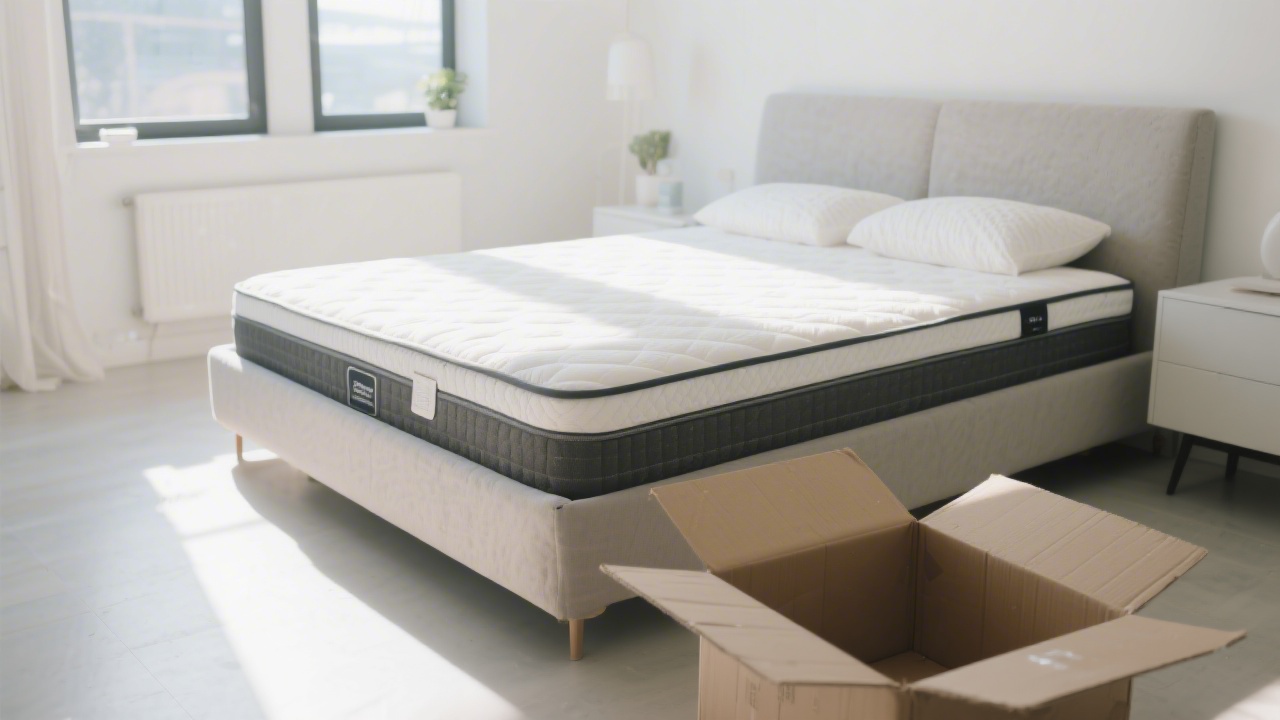
by Buying a new mattress is one of the more disorienting consumer purchases: a product you have spent several hundred to several thousand dollars on feels wrong when you first sleep on it. This is normal. Most mattresses require 30-90 days before they reach their intended feel - what the manufacturer tested and rated is the mattress after the materials have settled, not on day one.
Sleep Lab Pick · Current Sale
Amerisleep's Current Sale: $500 off every mattress. The AS3 — plant-based Bio-Pur® foam, sleeps cooler than memory foam, 100-night trial, 20-year warranty.
Our Top Pick
365-night trial - the longest in the industry. Full break-in period covered.
Why Mattresses Need Breaking In
Three mechanisms contribute to the initial stiffness:
- Compression packaging - Roll-pack and box mattresses are compressed under significant pressure for weeks or months during shipping and storage. The foam, fibers, and coil encasings retain memory of that compressed state initially.
- Material off-gassing - New foam releases volatile organic compounds (VOCs) during the first 24-72 hours. Some people perceive this as a mild stiffness; it is primarily a chemical process, not a structural one. VOCs are harmless at typical levels; ventilate the room and they dissipate quickly.
- Coil tension (hybrids and innersprings) - Pocket coils are wound and tempered at the factory to a specific tension. They loosen slightly over the first weeks of use, which is why hybrids and innersprings often feel noticeably softer at 60 days than at day one.
How Long Break-In Takes by Mattress Type
- Memory foam: 30-45 days. Body heat accelerates the softening of viscoelastic foam. Temperature-sensitive materials respond faster in a warm room.
- Latex: 30-60 days. Natural latex has less dramatic break-in than foam but still settles, particularly Dunlop latex which is denser.
- Hybrid (foam + pocket coils): 45-90 days. The coil system needs time to calibrate alongside the foam layers.
- Traditional innerspring: 60-90 days. Older continuous-coil designs have the longest break-in periods.
How to Speed Up the Break-In Process
Sleep on it every night. Consistent, distributed weight is the most effective break-in mechanism. Avoid sleeping only on one side of the mattress; rotate your position.
Walk across it daily. Spend 10-15 minutes each day walking across the entire mattress surface. This distributes pressure across the full comfort layer rather than concentrating it where you normally sleep.
Maintain room temperature. Foam softens faster at normal sleeping temperatures (65-72°F / 18-22°C). A cold room (under 60°F) slows the process significantly.
Skip the topper for now. A mattress topper creates an intermediate layer that reduces the direct pressure on the mattress, slowing break-in. Wait until after the break-in period to add one if needed.
Remove packaging completely. Even thin plastic wrap layers can insulate the mattress and slow temperature-driven softening.
When It Is the Wrong Mattress, Not Just a New One
Break-in adjusts firmness by roughly 0.5-1 point on a 10-point scale. If you bought a medium-firm (6/10) mattress and the problem is that you need a plush (3/10), no amount of break-in will bridge that gap. Signs you have the wrong mattress rather than a new mattress:
- Pain that worsens progressively rather than staying stable or improving
- Pressure points at the shoulder or hip that are still prominent after 3-4 weeks
- Mattress feels actively hard, not just slightly firm
- Pain appears in a new location (e.g., shoulder starts hurting when it did not before)
In these cases, initiate an exchange or return within your trial window rather than waiting out 90 days. The Saatva Classic offers a 365-night trial with one free firmness exchange - the full break-in period is covered.
Internal Links
Related reading: Saatva Classic Review, Best Mattresses of 2026, Best Mattress for Back Pain, When to Replace a Mattress.
Our Top Pick
365-night trial. One free firmness exchange. White-glove delivery.
Frequently Asked Questions
How long does it take for a new mattress to break in?
Most mattresses take 30-90 days to fully break in. Foam and memory foam mattresses tend to break in faster (30-45 days) because the material responds to body heat and weight quickly. Hybrid and innerspring mattresses can take 60-90 days as the coils and comfort layers work together over time.
Why does a new mattress feel firmer than expected?
Mattresses are compressed and packaged at the factory. Even after unboxing, foam cells, comfort layers, and coil encasings retain some of that compressed state. Heat from your body and repeated pressure from sleeping gradually relaxes these materials. The mattress you sleep on after 60 days is noticeably softer than day one.
How can I speed up breaking in a new mattress?
Sleep on it every night - consistent use is the most effective method. Walk across the mattress surface for 10-15 minutes daily (distribute weight evenly). Keep the room at normal sleeping temperature (heat accelerates foam softening). Remove the mattress protector for the first week if possible, as protectors add a slight firmness layer. Do not add a topper before the break-in period ends.
When should I stop waiting and return or exchange the mattress?
If the mattress feels wrong after 60 days - not just different from what you expected, but actively uncomfortable or causing new pain - it is likely a firmness mismatch rather than an incomplete break-in. Pain that worsens (rather than staying stable) after 2-3 weeks is a signal to initiate an exchange before the break-in window ends. Most premium mattresses offer at least a 100-night trial; use it.
Does sleeping on a mattress before it fully expands damage it?
No. You can sleep on a roll-pack mattress the night it arrives. Most foam mattresses are ready within 24-72 hours of unboxing (minor off-gassing may occur in the first 24 hours in a well-ventilated room). Sleeping on it does not damage the foam or coils - it actually accelerates the expansion and break-in process.