
 by
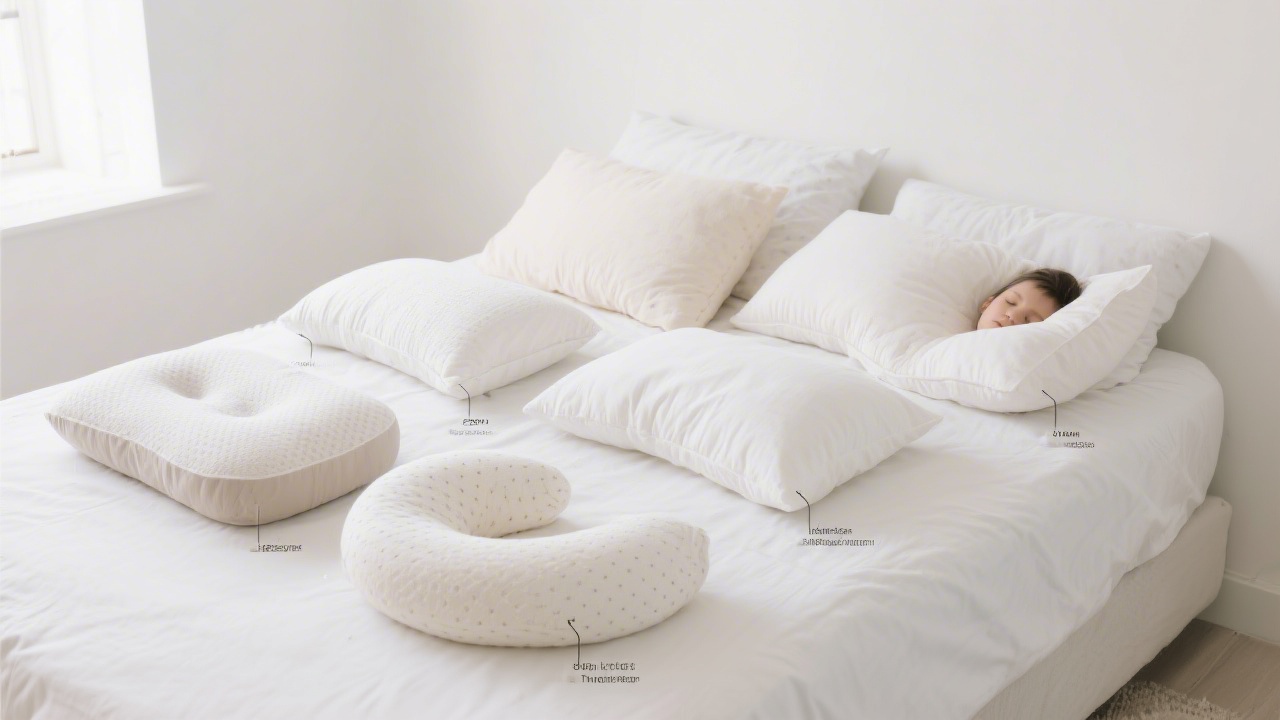
by The right pillow depends primarily on one factor: how you sleep. Side sleepers need high loft and firm support; back sleepers need medium loft; stomach sleepers need low loft or no pillow. Buying a pillow based on price or brand without considering sleep position is the most common mistake — and the most common reason people wake up with neck pain.
Choose by Sleep Position (The Core Rule)
| Sleep Position | Loft Needed | Firmness | Why |
|---|---|---|---|
| Side sleeper | High (4–6 inches) | Firm to medium-firm | Fill the gap between shoulder and head; maintain spinal alignment |
| Back sleeper | Medium (3–4 inches) | Medium | Support cervical curve without pushing head too far forward |
| Stomach sleeper | Low (1–3 inches) | Soft to flat | Prevent neck hyperextension; some stomach sleepers prefer no pillow |
| Combination sleeper | Adjustable (3–5 inches) | Medium | Shredded fill allows reshaping as you shift positions |
5 Questions to Find Your Pillow
- What is your primary sleep position? (Side / Back / Stomach / Combination) — Use the table above as your starting point.
- Do you sleep hot? If yes, avoid memory foam (traps heat). Choose latex, buckwheat, or cooling gel-infused options instead.
- Do you have allergies? If yes, avoid down and feather fills. Choose hypoallergenic polyester fiberfill or latex.
- What are your shoulders like? Broader shoulders = need more loft when side-sleeping. Narrow shoulders = less loft required.
- Do you want adjustability? Shredded memory foam and shredded latex pillows let you add or remove fill to dial in loft — ideal if you're between positions or not sure what works for you.
Pillow Fill Types Compared
| Fill Type | Loft | Support | Cooling | Price Range | Best For |
|---|---|---|---|---|---|
| Down | Adjustable | Soft | Good | $$–$$$ | Stomach/back sleepers; luxury feel |
| Down Alternative | Medium | Soft–Medium | Good | $–$$ | Allergy sufferers; value-conscious |
| Memory Foam (solid) | Fixed | Firm | Poor | $$ | Side/back sleepers needing consistent support |
| Shredded Memory Foam | Adjustable | Medium–Firm | Better than solid | $$ | Combination sleepers; adjustable needs |
| Latex | Medium–High | Firm | Good | $$$ | Side sleepers; hot sleepers; durability |
| Buckwheat | Adjustable | Firm | Excellent | $$–$$$ | Hot sleepers; neck pain sufferers |
| Polyester Fiberfill | Medium | Soft | Fair | $ | Budget option; guest rooms |
How to Tell If Your Pillow Is Wrong
Signs your current pillow isn't right for you:
- Waking up with neck stiffness or pain that resolves within an hour
- Folding or doubling up your pillow during the night
- Sleeping with your arm under the pillow (often means loft is too low for a side sleeper)
- Flat spot that doesn't recover after fluffing (pillow is past its lifespan)
- Pillow is more than 1–2 years old for synthetics (3–5 years for latex or down)
How Often to Replace a Pillow
- Polyester fiberfill: Every 1–2 years
- Down / down alternative: Every 2–3 years
- Memory foam (solid): Every 2–3 years
- Latex: Every 3–5 years
- Buckwheat: Refillable; hull replacement every 3+ years
The fold test: Fold your pillow in half. If it stays folded and doesn't spring back, replace it.
View on Saatva →
Frequently Asked Questions
What pillow firmness is best for side sleepers?
Medium-firm to firm. Side sleepers need a pillow that doesn't compress under the weight of the head — a soft pillow allows the head to sink, creating lateral neck strain. High loft (4–6 inches) combined with firm support keeps the spine aligned from ear to hip.
Is memory foam good for back sleepers?
Solid memory foam works well for back sleepers who need consistent medium support. The key is loft — memory foam pillows for back sleepers should be lower profile (3–4 inches) than those for side sleepers. Shredded memory foam is more adaptable and often preferred.
How do I know what loft height I need?
A simple test: Lie on your side on your mattress with no pillow. Have someone look at your spine from behind. The distance from your shoulder to the side of your head is approximately the loft you need. For most adults on standard mattresses, this is 4–6 inches for side sleeping.
Are expensive pillows worth it?
Often yes, up to a point. A $60–$150 pillow with the right fill for your sleep position will typically outperform a $20 synthetic pillow in both support and durability. Above $200, the incremental benefit diminishes for most sleepers. The right fit matters more than the price.
Can a bad pillow cause shoulder pain?
Yes. A pillow that's too low for a side sleeper causes the head to drop, compressing the shoulder and neck. Over time this can cause shoulder and neck pain, numbness in the arm, or tension headaches. The fix is usually increasing pillow loft, not changing the mattress.
Voted best luxury innerspring mattress with exceptional lumbar support and white-glove delivery.
Check Price & Availability FAQPage", "mainEntity": [ {"@type":"Question","name":"What pillow firmness is best for side sleepers?","acceptedAnswer":{"@type":"Answer","text":"Medium-firm to firm with high loft (4–6 inches). Side sleepers need a pillow that doesn't compress, keeping the spine aligned from ear to hip."}}, {"@type":"Question","name":"Is memory foam good for back sleepers?","acceptedAnswer":{"@type":"Answer","text":"Yes, especially solid or shredded memory foam at medium loft (3–4 inches). Shredded foam is more adaptable and often preferred."}}, {"@type":"Question","name":"How do I know what loft height I need?","acceptedAnswer":{"@type":"Answer","text":"Lie on your side without a pillow — the distance from your shoulder to the side of your head is approximately the loft you need. Typically 4–6 inches for side sleepers."}}, {"@type":"Question","name":"Are expensive pillows worth it?","acceptedAnswer":{"@type":"Answer","text":"Often yes up to ~$150. The right fill for your sleep position matters more than price. Above $200 the incremental benefit diminishes."}}, {"@type":"Question","name":"Can a bad pillow cause shoulder pain?","acceptedAnswer":{"@type":"Answer","text":"Yes. A pillow too low for side sleepers compresses the shoulder and neck. Increasing pillow loft usually resolves the issue."}} ] }