
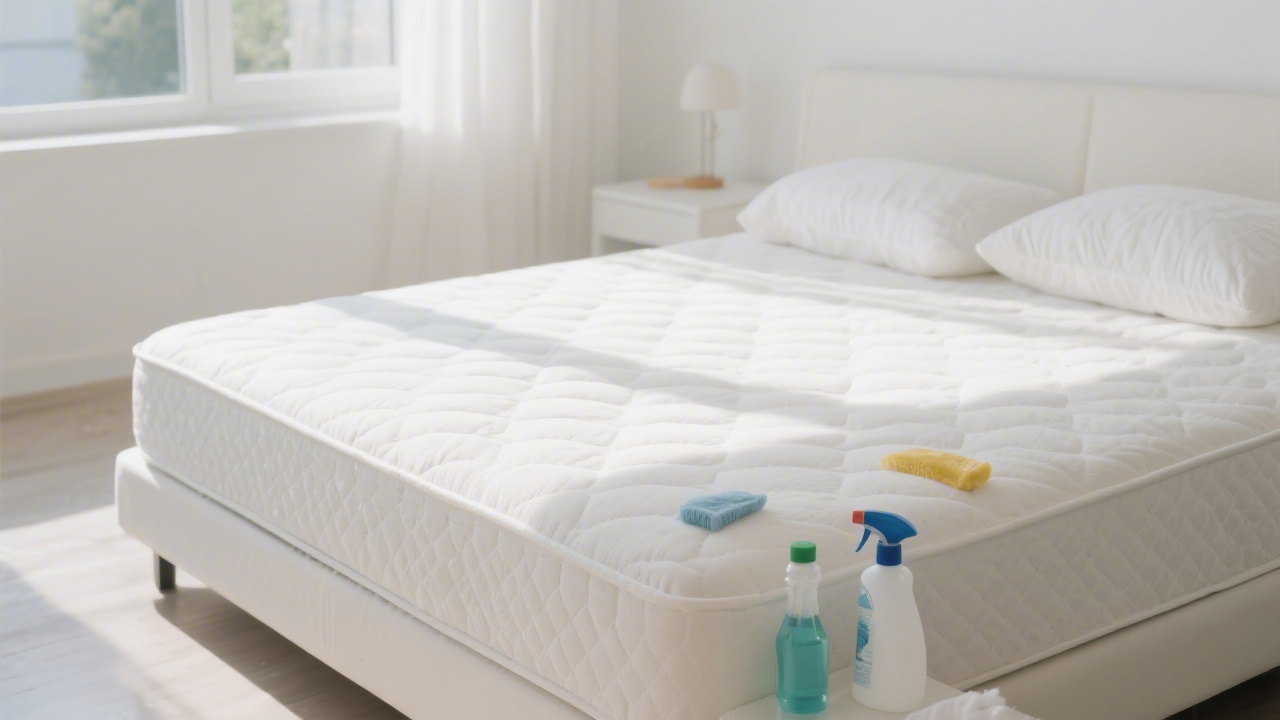
 by
by
Editor's pick, mattress review category
Saatva Classic
From $1,174 (Twin) · Saatva's #1 bestseller · Euro pillow top · 3 firmness · 365-night trial · Lifetime warranty
A mattress pad is the most effective stain prevention available - cheaper than any cleaning job.
TL;DR
This mattress review covers construction, firmness, trial/warranty, price, and who it fits. Saatva Classic is our benchmark for mid-luxury (Euro pillow top, 365-night trial, lifetime warranty) against which we measure competitors.
Jump to section
The most important thing to know before cleaning any mattress stain is this: cold water only. Hot water permanently sets protein-based stains - blood, urine, sweat - by binding proteins to fabric fibers. Everything else in mattress stain removal is secondary to temperature. With that principle established, here is a complete guide by stain type.
General Rules That Apply to Every Stain Type
- Act quickly. Fresh stains are always easier to remove than dried or set ones. The first 30 minutes matter most.
- Blot, never rub. Rubbing spreads the stain outward and pushes it deeper into fabric fibers. Use a clean cloth and press straight down, then lift.
- Use minimal liquid. Mattresses are not designed to absorb and dry large amounts of water quickly. Excess moisture in the core can cause mold growth. Use spray bottles for controlled application.
- Dry thoroughly before replacing bedding. Point a fan directly at the cleaned area and allow at least 2 to 4 hours of drying time, preferably with windows open for airflow.
Blood Stains
Fresh blood: Blot immediately with a cold damp cloth to absorb as much liquid as possible. Mix one teaspoon of dish soap with two cups of cold water. Apply with a cloth, blot, rinse with cold water, and blot dry. Do not saturate the mattress.
Dried blood: Create a paste of baking soda and cold water (roughly 2:1 ratio). Apply to the stain and let sit for 30 minutes. Blot with a cold damp cloth to lift the paste and stain. For stubborn dried blood, apply 3% hydrogen peroxide directly - it will bubble as it breaks down the protein. Let it sit 5 minutes, then blot clean. Test a small area first if uncertain about fabric bleaching.
Urine Stains
Fresh urine: Blot all liquid immediately with paper towels or a dry cloth, pressing firmly to draw moisture up and out. Spray the area with undiluted white vinegar and let sit for 5 to 10 minutes - vinegar neutralizes alkaline urine compounds. Blot dry. Sprinkle baking soda generously and leave for 6 to 8 hours, then vacuum completely.
Dried urine / odor: Spray with an enzyme-based cleaner (available at pet supply stores) and follow package instructions. Enzyme cleaners break down uric acid crystals that standard cleaners leave behind. These crystals are the primary source of persistent urine odor. Let the enzyme cleaner dwell for the full recommended time before blotting.
Wine and Red Liquid Stains
Act immediately. Blot to absorb as much liquid as possible. Mix one tablespoon of dish soap, one tablespoon of white vinegar, and two cups of cold water. Apply with a clean cloth, work from the outside edge of the stain inward to prevent spreading, blot repeatedly. For remaining color, a small amount of 3% hydrogen peroxide applied carefully can lift the tannin pigments in red wine. Blot and rinse with cold water.
Sweat Stains (Yellow Discoloration)
Sweat staining is cumulative and caused by both the salt content of perspiration and skin oils. A paste of baking soda, salt, and cold water (1:1:2 ratio) applied and left for 30 minutes helps lift the discoloration. For more advanced yellowing, a diluted hydrogen peroxide spray (50% water, 50% 3% peroxide) with a small amount of dish soap applied, left for 5 to 10 minutes, then blotted works effectively. This is also a good periodic maintenance treatment for the full mattress surface.
Coffee and Tea
Cold water and dish soap mixture as described for wine. The tannins in coffee and tea respond to the same approach as red wine. Speed matters - these stains set within minutes if allowed to dry. A small amount of white vinegar in the cleaning solution helps break down tannin compounds.
Vomit
Remove any solid matter first using a rigid tool (a plastic scraper or spoon), working from the outside in. Apply a paste of baking soda to neutralize acid content and absorb remaining moisture. After 10 minutes, remove the baking soda and clean the area with a dish soap and cold water solution. Follow with white vinegar spray for any remaining odor. Allow thorough drying with direct airflow.
Mold and Mildew
Saatva Classic
Saatva's #1 bestseller · Euro pillow top · 3 firmness · 365-night trial · Lifetime warranty. Saatva is one of the few mattress brands to pair a multi-hundred-night home trial with a lifetime-scale warranty.
- Price: From $1,174 (Twin)
- Free white-glove delivery & old-mattress removal (US)
- 365-night home trial on mattresses
- ID.me discount for military, veterans, first responders, teachers, seniors
- GREENGUARD Gold certified construction
Disclosure: we may earn a commission from this link at no extra cost to you.
If mold is present on the sleep surface, it indicates moisture has reached the foam core - a more serious issue than surface staining. For surface mold, apply undiluted rubbing alcohol (70% isopropyl) with a cloth, allow to sit briefly to kill surface mold, then blot. The mattress must be dried completely and thoroughly before use. If there is mold growth through the depth of the mattress, replacement is the correct response - mold in a foam core cannot be reliably eliminated from the surface.
The Case for Prevention
A waterproof mattress pad costs significantly less than professional cleaning or early mattress replacement. A quality pad creates a barrier between the sleep surface and any liquid, protecting the mattress entirely from the stain scenarios above. It also preserves warranty coverage, since most warranties require the mattress to be kept in a reasonably clean state.
Related Reading
Mattress care & maintenance FAQ
If replacement is overdue
Saatva Classic, from $2,229 queen
If cleaning isn't fixing the problem, a 15-20 year lifespan hybrid is the long-term answer. 365-night home trial, lifetime warranty, free white-glove delivery + free old-mattress removal.
How often should you actually clean a mattress?
Every 3 months: vacuum the surface with an upholstery attachment. Every 6 months: deep clean (baking soda + vacuum). Every 12 months: rotate the mattress (180° if flippable, or head-to-foot if not).
What's the fastest way to remove urine/stains from a mattress?
Blot with cold water + mild dish soap, then apply white vinegar to neutralize odor. Avoid hot water (sets proteins) and bleach (damages fabric/foam). Baking soda for 6-12 hours after drying pulls residual moisture and smell.
When is it actually time to replace a mattress?
Signals: visible permanent indentation > 1.5", waking up with pain/stiffness that fades during the day, noticeable age-related smell, age beyond 8-10 years for most hybrid/foam mattresses. If a new topper doesn't solve it, it's a mattress problem. The Saatva Classic runs a 15-20 year expected lifespan, double most foam-only mattresses.
Can you vacuum a mattress with a regular vacuum?
Yes, upholstery attachment, slow passes, no beater bar. Start at the seams (where dust mites concentrate) and work the full surface. 10-15 minutes for a queen.
Why does a mattress smell musty?
Usually moisture trapped under the mattress from the floor or an unventilated frame. Fix: sprinkle baking soda, vacuum after 6-12 hours, then add a breathable mattress protector. If the smell returns, the frame/floor is still trapping moisture, add a slatted base or risers.
Do you need a mattress protector? | Can you flip a mattress? | When to replace your mattress
Frequently Asked Questions
Can you use hot water to clean mattress stains?
No. Hot water sets protein-based stains - including blood, urine, and sweat - permanently by denaturing the proteins and bonding them to fabric fibers. Always use cold or cool water for all mattress stain work, regardless of stain type. This single rule prevents more permanent staining than any cleaning product.
How do you remove dried blood stains from a mattress?
For dried blood, apply a paste of baking soda and cold water to the stain, let it sit for 30 minutes to lift the protein, then blot with a cold damp cloth. For stubborn dried stains, 3% hydrogen peroxide applied directly will break down the protein structure - apply, let it bubble for 5 minutes, then blot. Do not rub, as this spreads the stain.
Is it safe to use hydrogen peroxide on a mattress?
3% hydrogen peroxide - the concentration sold at pharmacies - is safe for most mattress fabrics and effective on blood and urine stains. Higher concentrations can bleach fabric. Always test on an inconspicuous area first. Avoid soaking the mattress; use a spray bottle for controlled application and blot rather than rub.
How do you get urine smell out of a mattress?
After blotting liquid urine, spray the area generously with undiluted white vinegar and let it sit for 5 to 10 minutes. Vinegar neutralizes the alkaline salts in urine that cause odor. Blot dry, then apply baking soda liberally and leave for 6 to 8 hours to absorb residual odor compounds. Vacuum the baking soda completely before replacing bedding.
Does mattress cleaning void the warranty?
Using improper cleaning methods - particularly soaking the mattress with excessive liquid - can void warranties by causing foam compression or mold growth in the core. Most warranties require that the mattress remain dry and that any cleaning follow manufacturer guidelines. Using targeted blotting with minimal liquid and thorough drying is within standard warranty care.
A waterproof mattress pad stops stains before they reach the mattress surface. One purchase, years of protection.
Disclosure: This site earns a commission from qualifying purchases at no additional cost to you.