
 by
by A hot room doesn't just make you uncomfortable, it actively wrecks your sleep. Research from the Sleep Foundation and Cleveland Clinic consistently places the ideal bedroom temperature between 60 and 67°F, with most adults landing around 65°F as their sweet spot. Even a few degrees above that range reduces time in deep, restorative sleep and increases nighttime waking.
The good news: you don't need central air conditioning to hit that target. Whether you're dealing with a heatwave, a poorly insulated apartment, or a room that just traps heat, the strategies below are practical, cost-effective, and fast-acting. Several cost nothing at all.
Sleep Lab Pick
A cooling mattress is the foundation of a cool sleep setup. Save on any Amerisleep mattress in the current sale.
Room Cooling Methods at a Glance
Not every approach fits every situation. Here's how the most effective methods compare before we get into the details:
| Method | Estimated Cost | Cooling Effectiveness | Effort Required |
|---|---|---|---|
| Box fan window trick (cross-ventilation) | $20–$40 (fan) | High (when outdoor temp is cooler) | Low |
| Fan + ice bowl | $0–$5 | Moderate (short-term, small radius) | Low |
| Blackout curtains (daytime) | $30–$100 | High (prevents heat buildup) | Very low |
| Central or window AC | $150–$600+ | Very high | Low (once installed) |
| Portable evaporative cooler | $50–$200 | Moderate (low humidity climates) | Low–Medium |
| Dehumidifier | $150–$300 | Moderate (improves perceived temp) | Low |
| Cooling mattress | $600–$2,000+ | High (body-contact layer matters most) | One-time purchase |
| Cooling sheets | $40–$200 | Moderate–High | Very low |
| Cooling pillow | $50–$150 | Moderate (head/neck temp) | Very low |
| Remove heat sources (electronics, bulbs) | $0 | Low–Moderate | Low |
| Exhaust fans / attic ventilation | $0–$300 | High (whole-house effect) | Medium |
| Cool shower before bed | $0 | Moderate (lowers core temp briefly) | Very low |
Block Heat Before It Enters: Daytime Window Management
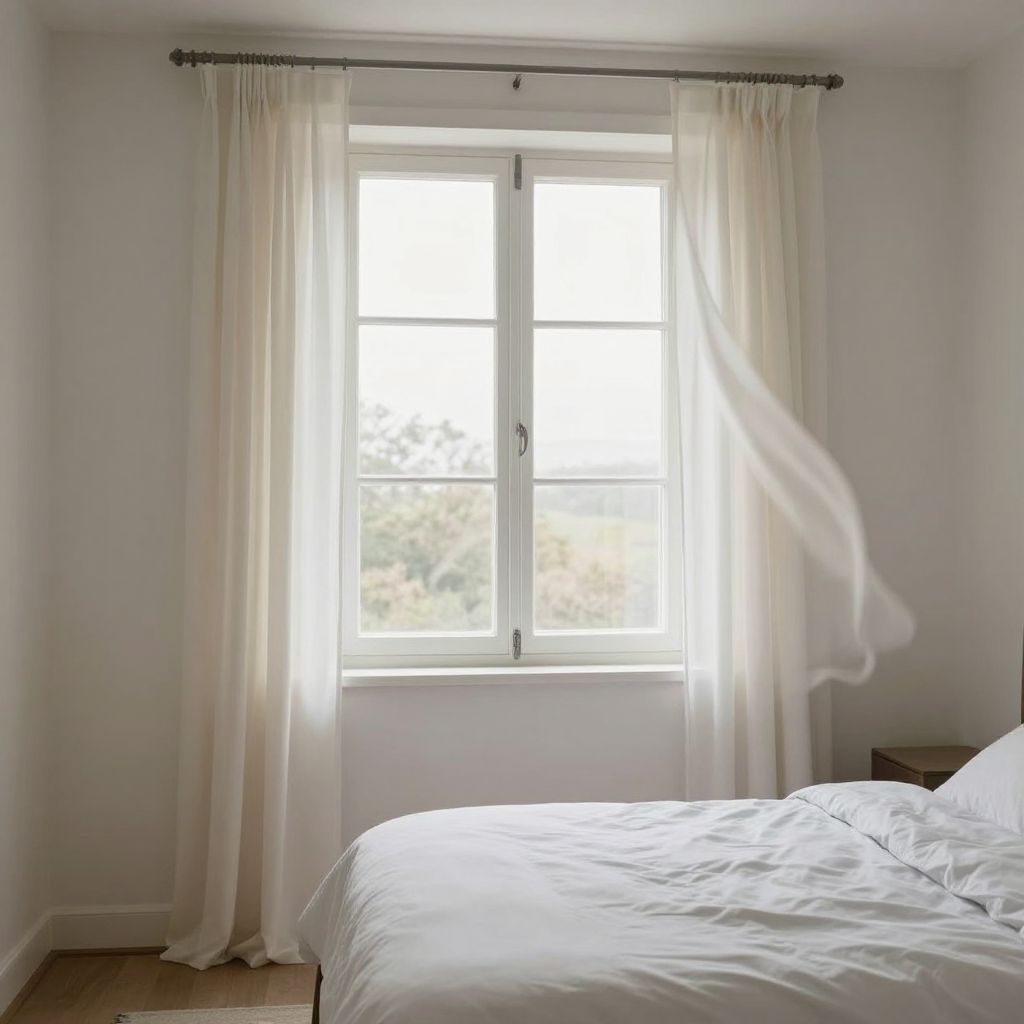
The single most underrated cooling move costs almost nothing: keep your blinds and curtains closed during daylight hours. South- and west-facing windows take direct sun in the afternoon, and uncovered glass can raise a room's temperature by 10 to 15°F over the course of a day.
Blackout curtains go a step further. Unlike standard curtains, thermal blackout panels have a dense, often foam-backed weave that blocks both light and radiant heat. Studies on window coverings have shown interior blackout curtains can reduce solar heat gain through windows by up to 33%. Pair them with the right blackout curtain for your room size and you're preventing the problem, not just reacting to it.
Practical sequence: close blinds by 9 a.m. on hot days, before the sun angle climbs. Reopen windows after 8–9 p.m. when outdoor temperatures drop below indoor levels.
The Box-Fan Window Trick for Cross-Ventilation
This works because of a simple principle: you need to move hot air out, not just circulate it. A single fan blowing into a room just stirs warm air. Cross-ventilation creates actual airflow through the space.
Here's the setup that works best:
- Intake window: Place a fan on the shaded, cooler side of your home (usually north or east-facing in the US) blowing inward.
- Exhaust window: Open a window on the opposite side of the room or across the hall to let hot air escape.
- Timing: Run this setup after sundown when outdoor air drops below 75°F. During the day, it can backfire by pulling warm outside air in.
For a single-window room, face the fan outward to exhaust hot air. It's less effective than cross-ventilation but still reduces heat buildup. A second fan aimed at your body while sleeping supplements the airflow.
Fan + Ice: The DIY Evaporative Cooler
Place a shallow bowl or pan of ice directly in front of a desk or box fan. As the fan blows over the ice, it picks up cold, moist air and sends it toward you. This is essentially a stripped-down version of an evaporative cooler.
Expectations: this method drops the perceived temperature in a roughly 6-foot radius by 5 to 10°F. It's a short-term fix, ice lasts 30 to 60 minutes, but it's effective for falling asleep. Keep a backup tray in the freezer.
Important caveat: evaporative cooling adds moisture to the air. In humid climates (above 60% relative humidity), this can make the room feel more uncomfortable. In dry climates, the American Southwest, mountain states, it works exceptionally well.
Dehumidifying: The Overlooked Variable
High humidity makes warm air feel significantly hotter because sweat can't evaporate efficiently from your skin. A room at 78°F and 30% humidity feels tolerable; the same temperature at 70% humidity feels stifling.
A portable dehumidifier running in your bedroom during summer can drop perceived temperature by several degrees without touching the thermostat. Target 30 to 50% relative humidity for the best balance of comfort and health. Side benefit: lower humidity also reduces dust mite populations, which thrive above 50% humidity.
Eliminating Hidden Heat Sources in Your Bedroom
Electronics generate a surprising amount of heat at rest. A gaming console in standby, a desktop PC left on, a large TV, and incandescent or halogen bulbs all radiate warmth continuously. In a small, closed bedroom, this adds up.
A standard incandescent bulb converts roughly 90% of its energy into heat, not light. Switching the bedroom to LED bulbs alone can reduce ambient heat noticeably. Plug electronics into a power strip with a timer or switch them fully off at night rather than leaving them in standby mode.
Maximize AC Efficiency If You Have It
If you have central or window AC, how you use it matters as much as whether you have it. Common mistakes that reduce cooling efficiency:
- Setting the thermostat too low: The system runs longer cycles at extreme settings and doesn't actually cool faster. Set it to 65–68°F and let it maintain.
- Ignoring the filter: A clogged AC filter reduces airflow by 15 to 25%. Check it monthly during peak cooling season.
- Running it during peak heat with windows open: Even a cracked window bleeds cold air rapidly.
- Not using fan-only mode at night: On cooler nights (below 70°F outside), switch to fan-only mode to circulate outside air without running the compressor.
Ceiling fans help, but only if set correctly. In summer, ceiling fans should spin counterclockwise (viewed from below) to push air straight down and create a wind-chill effect.
Cooling Your Bed Directly
The air temperature in your room and the temperature at your body's contact points are different problems. Even a well-cooled room at 66°F won't help much if you're sleeping on a dense foam mattress that traps body heat.
The surface you sleep on matters enormously. Dense memory foam, especially older formulations, absorbs and holds heat. If you wake up overheating in the middle of the night, your mattress is a likely contributor. See our full guide to the best cooling mattresses.
Your sheets are the next layer. Materials like cotton percale, linen, and Tencel lyocell are far more breathable than polyester or microfiber blends. Check our picks for the best cooling sheets for hot sleepers.
Pillows matter too. Shredded latex and buckwheat hulls allow air to flow through the fill. Our best cooling pillow guide breaks down the options by fill type. For a full comparison of how bedroom environment and bedding work together, see our guide to the best bedroom temperature for sleep and the complete bedroom cooling guide.
Pre-Sleep Habits That Lower Your Core Temperature
Your body naturally begins dropping its core temperature about two hours before sleep as part of the circadian rhythm. You can support that process.
- Cool or lukewarm shower 1–2 hours before bed: A slightly warm (not cold) shower triggers vasodilation, blood moves to the skin surface to dissipate heat, which accelerates core temperature drop.
- Avoid exercise within 2 hours of bedtime: Raises core temperature and takes time to dissipate.
- Light, loose sleepwear: Natural fibers breathe better than synthetics.
- Separate blankets for couples: Body heat from a partner is a significant source of nighttime overheating.
Frequently Asked Questions
What is the ideal bedroom temperature for sleep?
Most sleep researchers recommend keeping the bedroom between 60 and 67°F (15.6–19.4°C), with around 65°F being the most commonly cited optimal point. Older adults may sleep best slightly warmer, in the 68–72°F range.
How can I cool my room without air conditioning?
The most effective no-AC approach combines three steps: block heat entry during the day with blackout curtains; exhaust accumulated heat at night using the box-fan cross-ventilation method; and reduce heat at the body-contact level with breathable sheets and a non-heat-trapping mattress.
Does the fan + ice trick actually work?
Yes, within limits. It works by lowering the air temperature in a small radius (roughly 4–8 feet) through evaporative cooling. Effectiveness drops significantly in humid climates above 60% relative humidity. In dry climates, it can feel like a meaningful difference.
Should I sleep with a fan on all night?
For most people, yes, a fan creates white noise, promotes air circulation, and can lower perceived temperature by 5–8°F through wind-chill effect. Fans can dry out nasal passages; a light humidifier in the same room resolves that without canceling the cooling effect.
Why does my room stay hot even after the sun goes down?
Thermal mass. Walls, floors, and furniture absorb heat throughout the day and release it slowly overnight, a process called thermal lag. The cross-ventilation setup accelerates the release of stored heat.
Does humidity affect how hot a room feels?
Significantly. Humidity impairs the body's primary cooling mechanism, sweat evaporation. Dehumidifying to the 30–50% range makes the same temperature feel several degrees cooler.
What bedroom changes make the biggest difference fastest?
In order of impact per dollar: (1) close blinds and curtains before heat builds up in the morning; (2) run a box fan as an exhaust after 8 p.m.; (3) swap polyester sheets for cotton percale or linen. These three changes cost little or nothing and are noticeable the same night. Upgrading to a cooling mattress has the highest long-term impact.