
 by
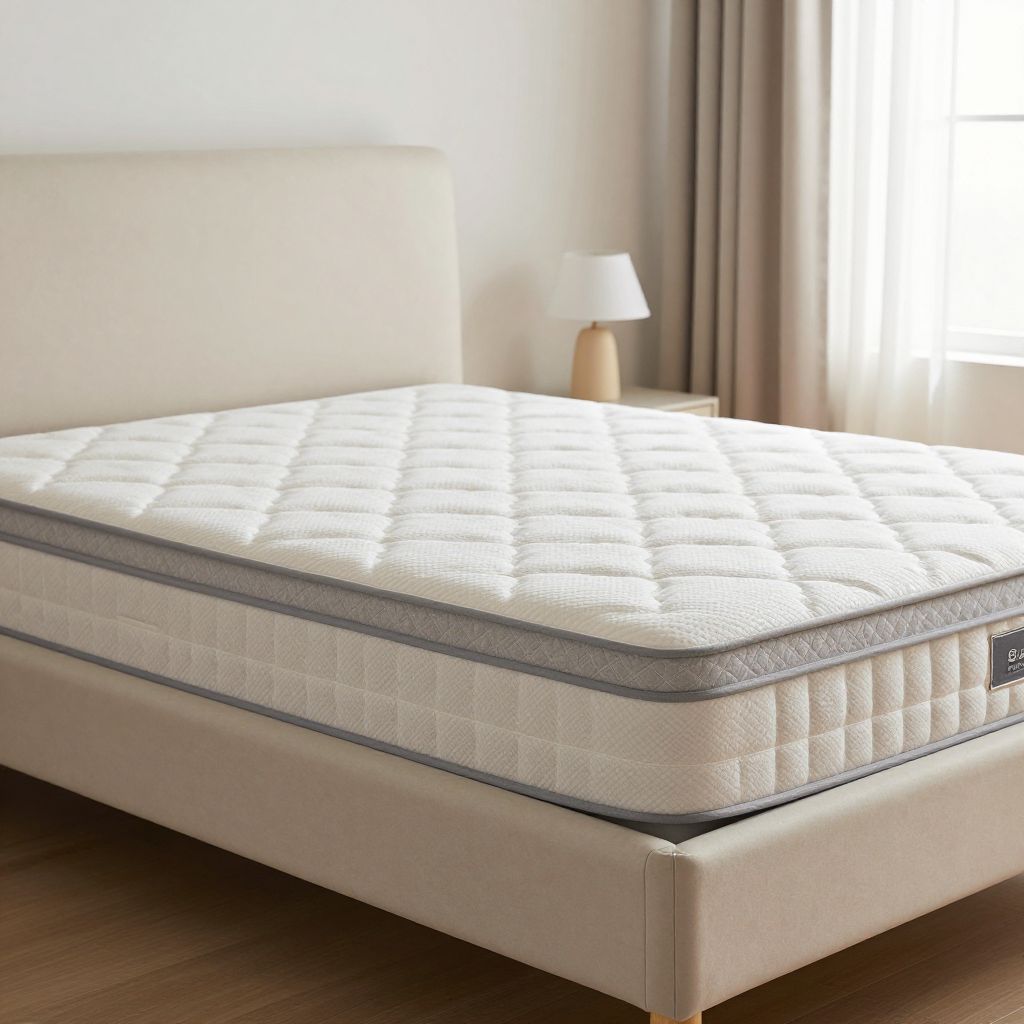
by Mattress thickness affects far more than how your bed looks in a room. It determines how well the mattress supports your body weight, how easy it is to get in and out of bed, whether your fitted sheets will stay put, and ultimately how well you sleep. Most shoppers default to thicker is better, but that logic breaks down quickly once you understand what those inches actually contain.
This guide breaks down every thickness category, explains who benefits from each, and helps you match mattress height to your body, your bed frame, and your bedroom setup.
Sleep Lab Editor's Pick
Our Editor's Pick: the Saatva Classic, offered in 11.5" and 14.5" profiles so you can match thickness to your body and frame — free white-glove delivery, 365-night trial.
What Mattress Thickness Actually Means
A mattress is not a single slab. It is a stack of distinct functional layers. Comfort layers sit at the top, the softer materials you feel immediately (memory foam, latex, polyfoam, or a pillow top). They cushion pressure points and typically run 2 to 4 inches. The support core occupies most of the height and does the structural heavy lifting, a coil system or high-density base foam, usually 6 to 8 inches. A 12-inch mattress might have 3 inches of comfort foam and a 9-inch core. Neither thickness is universally superior, it depends on what those inches are doing for your body.
Mattress Thickness Categories at a Glance
| Profile | Height Range | Best For |
|---|---|---|
| Low / Slim | 6–9 inches | Children, bunk beds, daybeds, lightweight sleepers under 130 lbs, occasional guest mattresses |
| Standard | 10–12 inches | Average-weight adults (130–230 lbs), most sleep positions, standard frames |
| Thick / Deep | 13–15 inches | Heavier sleepers (230–300 lbs), couples with weight difference, side sleepers wanting extra pressure relief |
| Extra-Thick | 16 inches and up | Heavy sleepers over 300 lbs, severe joint issues, those who prefer an elevated bed height |
Low Profile: 6 to 9 Inches
Slim mattresses are purpose-built for specific use cases: bunk beds, daybeds, foldable guest mattresses. For adults under 130 pounds, a 6-to-8-inch mattress can offer adequate support because there is less body mass compressing the comfort layers. Anyone above 130 pounds should treat this as a specialty category, the support core is too shallow to maintain spinal alignment over years of nightly use.
Standard Profile: 10 to 12 Inches
This range covers the majority of quality mattresses and is the right starting point for most adults. A well-built 10-to-12-inch mattress delivers enough support core to handle body weights up to roughly 230 pounds across all sleep positions. Back and stomach sleepers often do well with 10 inches medium-firm; side sleepers typically prefer 11 to 12 inches for extra shoulder/hip cushioning. For frame and size options, see the mattress size guide.
Thick and Deep Profile: 13 to 15 Inches
This range is engineered for heavier body weights or a distinctly luxurious feel, often both. Heavier sleepers (above 230 pounds) compress materials more deeply; a thicker support core resists that compression and prevents the hammock effect. If you are a heavier sleeper, the best mattresses for heavy people covers models engineered for this profile, a hybrid with a robust coil unit and 3-to-4-inch comfort foam is typically best. See our best hybrid mattress roundup for deep-profile options offered in both standard and high-profile heights.
Extra-Thick Profile: 16 Inches and Up
Less common and often marketing-driven. Sleepers over 300 pounds can genuinely benefit from 16-inch-plus construction because the support core needs real depth. But extra thickness only matters if the materials are high quality, a 16-inch mattress stuffed with low-density foam will sag faster than a well-built 12-inch hybrid. Verify coil count, foam ILD ratings, and warranty length first.
How Body Weight Changes the Equation
- Under 130 lbs: 8 to 10 inches is usually sufficient.
- 130 to 230 lbs: 10 to 12 inches covers most needs.
- 230 to 300 lbs: 12 to 15 inches; the support core must resist compression over time.
- Over 300 lbs: 14 inches or more with a reinforced edge system. Check for deals as heavy-duty options carry higher price tags.
Couples where one partner weighs significantly more benefit from zoned support or individually wrapped coils, which localize compression.
Total Bed Height: Mattress Plus Foundation
The mattress is only part of your final sleeping height. A standard box spring adds 8 to 9 inches; low-profile adds 4 to 5; a platform bed adds 6 to 12; an adjustable base adds 6 to 8. The ergonomic sweet spot is 24 to 30 inches total, sitting on the edge places your feet flat on the floor with hips and knees at roughly 90 degrees, ideal for standing up.
Mattress Thickness and Getting In and Out of Bed
For older adults, those recovering from surgery, or anyone with limited mobility, bed height is a genuine accessibility issue. Occupational therapists generally recommend a height that allows the user to sit on the edge with both feet flat and a slight forward lean to stand, which lands in the 22-to-28-inch total range. Prioritize total bed height over mattress thickness alone, a 10-inch mattress on a medium platform may outperform a 14-inch mattress on a low platform for this purpose.
Deep-Pocket Sheets: An Often-Missed Consequence
A 14-inch mattress will pull fitted sheets off the corners unless those sheets are deep-pocket. Standard fitted sheets are built for mattresses up to 12 inches; deep-pocket accommodate 13 to 17 inches; extra-deep covers 18 inches and up. If upgrading to a thicker mattress, budget for new sheets. Our guide to deep-pocket sheets covers what to look for.
Thickness vs. Quality: A Common Misconception
Height in inches does not equal quality. A 14-inch mattress made from low-density polyfoam will feel impressive in a showroom and degrade within two years. A 10-inch mattress with high-density base foam and quality coil construction will outlast it. Look beyond total height to layer breakdown: base foam density (1.8 lb/cubic foot or higher for all-foam), coil count and gauge for hybrids, the transition layer, and warranty coverage. For top performers, the best memory foam mattress guide benchmarks density and durability.
Frequently Asked Questions
How thick should a mattress be for a heavier person?
Sleepers between 230 and 300 pounds generally perform best on 12 to 15 inches. The support core needs enough depth to resist long-term compression. Above 300 pounds, look for 14 inches or more with reinforced edge support.
Is a 10-inch mattress thick enough for most adults?
Yes, for adults under 230 pounds a well-built 10-inch mattress is typically sufficient. Material quality matters more than height.
Does mattress thickness affect how hot you sleep?
Thicker mattresses can retain more heat if composed of dense foam. Hybrids offset this with coil airflow even at 14–15 inches. Prioritize construction (hybrid vs all-foam) over thickness for temperature.
What mattress thickness works best for an adjustable base?
Most adjustable base manufacturers recommend 10 to 14 inches. Thinner mattresses flex more easily; very thick or stiff mattresses may not bend properly at the head and foot. Confirm compatibility before purchasing.
Can a mattress be too thick?
Yes, if the extra height is low-quality filler foam, or if the total bed height exceeds what is ergonomically appropriate, particularly for shorter adults or those with mobility challenges.
Do I need deep-pocket sheets for a 12-inch mattress?
Standard fitted sheets handle up to 12 inches, so a 12-inch mattress is at the upper limit. Add a protector or topper and you will likely need deep-pocket sheets.
What is the most common mattress thickness sold today?
The 10-to-12-inch range accounts for the large majority of mattresses sold in the US, balancing supportive construction, ease of use with standard foundations, and reasonable shipping dimensions.