
 by
by Our Pick
Sleep Lab Pick · Current Sale
Current Sale: Amerisleep's current sale runs sitewide. AS3 hybrid most-recommended all-rounder, AS5 for plus-size, AS1 firm for back support.
Saatva Adjustable Base Plus. From $1,395
365-night trial · Lifetime warranty
Mild positional sleep apnea can sometimes resolve without CPAP through weight loss, side sleeping, head elevation, and lifestyle changes. Research shows ~50% of mild-to-moderate cases achieve full or partial resolution with these natural interventions. However, moderate-to-severe apnea (AHI >30) almost always requires CPAP or other medical treatment. Here is the evidence-based at-home protocol.
Who Can Succeed Without CPAP
- Mild apnea (AHI 5-15)
- Positional apnea (only on your back)
- Weight-driven apnea (overweight with neck circumference >17" men, >16" women)
- Alcohol-triggered apnea
- Anatomically normal airway
Who Should NOT Skip CPAP
- Moderate apnea (AHI 15-30): lifestyle alone rarely enough
- Severe apnea (AHI >30)
- Complex apnea with central component
- Cardiovascular disease (heart attack / stroke history)
- Known neuromuscular disease
- Severe daytime fatigue or fall-asleep episodes
The 6 Natural Interventions (Ranked by Effect)
| Intervention | Effect on AHI | Time to effect |
|---|---|---|
| 10-15% weight loss | 30-50% reduction | 3-6 months |
| Side sleeping | 30-50% reduction (positional) | Immediate |
| Head elevation 7-15° | 20-40% reduction | Immediate |
| No alcohol 3h+ pre-bed | 15-25% reduction | Immediate |
| Throat/tongue exercises | 10-20% reduction | 3-6 months |
| Treat nasal obstruction | 10-30% reduction | Immediate |
1. Weight Loss (Most Effective)
For weight-driven apnea, 10-15% body weight loss eliminates apnea in roughly 50% of mild-to-moderate cases. Even 5-10 lbs loss shows measurable AHI reduction.
2. Side Sleeping
Back sleeping lets the tongue and soft palate collapse into the airway. Side sleeping keeps the airway open. Techniques to stay off back: tennis ball in pajama top, body pillow, positional therapy shirts.
3. Head Elevation
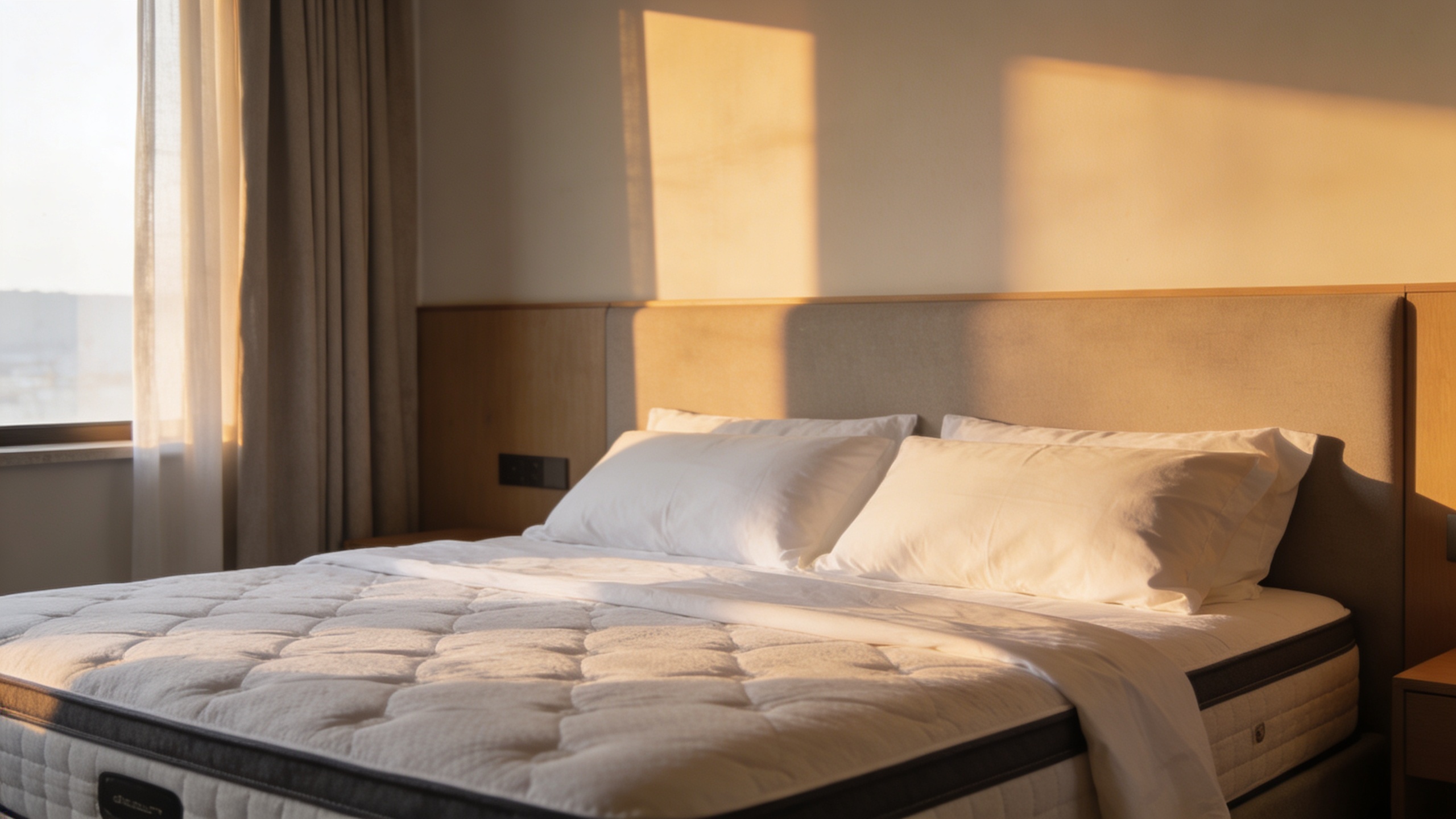
7-15 degree upper body elevation reduces gravity-induced airway collapse. Most effective via adjustable bed base.
Our Pick
Saatva Adjustable Base Plus. From $1,395
365-night trial · Lifetime warranty
4. Eliminate Alcohol Before Bed
Alcohol relaxes throat muscles, worsening apnea. 3+ hour cutoff before bed reduces AHI significantly for many drinkers.
5. Throat & Tongue Exercises (Myofunctional Therapy)
Daily 15-20 minute routine of tongue and throat muscle exercises strengthens airway muscles. Research supports modest AHI reduction over 3-6 months of consistent practice. Free; requires discipline.
6. Treat Nasal Obstruction
Saline rinse, nasal strips, nasal steroid spray for chronic congestion. ENT evaluation for deviated septum or enlarged turbinates.
Other Lifestyle Factors
- Quit smoking (inflames airway tissues)
- Avoid sedatives / sleeping pills (same mechanism as alcohol)
- Treat GERD (acid reflux contributes to nighttime congestion)
- Hydrate adequately
When to Reassess
Get a follow-up sleep study after 3-6 months of consistent lifestyle changes. If AHI has dropped below 5, apnea is effectively cured. If not, continue or add CPAP.
FAQ
Can you cure sleep apnea without CPAP?
Mild positional cases: often yes. Moderate-to-severe: rarely. Requires medical monitoring.
What is the most effective natural treatment for sleep apnea?
Weight loss (if overweight) combined with side sleeping and head elevation.
How long does it take to cure sleep apnea naturally?
Positional changes: immediate. Weight loss: 3-6 months. Full resolution: 3-12 months.
Related reading: Can Sleep Apnea Be Cured? | Best Sleep Position for Apnea | How to Sleep to Prevent Apnea | How to Stop Snoring
CPAP sleeping essentials
- Mask fit first. 70% of CPAP abandonment in year one is due to mask discomfort. Re-fit every 6 months as facial tissue changes.
- Hose management — use a hose lift or hanger to keep tubing above the mattress. Prevents tangling and reduces pull on the mask.
- Mattress choice matters. Side sleepers with CPAP benefit from a medium-firm hybrid that keeps the airway aligned. Adjustable beds (head elevation 10-15 degrees) improve CPAP efficacy.
- Humidifier — use heated humidification year-round. Dry air worsens nasal symptoms and reduces compliance.
- Filter replacement — change every 1-3 months; monthly in pet or dusty households.
CPAP + mattress interaction
Side sleepers using CPAP should avoid very soft mattresses that let the shoulder sink too deep, which rotates the jaw and breaks the mask seal. A medium-firm hybrid with targeted shoulder-zone contour (like the Amerisleep AS3 Hybrid) keeps the airway aligned.