
 by
by Mattress odors are almost always identifiable — and each source requires a different removal method. Using baking soda on a urine stain will not work the same way it works on sweat odors. Using an enzyme cleaner on off-gassing will accomplish nothing. This guide breaks down every odor type and the specific approach that works for each.
Our Top Pick
The Saatva Mattress Pad creates a washable barrier that prevents odor-causing sweat and spills from reaching your mattress in the first place.
Affiliate disclosure: We earn a commission at no extra cost to you.
Identifying the Odor Source
Before treating, identify what you are dealing with:
- Sweat / body odor: Faint, persistent stale smell; worst in areas where you sleep most
- Urine: Sharp ammonia smell; often localized to a specific spot
- Mold / mildew: Musty, earthy smell that does not go away with airing
- Off-gassing (VOCs): Chemical, plastic-like smell; common in new mattresses, especially memory foam
- Pet odors: Similar to urine but with additional biological compounds requiring enzyme treatment
Method 1: Baking Soda (Sweat and General Odors)
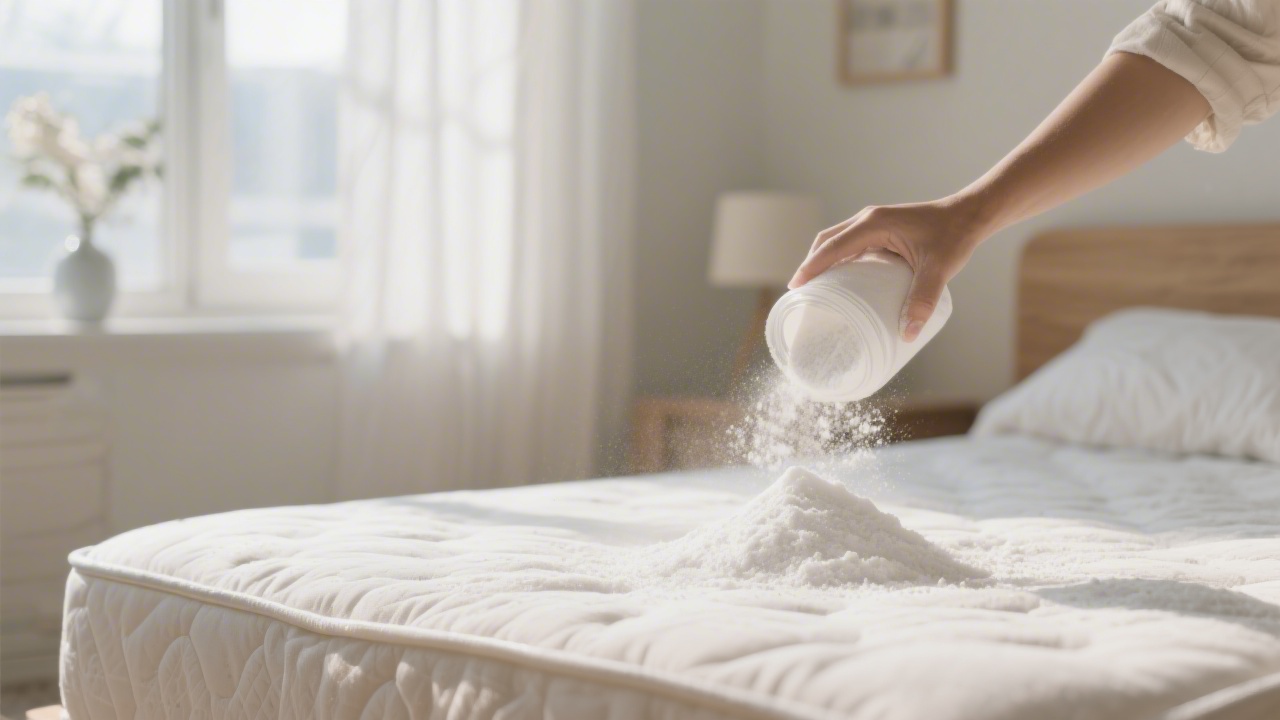
Baking soda is an odor absorber, not an odor neutralizer. It draws moisture and odor molecules out of the mattress surface rather than masking them with a scent. This makes it highly effective for sweat odors but less effective for biological stains like urine, which require enzyme breakdown.
- Strip all bedding and remove any mattress protector.
- Vacuum the mattress surface to remove dead skin cells, dust, and debris.
- Sprinkle a generous, even layer of baking soda over the entire surface. For stubborn odors, add a few drops of essential oil to the baking soda first and mix before applying.
- Leave for a minimum of 8 hours. Overnight is better. The longer it sits, the more moisture and odor molecules it absorbs.
- Vacuum thoroughly, using the upholstery attachment.
- Flip the mattress (if double-sided) or rotate it and repeat on the other end.
Method 2: Enzyme Cleaner (Urine and Pet Odors)
Urine contains uric acid crystals that baking soda cannot break down. Enzyme cleaners contain biological enzymes that digest the uric acid and other organic compounds that cause the odor. This is the only method that actually eliminates urine odor rather than temporarily covering it.
- Blot fresh urine immediately — do not rub. Work from outside the stain inward.
- Apply enzyme cleaner liberally to the stained area. Follow product instructions, but generally the cleaner needs to penetrate as deeply as the urine did.
- Cover with a damp cloth and leave for the time specified on the product (often 10-15 minutes to several hours for severe stains).
- Blot dry and allow to air dry completely before replacing bedding.
Important: Do not use hot water or heat during this process. Heat sets urine stains and odors permanently.
Method 3: Airing and Sunlight (Off-Gassing and Mild Odors)
New memory foam mattresses typically off-gas for 24-72 hours due to VOCs (volatile organic compounds) released from the foam and adhesives. This is the one odor type that does not require any product — it resolves with airflow and time.
Set the mattress in a well-ventilated room or outdoors (weather permitting) for at least 24 hours. Direct sunlight is beneficial — UV radiation breaks down some VOCs and acts as a natural deodorizer. If the smell persists beyond 72 hours of continuous ventilation, it warrants investigation as something other than normal off-gassing.
Method 4: Activated Charcoal (Persistent or Multiple Odors)
Activated charcoal is more absorbent than baking soda and can address odors that resist the baking soda method. Place several activated charcoal bags or charcoal-based deodorizing pouches directly on the mattress surface, cover with a light sheet, and leave for 24-48 hours. This method works particularly well for mattresses in closed or poorly ventilated spaces where airing alone is insufficient.
What Does Not Work
- Perfume or fabric spray: Masks odor temporarily; does nothing to the odor source
- Febreze-type sprays on biological stains: These odor neutralizers work on surface-level smells but do not penetrate foam to break down uric acid crystals
- Steam cleaning without proper drying: Steam introduces moisture, which creates mold risk if the mattress does not dry completely within 24-48 hours
- Washing the entire mattress: Most mattresses cannot withstand submersion. Memory foam dissolves when wet and wrung
Preventing Recurring Odors
A waterproof mattress pad is the only preventive measure that actually works. It intercepts sweat, spills, and any biological moisture before it reaches the mattress, and it is machine washable. Without a protector, odors will return regardless of how thoroughly you deodorize, because the source (your body, nightly) is constant.
Internal Links
- Mattress Mold: How to Spot It, Clean It, and Prevent It
- How to Dry a Wet Mattress
- Mattress Allergies and Dust Mites
- Best Mattresses Ranked
Our Top Pick
Saatva Mattress Pad — machine washable, organic cotton, the preventive solution to recurring mattress odors.
Affiliate disclosure: We earn a commission at no extra cost to you.
Frequently Asked Questions
How long should I leave baking soda on a mattress?
A minimum of 8 hours for general odors; overnight (12+ hours) for stronger smells. There is no risk of leaving it too long — baking soda will not damage mattress fabric or foam — so err on the side of more time if the odor is persistent.
Can I use white vinegar to deodorize a mattress?
White vinegar can help neutralize some odors, including mild urine odors, because its acidity counteracts the ammonia in urine. However, it is not as effective as enzyme cleaner for biological stains, and it adds moisture to the mattress. If you use it, apply with a lightly dampened cloth rather than spraying liberally, and ensure complete drying afterward.
Why does my new mattress smell like chemicals?
New mattresses — especially memory foam — off-gas VOCs (volatile organic compounds) from the foam, adhesives, and fire retardants used in manufacturing. This is normal and not harmful at typical levels. The smell dissipates with ventilation, usually within 24-72 hours. Airing the mattress in a well-ventilated space accelerates the process significantly.
My mattress smells even after deodorizing. What should I do?
Persistent smell after thorough deodorizing usually indicates the odor source is deep inside the mattress — either a large urine stain that penetrated the foam, or mold growing internally. Surface methods cannot reach deep contamination. If the smell is musty or chemical and persists after multiple treatments, consider replacement.
Does a mattress protector prevent odors from forming?
Yes — a waterproof mattress protector prevents sweat, urine, and other moisture from reaching the mattress. Since moisture is the primary cause of all biological odors, the protector eliminates the source rather than treating the symptom. Machine-washable protectors remove accumulated odors with regular laundering.