
 by
by A squeaky bed frame is one of the most fixable sleep problems. In most cases, it takes less than 30 minutes and costs under $10. The key is diagnosing the correct source of the noise before applying a fix — the wrong fix on the wrong cause will waste your time and leave the squeak intact.
Editor's Pick
Saatva Foundation
Solid wood foundation engineered for Saatva mattresses. Eliminates flex, noise, and instability at the source.
Affiliate disclosure: We earn a commission at no extra cost to you.
Diagnostic: Find the Noise Source First
Before applying any fix, remove the mattress and all bedding from the frame. Then systematically press down on different sections of the frame with your body weight:
- Press down on each corner post joint
- Press down on the center of each side rail
- Press down on the head rail and foot rail
- Press down on each slat, moving from head to foot
- Rock the frame side-to-side to check joint rigidity
The noise will be loudest when you are closest to the source. Note where it is loudest before applying any fix.
7 Solutions by Noise Source
Solution 1: Tighten All Bolts and Screws
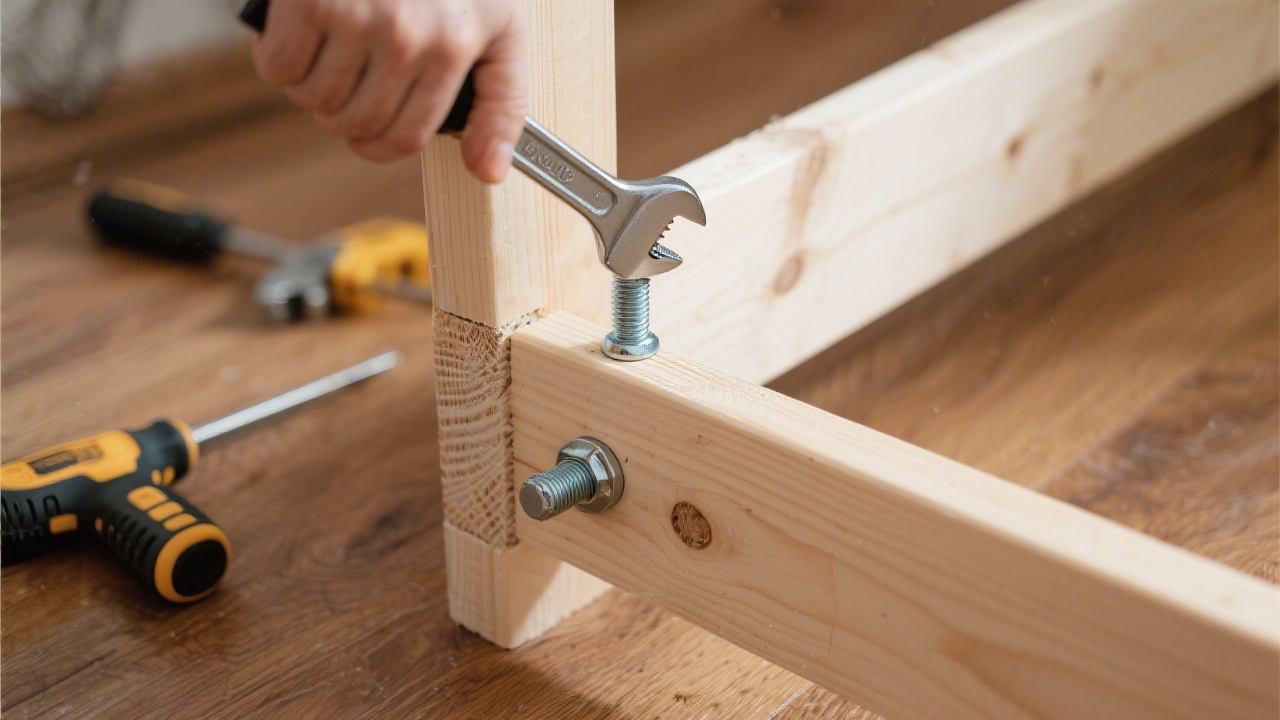
The most common cause of bed frame noise is loose fasteners. Use the wrench or Allen key that came with your frame (usually stored in a bag taped to the frame rail) and tighten every visible bolt and screw. Start at the corners. Work methodically. Do not overtighten — overtightening can strip threads or crack wood.
After tightening, test the frame. For metal frames, this alone resolves 60% of squeaks.
Solution 2: Add Felt Pads at Metal Contact Points
Metal-to-metal contact creates a distinctive high-pitched squeak under load. Adhesive felt furniture pads (available at any hardware store for $3-5) placed between metal joint surfaces eliminate this friction. Apply to all places where metal parts contact each other — typically at the rail-to-post connection points.
Solution 3: Lubricate Metal Joints
For metal frame joints that still squeak after tightening and felt application, white lithium grease (not WD-40) applied to the joint contact surfaces provides lasting lubrication. Disassemble the joint, apply a thin coating, reassemble, and tighten. Alternatively, beeswax rubbed on the threads of bolts reduces metal-on-metal friction.
Solution 4: Wax Wood-on-Wood Contact Points
Wood frames squeak from wood-on-wood friction at joints. Rub a candle, beeswax block, or bar soap on the surfaces where wood parts meet. This lubricates without leaving a visible residue or damaging the wood. Focus on mortise-and-tenon joints and places where the slats rest on rail ledges.
Solution 5: Stabilize or Replace Loose Slats
Slats that move in their holders squeak under load. Solutions in order of severity: (1) add anti-slip rubber grip tape to slat ends where they rest on the rails; (2) zip-tie slats together to prevent lateral movement; (3) replace worn slat holders with new ones from a hardware store or the frame manufacturer. Slat gaps larger than 3 inches can also cause foam mattresses to compress into the gap — replace with additional slats if needed.
Solution 6: Add a Mattress Between Frame and Slats
Sometimes the squeak is not from the frame itself but from the mattress moving on the slats. A non-slip mattress pad or rug gripper sheet placed between the mattress and slats eliminates this movement. This is a quick fix that takes 2 minutes and costs under $15.
Solution 7: Reinforce Weak Frame Joints
For wood frames where the joint itself has worked loose beyond what tightening can fix, wood glue with a clamp hold is the most permanent solution. Apply wood glue to the joint, clamp for 24 hours, and allow full cure before loading the frame. For particularly stressed joints, adding a corner bracket (available at hardware stores) adds structural support.
When the Problem Is the Foundation, Not the Frame
If your squeak persists after checking all frame joints and slats, the issue may be in the foundation or box spring rather than the bed frame. See related guides: mattress setup guide for proper foundation selection, and bed frame assembly tips to confirm the frame was assembled correctly in the first place. Our bedroom sleep audit covers all sleep disruption variables if noise is only part of the problem.
Editor's Pick
Saatva Foundation
Solid wood foundation engineered for Saatva mattresses. Eliminates flex, noise, and instability at the source.
Affiliate disclosure: We earn a commission at no extra cost to you.
Frequently Asked Questions
Why does my bed frame squeak?
Squeaky bed frames almost always come from one of three sources: loose metal-to-metal joints, wood-on-wood friction at joints or slats, or worn slat holders. Identifying which source through the diagnostic test below tells you which fix to apply.
How do I find where my bed frame is squeaking?
Methodically press down on each section of the mattress with the mattress removed. Press the corners, the center, and along the side rails. The squeak will be loudest closest to its source.
Does WD-40 fix a squeaky bed frame?
WD-40 is a water displacer, not a long-term lubricant. It can stop metal squeaks temporarily but evaporates quickly. White lithium grease or beeswax is more durable for metal joints. Wax is better for wood friction.
Can a squeaky bed frame damage the mattress?
Not directly. However, a squeaky frame often indicates instability, and frame instability can cause uneven mattress wear over time. Loose joints allow the mattress to flex in ways it wasn't designed for.
When should I replace the bed frame instead of fixing it?
When the structural joints are cracked or broken (not just loose), when the metal rails are bent, or when the problem returns within weeks after multiple repair attempts. At that point, replacement is more cost-effective than continued maintenance.